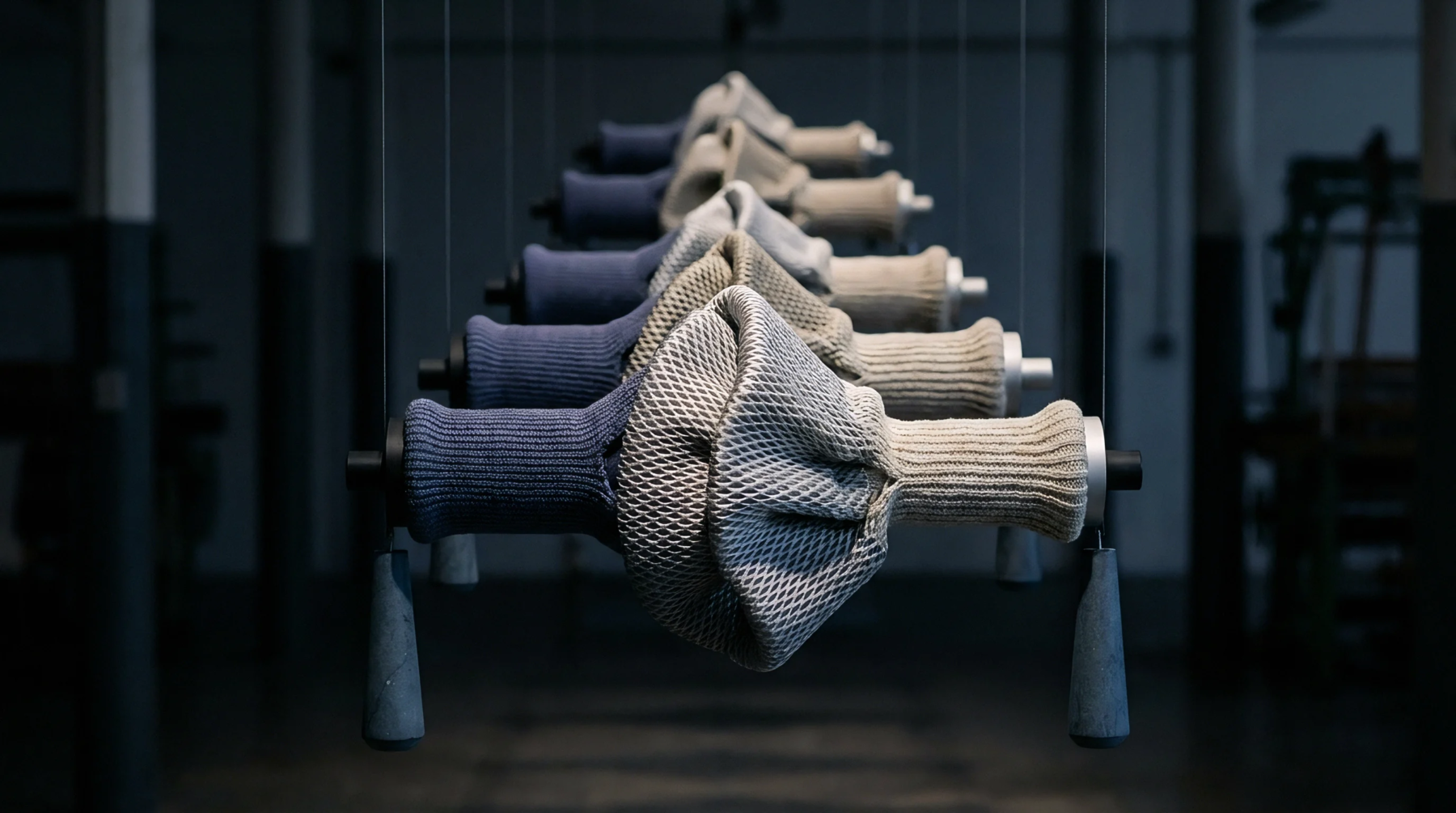
Geometric Shift
Circular knit jersey displays a permanent rotational deviation of wale lines away from perpendicular due to internal torque accumulated during yarn spinning and looping stages. Spirality angle measures this angular displacement between course rows and wale columns on relaxed garments. Dyehouses and cutting rooms verify the metric before bulk spreading to prevent twisted side seams in finished apparel.
Torque Generation
Residual torsional stress builds inside single jersey structures during ring spinning or rotor spinning operations. Unbalanced yarn twist forces loops to distort laterally once fabric leaves the knitting cylinder. Steam relaxation and heat setting release partial strains, yet residual forces persist inside high twist cotton constructions.
Measurement Protocol
Technicians lay conditioned fabric flat on a horizontal glass table without stretching the borders. A transparent protractor aligns with the straight course line while a secondary hairline tracks the tilted wale direction. The resulting deviation reading determines whether the cut pieces require pre-skewing on automated table feeders.
Correction Limit
Cutting tables apply compensating distortion angles during marker layout to counteract subsequent garment skewing. Standard tolerances permit minor deviations on casual tees, whereas technical athletic wear demands strict zero tolerance thresholds. Excessive angular shift forces automatic rejection of entire dye lots prior to sewing floor distribution.