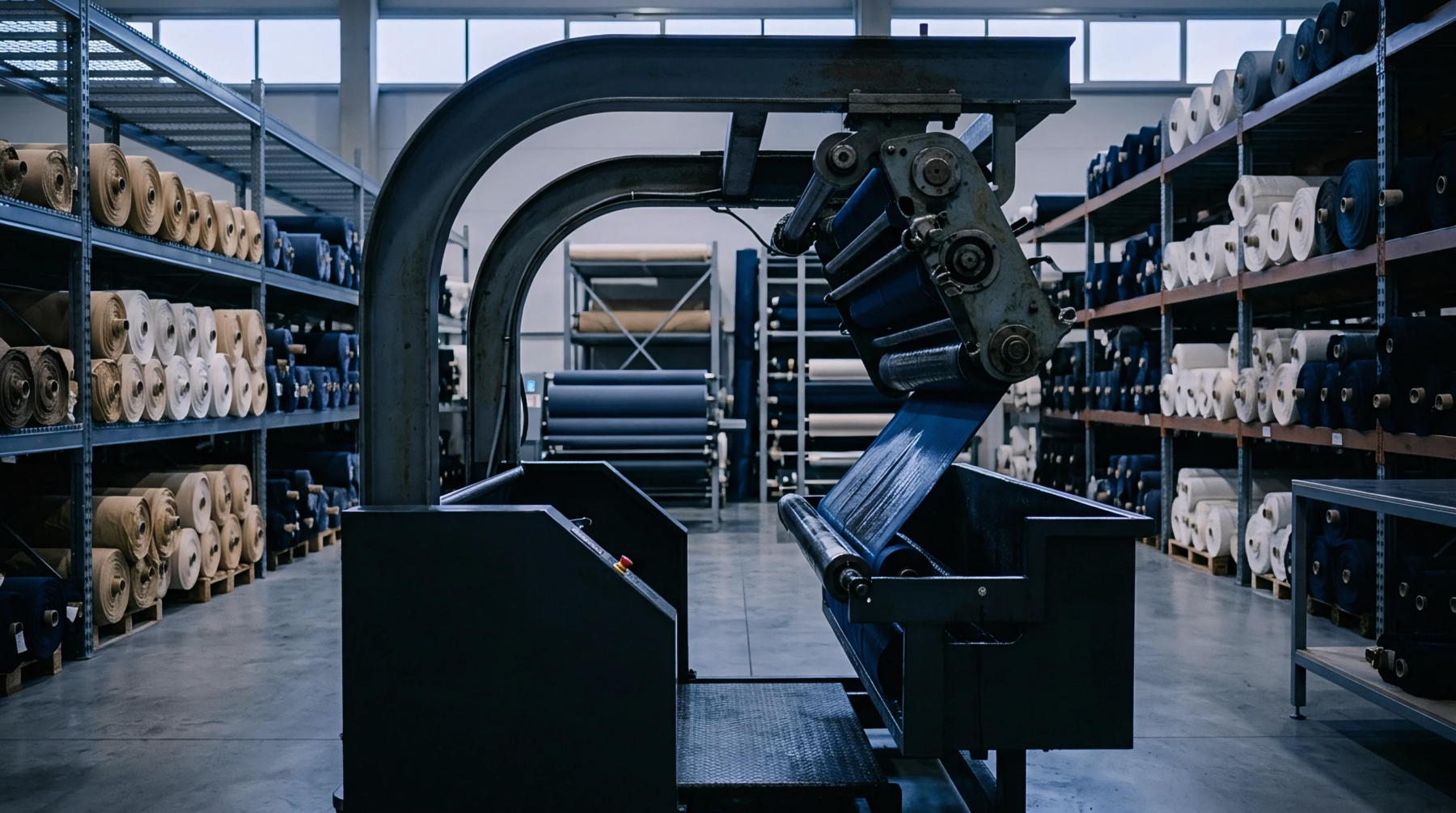
Processing Mechanism
Textile finishing lines utilize mechanical pin chain transport systems inside heated chambers to stabilize fabric width and control relaxed length during moisture removal. Stenter overfeed drying feeds woven or knitted fabric onto the transport chain at a linear speed faster than the speed of the chain pins, introducing controlled fullness along the length direction. This mechanical compression allows yarns to relax and crimp before thermal setting locks the structural dimensions.
The process stops when processing fully rigid non-extensible industrial fabrics that require zero-tension drying.
Dimensional Stabilization
Knitted and extensible woven fabrics develop significant longitudinal tension during wet bleaching and dyeing operations. Drying tensioned fabric without mechanical overfeed results in high residual garment shrinkage during laundering. Feeding excess fabric length onto stenter pins forces loop structures in knits to round out and warp yarns in wovens to increase crimp amplitude.
Heat inside the stenter drying zones evaporates moisture while setting the relaxed geometry in place. Overfeed percentages typically range between five percent and twenty-five percent depending on fabric weight and structural elasticity. Precise moisture sensors at the chamber exit monitor residual humidity to prevent over-drying, which can temporarily set artificially stretched fabric dimensions.
Correctly relaxed fabric exhibits low residual laundering shrinkage and stable surface mass per unit area.
Shrinkage Control
Apparel brand quality standards require strict residual shrinkage thresholds below three percent after repeated washing cycles. Implementing correct overfeed ratios during final stenter drying ensures compliance with buyer dimensional stability specifications.
Machinery Configuration
Variable speed feed rollers driven by servo motors control overfeed ratios at the entry brush wheels. Differential speed control between entry rollers and pin chains maintains precise longitudinal relaxation during continuous high-speed production.