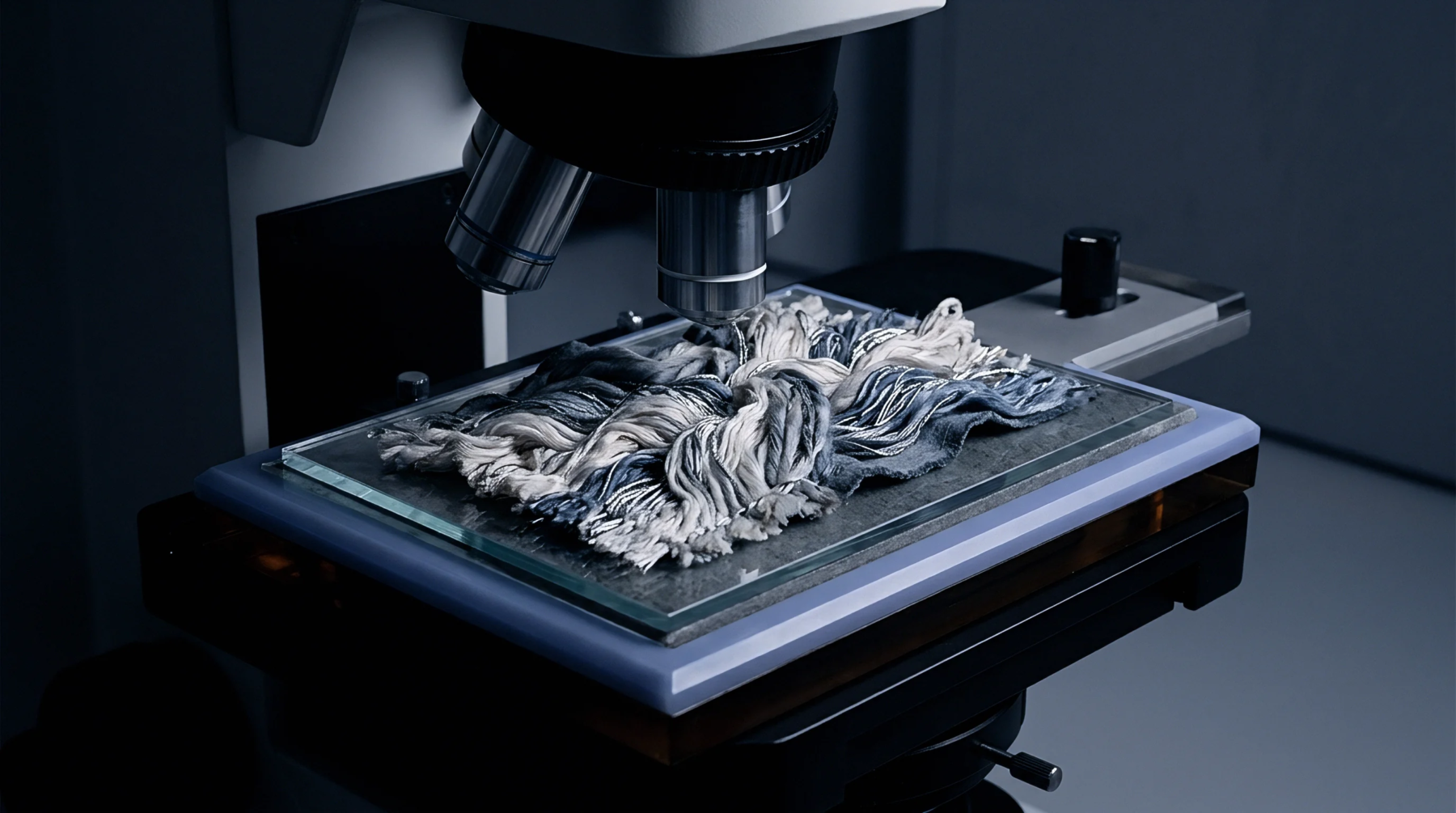
Particle Migration
Low molecular weight polymer fragments move from the interior of a synthetic fiber to its exterior during high-temperature processing. Surface oligomer migration is most common in polyester dyeing, where these cyclic molecules crystallize on the fiber walls as the dye bath cools. The resulting white powder or film can interfere with subsequent processing and degrade the appearance of the fabric.
Friction Interference
Accumulation of these particles on machinery parts increases the friction between the yarn and the guides. When surface oligomer migration occurs at a high rate, the deposits can clog the small orifices of spinning or texturing equipment. This buildup leads to increased yarn tension and a higher frequency of filament breaks.
Dyeing Obstruction
Presence of crystals on the fiber surface creates an uneven barrier for dye molecules. If surface oligomer migration is not managed, the resulting color may be blotchy or show poor rub fastness.
Quality Control
Visual inspection and extraction tests identify the severity of the deposit formation. Controlling surface oligomer migration requires careful selection of the polymer grade and the use of optimized cooling profiles after high-heat treatments. This management is necessary for maintaining the soft hand and clear color required for premium apparel products.