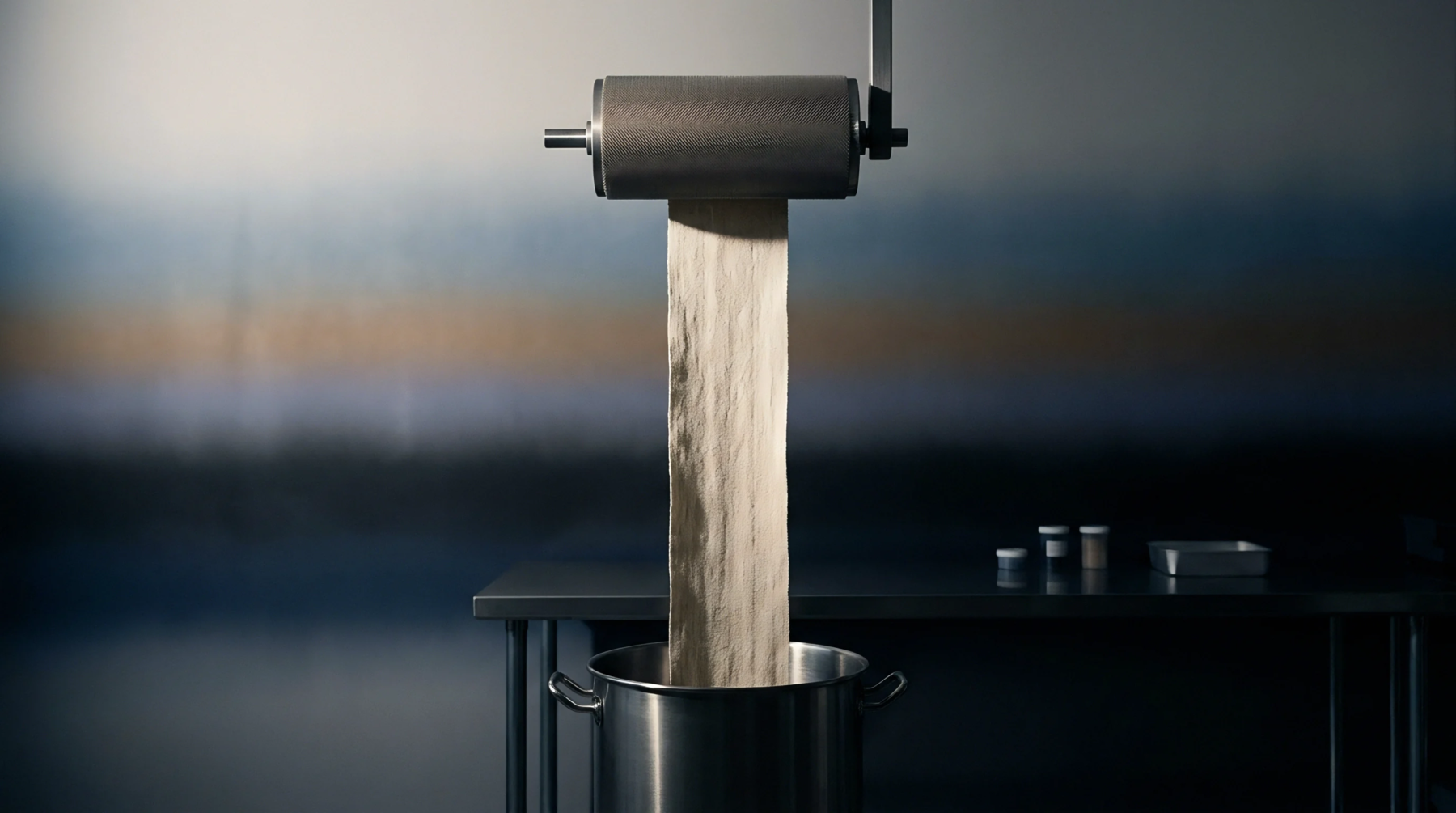
Volumetric Parameter
Fluid dynamics in continuous wet processing dictate the relationship between chemical bath capacity and the active consumption rate of circulating processing liquor. The metric of trough turnover volume measures the frequency with which a padder trough or chemical saturator replaces its total fluid content during a production run. Low-capacity troughs ensure that fresh liquor constantly replenishes chemical components absorbed by the traveling fabric web.
High turnover rates prevent dyestuff hydrolysis, chemical degradation and bath contamination caused by accumulated fabric lint. Optimizing container geometry permits continuous operation with minimal chemical inventory.
Replenishment Dynamic
Chemical consumption during continuous padding depends directly on fabric weight, running velocity and target wet pickup percentages. Calculating trough turnover volume requires dividing total trough holding capacity by the hourly volume of liquor removed by the passing textile substrate. Rapid replenishment maintains equilibrium between incoming concentrated replenisher feeds and chemicals depleted by fiber substantivity.
If the turnover rate is sluggish, sensitive dyestuffs decompose under prolonged exposure to bath heat, alkaline auxiliaries and atmospheric oxygen. Automated dosing units synchronize feed pumps with fabric speed to maintain uniform fluid replacement throughout production shifts.
Tailing Prevention
Differential affinity between dye components and textile fibers threatens lengthwise shade uniformity during long continuous processing runs. Rapid trough turnover volume minimizes tailing, a defect where preferential absorption of high-affinity dyes depletes the bath, causing the fabric shade to shift gradually from start to finish. Minimizing physical trough dimensions while maximizing fabric throughput forces the chemical bath to renew itself before preferential dye strike causes visible color drift.
Displacement blocks inserted into pad troughs reduce dead zones and lower fluid volume without altering roller width. Maintaining stable turnover guarantees identical shade depth across thousands of continuously processed meters.
Padder Operation
Mechanical setup of the foulard requires balancing immersion path length against bath volume to ensure thorough chemical penetration. Managing trough turnover volume prevents the accumulation of loose fiber dust, spinning waxes and sizing residues stripped from fabric surfaces during high-speed passage. Operators adjust immersion guide rolls to shorten dwell time when running sensitive reactive dye liquors susceptible to bath hydrolysis.
End-of-lot changeovers dump minimal residual liquor when troughs operate at low fluid capacities, reducing wastewater treatment burdens. Efficient turnover dynamics enable dyeing mills to execute rapid color changes between bulk production orders.