Structural Redistribution
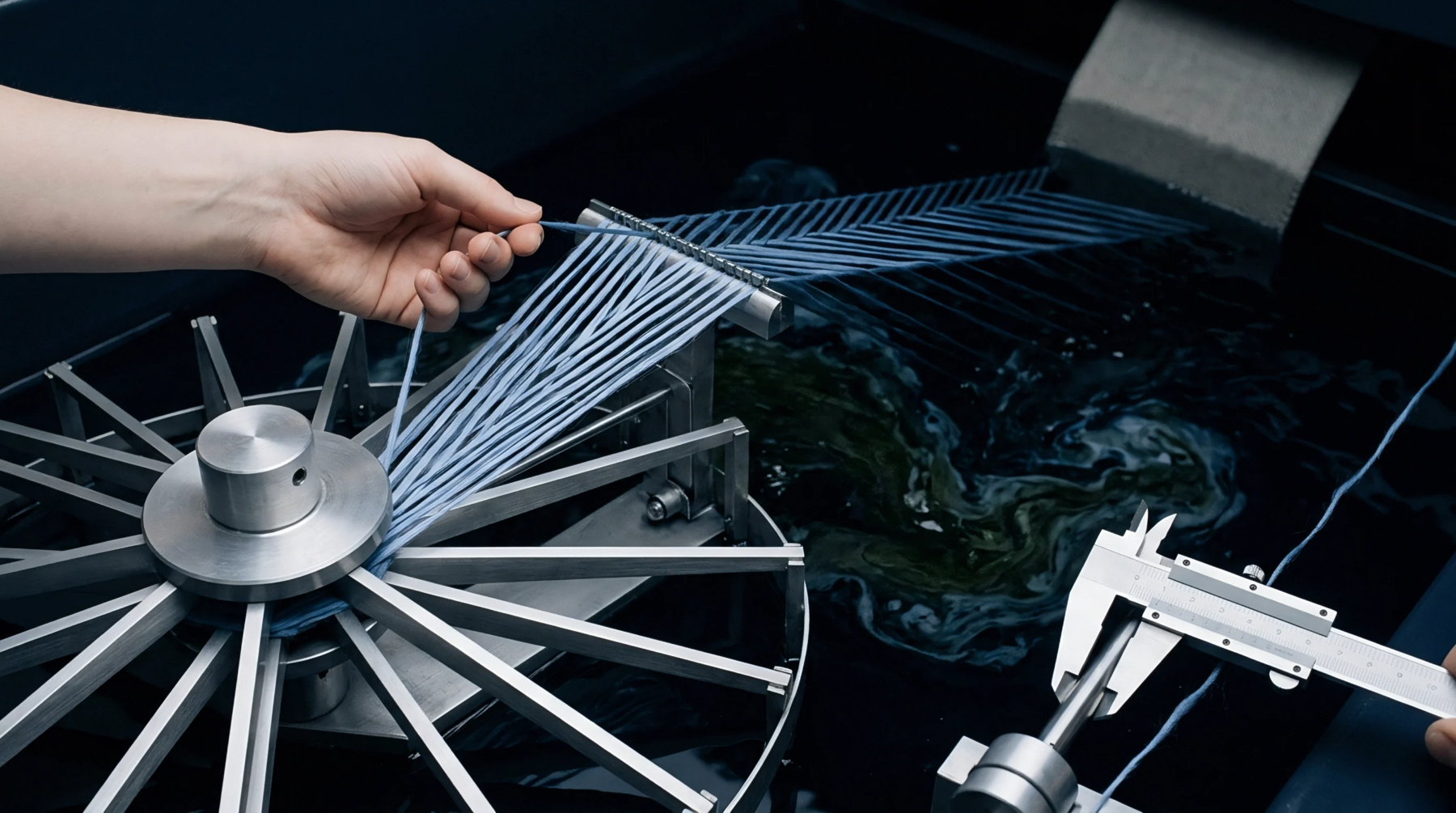
The redistribution of yarn waviness between the longitudinal and transverse directions occurs when woven fabric is subjected to tension in one direction. During this process, warp crimp interchange alters the relative waviness of the warp and weft yarns as one set flattens and forces the other to bend more. This behavior is analyzed by measuring yarn crimp percentages before and after applying tension.
Measuring these shifts helps predict how the fabric will react during subsequent finishing processes.
Mechanical Action
When warp yarns straighten, they lose crimp. This squeezing action forces the perpendicular weft yarns to bend. The adjustment occurs without yarn slippage.
Process Influence
This yarn behavior affects fabric properties like dimensional stability, air permeability, and tear strength. Adjusting warp tension during weaving controls the initial crimp levels and balances the performance of the fabric. High warp tension yields fabric with low warp crimp and high weft crimp.
Measurement Techniques
Laboratory testing involves deweaving a sample of fabric and measuring the length of the yarns under standard tension. Technicians compare this straight length to the woven length to calculate the crimp percentage. This data helps predict how the fabric will behave under tension during processing.