Kinetic Loading
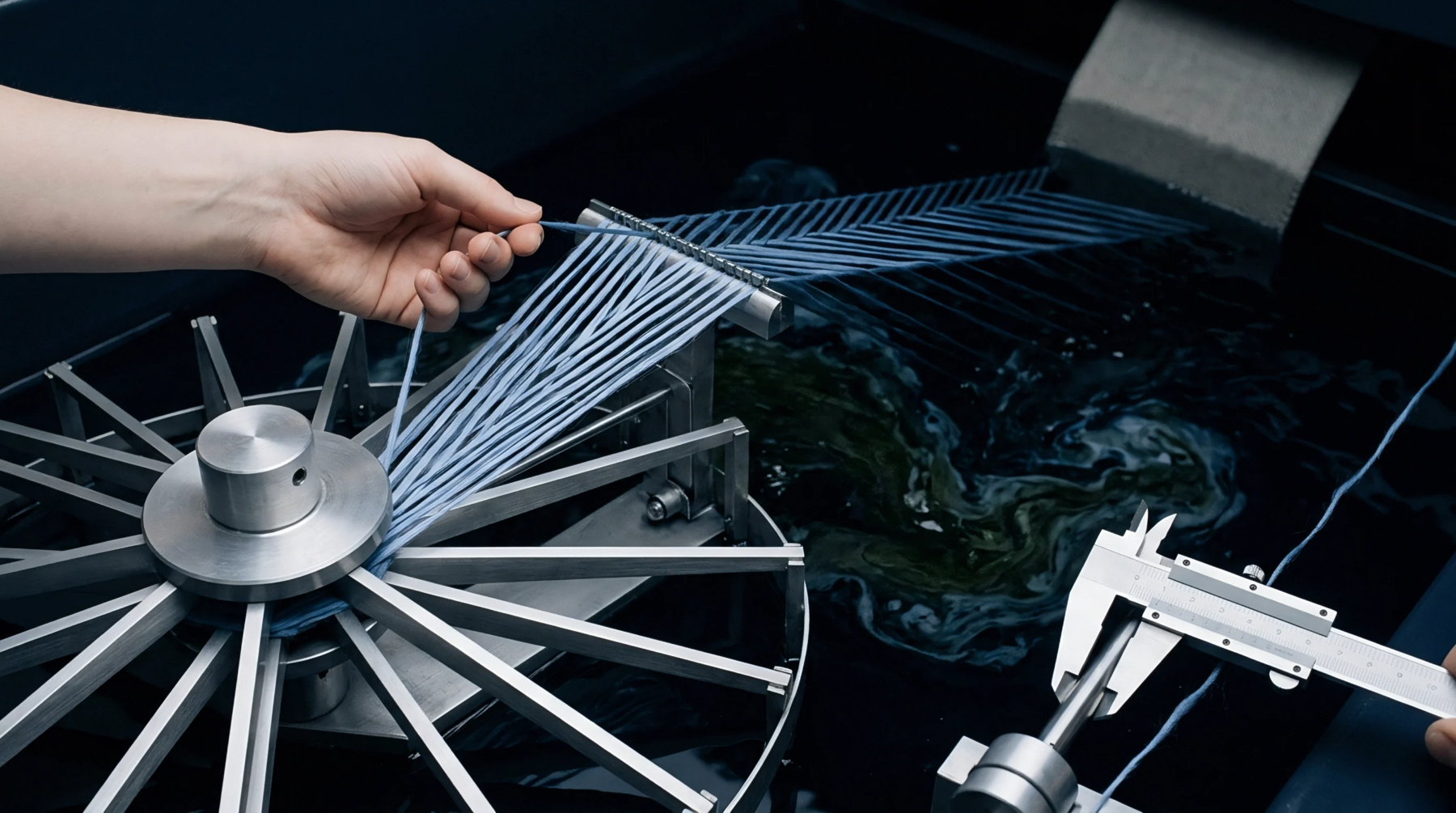
Industrial pulling forces act on a fabric as it moves through liquid baths and heated rollers. The level of wet processing tension influences the final width and the residual shrinkage of the finished material. Excessive force during the dyeing or washing stages can permanently elongate the yarns and weaken the overall structure of the weave.
This requirement is a constant concern for operators who must balance the speed of the production line with the delicate nature of the wet textile.
Width Control
Saturation with water softens the hydrogen bonds in natural fibres and makes them more susceptible to stretching. By carefully controlling the wet processing tension, a mill can ensure that the fabric remains stable and does not contract excessively when it is later laundered by the consumer.
Shrinkage Potential
Automated sensors in the machines monitor the load in real time to prevent sudden spikes. If the wet processing tension is not uniform across the entire batch, the result will be variations in the shade and the texture of the fabric.
Machine Gradient
Compressive shrinkage units are often used at the end of the line to counteract the effects of earlier pulling. A successful management of wet processing tension results in a predictable product that meets the dimensional specifications required by the garment manufacturer.