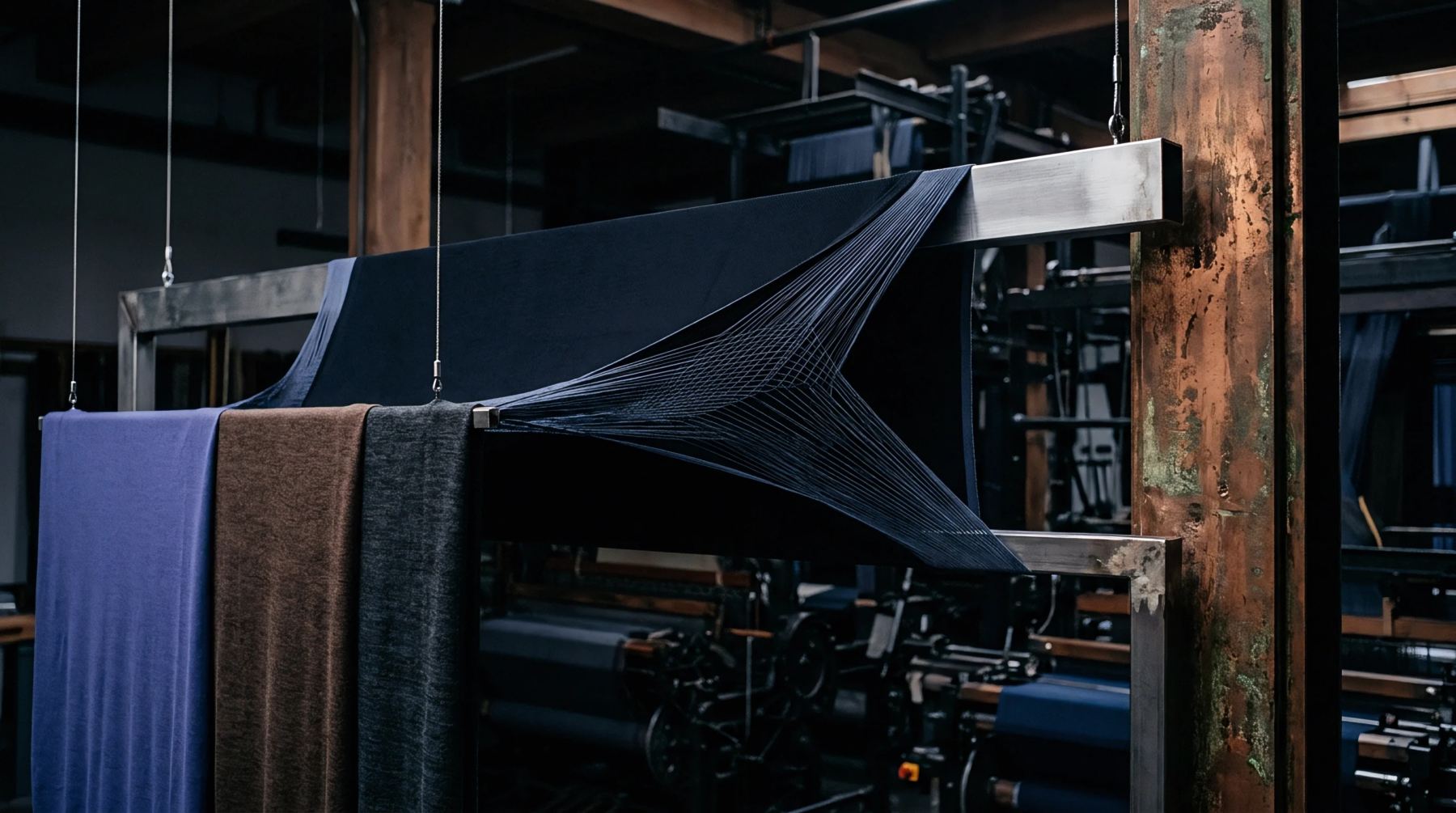
Structure Geometry
The smallest rectangular grid of interlacing warp and weft yarns represents the fundamental design module that dictates the entire appearance of a fabric surface. This weave repeat unit determines the total number of ends and picks required to complete a single cycle of the pattern before the arrangement of intersections returns to the initial state. Production looms depend on these specific dimensions to calculate harness lift sequences for mechanical dobbies or electronic jacquard controllers.
The integer value assigned to this dimension ensures consistent alignment across the width of the fabric during high speed operation.
Design Parameter
Each repeat defines the logic of interlacing for individual yarns relative to the crossing path of the perpendicular set. Complex patterns often require a larger repeat to accommodate elaborate floating structures or multi coloured designs. Standard plain cloth requires only two ends and two picks to complete the cycle.
The constraint of physical space on the loom frame dictates the maximum dimensions possible for any single module.
Technical Capacity
Loom width and machine speed determine the efficiency of producing specific pattern sizes. Large modules demand more complex shedding mechanisms to manage the increased density of harness cords and lifting hooks. Small units allow for higher throughput since the machine cycle completes within fewer pick movements.
Manufacturers select the smallest possible module that achieves the intended aesthetic or physical performance to minimize operational complexity.
Fabric Integrity
Consistency in the repetition of the grid pattern across the entire length of the roll prevents visual distortion or bowing in the finished goods. Skew or bias in the final product often originates from a failure to maintain exact tension on the yarns that define the edges of the grid. Automated inspection systems scan for deviations in this cycle to detect skipped picks or broken warp ends that disrupt the structure.
Precise adherence to these dimensions establishes the baseline for total fabric stability.