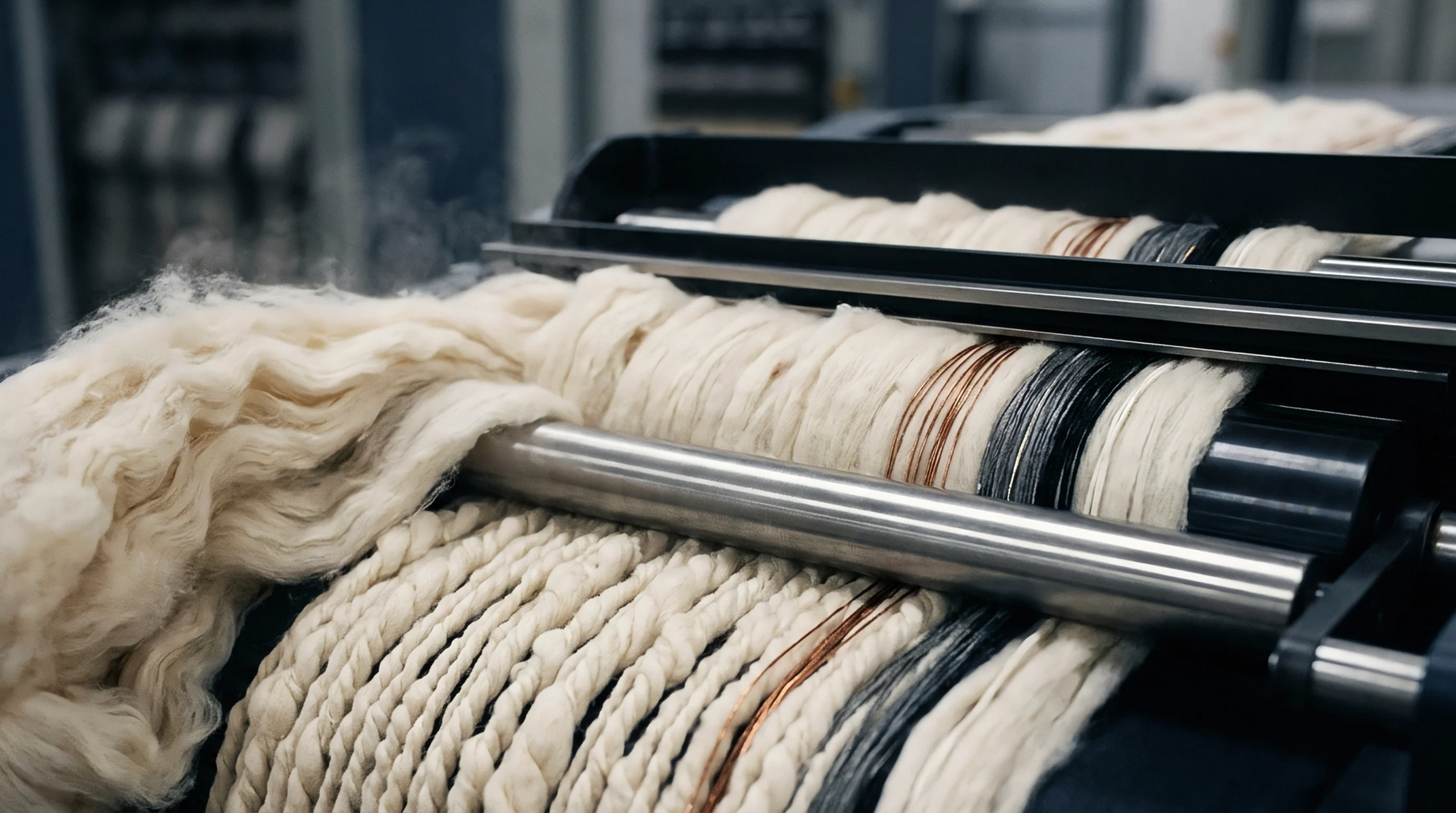
Material Accounting
Gravimetric batching units function as automated feeding machinery that proportions textile raw inputs by continuous weight measurement before delivery to downstream carding or extrusion lines. Weigh hopper volumetric dosing operates inside the fiber preparation department where mills mix synthetic staple batches with natural wool tops. Operators verify the accuracy of these mechanical installations during daily calibration audits at the material staging checkpoint.
Production technicians check load cell readings against known reference weights to confirm that delivery screws dispense exact mass fractions per batch cycle. Mechanical tolerances govern whether raw stock meets spinning mill specifications before bales move forward into opening machinery.
Calibration Drift
Electronic transducers measure downward force continuously while discharge gates remain closed during the accumulation phase. Feed screws rotate at fixed revolutions per minute once the target mass registers on the digital controller. Sensor signals drift upward over months of continuous operation due to microscopic fiber dust accumulation on the suspension brackets.
Technicians apply correction algorithms to offset tare weight discrepancies caused by residual stock remaining inside the enclosure after each dump cycle. Pneumatic actuators open the bottom slide rapidly when the designated mass threshold arrives from the central PLC. Calibration checks occur every shift change to prevent minor accumulation errors from multiplying across subsequent processing floors.
Throughput Variance
Batch cycles repeat continuously to maintain stable fiber flow into the main blending chamber. Hopper capacity limits the maximum single charge size available for each individual drop. Material density changes cause volumetric feed screws to deliver inconsistent mass quantities despite constant rotational speeds.
Operators compensate for raw material bulk density shifts by adjusting auger speed ratios during heavy lot transitions. Continuous monitoring prevents starvation at the carding feed chute while avoiding downstream machinery jams caused by overfilling.
Resin Feedstocks
Synthetic filament extrusion plants utilize these same weighing assemblies to meter masterbatch colorants into virgin polymer streams. Polymer pellets drop from overhead silos into small surge bins equipped with vibrating cone activators. Screw drives push precise pigment quantities into the main extruder throat alongside the primary carrier resin.
Pigment proportions remain strictly controlled to prevent shade variations across finished woven fabrics inspected in the dyehouse laboratory. Automated shutoff valves halt material flow instantly whenever downstream pressure spikes exceed safe operating limits inside the mixing barrel. Final color consistency depends upon maintaining stable mass flow rates throughout extended multi-day production runs.