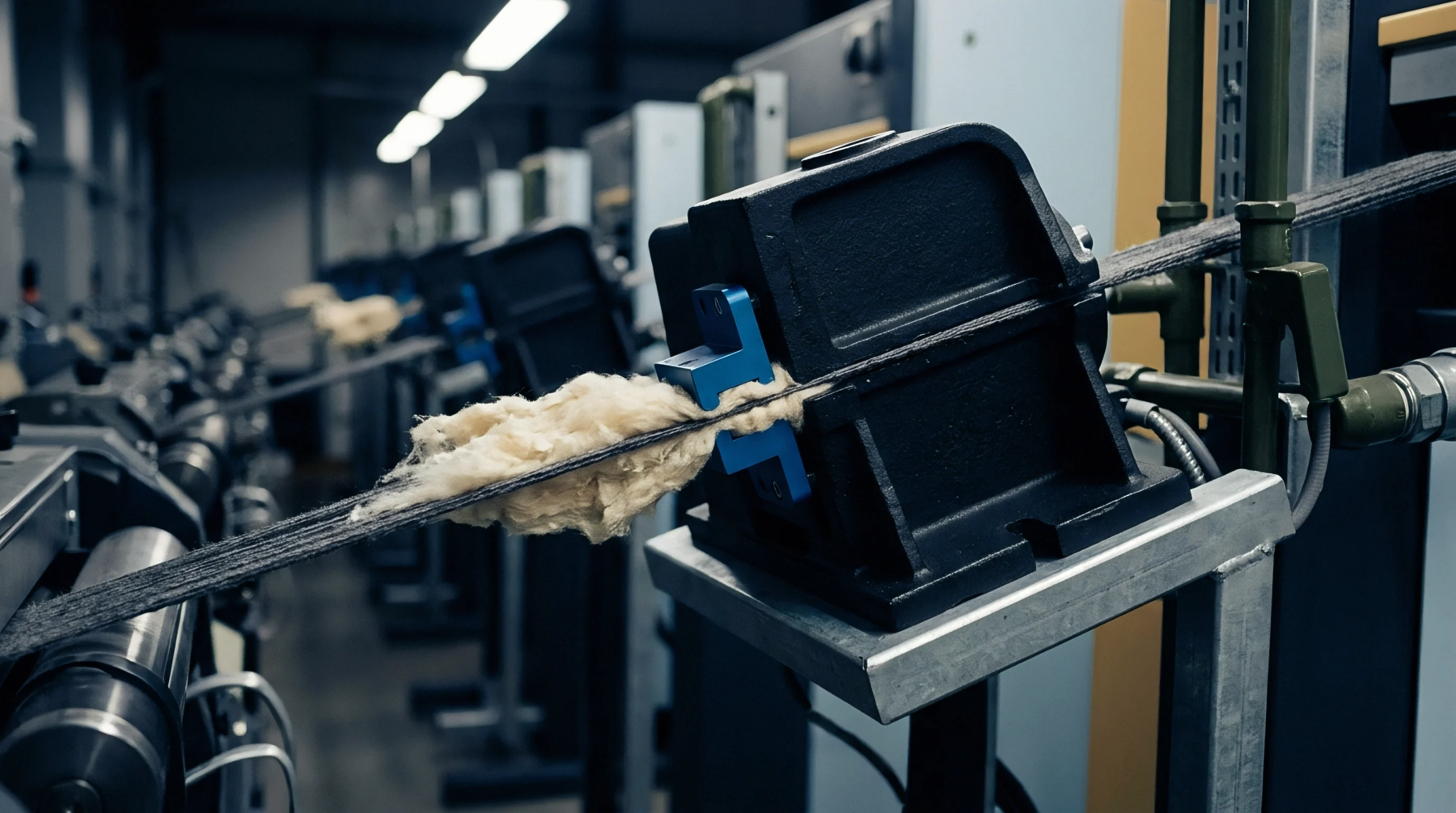
Material threshold
Maximum force values determine the point at which the internal friction between individual fibres is overcome by external tension, causing the yarn structure to fail or slide apart. In the engineering of high-performance textiles, the yarn shear limit is a fundamental property that dictates the maximum stress a yarn can withstand before it loses its structural integrity. This limit is not a measure of the individual fibre strength but rather a measure of the cohesion provided by the yarn twist and the surface friction of the fibres.
When a yarn is pulled, the fibres are pressed together, creating a frictional force that resists slippage. However, once the external tension exceeds this internal resistance, the fibres begin to slide past each other, leading to the thinning and eventual break of the yarn. This property is particularly important for spun yarns made from short staple fibres like cotton or wool.
Friction Mechanism
The cohesion of the yarn depends on the twist level, the fibre length and the presence of any surface finishes or lubricants. Yarn shear limit is higher in yarns with a high twist because the radial pressure on the fibres is greater, increasing the frictional contact. Longer fibres also contribute to a higher limit because they have more surface area for friction and are more likely to be gripped by multiple points of the twist.
If the fibres are too smooth or if too much lubricant is applied during the spinning process, the shear limit will drop, making the yarn prone to drafting and breakage. This can lead to frequent stops on the loom or knitting machine, reducing the efficiency of the factory. During weaving, the yarn is subjected to rapid cyclic tension and abrasion, which can cause the fibres to shift and the yarn to fail if the shear limit is low.
Technicians use yarn strength testers to measure the breaking force and the elongation at the point of failure. These tests help to determine the optimal twist level for a specific fibre type to ensure it can withstand the mechanical stresses of downstream processing. The relationship between the twist and the strength is often described by a curve, where the strength increases with twist up to a certain point and then begins to decrease as the fibres are damaged by the excessive pressure.
Structural Failure
When a yarn is stressed beyond its capacity, the failure usually starts at a thin spot where the number of fibres is lower. The yarn shear limit is reached more quickly in these areas, leading to a localized slippage that weakens the entire structure. This results in a clean break where the fibres have pulled apart rather than snapping individually.
Testing Context
Measuring this property is necessary for designing fabrics that must maintain their strength under heavy loads or extreme conditions. If the yarn shear limit is too low, the resulting fabric will have poor tear strength and low durability. Manufacturers must carefully balance the twist and the fibre selection to meet the technical requirements of the final product.
Final quality checks ensure that the yarn meets the minimum shear thresholds before it is used for high-value applications.