Dynamic Fluid Shear Constriction during High-Speed Continuous Impregnation across Jammed Industrial Greige Structures
Fluid shear constriction in jammed greige structures limits liquor penetration above 80 m/min, requiring dynamic pressure matching to avoid core voids.

Swell
Heavy canvas, industrial duck, and high-density filtration fabrics present high hydraulic resistance during wet processing. When un-sized greige cloth enters an aqueous impregnation bath at line speeds exceeding 60 metres per minute, substrate geometry governs fluid entry. In jammed constructions where both warp and weft cover factors approach theoretical maximums, clearance between constituent yarns drops below 5 micrometres.
The yarn bundles themselves consist of tightly twisted staple fibers or compressed continuous filaments, leaving minimal void space inside before liquid contact.

Structural Density and Inter-Yarn Jamming
Fabric tightness factor dictates how much physical volume remains for bath displacement. In a jammed plain weave of 20/2 Ne combed cotton yarns at 28 ends per centimetre and 24 picks per centimetre, inter-yarn capillary channels narrow as crossing points compress under tension. As line tension rises, warp yarns flatten against weft threads, constricting the primary channels that usually let bath fluid pass through the web thickness.
Unscoured greige fibers further impede fluid entry. Natural waxes and residual spinning lubricants form a hydrophobic boundary that opposes liquid intake. When line speed increases from 30 to 90 metres per minute, the window for bath contact drops from 1.2 seconds to less than 0.4 seconds.
Within this tight interval, fluid driving pressure must overcome both the hydrophobic contact angle and the spatial constriction of the jammed weave. If liquid fails to reach the yarn core during this window, trapped microscopic air pockets cause shade un-levelness and spotty coating adhesion in downstream operations.
Industrial greige structures running at maximum mechanical cover factor exhibit a sharp drop in bath penetration when line velocity exceeds the critical capillary displacement threshold.
Pore Clearance under Mechanical Tension
Tension applied by stenter chains or padder drive rolls alters the cross-sectional geometry of inter-yarn voids. A longitudinal tension of 800 Newtons per metre of fabric width squeezes round inter-yarn pores into narrow elliptical slits, reducing the effective pore radius by up to 60 percent along the transverse axis. This constriction raises hydraulic resistance significantly, demanding higher external fluid pressure to drive liquid into the web core.
- Maximum Weft Jamming occurs when pick density reaches the geometric limit where weft threads touch continuously along the warp crown, eliminating free inter-yarn clearance.
- Warp Tension Flattening compresses the round profile of warp yarns into elliptical ribbons, closing longitudinal capillary highways and forcing fluid around yarn perimeters.
- Greige Hydrophobic Barrier arises from natural fats, waxes, and synthetic warp sizing agents that establish an initial dynamic contact angle exceeding 110 degrees.
- Entrained Air Retention occurs when rapid bath entry seals surface pores before interior gas volume can escape through the back of the fabric.
How jammed greige behaves under mechanical load sets the practical limits for continuous wet processing lines. Higher line tension keeps the web stable during transit but lowers liquid uptake per pass. Maintaining both web stability and open void fraction requires ongoing tension monitoring at the padder entry zone; running high-density duck under uncalibrated tension leaves the core dry regardless of wetting agent additions.
Hydraulics
Liquid entry into a moving porous web depends on the balance between dynamic fluid pressure and opposing capillary forces. As the fabric enters the liquor bath, a fluid boundary layer travels along the surface at matching speed. At line speeds above 75 metres per minute, the kinetic energy of this layer forms a dynamic pressure wedge at the nip or immersion zone, acting directly against the capillary resistance of the jammed pores.
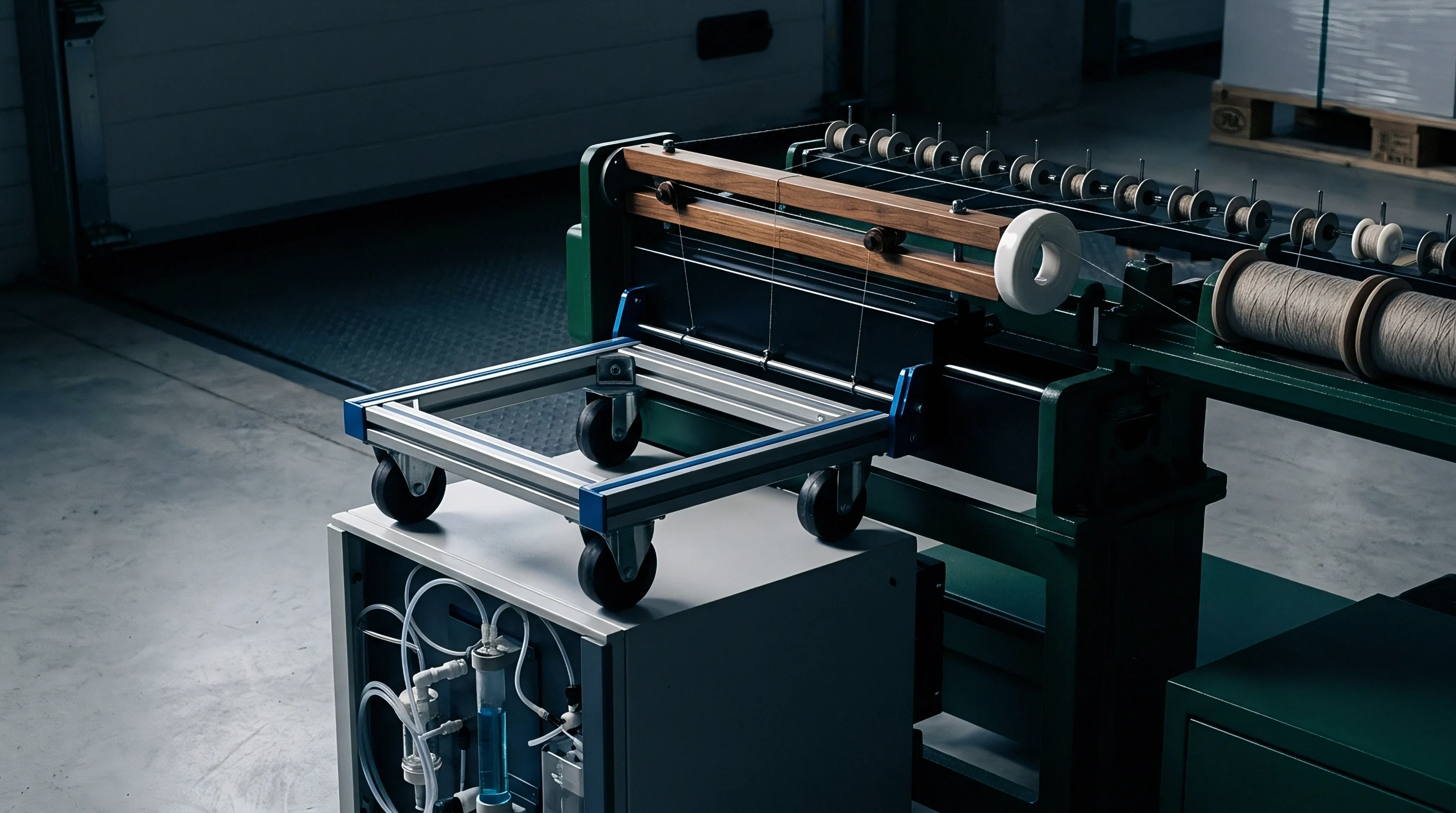
Dynamic Shear Forces in Micro-Pores
Fluid passing through microscopic channels encounters intense wall friction. Shear rates inside the inter-filament gaps of jammed industrial greige reach 10,000 to 100,000 reciprocal seconds during high-speed impregnation. At these rates, non-Newtonian bath components undergo sharp viscosity shifts: shear-thinning formulations flow more easily into narrow voids, while dilatant mixtures can form rigid plugs that stop deeper liquid transit.
The hydrodynamic pressure generated by fabric motion is expressed as P_h = 0.5 rho v^2, where rho represents fluid density and v is web velocity. At 100 metres per minute (1.67 metres per second), dynamic fluid pressure reaches roughly 1.4 kilopascals. Although modest, this pressure acts over immersion times under 300 milliseconds.
If capillary resistance P_c = (2 gamma cos(theta)) / r exceeds this dynamic driving pressure, liquid entry relies entirely on capillary wicking ~ far too slow to saturate the core at commercial line speeds.
| Fabric Build Type | Warp Cover Factor | Mean Pore Radius (µm) | Capillary Resistance (kPa) | Dynamic Pressure at 40 m/min (kPa) | Dynamic Pressure at 100 m/min (kPa) | Core Wetting Efficiency (%) |
|---|---|---|---|---|---|---|
| Medium Canvas (300 g/m²) | 0.78 | 12.5 | 4.8 | 0.22 | 1.39 | 94.2 |
| Heavy Industrial Duck (450 g/m²) | 0.88 | 5.2 | 11.5 | 0.22 | 1.39 | 71.8 |
| Jammed Filtration Greige (580 g/m²) | 0.95 | 1.8 | 33.3 | 0.22 | 1.39 | 38.5 |
| High-Density Belting Fabric (750 g/m²) | 0.98 | 0.9 | 66.7 | 0.22 | 1.39 | 14.1 |
| Test conditions: Liquid surface tension gamma = 32 mN/m, dynamic contact angle theta = 65 degrees, water bath density rho = 1000 kg/m³. Pore radii measured via mercury intrusion porosimetry on un-sized greige. | ||||||
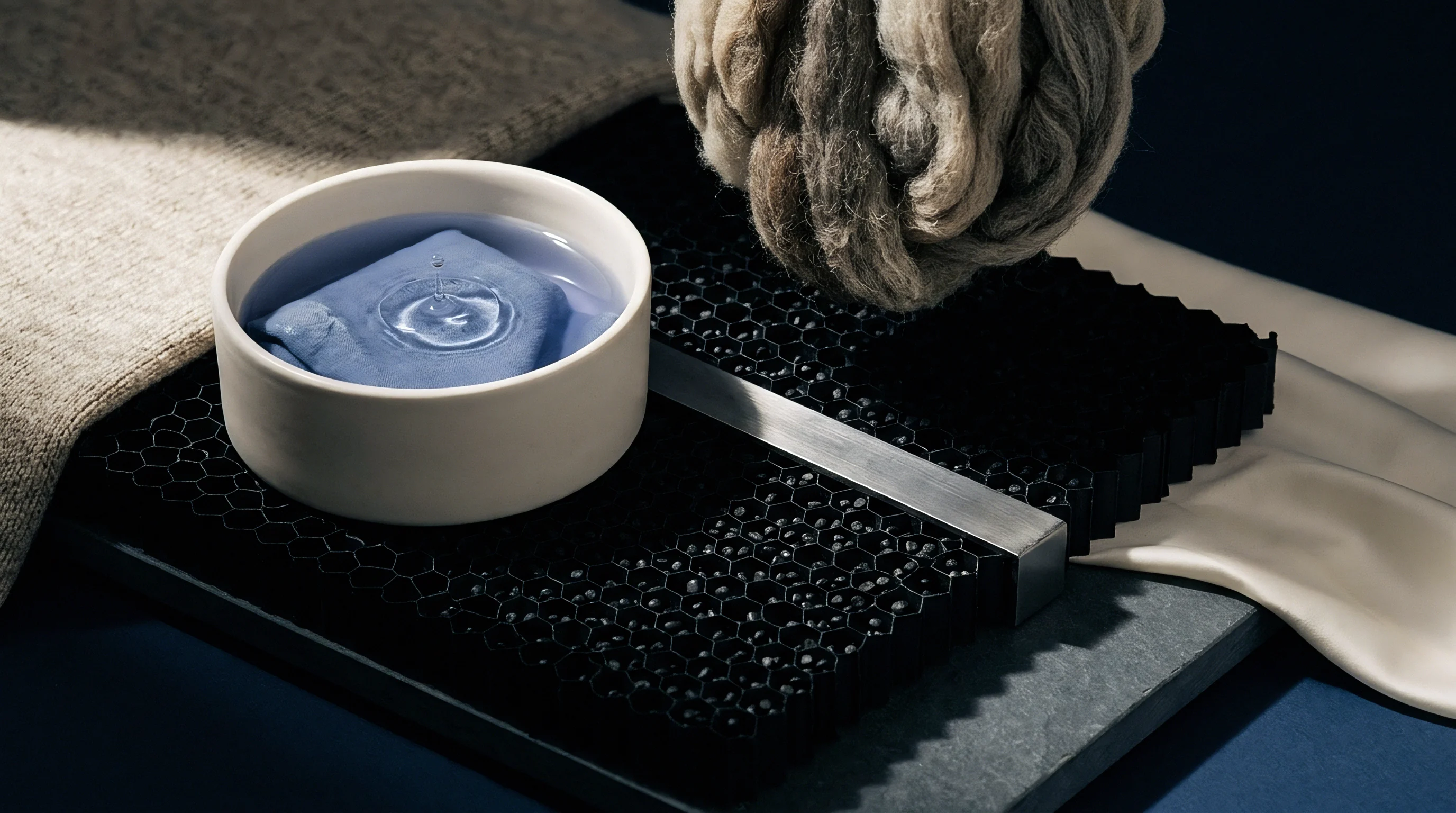
Capillary Resistance against Rapid Wetting
As yarn density rises to meet tight filtration specifications, smaller pore radii increase capillary resistance exponentially. When mean inter-filament pore radii shrink below 2 micrometres ~ compounded by sizing wax in raw channels ~ capillary counter-pressure exceeds 30 kilopascals, far outpacing the dynamic pressure generated by line speed alone. Overcoming this resistance requires mechanical aid like submerged squeezing rolls, high-pressure liquid jets, or vacuum extraction slots.
A fourfold reduction in mean inter-yarn pore radius increases capillary entry resistance by 400 percent, requiring active mechanical fluid injection to maintain core saturation at high line velocities.
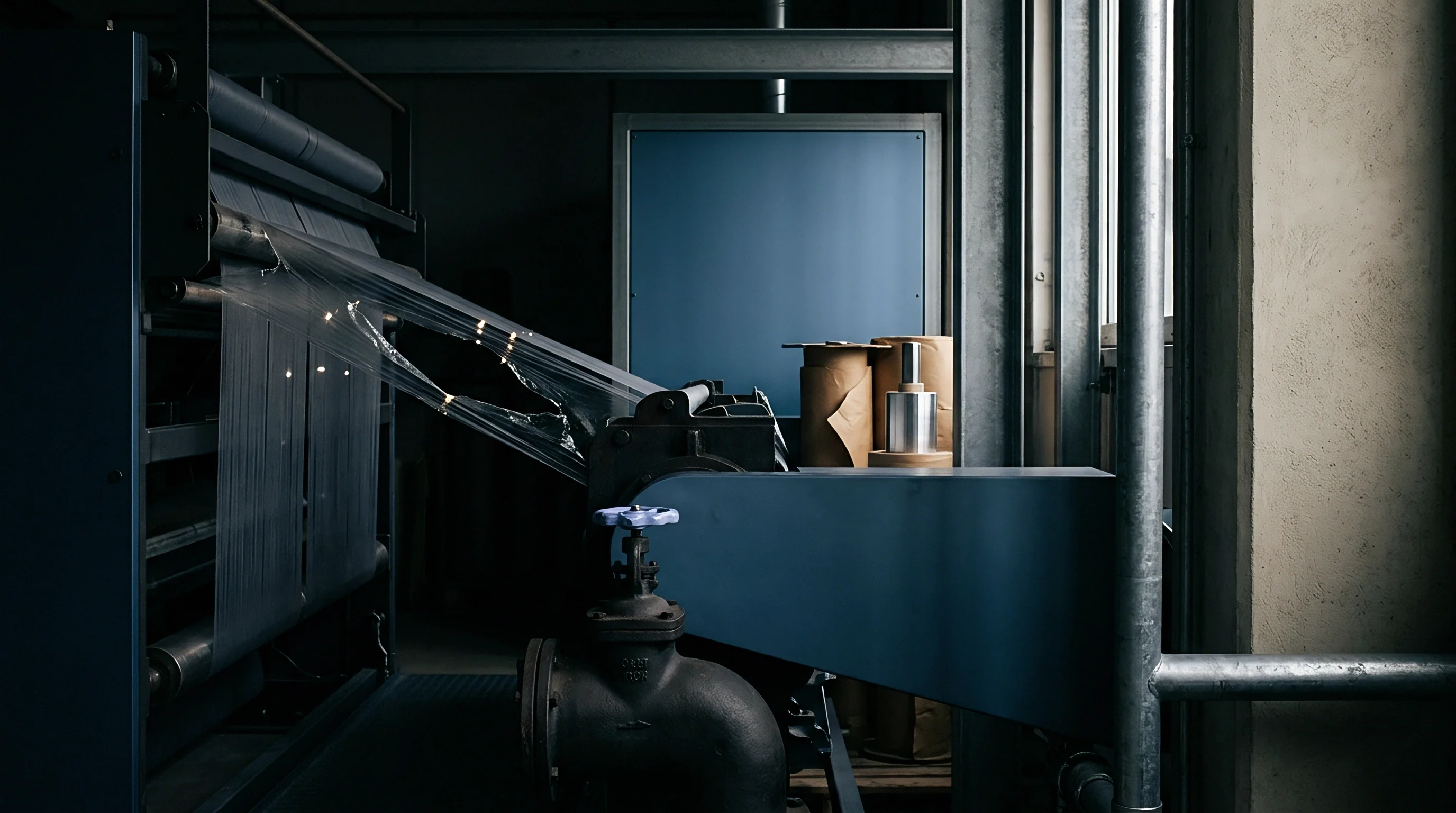
Operating a continuous impregnation line without balancing dynamic pressure against capillary resistance results in superficial wetting: liquor saturates the outer envelope while leaving the inner core bone dry. When the fabric later undergoes hot dyeing or vulcanization, trapped air expands into blisters, delamination, or severe shade streaks, whereas slowing the line to prevent these defects increases running costs.
Viscosity
Liquor composition dictates how fluid shear affects movement through jammed yarn voids. Surfactant selection, bath temperature, and polymer thickener loading alter surface tension and shear-dependent flow behavior. In dense industrial greige, formulation choices decide whether liquid enters intra-filament channels or forms an impenetrable wedge at the fabric surface.

When Does Shear Constriction Prevent Inter-Filament Core Wetting?
Shear constriction occurs when local fluid strain within narrow capillaries drives liquid viscosity to extreme levels or creates dynamic contact angle stagnation. As liquid enters a 3-micrometre inter-filament pore at 90 metres per minute, local shear rates hit 50,000 s^-1. Under these conditions, surfactants with slow adsorption kinetics fail to lower surface tension fast enough at the newly created liquid-air interface.
The effective dynamic contact angle remains above 90 degrees, turning the pore into a hydraulic wall.
Consider a 450 g/m² industrial cotton duck running through a continuous padding liquor containing an unoptimized non-ionic wetting agent. Take a 10,000-metre production run at a target pickup of 65 percent wet-on-dry. The Lucas-Washburn equation governs penetration depth x over time t: x^2 = (gamma r cos(theta) t) / (2 eta), where gamma is surface tension, r is pore radius, theta is dynamic contact angle, and eta is dynamic viscosity.
Assume the bath possesses an equilibrium surface tension of 28 mN/m and dynamic viscosity of 2.5 mPa s. Under static conditions, these parameters suggest rapid penetration. However, at a line speed of 90 m/min, the immersion time in a standard 0.6-metre pad trough is exactly 0.4 seconds (400 milliseconds).
At a high shear rate of 40,000 s^-1 within the 4-micrometre pores, the dynamic contact angle rises to 82 degrees due to lagging surfactant migration. Substituting these values into the penetration calculation: x^2 = (0.028 4e-6 cos(82 deg) 0.4) / (2 0.0025). Cosine of 82 degrees is 0.139.
Thus, x^2 = (0.028 4e-6 0.139 0.4) / 0.005 = 1.245e-9 m^2, yielding a total fluid penetration depth x of 35.3 micrometres. Given that the fabric thickness is 680 micrometres, liquid penetrates less than 6 percent into the interior structure from each face, leaving over 88 percent of the internal yarn cross-section completely dry.
To overcome this shear constriction failure, the formulation requires a fast-acting anionic surfactant such as sodium dioctyl sulfosuccinate. This addition drops the dynamic contact angle to 35 degrees under high shear. Recalculating with cos(35 deg) = 0.819 yields x^2 = (0.028 4e-6 0.819 0.4) / 0.005 = 7.338e-9 m^2, resulting in a penetration depth x of 85.7 micrometres per contact side.
Combining this with double-sided mechanical padder compression at 3 bar nip pressure forces liquid through the remaining core thickness, achieving complete void displacement.
Dynamic contact angles measured at microsecond timescales dictate high-speed liquor uptake far more accurately than standard equilibrium surface tension values.

Rheological Behavior under Extreme Shear Rates
Bath additives that exhibit shear-thickening (dilatant) profiles pose significant operational risks in continuous greige impregnation. Hydroxyethyl cellulose thickeners or high-solid pigment dispersions can increase viscosity by two orders of magnitude when forced through jammed inter-yarn bottlenecks. Conversely, selecting pseudoplastic (shear-thinning) polymers allows viscosity to drop under high shear.
While increasing wetting agent concentration is intended to improve penetration on heavy fabrics, exceeding optimal concentration limits causes heavy bath foaming, introducing micro-bubbles into the liquid delivery stream and lowering effective fluid density.
Clamp
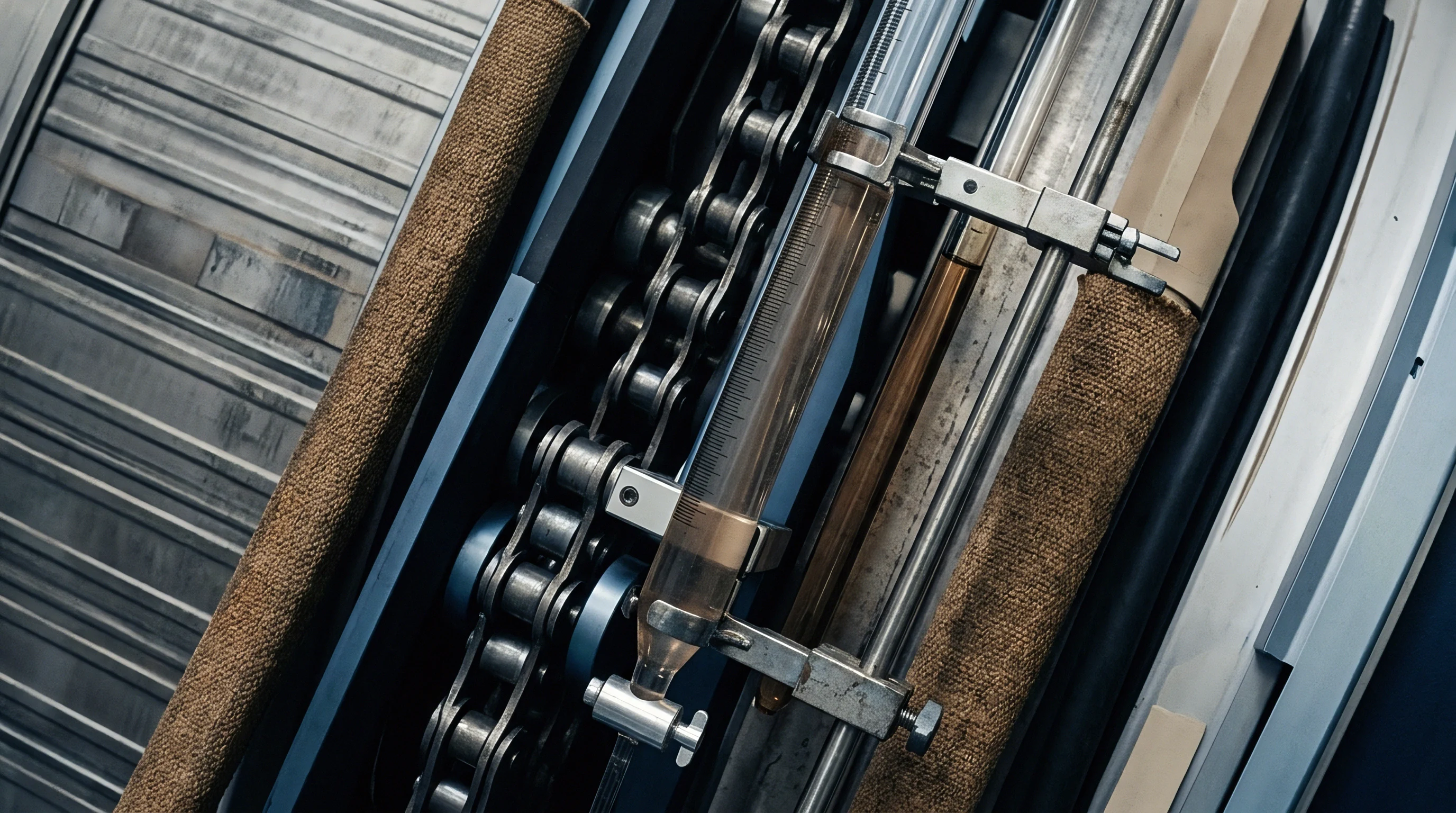
Mechanical impregnation machinery must provide high physical driving forces to supplement chemical wetting action. Modern high-speed finishing ranges deploy specialized padder nip geometries, submerged squeezing units, and pressurized liquor injectors designed to force liquid through jammed greige webs before dynamic shear constriction halts fluid movement.
Mechanical Padder Configurations and Nip Pressure
Roller hardness and nip geometry govern liquid transfer efficiency. Hard synthetic rubber rollers (95 Shore A hardness) produce a narrow nip zone with very high peak hydraulic pressure. Soft rollers (70 Shore A hardness) deform under load, yielding a wider footprint with lower peak pressure but longer dwell time.
For jammed greige, high peak pressure is necessary to force liquor past outer yarn barriers into the compressed fabric core.
Submerged squeezing rollers installed inside the liquor trough remove entrained air before the web exits the bath. Squeezing the fabric while submerged expels air bubbles, which are immediately replaced by liquid as the yarns recover elastically. Vacuum extraction units placed ahead of the main padding nip further assist by pulling air from jammed pores, creating a partial vacuum inside yarn bundles that draws in liquor upon immersion.
Forced Liquor Injection Sequence
Achieving uniform wet pickup on high-density duck and canvas greige demands a precise machinery setup sequence across the impregnation zone.
- Position the web entry guide rolls to establish a 90-degree immersion angle into the liquor trough, minimizing surface wave turbulence and air entrapment at the fluid interface.
- Engage the vacuum slot header at -30 kilopascals differential pressure immediately prior to bath entry to strip the boundary air layer carrying along the greige surface.
- Pass the web through two consecutive submerged nip rolls set to 2.5 bar mechanical pressure, forcing trapped internal air out of inter-yarn voids while submerged.
- Direct twin high-pressure liquor jet manifolds at both fabric faces operating at 1.8 bar fluid delivery pressure to flood the surface with fresh, bubble-free bath chemistry.
- Route the saturated web into the primary horizontal squeezing padder featuring 92 Shore A hardness rolls loaded to 40 Newtons per millimeter linear nip force.
- Monitor real-time wet pickup via non-contact beta-gauge or microwave absorption sensors positioned 1 metre downstream of the final padder exit.
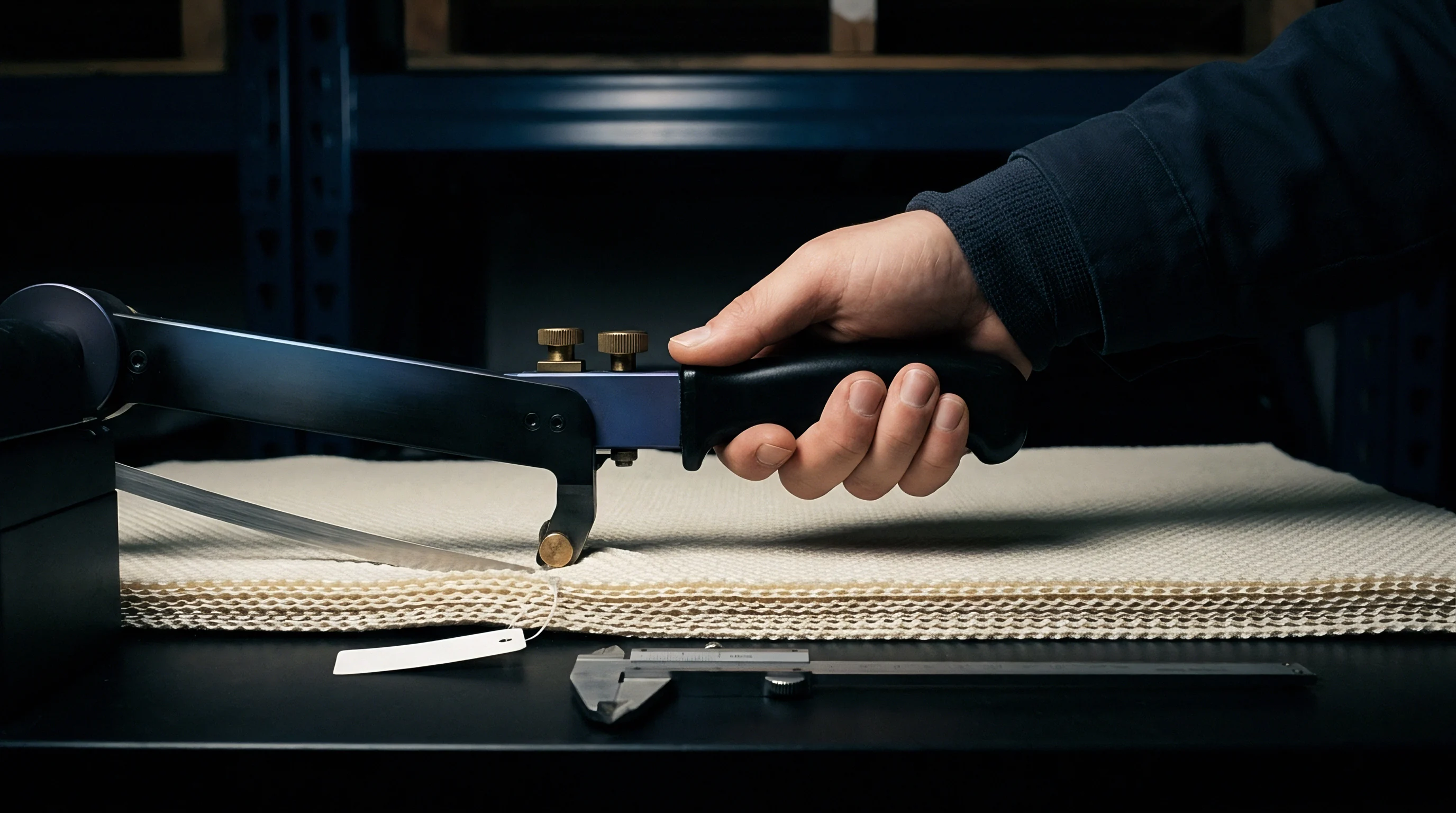
Quality specifications for industrial coated greige reference ISO 811 for hydrostatic pressure resistance and ISO 13934-1 for strip tensile strength. When incomplete core wetting occurs due to improper padder clamping, delamination strength under ISO 2411 drops by up to 50 percent below contract minimums, voiding the material warranty.

Yield
Incomplete fluid penetration across jammed greige structures creates structural defects that appear throughout wet processing, coating, and end-use field deployment. Identifying root causes requires systematic diagnostic protocols to isolate whether defects originate from fabric tight spots, high shear fluid constriction, or uncalibrated mechanical nip pressures.

Core Void Diagnostics and Micro-Tomography
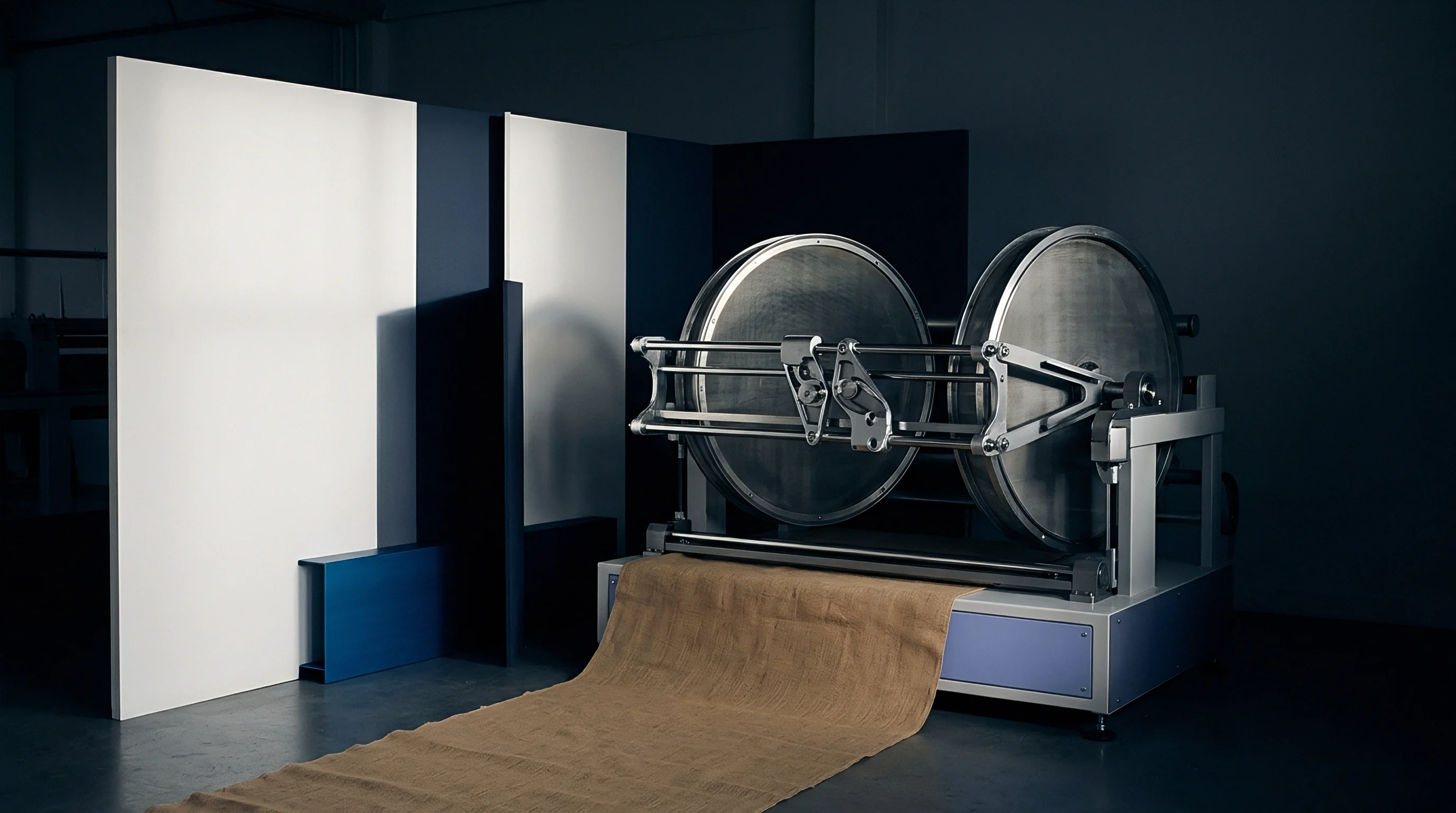
Standard visual inspection frames fail to detect internal yarn dryness because outer fibers absorb enough dye or finish to appear fully processed. Cross-sectional optical microscopy and X-ray micro-tomography reveal void distributions within raw yarn cores. Samples taken from defective lots typically exhibit annular wetting: a saturated outer ring surrounding an intact, dry fiber core.
Industrial duck intended for conveyor belting or inflatable structures suffers internal shear failure during flex fatigue testing if core fibers remain un-impregnated. Without chemical binder or rubber latex penetrating the intra-filament channels, dry filaments rub together under cyclic loading, causing internal abrasion that degrades tensile performance long before outer coatings wear through.
Landed Cost Implications of Impregnation Defect Rates
Fluid shear failures during continuous impregnation translate directly into landed material scrap and financial penalties across the supply chain.
| Defect Classification | Root Physical Mechanism | Verification Method | Standard Tolerance Limit | Landed Meter Cost Impact |
|---|---|---|---|---|
| Center-to-Edge Listing | Uneven nip pressure profile across wide roll causing variable shear constriction | Spectrophotometer delta-E scan across roll width (ISO 105-J03) | Delta-E less than 0.8 across full width | 15% to 30% price downgrade to secondary shade grade |
| Core Delamination Voids | Insufficient dynamic fluid pressure to overcome jammed capillary resistance | Cross-section optical microscopy & ISO 2411 peel test | Zero core voids per 100 mm² cross-section | 100% loss of rejected roll lot value plus liability |
| Micro-Foam Pitting | Air entrapment caused by excess surfactant shear turbulence in trough | Surface pinhole count per m² (ASTM D3776 / visual) | Maximum 2 pinholes per 100 square metres | 20% scrap rate at knife-over-roll coating head |
| Resin Migration Ringing | Uneven core liquid distribution driving migration during stenter drying | AATCC Test Method 198 micro-extraction | Resin variation under 5% across cross-section | Rework cost of re-padding plus stenter energy surcharge |
The operational qualification of high-density industrial greige demands rigorous incoming inspection. Evaluating supplier lots requires standardized testing to confirm that yarn packing, warp cover factor, and sizing formulation conform strictly to approved technical data sheets.
- Yarn Packing Density Verification measures fiber packing fractions using cross-sectional image analysis per ISO 1833 yarn blend guidelines.
- Pore Size Distribution Profiling determines mean flow pore diameters via capillary flow porometry under ASTM F316 standards.
- High-Speed Wetting Kinetics measures dynamic contact angles at microsecond intervals using drop-shape analysis under automated liquid dispensing.
- Total Extractable Size Content calculates residual wax and polyvinyl alcohol levels by solvent extraction per ISO 14419.
What critical shear rate threshold causes dynamic contact angle breakdown in ultrafine synthetic filaments, and how will next-generation ultrasonic padder troughs alter fluid penetration limits in jammed structures running above 150 metres per minute?