Preventing Shear-Induced Emulsion Breakdown across Pressurized Jet Dyeing Venturis
Controlling nozzle shear rates below critical emulsion capillary thresholds prevents auxiliary oil spotting and fabric re-dyeing scrap during jet processing.


Velocity
Pressurized jet dyeing machines drive fabric circulation by pumping liquid bath formulations through a narrow convergent-divergent nozzle, generating flow acceleration that pulls the textile rope through the machine pipe. Within this localized constriction, fluid kinetic energy spikes while static pressure drops sharply according to Bernoulli dynamics. Liquid movement reaching fluid speeds between 8 and 15 metres per second across a throat orifice creates extreme velocity gradients between the fast-moving center stream and the wall boundary layers.
These velocity gradients generate local mechanical forces in excess of 100000 inverse seconds. Fluid forces shear the dispersed phase.
Emulsion droplets suspended in the dye liquor undergo severe physical deformation when traversing this high-energy zone. The mechanical stress imposed on a dispersed oil droplet depends on the viscosity ratio between the internal oil phase and the external aqueous liquor, balanced against the interfacial tension holding the droplet together. Fluid mechanics defines this balance through the dimensionless Taylor capillary number, where fluid stress scales directly with liquor dynamic viscosity, local rate of fluid deformation, and un-deformed droplet radius, divided by interfacial tension.
When local hydrodynamic forces exceed the critical capillary threshold, the spherical oil droplet elongates into a thread shape before snapping into smaller satellite droplets or stripping its protective surfactant sheath.
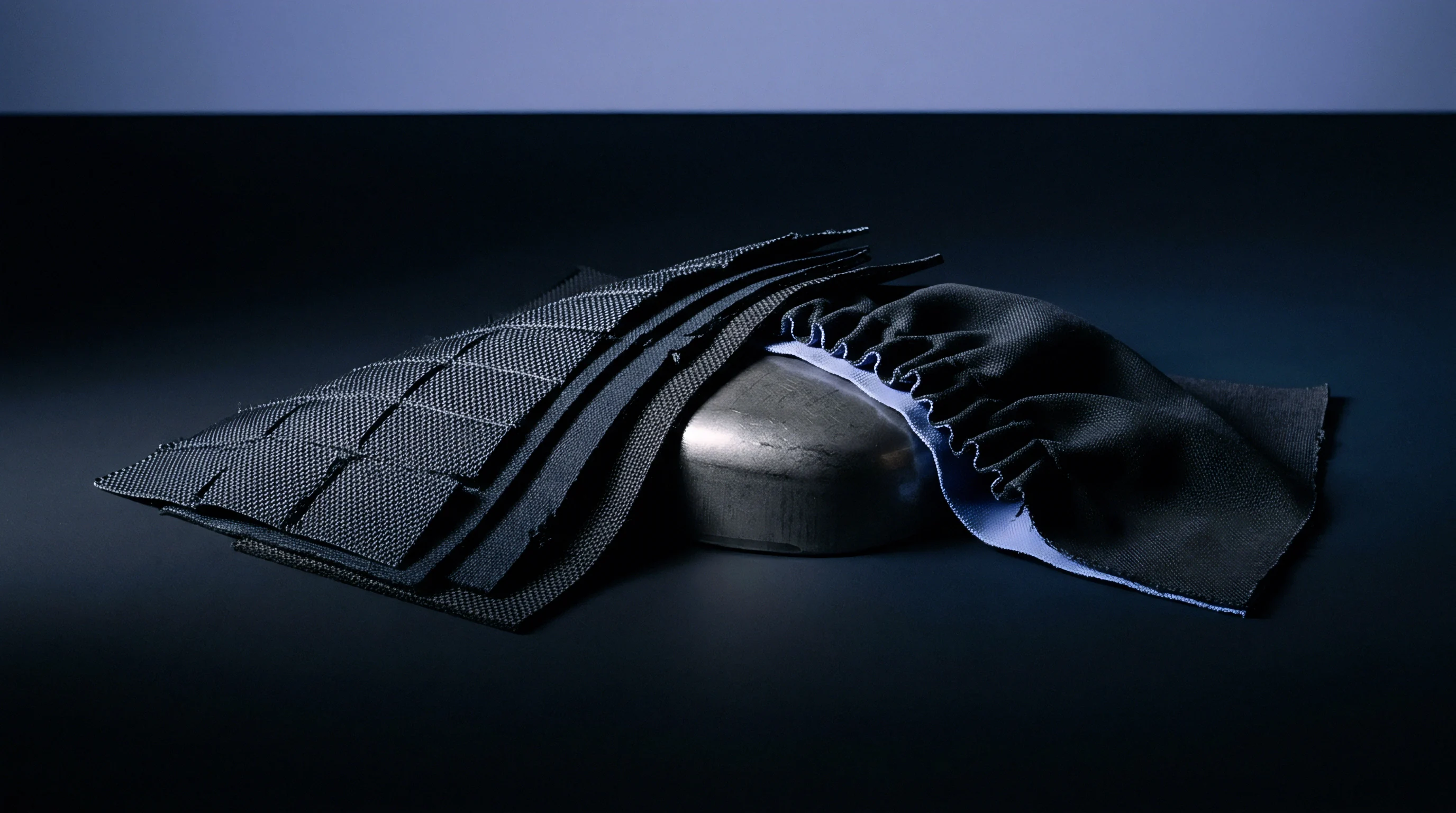
Hydrodynamic Forces inside Pressurized Nozzle Throat
Energy dissipation rates per unit mass inside a commercial jet venturi reach values between 105 and 107 Watts per kilogram. This concentrated kinetic energy dissipation generates micro-scale turbulent eddies that collide with emulsified auxiliary particles. Silicone softeners, paraffin yarn lubricants, and non-ionic leveling agents rely on steric or electrostatic repulsion layers created by surface-active molecules.
Rapid pressure changes across the convergent nozzle zone compression, followed by explosive expansion in the diffuser, produce localized cavitation bubbles when local fluid pressure dips below the vapor pressure of water at dyeing temperatures between 80 and 130 degrees Celsius. Cavitation accelerates droplet collision.
Bubble collapse generates microscopic shockwaves with localized stagnation pressures exceeding several hundred Megapascals. These violent micro-implosions strip surfactant molecules from the oil-water interface faster than free surfactant in the bulk solution can diffuse back to restore the protective film. Surfactant desorption drives phase separation.
Stripped hydrophobic oil droplets meet during turbulent eddies and instantly fuse together, initiating irreversible phase separation before the fluid exits the diffuser pipe into the main transport tube.
A fluid shear rate exceeding 85000 inverse seconds inside a 100 millimetre nozzle throat strips the non-ionic emulsifier layer from silicone oil droplets larger than 0.5 micrometres.
Disregard for localized fluid deformation dynamics when scaling up wet processing programs from low-speed sample machines guarantees emulsion collapse across high-speed jet equipment. Operating a jet pump at maximum frequency to force heavy fabric ropes through tight nozzle restrictions increases boundary layer friction beyond the mechanical endurance limit of standard chemical emulsions. The unmitigated oil phase aggregates into visible spots on synthetic fibers, forcing costly chemical stripping operations or converting entire production batches into off-spec scrap fabric.

Coalescence
Phase breakdown initiates the moment interfacial surfactant density falls below the minimum surface coverage required to maintain thermodynamic stability. When fluid deformation strips surfactant tail groups from the core oil droplet, hydrophobic interactions force exposed oil surfaces to aggregate upon impact. Temperature lowers interfacial viscosity.
In high-temperature polyester dyeing operations running at 130 degrees Celsius, the viscosity of the internal silicone or paraffin phase decreases substantially, making droplets far more susceptible to severe elongation and rupture under hydro-mechanical stress. Coarser emulsions rupture first.
The resulting free oil droplets no longer remain suspended in the aqueous bath. Because most organic silicones and paraffin lubricants possess a lower density than the surrounding water bath, free oil particles migrate toward the liquid surface or adhere to hydrophobic fabric surfaces, particularly synthetic fibers like polyester and nylon. Non-ionic emulsifier molecules that have been torn away from oil droplets form secondary micellar aggregates, altering the overall bath chemistry and destabilizing other auxiliary systems, including disperse dye dispersing agents and defoamers.
| Auxiliary Type | Critical Shear Threshold | Breakdown Mechanism | Visual Fabric Defect |
|---|---|---|---|
| Macro-emulsion Amino Silicone | 25000 s⁻¹ | Surfactant desorption followed by hydrophobic oil collision | Dark viscous spots, water repellency patches |
| Micro-emulsion Hydrophilic Silicone | 120000 s⁻¹ | Thermodynamic phase inversion under high thermal shear | Subtle shade variation, reduced hand consistency |
| Paraffin Wax Lubricant | 35000 s⁻¹ | Mechanical film disruption and crystallization seed formation | White greasy residue, needle breakage during sewing |
| Polyethylene Defoamer | 40000 s⁻¹ | Hydrophobic particle agglomeration via turbulent cavitation | Irregular pinholes, local dye resist spots |
Different auxiliary formulations exhibit specific failure modes when exposed to high-velocity liquid flow within jet machinery. Identifying the exact breakdown path determines whether mechanical machine settings or chemical formulation changes will resolve the issue.
- Desorption-Driven Oil Spotting occurs when non-ionic emulsifiers detach from amino-functional silicone oils under high shear rate gradients, leaving free hydrophobic polymer clusters that deposit directly onto synthetic yarns.
- Thermal-Mechanical Phase Inversion happens when non-ionic surfactant cloud points drop below bath temperature during pressure cycles, causing immediate emulsion destruction under moderate mechanical force.
- Cavitation-Induced Agglomeration develops when rapid pressure drops across the nozzle throat cause micro-bubbles to form and collapse, forcing defoamer particles into sticky macroscopic masses.
- Shear-Induced Pre-Crystallization takes place in paraffin wax lubricants when mechanical stress aligns hydrocarbon chains at elevated temperatures, forming solid wax flakes prior to fabric absorption.
ISO 105 B02 fastness disputes trace directly to oil spots formed when broken softeners redeposit unevenly across synthetic knits.
Chemical suppliers frequently claim that emulsion instabilities stem exclusively from improper plant water hardness or incorrect bath pH management. Field testing demonstrates that perfectly balanced bath chemistries fail catastrophically when fluid deformation rates inside the nozzle cross the shear threshold of the chosen surfactant package.


Gap
Nozzle clearance directly governs the velocity profile, total volumetric flow, and total pressure differential realized across the jet venturi system. Selecting an orifice dimension involves a tight engineering compromise between maintaining sufficient liquor velocity to transport heavy fabric ropes without mechanical chafing and keeping localized shear rates below the critical threshold where chemical breakdown occurs. The internal hydraulics of a convergent venturi can be quantified by examining volumetric flow rates alongside cross-sectional pipe dimensions.
Consider a 300-kilogram batch of 100 percent polyester circular knit fabric processed in a single-rope pressurized jet dyeing machine with a bath ratio of 8:1, yielding a total liquid volume of 2400 litres. The circulation pump delivers a volumetric flow rate Q of 1200 litres per minute, equivalent to 0.02 cubic metres per second. If the machine operates with a 140-millimetre diameter venturi nozzle, the cross-sectional area A1 equals 0.01539 square metres, resulting in an average liquor velocity v1 of 1.30 metres per second.
To increase rope speed, an operator swaps the nozzle to an 80-millimetre variant. The new cross-sectional area A2 decreases to 0.00502 square metres. Assuming constant pump discharge, the liquor velocity v2 inside the nozzle throat accelerates dramatically:
v2 = fracQA2 = frac0.02 m3/s0.00502 m2 = 3.98 m/s
The wall shear rate inside a circular pipe or nozzle orifice can be approximated using the Newtonian pipe flow velocity relationship where shear rate equals eight times velocity divided by throat diameter. For the 140-millimetre nozzle, the calculated shear rate yields:
dotγ1 = frac8 × 1.30 m/s0.140 m = 74.3 s-1
For the 80-millimetre nozzle operating at identical volumetric pump throughput, the shear rate jumps exponentially:
dotγ2 = frac8 × 3.98 m/s0.080 m = 398 s-1
This simple average calculation understates the true physical peak shear stress occurring within the narrow boundary layer at the nozzle wall. Real fluid flow across convergent venturis includes localized velocity profiles where shear rates near the wall exceed the mean calculated value by up to two orders of magnitude, easily reaching 40000 to 100000 inverse seconds under commercial production conditions.

How Does Venturi Diameter Impact Droplet Shear?
Reducing nozzle clearance while maintaining high circulation pump output increases pressure differential Δ P across the jet unit according to fluid friction scaling laws. Higher pressure drops inject immense turbulent energy directly into the liquor stream over a distance of just a few centimetres. Nozzle clearance alters energy distribution.
Temperature further amplifies this mechanical sensitivity. At 130 degrees Celsius, water viscosity falls to approximately 0.22 centipoise, roughly one-fourth of its room-temperature value. Lower continuous-phase viscosity reduces the hydro-dynamic drag required to deform fabric, but it simultaneously destabilizes surfactant micelles by increasing kinetic thermal motion and accelerating emulsifier desorption rates from oil phase surfaces.
Reducing pump impeller speed yields greater emulsion stability gains than widening the venturi nozzle gap.
Matching the nozzle cross-section to fabric weight per linear metre keeps fluid shear stresses within safe operational limits without compromising fabric rope speed.
Probe
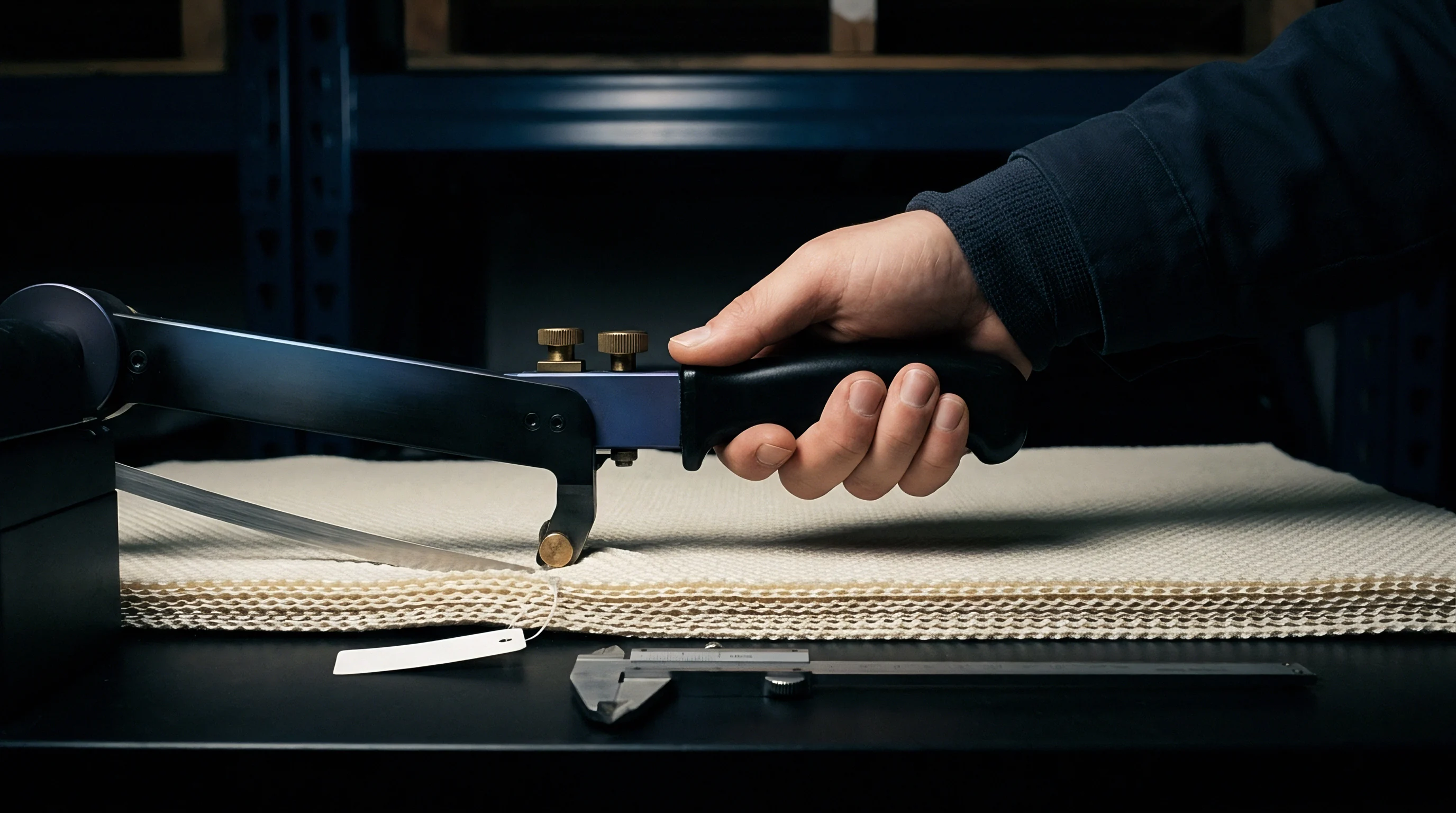
Evaluating chemical auxiliary stability on a laboratory bench requires testing methods that reproduce the extreme hydrodynamic conditions found inside commercial jet venturis. Standard static laboratory tests, such as heating a chemical solution in a beaker or stirring it with a standard magnetic bar, fail to generate the shear rate gradients and cavitation conditions present in production dyehouses. Bench tests frequently miss transient peaks.
To accurately evaluate shear resistance, testing protocols use high-shear laboratory homogenizers operating at rotational speeds between 10000 and 24000 revolutions per minute, or pressurized circulating pilot-scale venturi loops. Particle size analysis before and after shear exposure provides quantifiable evidence of emulsion breakdown long before macro-scale phase separation becomes visible to the human eye.
| Test Method | Shear Stress Condition | Measurement Metric | Correlation to Production Venturi |
|---|---|---|---|
| Rotor-Stator Homogenizer | 50000 to 150000 s⁻¹ | Laser Diffraction Particle Size (D10, D50, D90) | High correlation for mechanical rupture thresholds |
| Accelerated Centrifugation | 3000 to 10000 × g | Phase Separation Volume (mL) | Moderate correlation for static storage shelf-life only |
| Pressurized Pilot Circulation Loop | 20000 to 90000 s⁻¹ | Turbidity changes, residue collection mesh | Excellent correlation for commercial jet performance |
| Ultrasonic Cavitation Cell | Localized acoustic shear | Spectrophotometric Absorbance Ratio | High correlation for cavitation-induced film stripping |
Screening raw chemical shipments prior to dyehouse introduction prevents severe bulk manufacturing failures. A reliable diagnostic routine uses a precise sequence of high-shear stress steps.
- Prepare a 5 percent active solution of the auxiliary formulation in deionized water, adjusting pH to 4.5 using acetic acid to match disperse dyeing conditions.
- Thermalize the solution in a sealed pressure container to 130 degrees Celsius and hold for 20 minutes to evaluate thermal surfactant stability.
- Transfer the heated liquid immediately to a rotor-stator high-shear homogenizer pre-heated to 90 degrees Celsius.
- Subject the liquid sample to 15000 revolutions per minute for exactly 5 minutes to simulate venturi pass energy dissipation.
- Measure particle size distribution using laser diffraction, recording shifts in median droplet diameter D50 and maximum diameter D90.
- Filter the sheared solution through a 5-micrometre polyester filter mesh under vacuum and inspect visually for coagulated oil or wax residue.
Micro-emulsions with droplet diameters under 30 nanometers pass through high pressure venturis without measurable phase separation.
Incorporating a mandatory shear resistance threshold of less than a 10 percent shift in D90 particle size under ISO-aligned laboratory stress testing into chemical purchasing contracts legally binds suppliers to deliver formulations capable of surviving high-velocity jet dyeing environments.

Formula
Preventing shear-induced emulsion failure without sacrificing dyeing performance requires re-engineering the chemical auxiliary system. Modern high-shear resistant formulations replace fragile macro-emulsions with micro-emulsion structures stabilized by specialized surfactant blends. Micro-emulsions feature droplet diameters smaller than 50 nanometres, which fall below the physical length scale of micro-turbulent eddies generated inside jet venturis.
Small droplets resist mechanical rupture.
Thermodynamic stability in high-shear micro-emulsions stems from ultra-low interfacial tension achieved through combinations of primary non-ionic surfactants and secondary co-surfactants. Block copolymers composed of ethylene oxide and propylene oxide sequences form dense, sterically hindered protective layers around the oil core. These polymeric surfactants anchor firmly at the oil-water interface, resisting mechanical desorption even when subjected to intense boundary layer shear stress gradients.
Similar physical principles govern phase retention in tertiary oil recovery transport systems, where crude oil emulsions must traverse high-pressure choke valves without breaking into pipe-clogging wax deposits. Translating this mechanical resilience to textile finishing ensures chemical agents remain fully dispersed during aggressive jet cycles.
When selecting or modifying chemical auxiliaries for high-velocity jet application, specific structural properties must be verified during qualification.
- Polymeric Co-Solvent Addition stabilizes surfactant tail orientation, preventing hydrophobic separation under high pressure differentials.
- High Cloud-Point Non-Ionics maintain hydrophilic hydration shells at dyeing temperatures above 130 degrees Celsius.
- Steric Polymeric Colloids construct physical barrier networks around oil cores that absorb turbulent kinetic energy impacts.
- Narrow Particle Size Distribution minimizes Ostwald ripening kinetics by keeping internal capillary pressures balanced across all droplets.
Unresolved questions remain regarding whether specialized non-ionic block copolymer surfactants interfere with the migrating and leveling abilities of low-molecular-weight disperse dyes on fine-denier microfibers.

Yield
Sustaining high operational yield across jet dyeing lines requires aligning machine mechanical setup directly with auxiliary formulation limits. When an emulsion breaks across a venturi throat, financial losses extend beyond the immediate value of damaged chemical baths. Fabric contaminated with silicone oil spots cannot be over-dyed without aggressive, high-temperature alkaline stripping cycles that degrade fabric tensile strength, increase energy consumption, and reduce overall line efficiency.
Stripping damaged fabric increases chemical cost.
Processing a 5000-kilogram order of technical polyester knit fabric illustrates the economic impact of shear management. A single bulk oil-spotting failure requiring chemical stripping, re-scouring, and shade re-leveling adds approximately 0.45 Euros per kilogram in direct rework costs while delaying shipment schedules by up to four days. Operating machines with properly matched venturi nozzle diameters and high-shear resistant micro-emulsion auxiliaries eliminates unrecoverable fabric scrap, securing plant profit margins across high-throughput production runs.