Evaluating Interfacial Shear Stress in High Temperature Jet Dyed Stretch Fabrics
High temperature jet dyeing degrades stretch fabrics when hydrodynamic nozzle shear strips outer yarn sheaths from softened elastomeric cores during processing.
Nozzle
High-temperature jet dyeing subjects elastomeric stretch fabrics to heavy hydraulic forces inside restricted flow conduits. Fluid velocity through the contraction zone converts pump pressure into dynamic head, driving the fabric rope through an accelerated liquor stream at temperatures reaching 130 °C. At this thermal threshold, the synthetic matrix softens, elevating susceptibility to mechanical drag. Hydraulic forces acting on the wet fabric rope generate friction along outer yarn walls, inducing localized tension gradients across the structure.
Dynamic Fluid Forces in Pressurized Jet Cavities
Liquor movement within the pipe throat establishes a differential boundary layer against the moving textile rope. The ratio of liquor volume to fabric mass governs the velocity profile of the surrounding bath. Low liquor ratios elevate liquid velocity to maintain transport momentum, increasing viscous drag along the surface of the core-spun yarn.
Excess fluid velocity exerts axial surface traction on outer fibers, pulling them relative to the inner elastomeric core.
Higher fluid speed directly increases velocity head within the system.
Higher pump frequencies increase boundary layer friction within the throat pipe. When fabric transport speeds lag behind liquor velocity, hydrodynamic drag spikes along the trailing edge of each fabric loop. This velocity imbalance creates continuous surface shear, forcing staple sheaths to slide along the continuous elastomeric core filament.
Mechanical Drag Profiling across Circular Venturi Pipe Geometry
Pipe diameter selection dictates the mechanical squeeze applied to the submerged fabric rope. Narrow throat circumferences compress the rope, forcing yarns into dense contact while fluid streams past at rates exceeding 400 meters per minute. The combination of thermal swelling, mechanical compression, and high fluid throughput concentrates shear forces at yarn cross-over points within the weave or knit grid.
| Jet Pipe Type | Liquor Ratio | Fabric Speed (m/min) | Throat Velocity (m/s) | Calculated Surface Shear (N/m²) |
|---|---|---|---|---|
| 1:10 | 250 | 4.2 | 18.5 | |
| 1:8 | 350 | 5.8 | 27.1 | |
| 1:4 | 450 | 8.1 | 42.3 | |
| 1:12 | 180 | 2.9 | 11.2 |
Selecting incorrect venturi inserts causes localized fiber stripping, permanent stretch degradation, and uneven shade penetration across bulk lots.
Interface
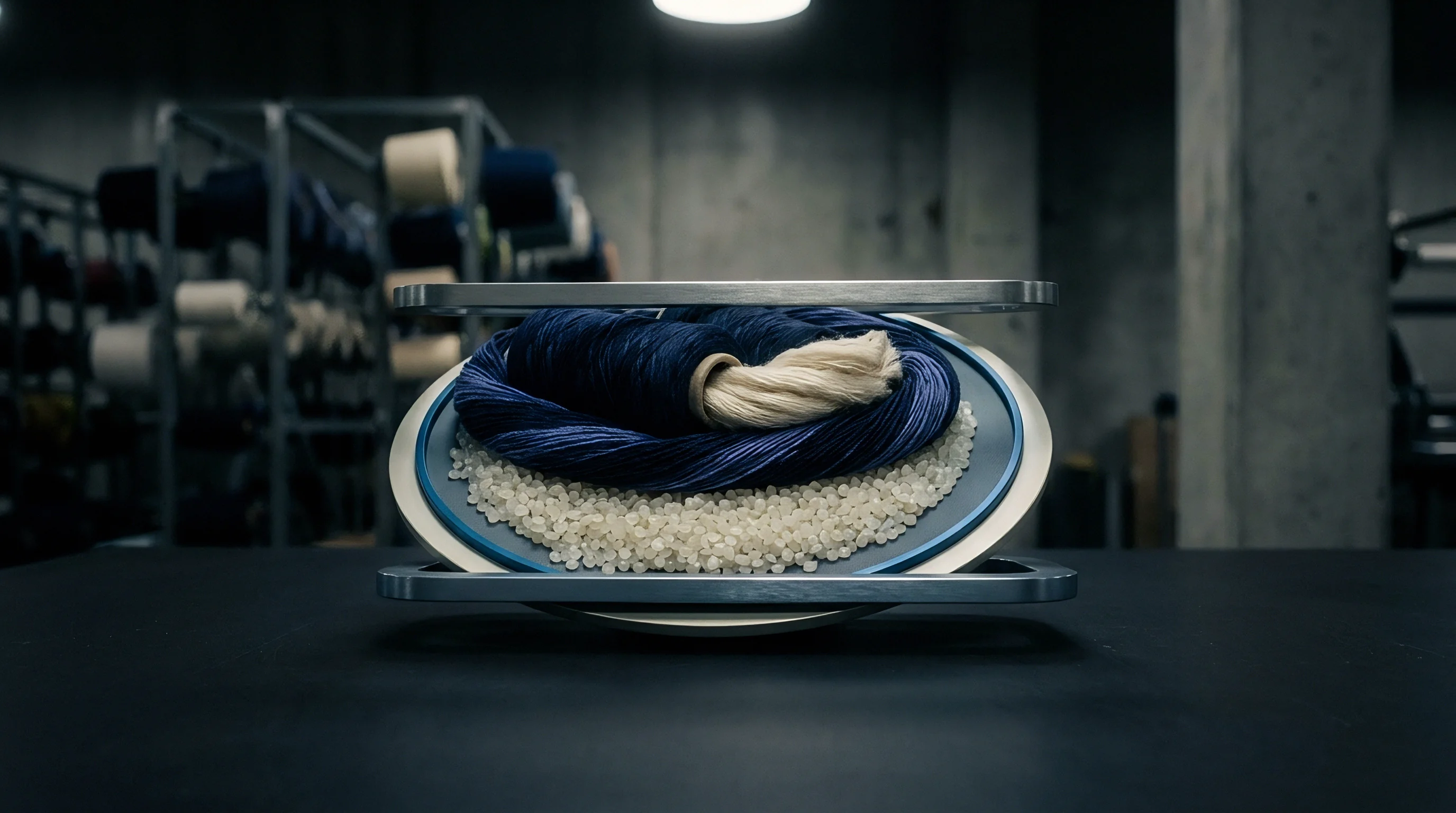
Friction between the outer spun sheath and the elastomeric core governs the structural integrity of stretch yarns during wet thermal processing. Core-spun yarns rely on mechanical twist and surface contact friction to anchor spun staple fibers, such as cotton or polyester, around a polyurethane monofilament. Air-covered yarns utilize intermingled filament loops to form physical nodes along the core.
High temperatures cause the polyurethane elastomeric core to approach its thermal softening zone, significantly reducing its elastic modulus and surface friction coefficient.
Core Sheath Micro Slip Mechanics
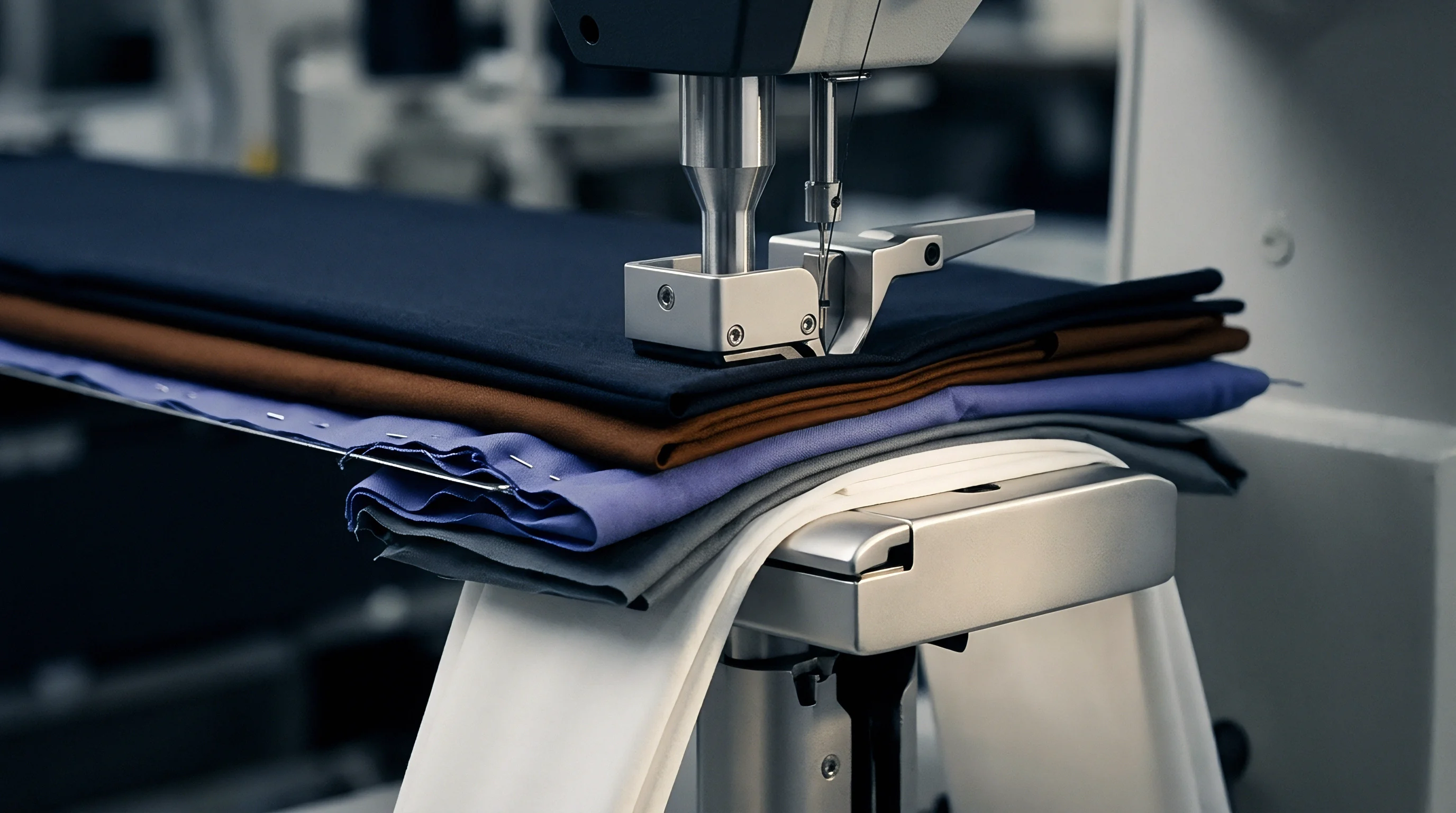
Thermal energy inside the pressurized vessel relaxes the molecular orientation of the elastomeric core. As the elastomer softens, its grip on the surrounding sheath fibers collapses. Hydrodynamic forces applied by the jet liquor strip outer fibers along the axis of the yarn, shifting the protective cover away from the stretch element.
The spun sheath begins slipping early under these conditions.
This displacement exposes the raw elastomeric filament to direct thermal oxidation and chemical attack from dyestuffs and auxiliary agents. The unravelling of outer fibers manifests physically as micro-looping, fiber bunching, and localized thick spots on the fabric face. Sheath movement alters local yarn density, resulting in irregular dye absorption and visible streakiness under flat light inspection.
At 130 °C under jet liquor turbulence, single-core core-spun polyester elastane stretch fabrics show up to a 14 percent reduction in elastic recovery due to axial sheath displacement along the core.

Thermal Softening and Elastic Modulus Decay Dynamics
Polyurethane monofilaments experience molecular structural shifts when exposed to aqueous environments above 120 °C. The hard segments within the polyurethane polymer chain maintain structural memory, while the soft segments provide extension. Jet dyeing temperatures disrupt hydrogen bonding within these soft segments, lowering the mechanical force required to draw out the core filament during transport.
Loss of internal friction destabilizes the core structure.
When external hydrodynamic shear overcomes internal yarn friction, permanent core elongation occurs. The core fails to retract fully after tension releases, altering the finished fabric weight, width, and stretch properties.
- Sheath Stripping Hydrodynamic drag slides outer staple fibers along the polyurethane core, accumulating bundle knots across the fabric surface.
- Elastomer Oxidation Direct exposure of the unshielded core filament to aqueous thermal bath chemistries accelerates polymer chain scission.
- Dimensional Creep Thermal degradation of elastomeric recovery power causes permanent width growth and lost elastomeric modulus after unloading.
- Pilling Instability Broken sheath fibers gather at high-friction contact points, increasing Martindale pilling rates on finished garments.
Bulk stretch loss often stems from hydrodynamic sheath displacement inside dye vessels rather than raw material variance in the greige yarn.

Deformation
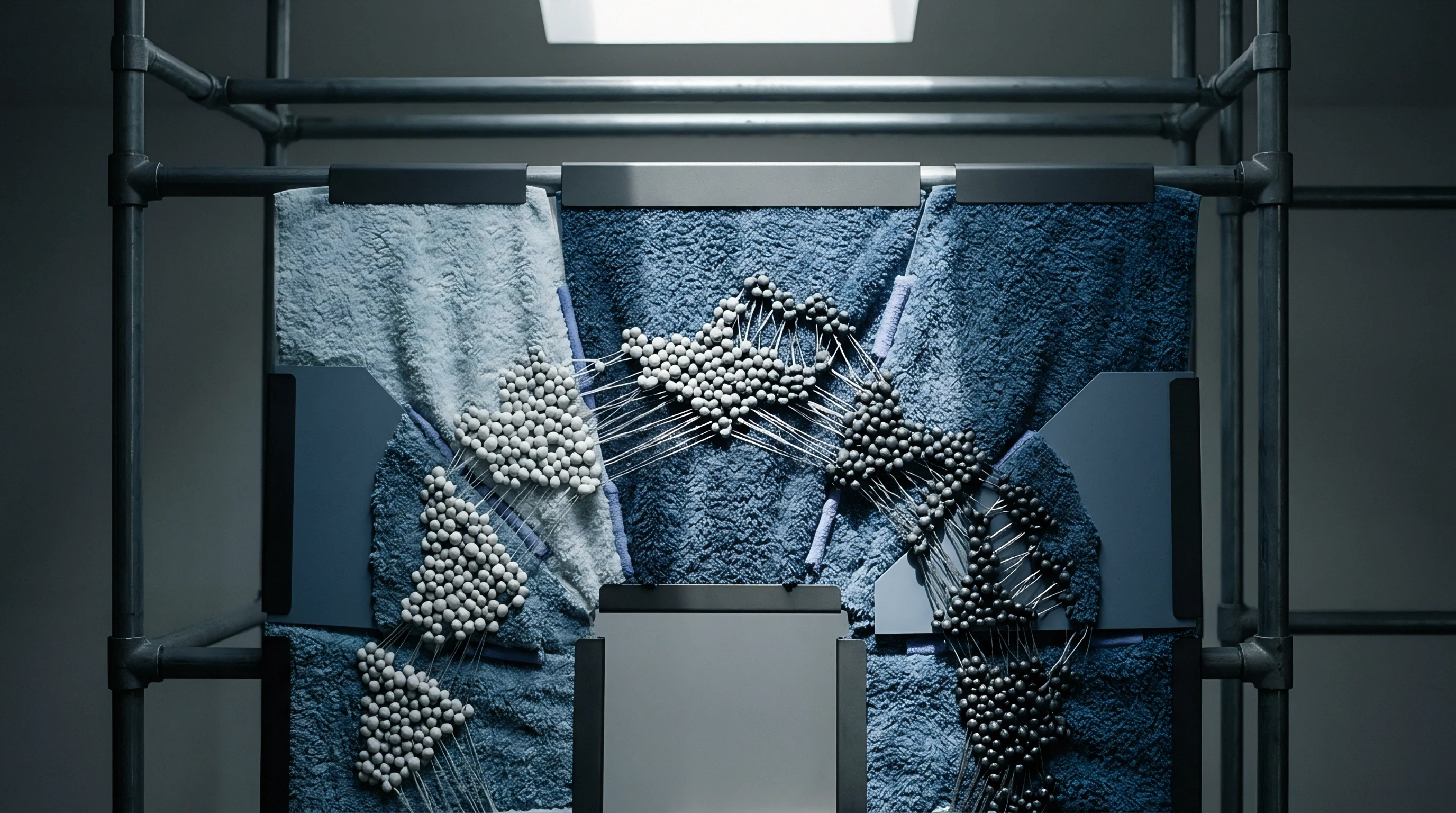
Structural distortion in stretch wovens and knits originates from uneven relaxation during high-temperature wet processing. Unfixed elastomeric yarns contract forcefully upon entering hot liquor, causing the surrounding fabric matrix to buckle. Pre-setting on a stenter frame establishes thermal memory, stabilizing yarn architecture before exposure to wet shear forces.
Skipping or under-specifying thermal pre-setting allows differential contraction between warp and weft yarns, creating permanent rope marks, creasing, and fabric skew.
Presetting Protocol Impact on Thermal Shrinkage Strain
Thermal stabilization locks the elastomeric core at a fixed width and state of extension prior to dyeing. Stenter pre-setting temperatures between 190 °C and 195 °C temporarily break thermal bonds within the polyurethane core, resetting its unconstrained state. Proper dwelling heat-sets the outer sheath around the core, enhancing resistance against mechanical displacement caused by high-velocity liquor streams.
Heat setting on the stenter establishes target yarn orientation.
Inadequate pre-setting dwell times leave internal stress within the yarn architecture. Upon entering the 130 °C dye bath, residual strain releases violently, causing uneven shrinkage along the fabric length. This uncontrolled relaxation forms tight structural creases that remain set through the dyeing cycle.

Why Does Elastomeric Core Slippage Peak at High Temperatures?
Viscoelastic properties of polyurethane elastomers change sharply past their glass transition phase under wet conditions. High thermal energy accelerates polymer chain mobility, reducing internal resistance to axial strain. Hydrodynamic fluid drag acts directly on sheath fibers, dragging them across the slick, softened surface of the elastomeric core.
| Presetting Temp (°C) | Jet Dwell Time (min) | Stretch Recovery (%) | Residual Skew (deg/m) | Seam Slippage Load (N) |
|---|---|---|---|---|
| Un-preset | 60 | 76.2 | 6.4 | 85 |
| 185 | 45 | 84.5 | 3.8 | 120 |
| 192 | 45 | 92.1 | 1.2 | 165 |
| 198 | 30 | 88.0 | 1.5 | 140 |
Maintaining temperature at baseline protects yarn integrity.
Exceeding optimal pre-setting temperatures degrades the polyurethane polymer structure before wet processing even begins. Excess heat causes yellowing and reduces ultimate elongation capabilities, narrowing the remaining processing window inside the dye vessel.
Stenter pre-setting temperates below target specifications result in un-recoverable structural creasing during pressurized jet liquor exposure.
- Cut a full-width trial swatch from greige bulk roll before thermal processing.
- Measure baseline warp and weft dimensions after conditioning at 20 °C and 65 percent relative humidity.
- Heat-set trial swatch on laboratory stenter frame at target temperature and feed speed.
- Perform standardized wash relaxation test to evaluate residual thermal shrinkage.
- Inspect yarn core integrity under optical microscope to verify sheath cover tightness.
Core stabilization requires precise temperature equilibrium across all heating zones before fabric enters the stenter chamber.
Tolerance
Establishing clear performance thresholds prevents defective bulk deliveries caused by interfacial yarn damage. Standardized physical test methods quantify stretch properties, core retention, and seam strength post-dyeing. Laboratory testing isolates whether fabric performance failures stem from greige yarn defect, inadequate pre-setting, or excessive jet machine shear forces.
Laboratory Verification Protocols for Core Anchor Stability
Testing seam slippage via ISO 13936-2 measures the resistance of yarns to displacement under applied load. Core-spun yarns subjected to high jet shear exhibit reduced seam strength due to sheath migration. Evaluating elastic recovery per ASTM D3107 determines the remaining functional stretch after thermal and mechanical stress cycles.
Evaluating crimp balance provides an initial baseline.
Microscopic cross-section analysis reveals micro-voids between core and sheath. Physical core pull-out tests apply direct axial force to isolated elastomeric filaments, quantifying the force needed to strip outer fibers. Lower pull-out force correlates directly with increased susceptibility to face pilling and fabric fuzzing.
Specifications defining minimum seam slippage loads prevent bulk failure caused by sheath migration under operational stress.
- Elastic Recovery Threshold Finished goods must retain a minimum of 90 percent elastic recovery after five standard wash cycles under ISO 6330.
- Seam Slippage Floor Maximum allowable seam opening cannot exceed 4 millimeters under a 120 Newton load per ISO 13936-2 testing.
- Dimensional Change Tolerance Total dimensional variance post-dyeing must remain within plus or minus 2.5 percent in both warp and weft directions.
- Pilling Resistance Target Martindale pilling resistance must meet Grade 4 minimum at 2,000 rubs under ISO 12945-2 test conditions.
Standard purchase agreements include clauses permitting bulk rejection if post-dyeing elastomeric recovery drops more than five percent below approved pre-production lab dip values.
Settlement
Commercial outcomes depend on balancing processing speeds against mechanical yield loss in stretch goods. Running jet dyeing machinery at reduced speeds lowers surface shear stress, protecting yarn structure but decreasing dyehouse capacity. Operating at maximum velocity elevates output per vessel hour, but spikes fabric scrap rates due to rope marks, sheath stripping, and stretch degradation.
Financial Impact of Processing Choices
Consider a 20,000-meter production run of 220 GSM polyester elastane stretch woven fabric. Utilizing a low-shear, soft-flow jet configuration extends processing time from 45 minutes to 65 minutes per batch. This operational shift increases direct processing cost by $0.18 per meter due to energy consumption and dyehouse machine occupancy.
However, it suppresses fabric yield loss from shear damage, reducing scrap from 6.0 percent down to 1.2 percent.
Uncontrolled yield loss directly erodes operating margins.
Calculating the net cost benefit requires evaluating raw material value against conversion tariffs. At a greige base cost of $3.50 per meter, avoiding 4.8 percent yield loss saves $3,360 in raw fabric scrap on the lot. Subtracting the elevated dyehouse machine runtime cost of $3,600 yields a net operational expense of $240.
However, this small variance protects downstream garment cutting yields and prevents client penalties for non-conforming stretch recovery performance.
| Process Route Configuration | Batch Dwell Time (min) | Conversion Cost ($/m) | Yield Loss Rate (%) | Net Landed Cost ($/m) |
|---|---|---|---|---|
| High-Speed Jet (Standard Parameters) | 45 | 0.85 | 6.2 | 4.62 |
| Optimized Low-Shear Jet Configuration | 65 | 1.03 | 1.4 | 4.58 |
| Dual-Core Yarn / Low-Shear Jet Route | 55 | 1.18 | 0.6 | 4.71 |
Excessive tension permanently impairs fabric stretch.
Specifying dual-core stretch yarns containing both polyester T400 and elastane increases initial greige yarn costs by $0.40 per meter. The resulting yarn structure provides higher mechanical resistance to shear stress, eliminating sheath stripping under standard jet dyeing parameters. Production runs utilizing dual-core inputs achieve consistent fabric widths and stretch retention across bulk lots, mitigating commercial risks associated with tight buyer tolerances.
Selecting low-shear processing parameters preserves elastomeric recovery metrics, reducing bulk cutting room scrap rates across commercial orders.
Converter margins rely on precise alignment between yarn structure selection, stenter heat-setting execution, and jet nozzle sizing. Higher initial yarn costs or extended wet processing cycles routinely offset expensive post-dyeing scrap liabilities, securing predictable finished fabric landed costs.