Standardizing Pad Bowl Squeeze Pressure for Heavy Cotton Twills
Standardizing pad bowl pressure on heavy cotton twills controls wet pickup uniformity, eliminates side-center-side shade variation, and cuts stenter drying costs.
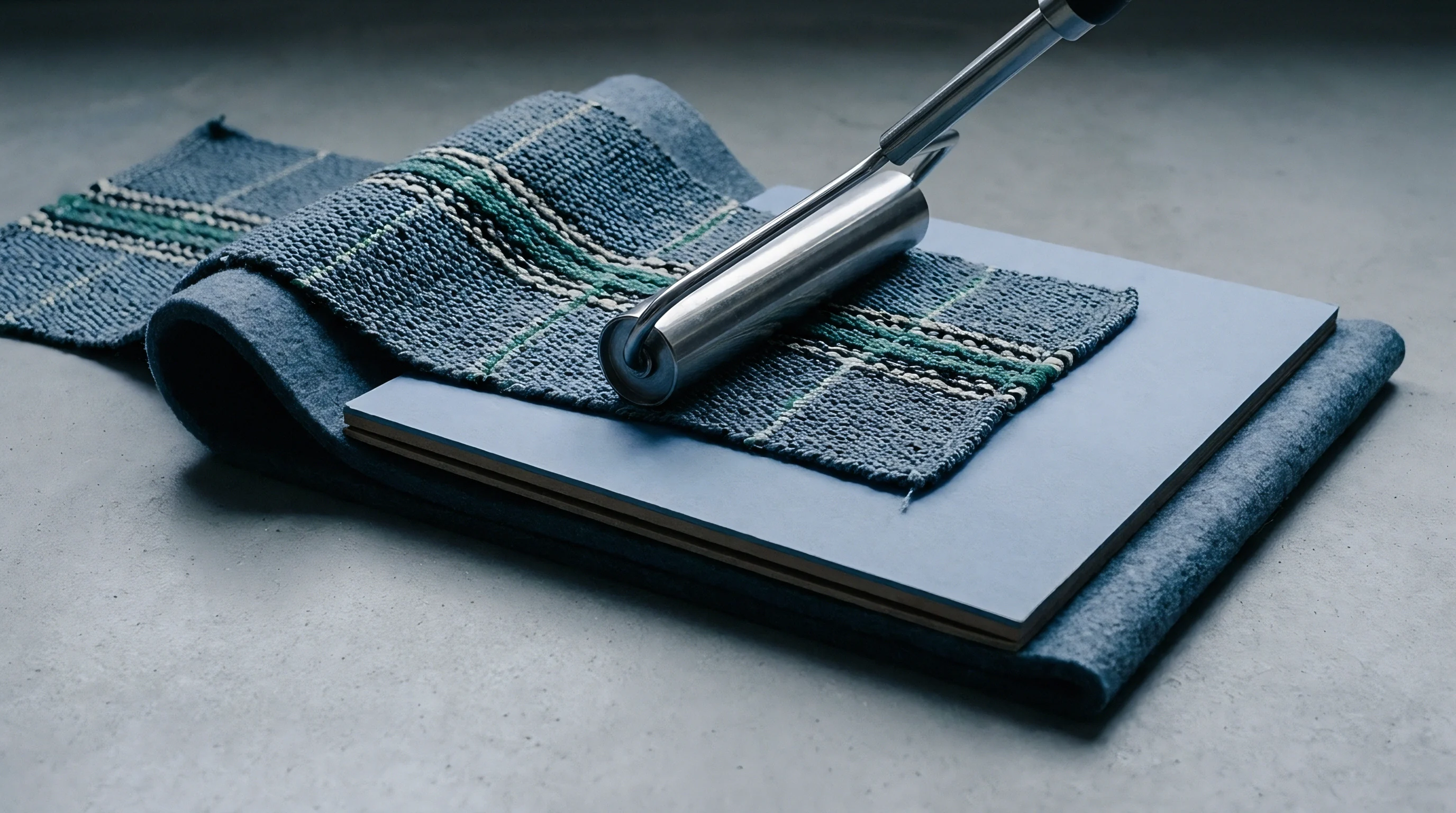
Nip
Heavy cotton twills carry dense floating yarns that resist liquid evacuation during continuous wet processing. Standardizing mechanical squeeze parameters across foulard bowls establishes controlled liquor retention without distorting fabric geometry. A three-by-one twill weave, typically specified at weights between three hundred and four hundred grams per square meter, exhibits anisotropic capillary void space.
Warp floats create directional channels that trap chemical liquor, while dense pick intersections prevent uniform penetration under insufficient compressive loading.
Mechanical Compression Kinetics in Dense Twill Weaves
Structural voids within a three-by-one weave require defined mechanical force to displace surface liquor into the fiber core. Hydrodynamic pressure within the nip gap rises rapidly as fabric velocity increases. Squeeze force drives liquid inward.
High-density twill weaves present substantial internal resistance to this flow. When applied force fails to overcome internal fluid pressure, excessive liquor remains on the fabric surface. This surface layer leads to migration artifacts during subsequent drying cycles.
Compression during padding compresses the yarn crown before fluid evacuation begins. Structural recovery occurs immediately as fabric exits the contact zone. The elastic resilience of cotton fibers draws surface liquor back into internal capillary networks.
Applied line pressure determines whether fluid expression occurs at inter-yarn void boundaries or within individual yarn structures.
Hydraulic Resistance and Wet Pickup Mechanics
Fiber swelling restricts fluid passage through interstitial channels when processing unsized greige or bleached fabrics. Heavy twills constructed from coarse single yarns display higher hydraulic resistance than fine poplin weaves. Linear pressure settings must compensate for fabric thickness to maintain target wet pickup percentages.
Heavy twills hold excess fluid.
Wet pickup targets for heavy cotton twills range between fifty-five percent and sixty-five percent of dry fabric weight. Achieving values below sixty percent requires linear squeeze forces exceeding forty Newtons per millimeter. Lower wet pickup values reduce energy consumption in downstream stenter frames while mitigating dye migration in pad-thermosol routes.
Squeeze pressures above forty Newtons per millimeter reduce heavy twill wet pickup below fifty-eight percent at seventy meters per minute.
Pneumatic cylinder pressure settings must account for bowl diameter and rubber cover hardness. Narrow contact footprints concentrate force, producing high peak pressure that drives fluid deep into heavy yarn bundles. Wider nip footprints extend dwell time but reduce maximum compressive pressure, allowing surface liquor to bypass extraction.
Excessive localized mechanical loading crushes the twill diagonal line, permanently flattening fabric topography and introducing irreversible two-sided reflectance differences across the dyed lot.
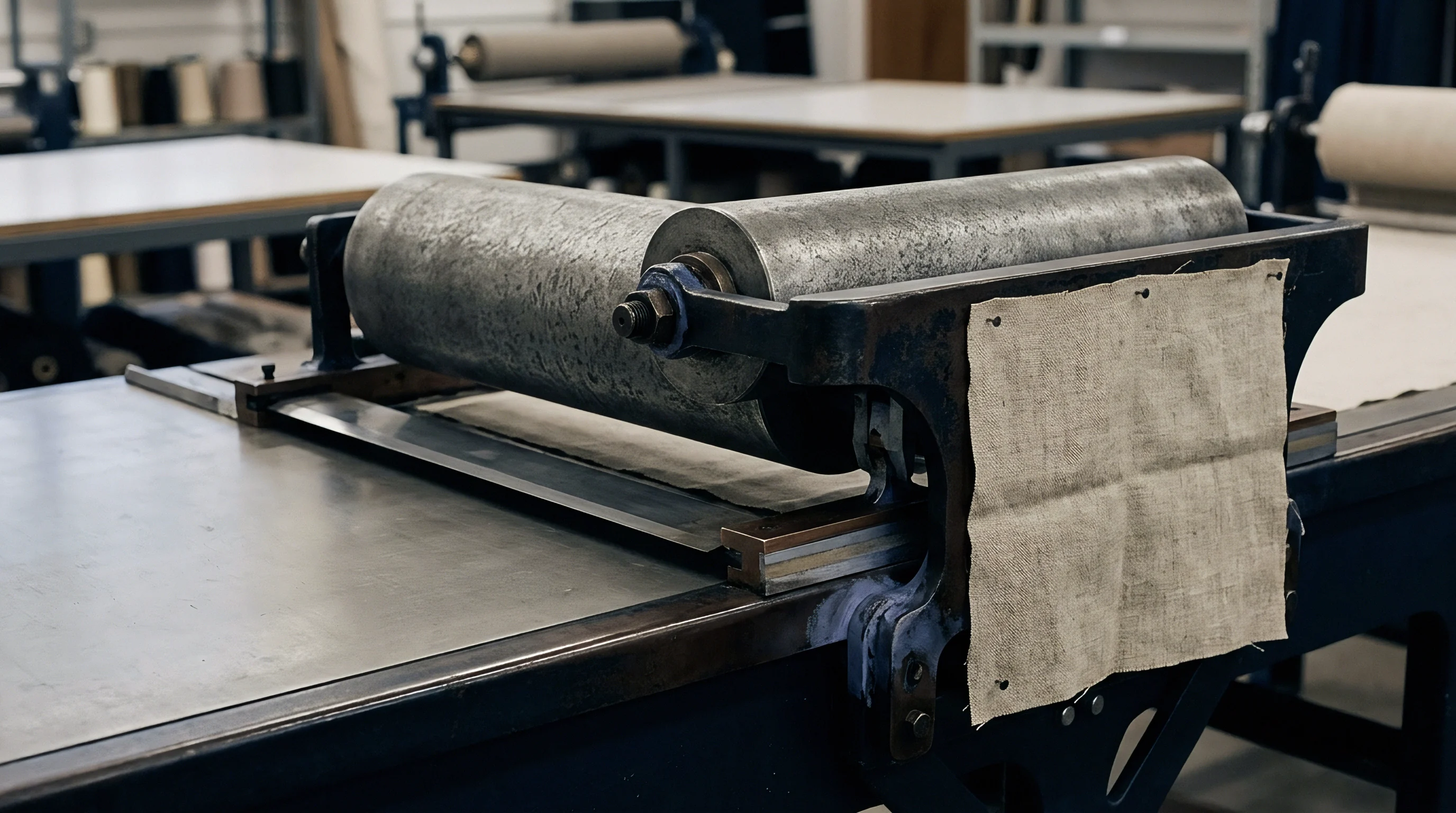
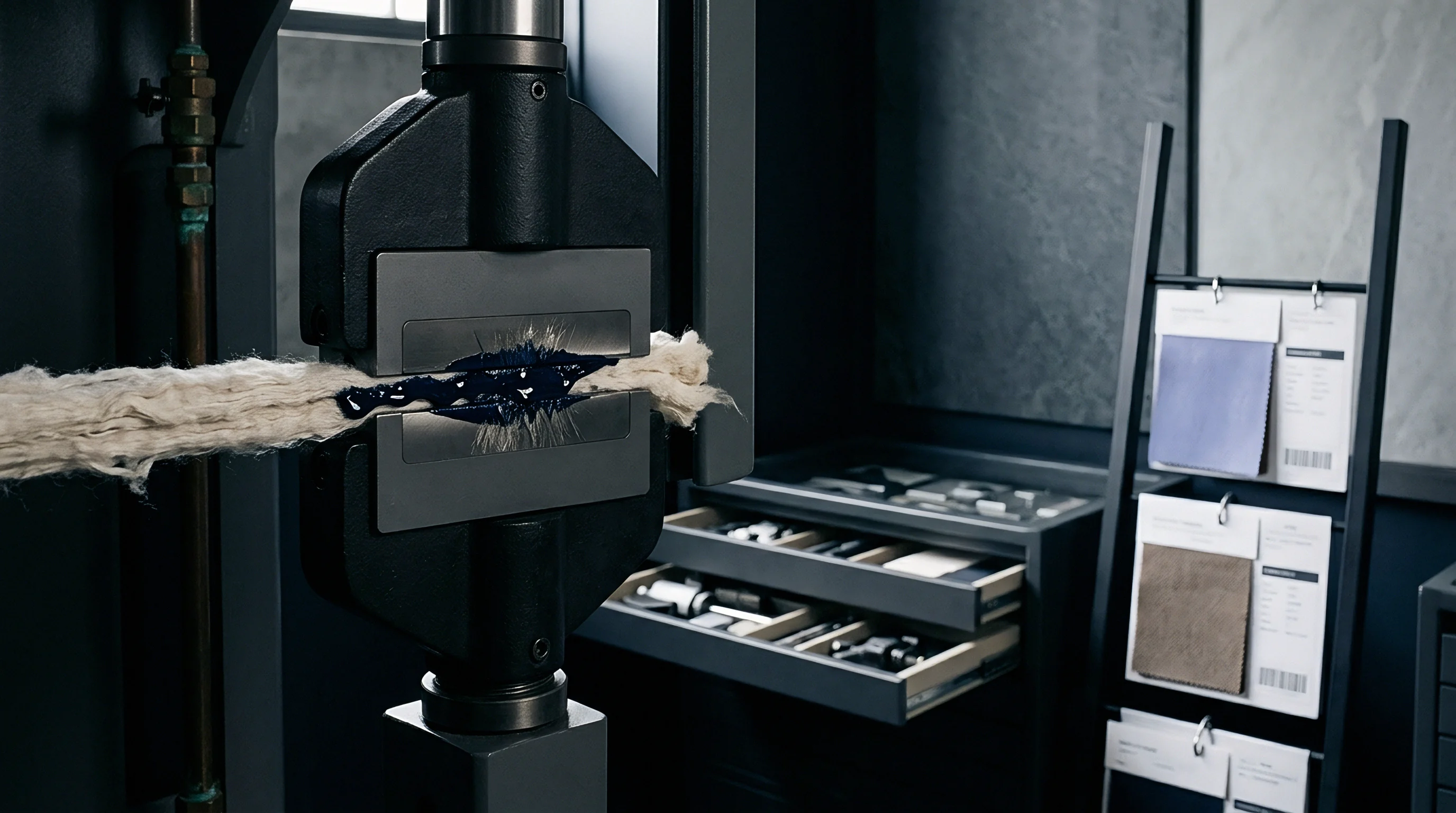
Deflection
Steel pad roll cores bend under external pneumatic loading, altering the cross-machine pressure profile during continuous padding. Journal loading applied at shaft ends creates a beam deflection curve across the face width. Uncompensated roll flexure results in lower squeeze pressure at the fabric center compared to selvedge zones, leading to center-to-edge wet pickup disparities.
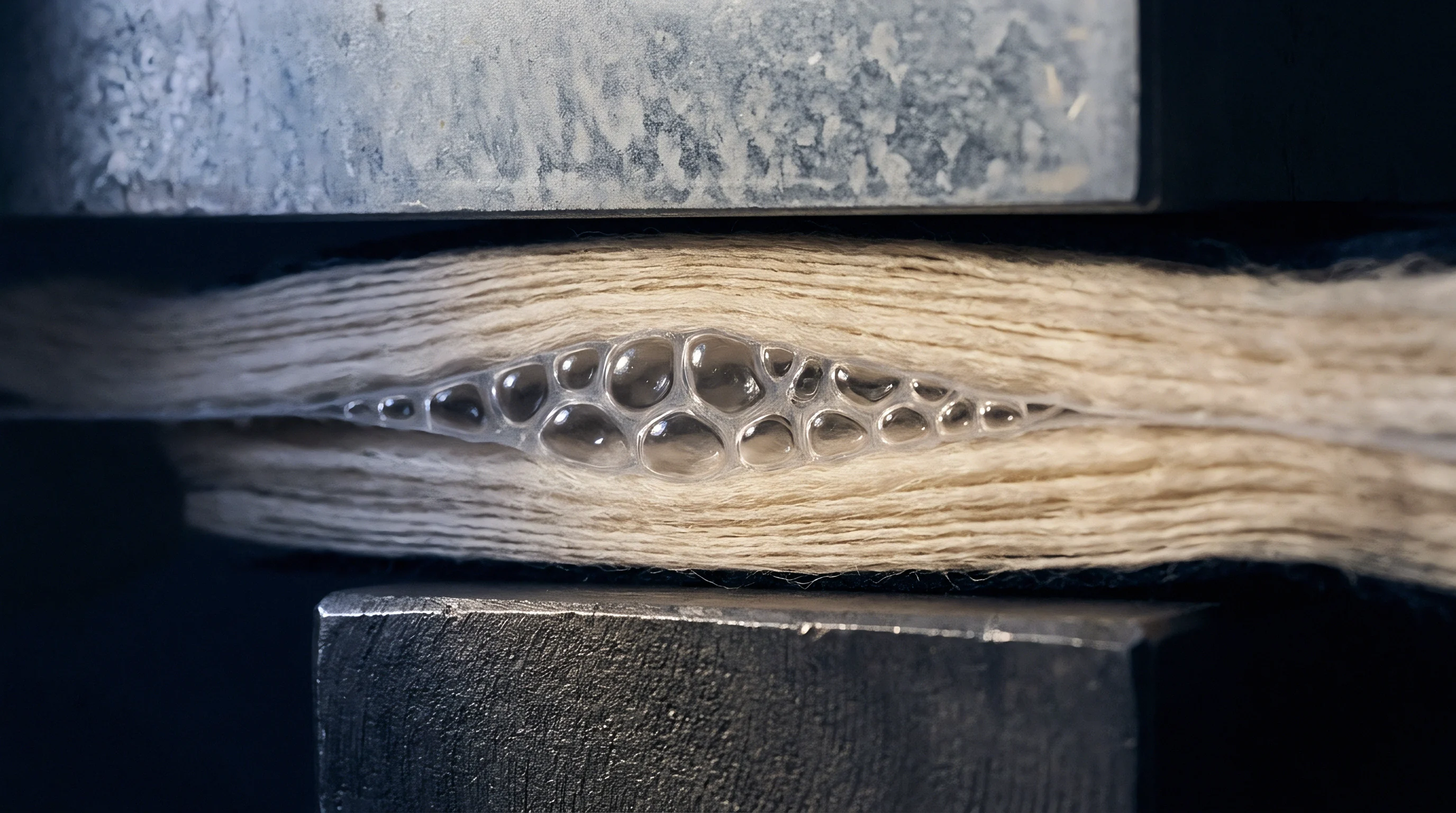
Pneumatic Loading Profile across Face Widths
Cylinders mounted at frame end-plates generate uneven distribution along wide bowl surfaces. Total force applied to journals creates a bending moment maximized at the midpoint of the roll face. Steel cores flex micro-millimeters under working loads of fifty Newtons per millimeter.
Steel cores bend under pressure. This physical displacement creates an expanded gap at the center of the nip zone.
Center gaps allow higher liquor volume to pass through the midpoint of heavy twill fabrics. The resulting moisture gradient across the fabric web creates shading along the length of the roll. Standardizing line pressure requires counteracting this mechanical bending moment through physical bowl crowning or variable-crown swimming rolls.
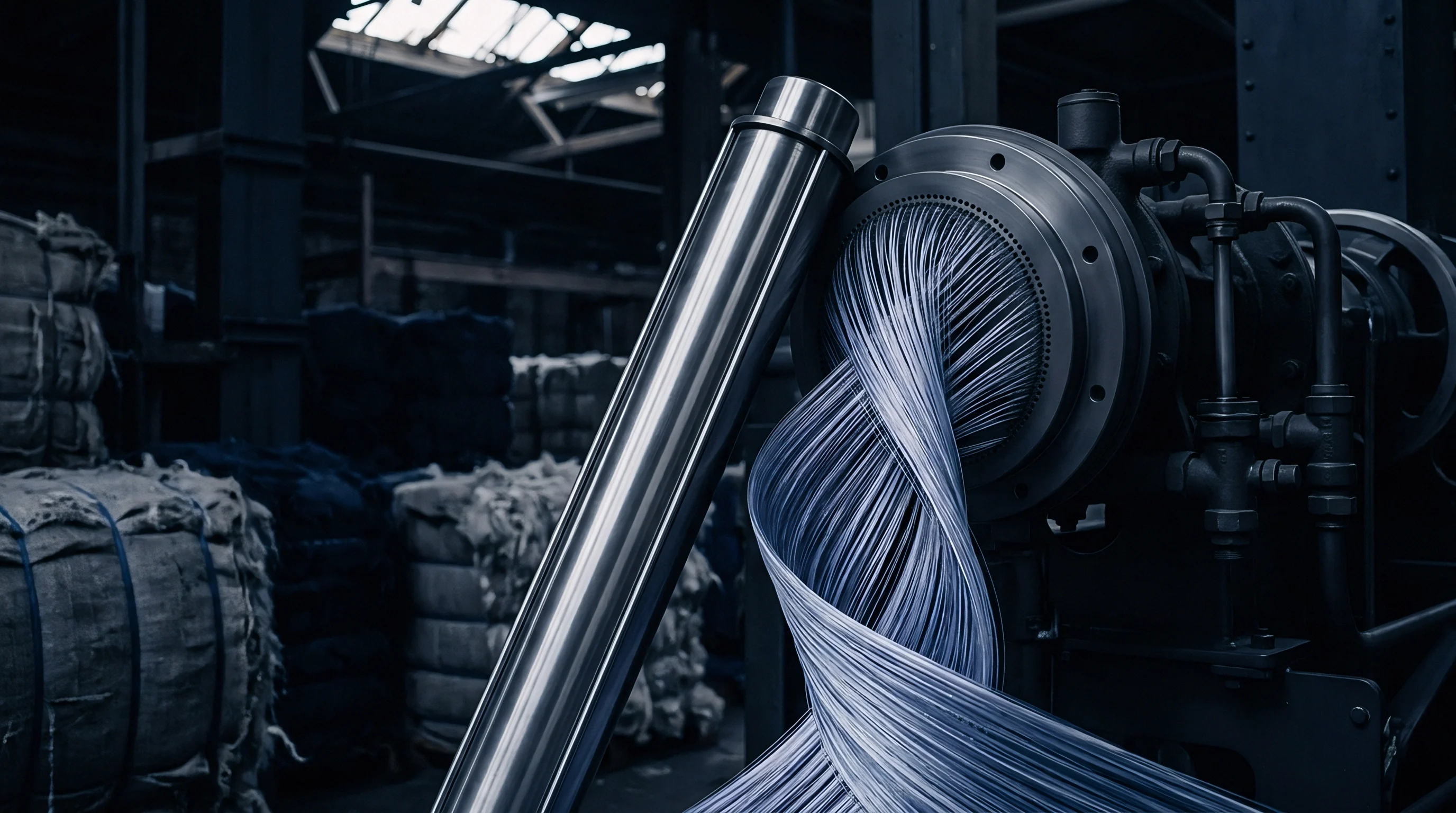
Mathematical Crown Calibration for Squeeze Bowls
Grinding a parabolic crown onto rubber covers counteracts shaft bending to re-establish parallel contact. Crown magnitude corresponds directly to anticipated working pressure, bowl face width, and core modulus. A crown profile too aggressive for a given load produces over-expression at the fabric center, reversing the shading defect.
| Face Width (mm) | Journal Load (kN) | Linear Load (N/mm) | Calculated Core Deflection (mm) | Required Rubber Crown (mm) | Shore A Hardness |
|---|---|---|---|---|---|
| 1800 | 35 | 38.8 | 0.12 | 0.24 | 70 |
| 1800 | 50 | 55.5 | 0.18 | 0.36 | 70 |
| 2200 | 45 | 40.9 | 0.21 | 0.42 | 75 |
| 2200 | 65 | 59.0 | 0.31 | 0.62 | 75 |
| 3000 | 70 | 46.6 | 0.48 | 0.96 | 80 |
| Calculations assume solid steel core construction with dynamic modulus of 210 GPa and synthetic elastomer cover thickness of 15 mm. Crown values represent total diameter increase at bowl midpoint. | |||||
Crown shapes compensate roll flex. Swimming rolls utilize internal hydraulic zones to apply counter-pressure directly behind the rubber shell. Adjusting internal hydraulic pressure allows real-time compensation for changing total loads when switching between lightweight poplins and heavy twills.
Equipment manufacturers frequently attribute side to center shade shading to inconsistent upstream moisture pre-conditioning rather than uncompensated roller bending under working loads.

Expression
Liquor removal across dense cotton substrates depends on dynamic nip contact time and fluid capillary dynamics. Heavy twill structures exhibit distinct fluid retention mechanisms within inter-yarn gaps compared to intra-fiber lumens. Expressing surface fluid demands precise application of linear force synchronized with web velocity.
Side to Center Side Moisture Profiling
Uncontrolled pressure gradients produce wet pickup variance across the width of the fabric web. Side to center side moisture measurements identify profile non-uniformity before thermal fixation. Measuring wet mass immediately after padding reveals structural extraction disparities across the bowl face.
Variations exceeding two percent in wet pickup across the width produce visible shade listing in reactive and vat dyeing. Heavy twills amplify these shade differences due to high total chemical load per square meter. Level pressure distribution maintains chemical mass balance from selvedge to selvedge.
How Does Speed Impact Hydraulic Expression in Heavy Twills?
Increasing line velocity shortens the duration that fabric spends under peak compressive force. Dwell time within a fifteen millimeter nip footprint drops below ten milliseconds at speeds exceeding sixty meters per minute. Speed reduces dwelling time in nip.
Fluid expression becomes limited by hydrodynamic flow rate through dense yarn intersections rather than applied mechanical force.
Compliance with ISO 105-C06 wash fastness ratings requires batching wet pickup variation across the roll face to remain within a three percent margin.
Dynamic pressure shifts with velocity. Higher running speeds require increased linear pneumatic pressure to maintain equivalent wet pickup targets on heavy cotton twills.
- Center listing occurs when insufficient bowl crown allows higher wet pickup at the fabric midpoint, concentrating dye solute during drying.
- Wing shading develops when excessive crown compresses fabric edges beyond target levels, causing light selvedges relative to the center.
- Twill line flattening results from extreme linear nip pressure exceeding elastomer displacement thresholds, damaging fabric surface luster.
- Migration streaking forms when elevated wet pickup leaves surplus liquor on warp floats, allowing chemical movement prior to stenter entry.
Slower running speeds require proportionately lower cylinder pressures to achieve identical liquor extraction efficiency on heavyweight fabrics.

Hardness
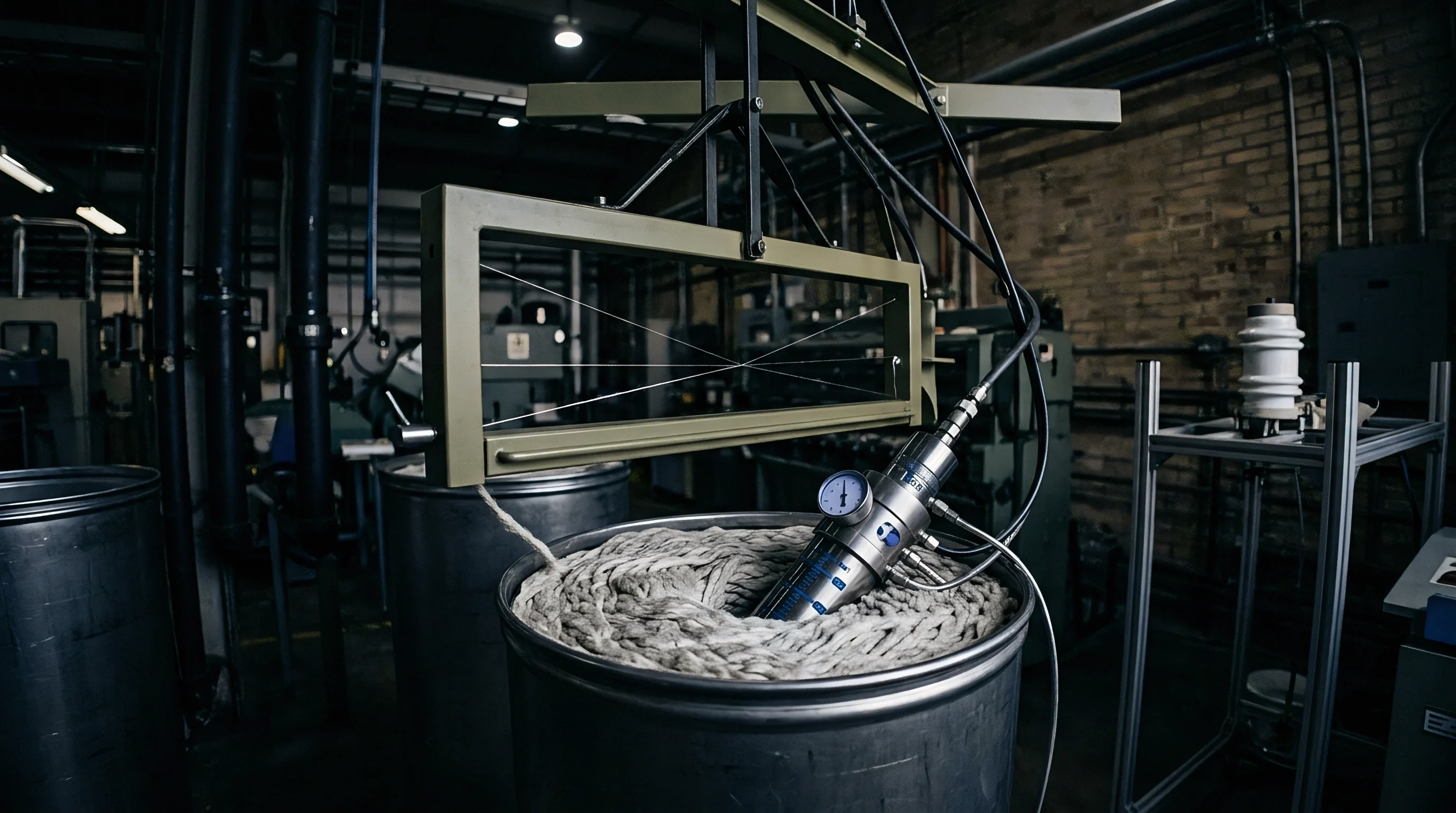
Rubber bowl covers undergo continuous mechanical shear and thermal cycling that alter their elastic recovery during production. Cover durometer directly dictates contact width and peak compression inside the nip zone. Hardness shifts alter liquor extraction characteristics independent of cylinder pressure gauge readings.
Polymer Roll Elastomer Degradation and Durometer Drift
Synthetic rubber compounds turn firm over operating cycles through chemical exposure and thermal aging. Heat softens rubber covers over time. Rubber hardness measured on the Shore A scale increases as cross-linking density alters under continuous dynamic load.
An increase of five Shore A points narrows the contact footprint, elevating peak compressive stress.
Narrow contact footprints elevate peak pressure but shorten dwell time. Harder rolls narrow the contact footprint. Processing heavy twills with degraded, hardened covers results in surface liquor removal without thorough core extraction.
Shore hardness dictates compression width.

Thermal Expansion and Dynamic Contact Zone Deformation
Frictional energy within the nip zone raises internal elastomer temperature during extended production runs. Thermal expansion increases roll diameter, altering pre-calculated crowning profiles. Non-uniform cooling creates localized diameter changes that disrupt pressure uniformity.
| Cover Material | Shore A Hardness | P&J Penetration (0.1 mm) | Thermal Expansion (mm/m/°C) | Dynamic Compression Set (%) |
|---|---|---|---|---|
| Natural Rubber | 65 – 75 | 35 – 50 | 0.18 | 12.5 |
| Nitrile Rubber (NBR) | 70 – 80 | 25 – 40 | 0.15 | 8.2 |
| Polyurethane (PU) | 80 – 90 | 10 – 20 | 0.11 | 3.5 |
| Ebonite (Hard Base) | 95 – 100 | 0 – 5 | 0.06 | 1.1 |
Polyurethane covers provide superior abrasion resistance and stable durometer values under thermal load. Nitrile covers offer chemical resistance against pad-batch alkali formulations but exhibit higher dynamic compression set over extended operating shifts.
- Lower the bowl assembly onto sensor paper at minimum operational pressure to record the dry nip imprint width across three locations.
- Measure the impression width at five points across the face width using digital calipers to verify parallelism.
- Apply maximum working pneumatic pressure and repeat the impression measurement to identify roll end deflection.
- Measure durometer value at ten millimeter intervals along the roll circumference with a calibrated Shore A gauge.
- Re-grind or re-cover the bowl surface when durometer readings vary by more than five points across the roll face.
Uniform pressure ensures level dyeing. Maintenance protocols must specify periodic grinding schedules to restore true parabolic geometry and remove oxidized surface layers.
Purchasing specifications aligned with DIN 53505 mandate surface hardness verifications every five hundred operating hours to prevent uncontrolled wet pickup shift.

Yield
Chemical consumption and drying energy costs scale directly with the volume of liquor retained after squeeze extraction. Minimizing wet pickup on heavy cotton twills optimizes resource usage without sacrificing penetration depth or color fastness metrics. Standardized pad pressure reduces overall thermal loads in thermal fixation routes.
Chemical Mass Balance and Liquor Pick up Optimization
Reducing target wet pickup from seventy percent to fifty-eight percent lowers moisture mass requiring stenter evaporation. Water removal saves thermal energy. Lower liquor retention allows higher chemical concentration in the pad bath, maintaining absolute mass per linear meter while reducing water burden.
Drying costs drop with lower moisture. Level pickup prevents shade listing. Concentrated padding baths require precise squeeze pressure control to prevent chemical spot formation or tailing along long production runs.
Worked Example of Chemical Savings on Heavy Twill Bulk Runs
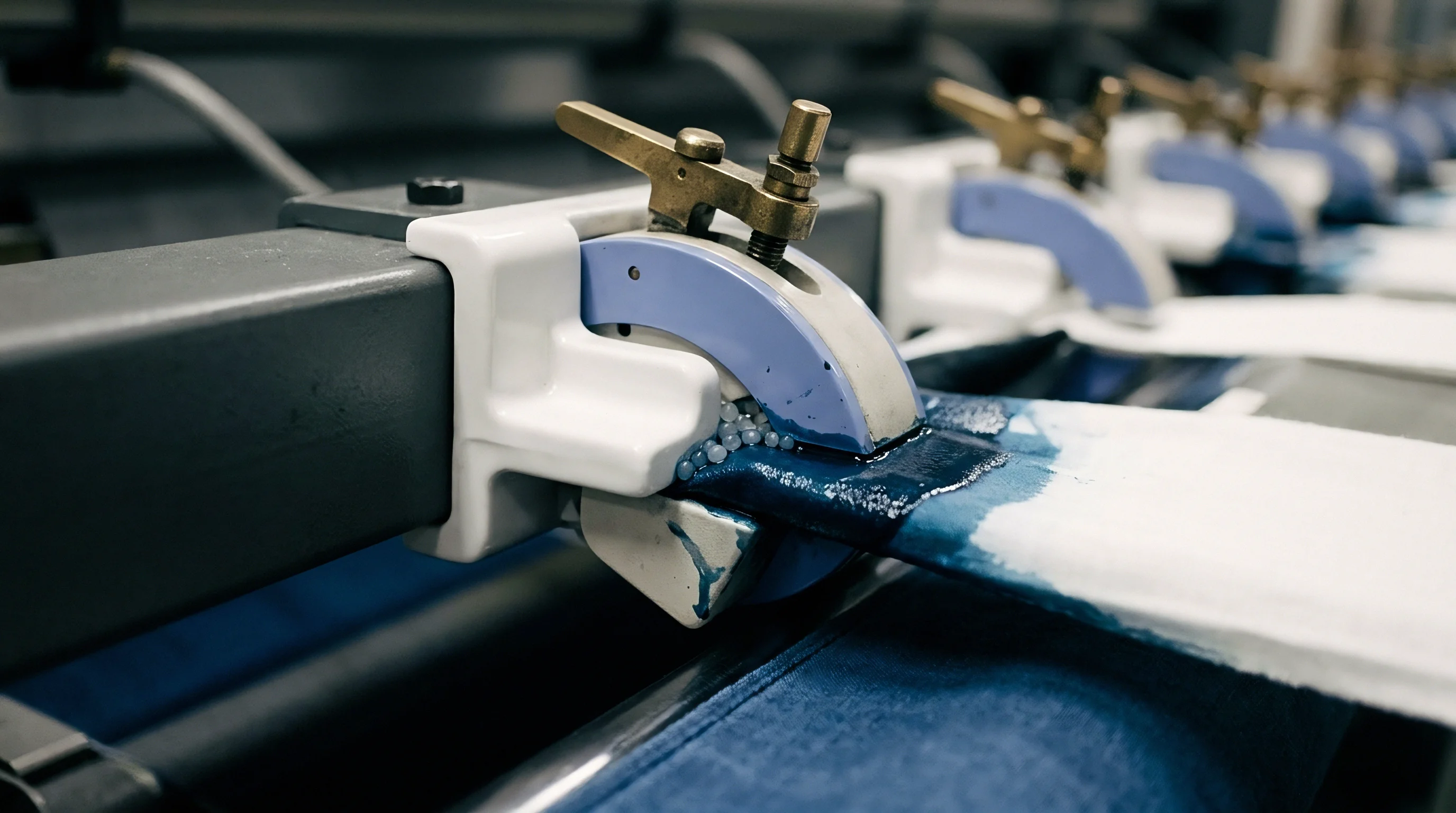
Standardizing squeeze profile across a forty thousand meter run of three-hundred-and-eighty gram cotton twill provides measurable cost reductions. Assume fabric width measures 1.5 meters, establishing a total dry fabric mass of 22,800 kilograms. Non-standardized processing at lower line pressure achieves 72 percent wet pickup, holding 16,416 kilograms of water.
Standardized high-pressure application achieves 60 percent wet pickup, holding 13,680 kilograms of water.
| Parameter | Baseline Operation (30 N/mm) | Standardized Pressure (52 N/mm) | Absolute Difference |
|---|---|---|---|
| Wet Pickup (%) | 72.0 | 60.0 | -12.0 |
| Total Water Retained (kg) | 16,416 | 13,680 | -2,736 |
| Evaporation Energy Needed (MJ) | 37,090 | 30,908 | -6,182 |
| Natural Gas Equivalent (m³) | 1,030 | 858 | -172 |
| Thermal Cost per Metre (USD) | 0.026 | 0.021 | -0.005 |
The calculation assumes water evaporation energy of 2.26 MJ per kilogram and natural gas thermal efficiency of 85 percent at 36 MJ per cubic meter. Reducing water mass by 2,736 kilograms saves 172 cubic meters of natural gas on a single bulk lot.
Decreasing wet pickup by ten percent yields a fifteen percent reduction in stenter gas consumption during heavy weight fabric drying.
What dynamic roll deflection sensors will enable real-time pneumatic adjustments without interrupting continuous high-speed finishing operations?