Structural Classification
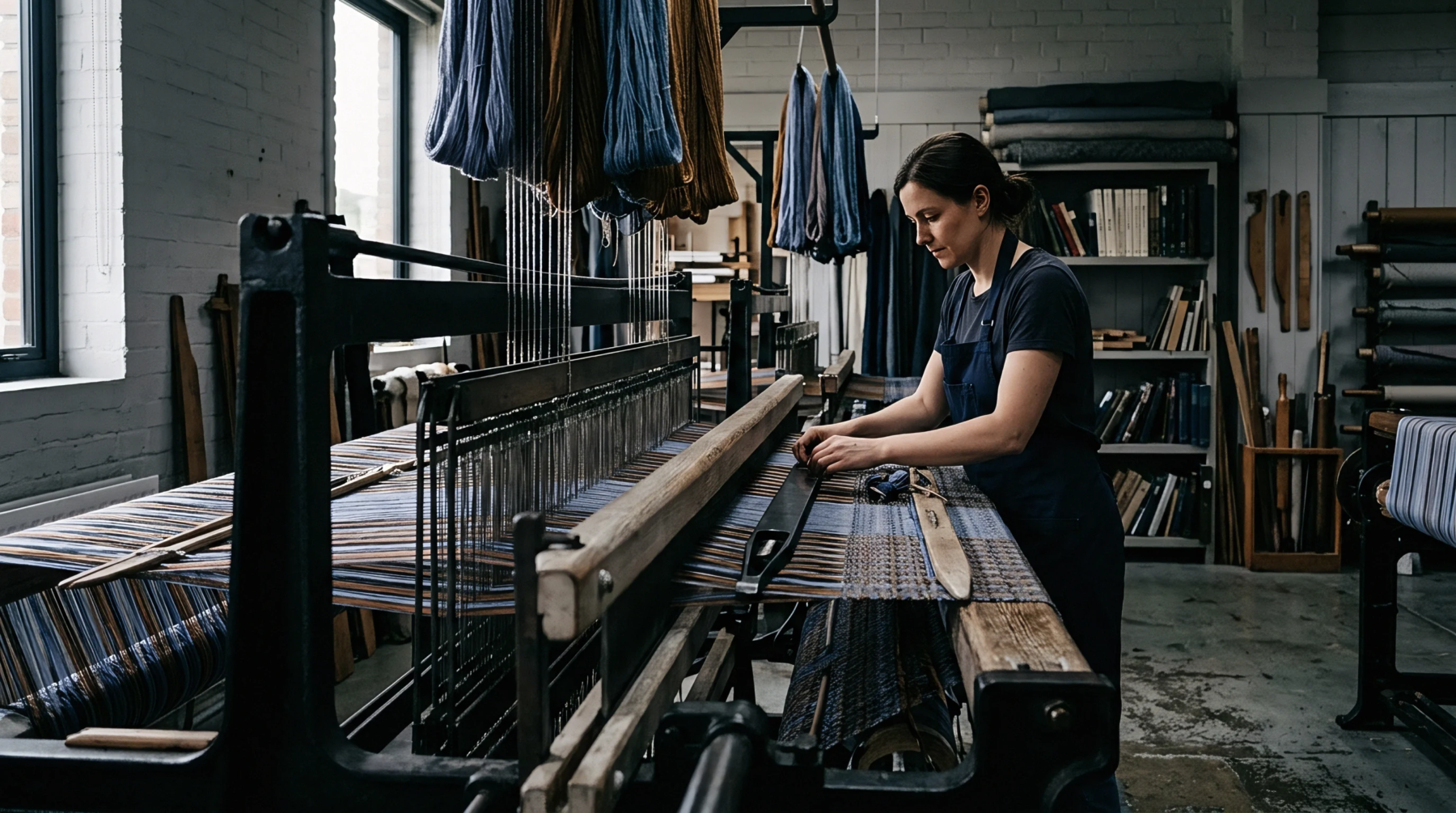
Diagonally ribbed woven textiles contain interlacing points staggered uniformly across adjacent warp ends. Commercial buyers classify cotton twills by their steep or reclined twill angles, produced using minimum three-harness weave structures. Warp floats dominate the technical face in uneven configurations like two-up, one-down, yielding clear diagonal wales running rightward or leftward.
The scope of this construction covers natural cotton yarns spun from carded or combed staple fibers, ending where modified basket, satin, or plain weaves displace the diagonal wale.
Mechanical Durability
High yarn packing fractions provide superior tear resistance and bursting strength compared to plain cloths of identical yarn weight. Cotton twills withstand heavy surface abrasion because long floats absorb rubbing forces without rupturing the inner yarn matrix. Weave tightness reduces air permeability while allowing good flexural drape, making the construction standard for workwear, uniform twills, and denim bottom-weights.
Combed ring-spun yarns produce smooth twill lines, whereas open-end yarns yield flatter, grainier surface textures.
Commercial Testing
Buyers verify construction properties against ASTM D3775 for thread count and ASTM D3887 for fabric mass per unit area. Fabric weight runs typically from 150 grams per square meter in light shirting twills up to 450 grams per square meter in heavy workwear drills. Tear propagation tests per ASTM D1424 confirm whether yarn float lengths preserve tear integrity under shear strain.
Skewing or spirality poses a persistent commercial risk, requiring verification via AATCC Test Method 179 to confirm that finished twill lines remain perpendicular to garment seams after home laundering cycles. Skew occurs when directional weave torque forces the fabric off-grain during wet finishing.
Wet Processing
Desizing, scouring, and mercerizing prepare grey twills for continuous piece dyeing or rotary screen printing. Dense packing slows chemical penetration into twill yarn intersections, necessitating wetting agents during pad-batch dyeing. Caustic soda treatment swells the cotton fibers, raising luster on prominent twill wales and boosting tensile strength.
Resins applied during durable-press finishing must penetrate the interior of floats without over-curing the surface, which causes wale embrittlement. Mercerization also increases dye yield across cotton twills subjected to continuous pad-steam processing.