Calibrating Gravimetric Correction Factors for Mechanically Cleaved Cellulosic Blends
Calibrating gravimetric correction factors for mechanically cleaved cellulosics prevents false synthetic content readings caused by accelerated fiber dissolution.


Fissure

Structural Alterations from Mechanical Cleavage
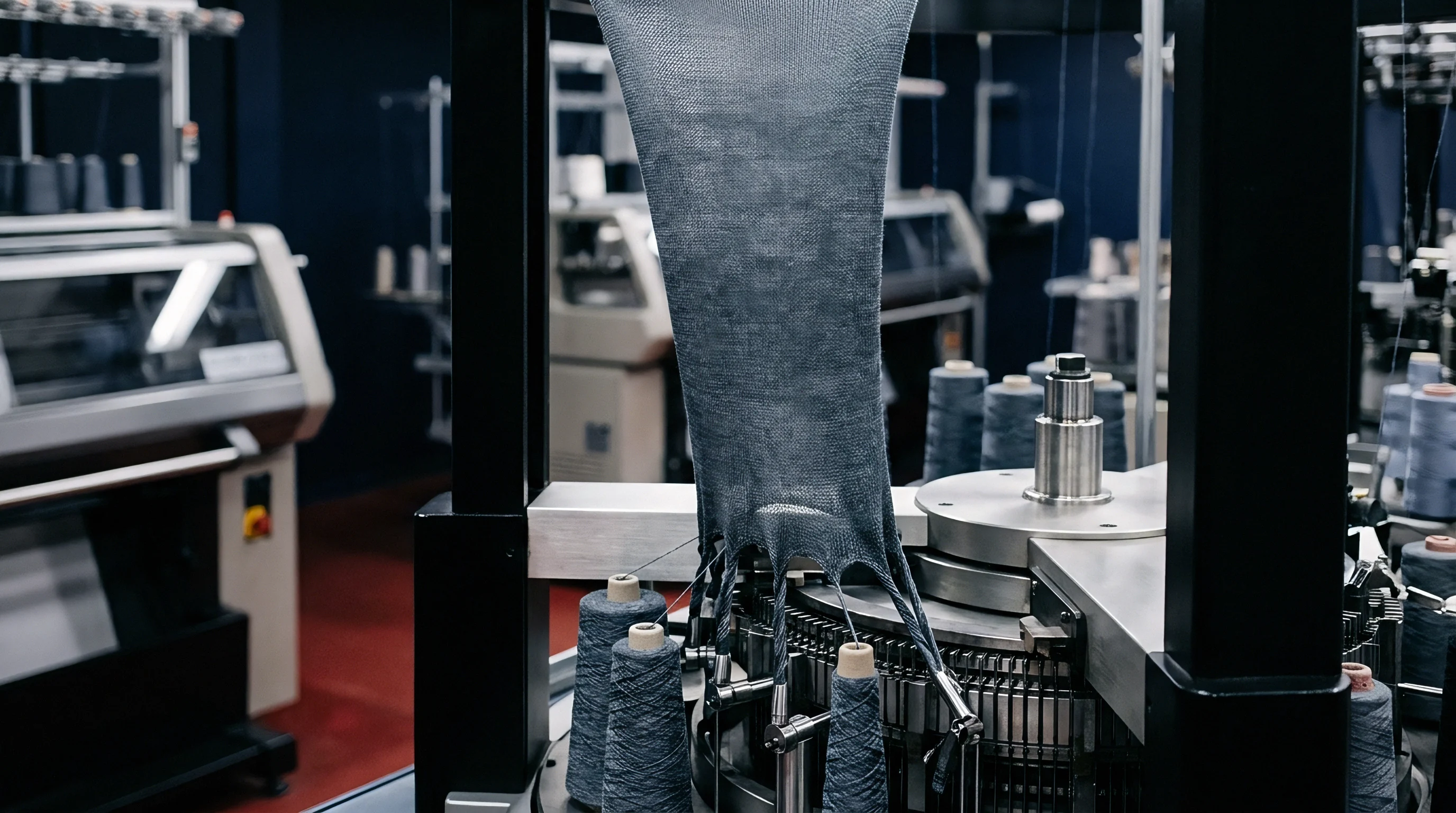
Mechanical shredding of recycled textile clips breaks long-chain cellulose polymers through shear force and tearing. Rotor-cleaved fibers show extensive physical disruption under optical microscopy. Secondary wall layers peel away from the primary cell wall.
Transverse cracks penetrate deep into the crystalline core. Tensile forces during garnetting cleave the long-chain cellulose molecules, reducing the degree of polymerization from typical virgin levels near 2400 down to ranges between 800 and 1100. Structural scission exposes amorphous polymer regions that were buried within the fibrillar architecture of the natural fiber.
Amorphous cellulose contains unbonded hydroxyl groups with high kinetic reactivity. These exposed sites alter how the fiber interacts with liquids, vapors, and chemical reagents. Virgin cotton maintains a protective primary wall coated with natural waxes and pectin compounds.
Mechanically torn cotton presents a fragmented surface with exposed crystalline planes and severed microfibrils. Amorphous regions dissolve rapidly when exposed to aggressive solvents. The speed of chemical dissolution increases dramatically when structural cracking opens internal capillary networks within the fiber shaft.

Surface Area Metrics and Dissolution Rates
Specific surface area expands when garnetting machinery tears intact fibers into short fragments. Mechanical cleavage increases total surface area per unit mass by three hundred percent compared to unclipped raw cotton. Fine lint particles smaller than five hundred micrometers generated during tearing contribute disproportionately to total surface area.
Solvent contact happens instantly across torn end-grain faces. Chemical reagents penetrate cleaved fibers along longitudinal fissures faster than through intact outer cuticles. Standard dissolution protocols rely on predictable surface erosion rates.
Mechanically severed fibers undergo simultaneous surface erosion and internal capillary dissolution. Accelerated reagent intake causes structural disintegration before the prescribed immersion timer elapses.
Cellulose chain length reduction alters the thermodynamic solubility boundary. Shorter polymer chains dissolve at lower solvent concentrations and lower ambient temperatures. Mechanical cleavage alters the mass loss ratio during routine chemical separation tests.
Chemical analysis of shredded cellulosic stock requires modified protocols to prevent over-dissolution of the insoluble fraction. Test methods calibrated for virgin cotton overestimate structural loss when applied to torn fibers. The rate of mass loss depends on the mechanical history of the raw material.
Garnet wire density, cylinder speed, and feed plate clearance determine the degree of internal polymer cracking. Unresolved questions remain regarding how microfibrillar swelling rates vary across post-industrial textile clips compared to post-consumer garments harvested from mixed mechanical sorting lines.

Reagent

Chemical Separation Kinetics in Damaged Fibers
Quantitative separation of binary blends containing cellulosic fibers and synthetic polymers relies on selective chemical solubility. ISO 1833 protocols specify targeted reagents to dissolve one fiber component while leaving the second component intact as a solid dry residue. Test method ISO 1833-3 uses an aqueous seventy-five percent sulfuric acid solution to dissolve cellulosic fibers, leaving insoluble polyester untouched.
Method ISO 1833-11 uses a sodium zincate solution to dissolve viscose while retaining virgin cotton. Chemical reagents attack torn cellulose far faster than unbroken fiber structures. Concentrated acids penetrate internal cracks within mechanically cleaved cellulosics immediately upon immersion.
Acid hydrolysis breaks remaining glycosidic bonds inside amorphous zones within seconds. Fast chemical attack erodes insoluble fiber fragments that usually survive standardized testing.
At a mechanical cleavage index exceeding forty percent, the standard gravimetric dissolution correction factor for cotton in seventy-five percent sulfuric acid shifts from 1.02 to 1.06 at twenty degrees Celsius.
Gravimetric analysis requires a correction factor, designated as the d-factor, to adjust for minor mass loss suffered by the non-soluble fiber fraction during solvent exposure. Standard tables assign pristine cotton a d-factor of 1.02 in seventy-five percent sulfuric acid. This value accounts for a two percent mass loss of virgin cotton wall material during acid washing.
Mechanically torn cotton suffers far greater material loss in the same reagent exposure window. Fractured fiber ends release microscopic lint fragments into the solvent bath. Soluble low-molecular-weight cellulose fractions wash through glass filter crucibles during vacuum filtration.
Measuring damaged fiber lots with standard virgin d-factors produces quantitative gravimetric errors that misstate true blend ratios.
| Reagent System | Target Dissolved Fiber | Residue Fiber Type | Standard d-Factor | Cleaved d-Factor | Dissolution Window |
|---|---|---|---|---|---|
| 75% Sulfuric Acid | Cellulose / Viscose | Polyester (PET) | 1.00 | 1.01 | 30 min @ 20°C |
| 75% Sulfuric Acid | Polyester (PET) Residue | Cleaved Cotton Residue | 1.02 | 1.06 | 30 min @ 20°C |
| Sodium Zincate | Viscose / Lyocell | Cleaved Cotton Residue | 1.02 | 1.07 | 20 min @ 20°C |
| 80% Formic Acid / ZnCl2 | Polyamide (Nylon 6,6) | Cleaved Cotton Residue | 1.01 | 1.04 | 20 min @ 40°C |

Mechanisms of Insoluble Fraction Mass Loss
Insoluble cellulosic residues suffer structural decay when exposed to chemical dissolution reagents designed for blended fibers. Mechanical processing damages cell walls and exposes core polymers to liquid reagents.
- Microfibrillar Splitting exposes internal polymer surfaces to immediate reagent penetration, accelerating background dissolution during routine quantitative extraction steps.
- Short Chain Extraction dissolves low molecular weight cellulose fractions into aqueous reagent solutions, removing mass that standard test protocols treat as insoluble solid residue.
- Fibril Fragment Shedding generates microscopic particulate matter smaller than P16 glass sinter pores, passing solid fiber mass into liquid filtrate waste streams.
- Amorphous Hydrolysis hydrolyzes exposed non-crystalline polymer zones rapidly, increasing dry weight loss during solvent immersion phases.
Standard gravimetric equations assume constant d-factor parameters across all cotton processing grades. Applying a virgin d-factor to a mechanically cleaved blend undercounts the actual cellulosic content present in the original sample. Laboratory technicians record false synthetic elevation when acid dissolves damaged cellulose fragments into filtration waste.
A blend containing seventy percent mechanical recycled cotton and thirty percent polyester reads as sixty-five percent cotton and thirty-five percent polyester under uncalibrated testing. The laboratory issues a non-compliant report. The buyer rejects a compliant yarn shipment due to baseline calibration failures within the gravimetric extraction protocol.

Regain

Moisture Sorption Hysteresis in Cleaved Fiber Networks
Cellulosic fibers absorb ambient water vapor through hydrogen bonding at free hydroxyl sites within amorphous polymer regions. Virgin cotton exhibits a standard moisture regain of eight point five percent under ISO 139 standard atmospheric conditions of twenty degrees Celsius and sixty-five percent relative humidity. Mechanical garnetting alters moisture sorption behavior fundamentally.
Severe mechanical stress breaks inter-molecular hydrogen bonds, exposing millions of previously inaccessible hydroxyl groups across cleaved surfaces. Amorphous volume fractions expand relative to crystalline domains. Increased amorphous volume raises equilibrium moisture regain capacity.
Mechanically torn cotton reaches moisture regain values between nine point two and ten point one percent under identical environmental conditions.
Finer mechanical shredding increases amorphous solvent accessibility long before visible reduction in staple length occurs.
Conditioning procedures must account for sorption hysteresis shifts in torn fibers. Fiber hysteresis describes the path-dependent equilibrium mass difference between adsorption from a dry state and desorption from a wet state. Cleaved cellulosics display wider hysteresis loops than raw virgin fibers.
Drying damaged fiber samples at elevated temperatures causes irreversible thermal collapse of open pore structures. Hornification closes internal voids, trapping bound water within internal capillaries. Standard oven-drying protocols at one hundred and five degrees Celsius require extended dwell times to reach true dry mass stability.
Calculating blend percentages on damp or incompletely dried residues distorts final mass balance ratios.

How Does Mechanical Cleavage Shift Solvent Loss Ratios?
Physical tearing changes how cellulosic fibers react when immersed in organic or inorganic liquid solvents. Standard quantitative methods calculate dry fiber mass by drying samples before and after chemical extraction. Water molecules bound within exposed amorphous zones require higher thermal energy to desorb completely during initial dry mass determination.
Residual moisture remaining in pre-extraction samples creates erroneous baseline weights. The lab calculates fiber loss using an inaccurate starting mass. Solvent immersion then strips both the soluble polymer phase and the trapped bound moisture simultaneously.
The final dry residue mass reflects both chemical dissolution loss and unaccounted water evaporation.
Commercial regain allowances defined in ISO 6741 assign fixed commercial moisture figures to specific fiber categories. Virgin cotton receives an allowance of eight point five percent. Viscose receives thirteen percent.
Recycled mechanical cellulosic stocks blur these defined categories. A blend composed of shredded post-consumer garments contains variable ratios of damaged cotton, torn lyocell, and degraded viscose. Applying standard commercial regain allowances to custom mechanically cleaved blends creates systemic invoicing errors.
Actual dry mass derived from calibrated laboratory drying must replace static commercial allowances during trade settlements. Moisture testing requires weighing samples inside sealed weighing bottles inside the oven chamber to prevent rapid moisture re-absorption during transfers.
Regain variations destabilize yarn weight specifications across international transit routes. Bales shipped at sea-level humidity pick up additional water weight across open capillary surfaces. Freight inspectors record net mass gains that do not reflect added fiber material.
Precise gravimetric correction demands continuous tracking of ambient vapor pressure during every balance reading.


Screen

Sieve Fractionation and Short Fiber Isolation
Accurate calibration of gravimetric correction factors requires physical separation of fine fiber fragments prior to chemical analysis. Mechanically cleaved stock contains a wide spectrum of particle sizes, ranging from intact fibers twenty millimeters long down to microscopic cellulose dust. Microscopic dust particles dissolve rapidly in test reagents, distorting gravimetric readings.
Screen fractionation isolates fine lint fractions to establish true particle size distributions within the test lot. Mechanical sieving uses stacked precision wire meshes ranging from two thousand micrometers down to thirty-eight micrometers. Sieve shakers operate at controlled orbital frequencies to stratify the loose fiber mass without generating artificial static charges that bind fine particles together.
Compliance with ISO 1833 Part 1 requires explicit qualification of insoluble fiber loss when processing mechanically recycled cellulosic feedstocks.
Advanced Fiber Information System testing measures short fiber content by number and by weight. Mechanically shredded post-consumer cotton often carries a short fiber content under twelve point seven millimeters exceeding forty-five percent by weight. Fine fiber fractions smaller than five hundred micrometers migrate through standard glass filter crucibles during liquid extraction steps.
Laboratory protocols must employ high-retention P16 sintered glass filters or glass microfibre filter discs with retention down to one point two micrometers. Unfiltered fine fragments passing into filtrate waste appear as dissolved fiber mass in gravimetric balance equations.

Protocol for Fine-Fraction Mass Loss Determination
Quantifying fine fiber loss requires a systematic physical preparation sequence prior to chemical reagent exposure.
- Desiccate raw mechanical cellulosic sample mass at one hundred and five degrees Celsius for three hours inside a forced-draft oven.
- Transfer dried sample to a sealed desiccator containing activated silica gel for forty-five minutes to reach room temperature equilibrium.
- Place the sample onto a stacked mechanical sieve shaker equipped with seventy-five micrometer and thirty-eight micrometer mesh screens.
- Agitate the dry mass for fifteen minutes at an amplitude of one point five millimeters to separate non-fibrous dust and micro-lint.
- Weigh the retained long-fiber fraction and the passed fine-particle fraction separately on an analytical balance reading to zero point one milligrams.
- Extract liquid soluble fats, waxes, and spinning oils using petroleum ether in a Soxhlet apparatus for four hours prior to chemical analysis.
Removing loose fine dust before chemical dissolution prevents extreme d-factor distortion. The retained long-fiber fraction exhibits predictable dissolution kinetics similar to standard raw cotton grades. Testing un-sieved raw mechanical clip mass produces erratic d-factors that shift wildly between different test runs.
Mill technicians frequently complain that varying shredder blade sharpness alters laboratory test results from batch to batch. Blade wear changes the ratio of clean cuts to ragged structural tears in the fiber core. Ragged tears increase fine fragment shedding during filtration.
Laboratories must establish screen fractionation baselines for every raw material supplier delivering mechanical recycled cellulosic stock.
Failing to standardize sieve preparation leads directly to disputed laboratory reports between yarn spinners and fabric buyers. A supplier will insist their shredding process maintains fiber integrity while laboratory gravimetric data indicates excessive chemical dissolution loss.


Calibration

Derivation of the Cleaved Correction Factor
Standard gravimetric correction factors fail when applied to torn cellulosic fibers. Calibrating an adjusted correction factor, designated as d-sub-c, requires empirical measurement of insoluble mass loss using pristine control samples of the target recycled lot. The analyst isolates the raw cellulosic component prior to blending or extracts it from a known single-component mechanical clip lot.
The isolated sample undergoes exact exposure to the chosen reagent system under standardized temperature, concentration, and immersion time constraints. The dry mass remaining after solvent extraction establishes the specific solubility loss of the cleaved material.
Mathematical derivation of d-sub-c relies on the mass balance equation of the non-dissolving reference fiber. Let m-sub-zero represent the initial dry mass of the unblended mechanically cleaved cellulosic sample. Let m-sub-r represent the dry mass of the insoluble residue retained on the filter crucible after reagent washing and oven drying.
The calibrated correction factor d-sub-c equals m-sub-zero divided by m-sub-r. If a ten-gram dry sample of cleaved post-consumer cotton yields nine point three grams of solid residue after exposure to seventy-five percent sulfuric acid at twenty degrees Celsius for thirty minutes, d-sub-c equals ten divided by nine point three, resulting in a calibrated factor of 1.0753. Standard tables prescribe 1.0200 for virgin cotton.
Using the standard factor introduces a five point5 percent systemic error into all subsequent blend percentage calculations.
| Analysis Parameter | Standard Method (ISO 1833-3) | Calibrated Method (d-sub-c) | Analytical Variance |
|---|---|---|---|
| Initial Dry Sample Mass | 2.5000 g | 2.5000 g | 0.0000 g |
| Insoluble PET Residue Mass | 0.8750 g | 0.8750 g | 0.0000 g |
| Assumed d-Factor for PET | 1.0000 | 1.0000 | 0.0000 |
| Calculated PET Mass in Sample | 0.8750 g | 0.8750 g | 0.0000 g |
| Calculated Cellulosic Mass | 1.6250 g | 1.5250 g (Adjusted for d-sub-c 1.075) | -0.1000 g |
| Final Declared PET Percentage | 35.00% | 30.12% | +4.88% Absolute Error |
| Final Declared Cotton Percentage | 65.00% | 69.88% | -4.88% Absolute Error |

Integration into Multi-Fiber Blend Equations
Calculating ternary blends containing mechanically cleaved cotton, virgin viscose, and synthetic fibers requires solving simultaneous mass balance equations incorporating unique correction factors for each component. Reagents dissolve different cellulosic species at distinct rates. Sodium zincate dissolves viscose completely while partially dissolving torn cotton.
Sulfuric acid dissolves both cellulosics while attacking nylon or polyester slightly. Laboratory chemists must sequence solvent extractions to isolate sensitive components sequentially.
Uncalibrated gravimetric analysis systematically underestimates virgin synthetic content in mechanically shredded cellulosic mixtures.
Executing accurate gravimetric calibrations requires strict adherence to standardized quality verification criteria across laboratory workflows.
- Control Sample Baseline Validation establishes the specific reagent mass loss rate of single-origin mechanical clip lots prior to commercial blend processing.
- Solvent Concentration Monitoring verifies reagent normality via potentiometric titration before every gravimetric test series to eliminate chemical potency variables.
- Temperature Chamber Stabilization holds reagent bath temperatures within plus or minus zero point two degrees Celsius during kinetic extraction cycles.
- Filter Pore Integrity Verification inspects P16 sintered glass crucibles under optical magnification to detect pore enlargement that allows micro-lint passage.
Calculated blend values determine legal compliance under international trade rules. A raw composition calculation that misses actual cotton content by nearly five percent places the shipment outside specified contractual limits. Commercial contracts must mandate inclusion of the specific d-sub-c factor derivation methodology within the official laboratory test certificate accompanying bulk shipments.


Invoice

Tariff Classification and Chief Weight Financial Mechanics
Customs authorities classify imported yarns and fabrics according to Harmonized System code chapters based strictly on composition percentages by weight. Chapter 52 governs cotton textiles. Chapter 55 governs synthetic and artificial staple fibers.
The tariff rate applicable to a yarn shipment frequently hinges on which fiber material predominates by weight. A binary blend containing fifty-one percent cotton and forty-nine percent polyester enters under HS Heading 5205 as a cotton yarn, incurring a specific duty rate. If gravimetric test errors understate cotton content, recording forty-eight percent cotton and fifty-two percent polyester, customs reclassifies the shipment under Heading 5509 as a synthetic yarn.
Tariff rate spreads between natural and synthetic categories often reach six to twelve percent of total duty-paid invoice value.
Financial risk expands when customs laboratories execute uncalibrated gravimetric extractions during routine entry audits. Government laboratories routinely use standard ISO 1833 parameters designed for virgin fibers. When testing mechanically cleaved cellulosic blends, official government tests return artificially high synthetic percentages.
Customs authorities issue misdeclaration penalties based on these erroneous reports. The importer faces retroactive duty assessments, punitive fines, and potential seizure of goods. Proving compliance requires presenting a fully documented laboratory dossier containing empirical d-sub-c calibration curves derived from the specific raw material batch.

Commercial Blend Tolerances and Landed Cost Exposure
European Union Regulation 1007/2011 and United States Federal Trade Commission rules grant a strict three percent manufacturing tolerance on textile composition labeling claims. This tolerance accounts for normal industrial blending variations during spinning. It does not cover analytical measurement error introduced by improper gravimetric testing protocols.
An uncalibrated test error of four point eight percent consumes the entire legal manufacturing tolerance band and creates an illegal mislabeling condition on retail hangtags. Retail buyers reject non-compliant garments instantly, transferring full financial liability back to the yarn spinner.
Landed cost calculations must account for potential re-testing, logistics delays, and laboratory qualification expenses. A forty-foot container carrying twenty tonnes of mechanical recycled cellulosic blended yarn represents a delivered commercial value exceeding one hundred thousand dollars. Holding a container at port pending dispute resolution costs hundreds of dollars per day in demurrage fees.
A contract clause requiring laboratory qualification using calibrated d-factors protects both buyer and seller. The clause specifies that all gravimetric composition verification must utilize lot-specific correction factors established according to documented fine-fraction isolation protocols before bulk clearance is granted.
Commercial invoices reflect final certified weights adjusted for actual dry fiber mass and calibrated regain figures. Yarn buyers who audit supplier gravimetric methods secure tight control over landed fabric costs while protecting retail supply chains from regulatory exposure.