Carboxyl End Group Effect on Recycled Polyethylene Terephthalate Processing Stability
Carboxyl end groups accelerate rPET hydrolytic cleavage during extrusion, requiring thermal drying below fifty parts per million moisture to preserve filament tenacity.

Hydrolysis

Chemical Kinetics of Polyester Chain Scission
Cleavage of ester linkages in recycled polyethylene terephthalate proceeds by autocatalytic thermal degradation driven by terminal acid groups. Virgin polyester synthesized via direct esterification of purified terephthalic acid and ethylene glycol typically maintains a carboxyl end group concentration between fifteen and twenty-five equivalents per tonne. Post-consumer mechanical recycling exposes the polymer matrix to multiple thermal cycles, residual wash water, and atmospheric photo-oxidation.
Each thermal scission event cleaves the ester backbone to generate one new carboxyl end group and one vinyl ester end group. As these acidic groups accumulate, they alter the chemical environment within the polymer melt during subsequent re-extrusion.
Terminal carboxylic acid groups act as proton donors in the presence of trace water at elevated extrusion temperatures, accelerating the scission of adjacent ester bonds by orders of magnitude compared with uncatalyzed thermal cleavage. At processing temperatures between two hundred and eighty and three hundred degrees Celsius, even ten parts per million of moisture initiates a rapid hydrolytic cycle. Each cleavage event produces an additional carboxyl group, lowering the activation energy needed for subsequent ester bond cleavage.
This self-accelerating kinetic loop degrades the average molecular weight of the polymer melt within seconds of entering the extrusion barrel.
Hydrolytic cleavage of polybutylene or polyethylene terephthalate melt proceeds at double the kinetic rate when carboxyl concentrations exceed thirty-five equivalents per tonne at two hundred and eighty-five degrees Celsius.
The rate of intrinsic viscosity loss directly reflects this chemical scission mechanism, correlating with the weight-average molecular weight of the polymer through the Mark-Houwink relationship. When recycled polymer flake with an initial carboxyl concentration of forty-five equivalents per tonne enters a melt extruder, molecular chain degradation proceeds three times faster than in virgin resin. The resulting short-chain fragments lower melt strength, alter shear response in the die, and impair orientation kinetics during fiber drawing.
Fiber spinning operations running high-carboxyl recycled flake encounter dynamic viscosity drops that destabilize spinpack pressure and induce yarn breaks.
Autocatalytic degradation leaves a distinct structural signature in the secondary thermal properties of recycled resin. Differential scanning calorimetry shows a broader melting peak and a downward shift in cold crystallization temperature. These shifts stem from a wider molecular weight distribution, as a high fraction of short polymer chains crystallizes rapidly at lower temperatures.
This crystalline heterogeneity introduces mechanical stress points in drawn filaments, limiting maximum draw ratios and lowering ultimate tensile strength in spun yarns.
What critical carboxylic acid concentration threshold triggers irreversible chain scission during thermal reprocessing?


Titration

Analytical Methods for Acid Content Determination
Quantifying carboxylic acid concentrations requires dissolved-polymer wet analytical methods or calibrated infrared spectroscopy. Dissolving a precise mass of cleaned polymer flake in a hot solvent mixture of o-cresol and chloroform at one hundred degrees Celsius prepares the sample for potentiometric evaluation. Standardized sodium hydroxide or potassium hydroxide dissolved in benzyl alcohol serves as the titrant, with bromophenol blue or automated potentiometric electrode systems establishing the neutralization endpoint.
ASTM D7409 and ISO 13885-1 outline standardized parameters for this measurement, expressing carboxyl end group concentration in milliequivalents per kilogram or equivalents per tonne of polymer.
| Flake Grade Code | Initial CEG (eq/t) | Initial IV (dL/g) | Retained IV after 3 min Melt (dL/g) | Melt Index Shift (%) |
|---|---|---|---|---|
| A Grade Clear Bottle Flake | 18.5 ± 1.2 | 0.82 ± 0.01 | 0.79 ± 0.01 | + 3.8 |
| B Grade Commercial Mix Flake | 34.1 ± 2.0 | 0.74 ± 0.02 | 0.66 ± 0.02 | + 14.2 |
| C Grade Mixed Thermoform Flake | 52.8 ± 3.1 | 0.68 ± 0.02 | 0.54 ± 0.03 | + 32.5 |
| D Grade Highly Degraded Regrind | 68.4 ± 4.0 | 0.61 ± 0.03 | 0.42 ± 0.04 | + 61.0 |
| Test conditions: ASTM D4603 for IV measurement in phenol/1,2-dichlorobenzene at 30°C; sample pre-dried to below 30 ppm moisture. | ||||
Analytical accuracy hinges on rigorous moisture exclusion and precise thermal management of the solvent during sample preparation. Environmental water absorbed during dissolution reacts with hot o-cresol, shifting the baseline potential and distorting titration endpoints. Fourier-transform infrared spectroscopy offers a non-destructive alternative by quantifying the absorbance peak of the terminal carboxylic carbonyl group at sixteen hundred and ninety reciprocal centimeters.
Calibrating infrared spectra against wet chemistry standards creates a rapid quality-control pipeline for incoming raw flake lots, preventing high-acidity material from entering production streams unadjusted.
- Solvent thermal degradation introduces artificial acid signals when o-cresol is overheated above one hundred and twenty degrees Celsius during sample dissolution.
- Atmospheric moisture absorption during titrant delivery consumes reagent and shifts the calculated neutralization endpoint upward by up to five equivalents per tonne.
- Incomplete polymer dissolution leaves crystalline domains unexposed, causing underestimation of internal carboxyl groups hidden inside high-crystallinity bottle flake core structures.
- Pigment and filler interference in colored or delustered recycled flake alters photometric indicator color shifts, demanding automated potentiometric endpoint detection.
Laboratory data shows a direct inverse correlation between baseline acid content and intrinsic viscosity retention during high-temperature melt residence. Polymer lots with initial acidity below twenty-five equivalents per tonne maintain stable molecular weight profiles under standard extrusion conditions. When incoming lots exceed forty equivalents per tonne, thermal degradation accelerates rapidly even under low-moisture conditions.
The resulting shift in melt rheology causes inconsistent polymer metering across multi-hole spinneret dies, generating uneven yarn denier and frequent filament rupture on the draw line.
Intrinsic viscosity drops during processing can stem from thermal history in the extruder rather than high baseline carboxyl content.


Drying

Devolatilization and Moisture Control
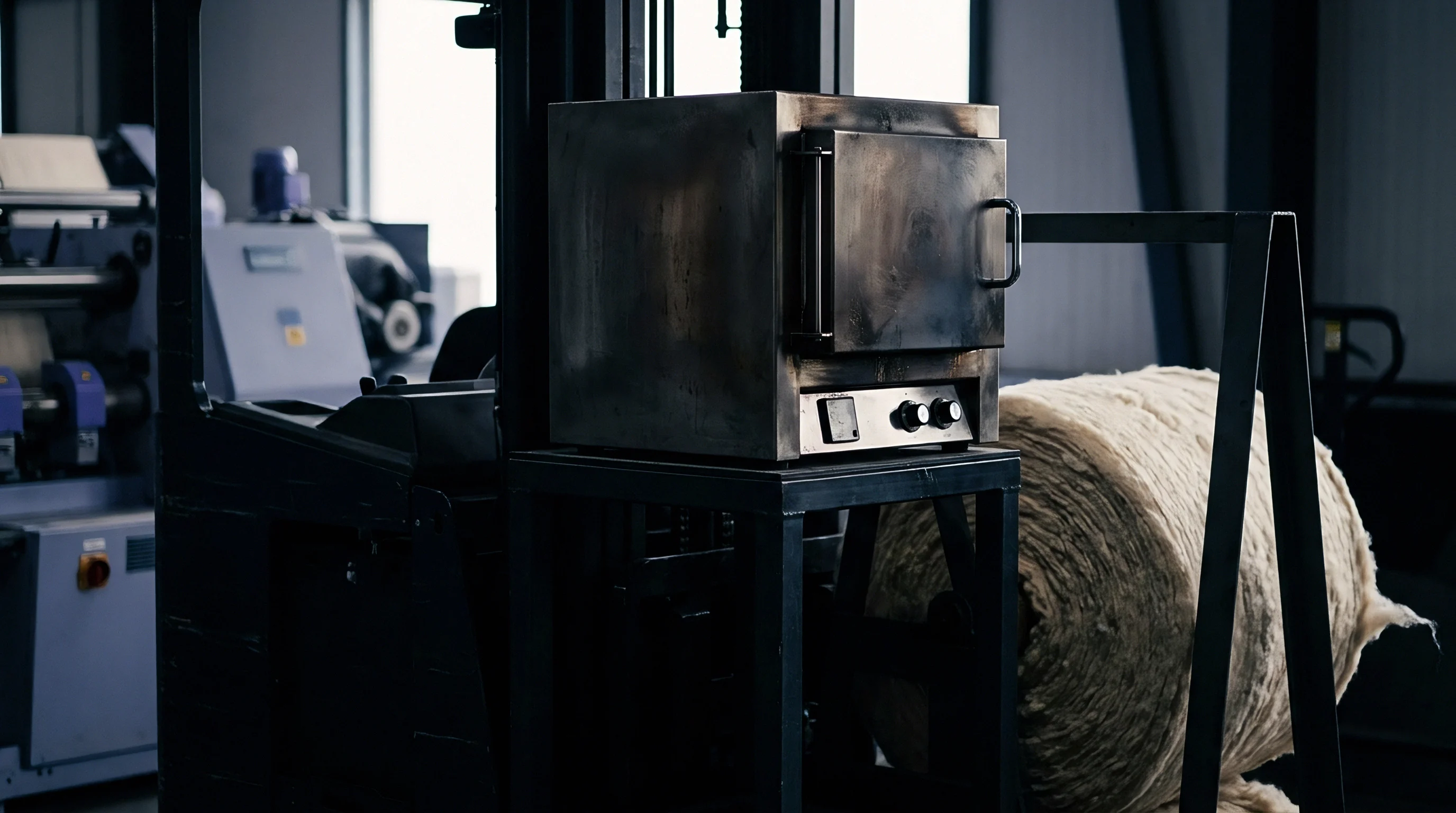
Moisture removal prior to melt processing remains the primary defense against autocatalytic molecular weight loss. The hygroscopic nature of recycled polyethylene terephthalate leads to atmospheric water absorption up to zero point six percent by weight under ambient storage. Processing polymer with this level of internal moisture triggers instantaneous hydrolytic chain cleavage in the extruder feed zone.
Effective thermal processing requires reducing residual moisture content to below fifty parts per million, and below thirty parts per million for high-tenacity industrial yarn extrusion.
- Pre-condition recycled flake in a continuous crystallization vessel at one hundred and fifty degrees Celsius for forty-five minutes to prevent particle agglomeration inside the main drying tower.
- Transfer crystallized flake to a desiccant drying hopper operating with a continuous air stream carrying a dewpoint of minus forty-five degrees Celsius or lower.
- Heat the drying hopper matrix to one hundred and seventy-five degrees Celsius while maintaining a volumetric air flow rate of zero point five cubic meters per hour per kilogram of resin.
- Monitor exhaust gas moisture content until the equilibrium relative humidity confirms internal flake moisture has dropped below thirty parts per million.
- Convey dried flake directly to the extruder hopper under a closed-loop dry nitrogen blanket to prevent re-absorption of ambient moisture during pneumatic transit.
Vacuum devolatilization systems integrated into multi-vent extruder barrels offer supplemental moisture extraction during thermal processing. High-vacuum zones pulling pressures below five millibars remove volatile species, water vapor, and residual glycol monomers directly from the melt stream. Devolatilization removes free moisture, but it cannot repair ester bonds that have already cleaved.
Chemical scission initiated by prior acid accumulation remains embedded in the polymer chain structure, lowering the molecular weight baseline before drawing begins.
A moisture reduction from one hundred parts per million to twenty parts per million doubles the residence time a thirty-five equivalent per tonne resin can endure before losing zero point zero two deciliters per gram of intrinsic viscosity.
Operating pre-drying systems without rigorous dewpoint monitoring exposes high-carboxyl flake to rapid molecular degradation during high-temperature processing.
Can Solid State Polymerization Reverse Carboxyl End Group Scission?
Solid-phase thermal condensation drives chain extension by combining existing carboxyl and hydroxyl terminal groups under deep vacuum or inert gas purge. Heating solid flake particles to temperatures between two hundred and two hundred and twenty degrees Celsius ~ below the crystalline melting point ~ mobilizes polymer chain ends within amorphous regions. This thermal energy allows terminal carboxyl groups to react with terminal hydroxyl groups, reforming the ester linkage and eliminating water as a byproduct.
Removing this condensate shifts the chemical equilibrium toward higher molecular weight and longer average chain lengths.
Chain condensation kinetics depend on particle size, initial carboxyl concentration, and terminal group stoichiometry. An optimal solid-state reaction requires a balanced ratio of hydroxyl to carboxyl end groups. When prior degradation creates an excess of carboxylic acid ends relative to hydroxyl ends, solid-state chain extension slows dramatically.
High-carboxyl recycled flake batches require extended residence times in the reactor to achieve target intrinsic viscosity levels, raising energy consumption per kilogram of processed polymer.
If the hydroxyl-to-carboxyl ratio drops below one point five to one, solid phase condensation stalls before reaching target industrial yarn viscosity levels.


Melt

Rheological Instability in Extrusion
Extruder temperature profiles and thermal exposure duration govern the rate of molecular weight loss in contaminated polymer streams. Molten polyester inside a single or twin-screw extruder undergoes intense shear stress alongside high thermal exposure. These combined inputs cleave the ester backbone, generating vinyl esters and free carboxylic acid groups through thermal elimination.
Minimizing melt temperature and optimizing screw profiles reduces shear heating, preserving chain integrity during high-throughput extrusion.
| CEG Concentration (eq/t) | Max Melt Temp (°C) | Critical Residence Limit (s) | Expected IV Loss (%) | Melt Pressure Variance (%) |
|---|---|---|---|---|
| 15 to 25 (Virgin Equivalent) | 295 | 240 | 1.5 to 2.5 | ± 1.2 |
| 26 to 35 (Standard Flake) | 288 | 180 | 3.5 to 5.0 | ± 3.5 |
| 36 to 50 (High Acid Flake) | 280 | 120 | 8.0 to 12.0 | ± 8.0 |
| Greater than 50 (Off-Spec) | 275 | 60 | 15.0 to 25.0 | ± 18.5 |
Shear degradation in the transition and metering zones of the extruder barrel alters the molecular weight distribution of the polymer melt. High shear rates generate local hot spots where temperatures exceed setpoints by ten to fifteen degrees Celsius. These localized surges trigger rapid beta-scission reactions, producing additional carboxyl end groups that contaminate the melt stream.
Extrusion hardware processing recycled polymer requires low-shear screw geometries, deep flight channels, and optimized residence time distributions to suppress thermal scission.
- Adjust temperature profiles down by five to ten degrees Celsius in the barrel metering zone when processing flake lots with acidity exceeding forty equivalents per tonne.
- Reduce extruder screw speed to lower internal shear rate while maintaining sufficient backpressure for thorough melt filtration.
- Increase vacuum vent suction to maximum operational negative pressure to remove volatile degradation products before the melt enters the gear pump.
- Bypass static mixers when running high-carboxyl feedstocks to minimize total hydraulic residence time inside the heated manifold assembly.
Viscosity loss directly compromises filament tenacity. Fluctuating melt viscosity shifts the pressure differential across the spinpack, destabilizing metering pump output and altering extruded filament diameter. These variations yield uneven cooling profiles in the quench cabinet, causing non-uniform stress distribution during subsequent high-speed drawing.
Extrusion lines running unadjusted high-carboxyl flake suffer elevated draw-resonance failures and inconsistent yarn orientation.
Setting extruder barrel zones above two hundred and ninety degrees Celsius without adjusting for initial carboxyl content causes rapid pressure loss at the spinpack and systemic filament breakage across the spinning frame.


Tenacity

Filament Spinning and Draw Failures
Mechanical strength in spun yarn drops proportionally with the accumulation of short polymer chains. Tensile strength and initial modulus depend on molecular orientation and the density of tie molecules connecting adjacent crystalline lamellae. Carboxyl end groups mark terminal chain breaks that cannot bear mechanical loads or contribute to tie-molecule formation.
High concentrations of these groups lower average molecular weight, limiting yarn drawability over hotplates or heated godet rolls.
Filament draw ratios must be reduced when processing yarn spun from high-acidity recycled polymer. Virgin polyester industrial filament achieves draw ratios between five to one and six to one, yielding high tenacity and low boiling water shrinkage. Recycled polymer with a carboxyl concentration of forty-five equivalents per tonne cannot sustain these draw ratios without individual capillaries breaking.
Dropping the draw ratio to four to one prevents capillary snapping, but yields yarn with lower tensile strength and higher elongation at break.
A carboxyl concentration above forty equivalents per tonne drops maximum stable filament draw ratio from five point two down to four point one, reducing ultimate tenacity by one point five centinewtons per dtex.
Dye uptake uniformity depends directly on structural consistency across the filament cross-section. Short polymer chains created by thermal scission crystallize at lower thermal thresholds, creating regions of varying crystallinity along drawn filaments. These structural fluctuations alter how disperse dyes diffuse into amorphous regions during atmospheric or pressure dyeing.
Fabric woven or knitted from high-carboxyl recycled yarn displays barrié patterns, streakiness, and uneven shade depth across the roll width.
- Intrinsic viscosity test documentation verifying baseline solvent viscosity according to ISO 1628-5 using dichloroacetic acid or phenol/dichlorobenzene solvent mixtures.
- Carboxyl end group titration certification establishing total acid equivalents per tonne via potentiometric wet chemistry under ASTM D7409 standards.
- Thermal history profile detailing melting enthalpy, cold crystallization peak temperature, and glass transition metrics measured via differential scanning calorimetry.
- Heavy metal catalyst quantification reporting residual antimony, titanium, or manganese concentrations in parts per million via inductively coupled plasma optical emission spectrometry.
- Ash and filtration capability index quantifying non-melting inorganic contaminant levels via pressure-value pack testing.
Documenting chemical properties prior to spinning allows texturizers and spinners to adjust draw parameters before processing problematic resin lots.
Purchaser reserves the right to reject any shipment of recycled polyethylene terephthalate resin if the carboxylic acid end group concentration exceeds thirty-five equivalents per tonne or if the intrinsic viscosity variance across the delivered lot exceeds plus or minus zero point zero two deciliters per gram from the approved reference sample.


Tariff

Commercial Valuation and Specifications
Customs classification and commercial valuation for recycled polyethylene terephthalate depend heavily on structural integrity. Harmonized System code 3907.61 covers polyethylene terephthalate with an intrinsic viscosity of seventy-eight cubic centimeters per gram or higher, whereas code 3907.69 applies to lower viscosity grades. Highly degraded recycled flake with elevated acid content and low intrinsic viscosity often falls into lower tariff classifications, incurring different import duty rates depending on the destination jurisdiction and applicable trade agreements.
| CEG Concentration Band (eq/t) | Commercial Classification | Base Price Adjustment (%) | Drying Energy Penalty ($/t) | Net Landed Cost Impact ($/t) |
|---|---|---|---|---|
| Less than 20 | Premium Filament Grade | Baseline Market Rate | 0.00 | 0.00 |
| 20 to 35 | Standard Bottle Grade | – 3.5 to – 5.0 | + 12.50 | + 47.50 |
| 36 to 50 | Engineering Fiber Grade | – 12.0 to – 15.0 | + 28.00 | + 148.00 |
| Greater than 50 | Off-Spec Degradation Grade | – 25.0 to – 35.0 | + 65.00 | + 315.00 |
| Assumes baseline virgin resin market price of $1,200 per tonne; drying energy penalty calculated at $0.12 per kWh required for extended vacuum residence times. | ||||
Reclaimers supplying post-consumer recycled flake must balance washing, sorting, and decontamination costs against the market discount demanded for high-carboxyl material. Fiber producers buying lower-grade flake incur higher operational costs from increased drying energy, reduced extrusion throughput, and lower yarn yields. Calculating the true landed cost per finished kilogram requires factoring in these yield losses alongside the baseline purchase price of the raw flake lot.
A worked financial comparison illustrates the operational cost differences between processing standard and high-carboxyl flake. Assume a spinning mill purchases a forty-tonne lot of standard clear bottle flake with a carboxyl concentration of twenty-five equivalents per tonne at twelve hundred dollars per tonne landed. Processing this lot yields thirty-eight point eight tonnes of prime filament yarn after accounting for a three percent scrap rate from spinpack changes and draw breaks.
The raw material cost per prime kilogram of yarn equals one dollar and twenty-four cents.
Assume the same mill purchases an alternative forty-tonne lot of low-cost thermoform regrind carrying a carboxyl concentration of fifty-two equivalents per tonne at a twenty percent discount, pricing the lot at nine hundred and sixty dollars per tonne. Elevated acid content accelerates thermal degradation inside the extruder, forcing a drop in extrusion speed and increasing yarn breaks. The operational scrap rate rises to eleven percent, yielding thirty-five point six tonnes of prime filament yarn from the forty-tonne input lot.
Supplemental drying energy demands add twenty-eight dollars per tonne in utility expenditures. Total raw material and processing energy costs reach thirty-nine thousand five hundred and twenty dollars. Dividing this cost by the thirty-five point six tonnes of prime yarn yields a net cost of one dollar and eleven cents per kilogram.
The raw price discount of twenty percent collapses to a real unit cost savings of ten point four percent after factoring in process scrap, spinpack pressure instability, and thermal energy adjustments.
Contractual specifications governing recycled resin purchases must incorporate strict acid group boundaries alongside traditional intrinsic viscosity and melt index metrics. Simple intrinsic viscosity testing fails to capture latent thermal instability caused by high carboxyl concentrations. Implementing double-testing protocols that specify both intrinsic viscosity and carboxyl end group concentration protects yarn buyers from unexpected processing failures, establishing clear legal criteria for lot rejection before raw material enters the drying hoppers.