Determining Combed Fiber Migration Dynamics in Rotor Spinning
Combed fiber migration in rotor spinning improves yarn tenacity when opening roller speeds match rotor groove centrifugal force boundaries.
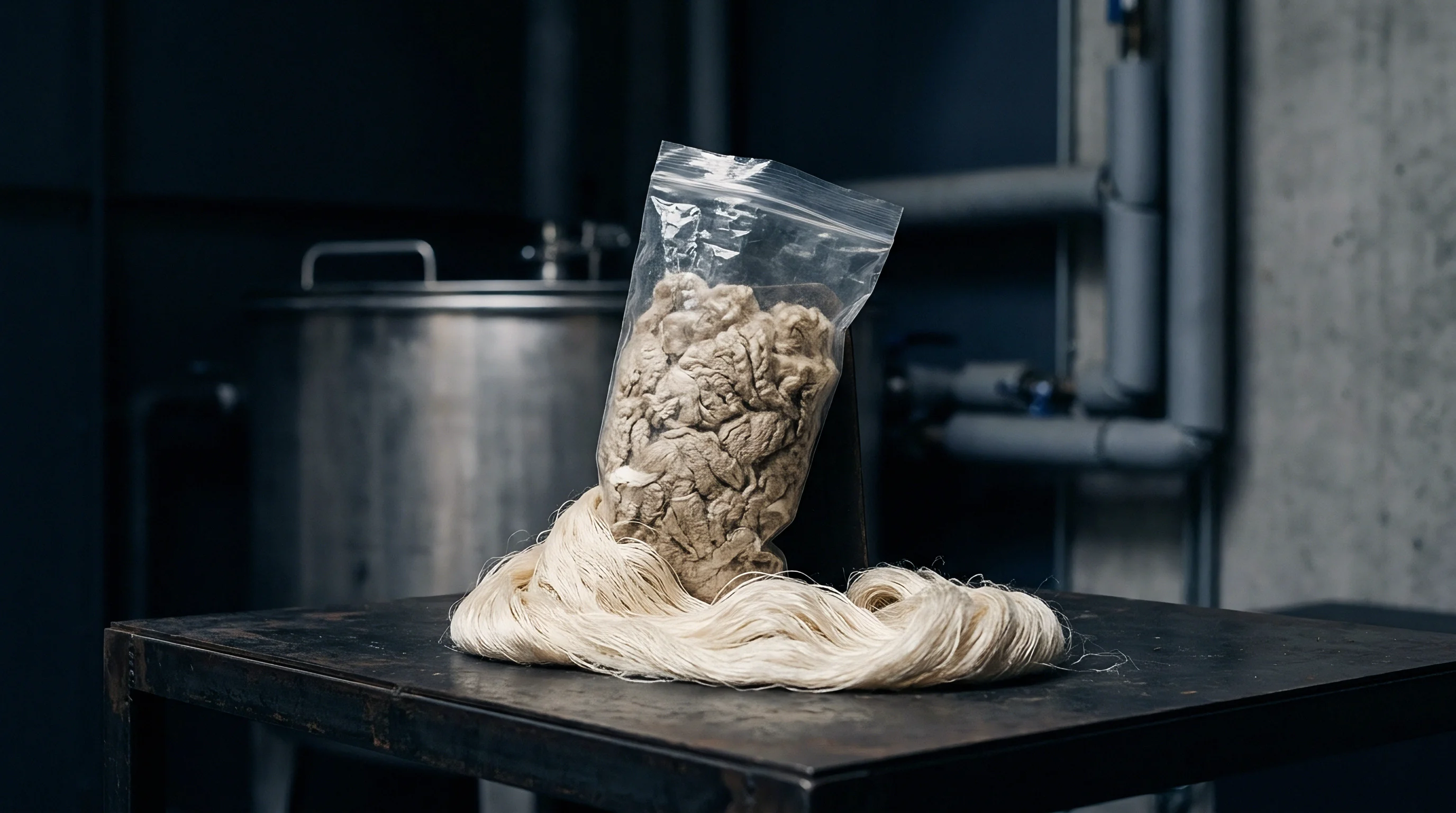
Comb
Sliver preparation sets the baseline for individual staple orientation before fiber enters the rotor unit. In high-speed open-end spinning, carded sliver contains a broad distribution of staple lengths, short fiber content exceeding ten percent, and persistent fiber hooks. Combing removes short floating fibers.
The removal of fibers shorter than 12.7 millimeters alters the mechanical interaction between individual strands and the opening roller clothing wire.
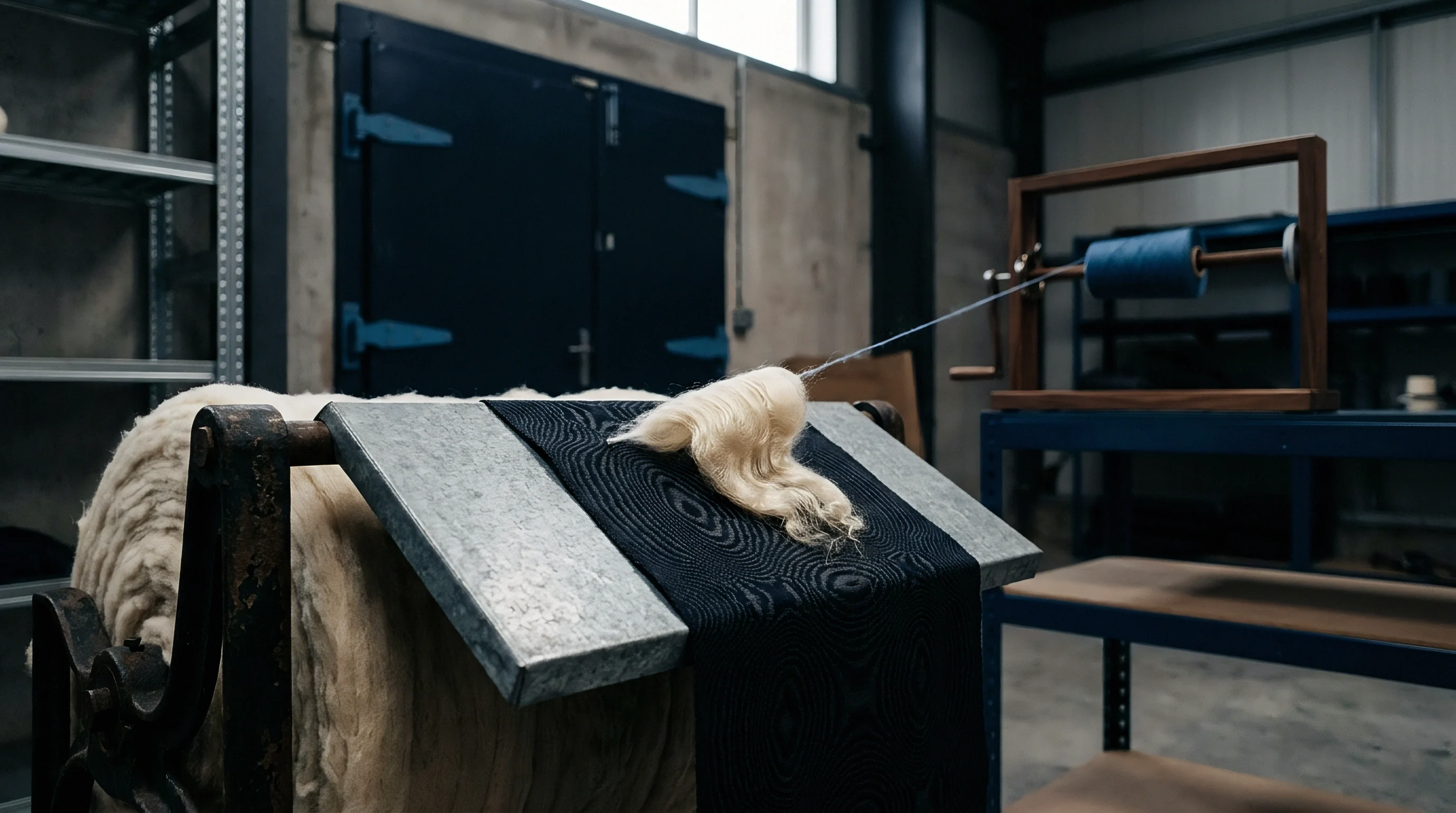
Ring frames run significantly slower. The opening roller operates at rotational speeds between 7,000 and 10,000 revolutions per minute. At these surface velocities, metallic wire teeth strip the fed sliver, drafting the fiber mass by factors exceeding 1,000.
When long, uniform cotton fibers undergo this intense mechanical drafting, their higher flexural rigidity prevents premature buckling along the transfer zone.
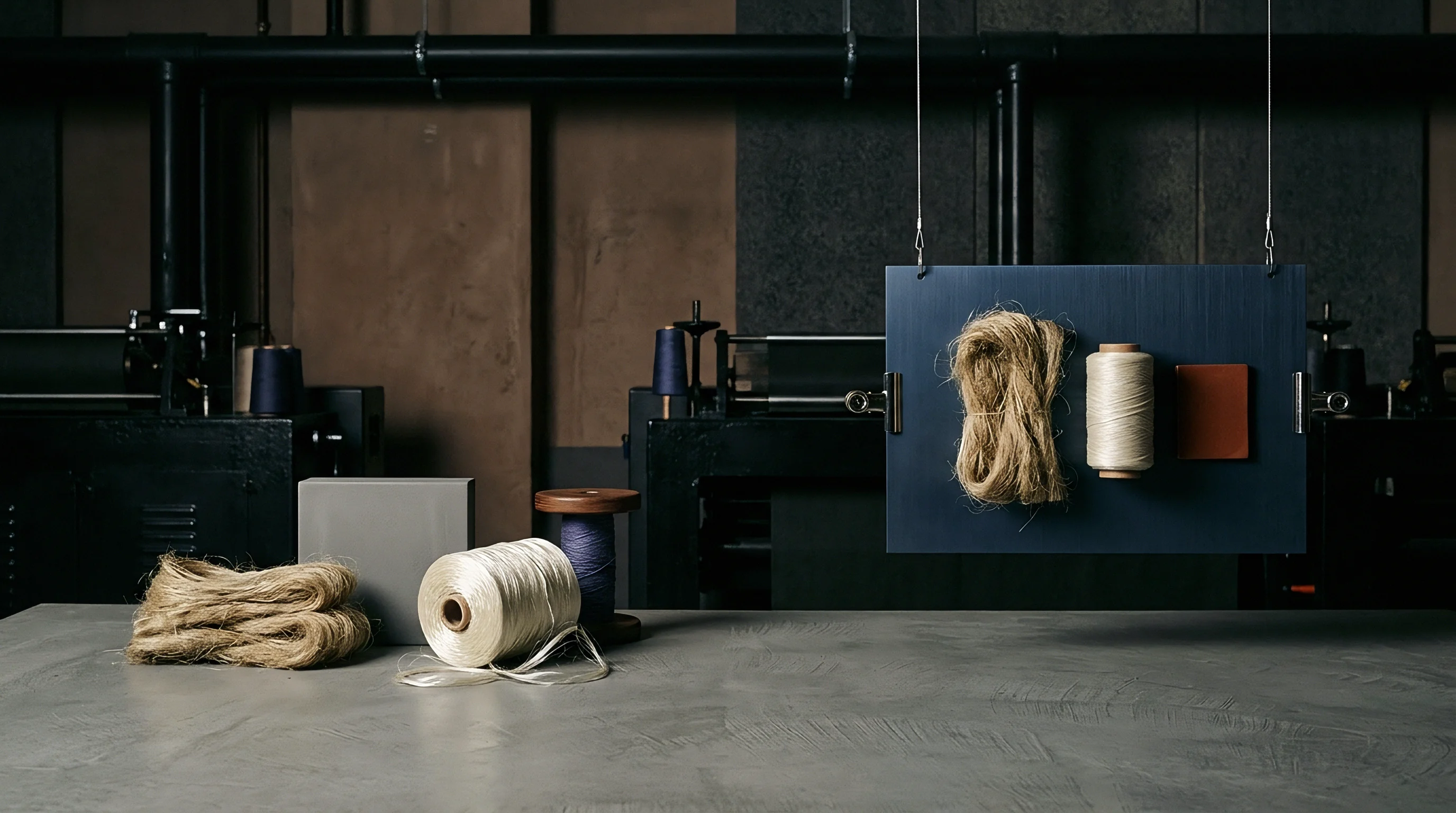
Opening Roll Stripping Action
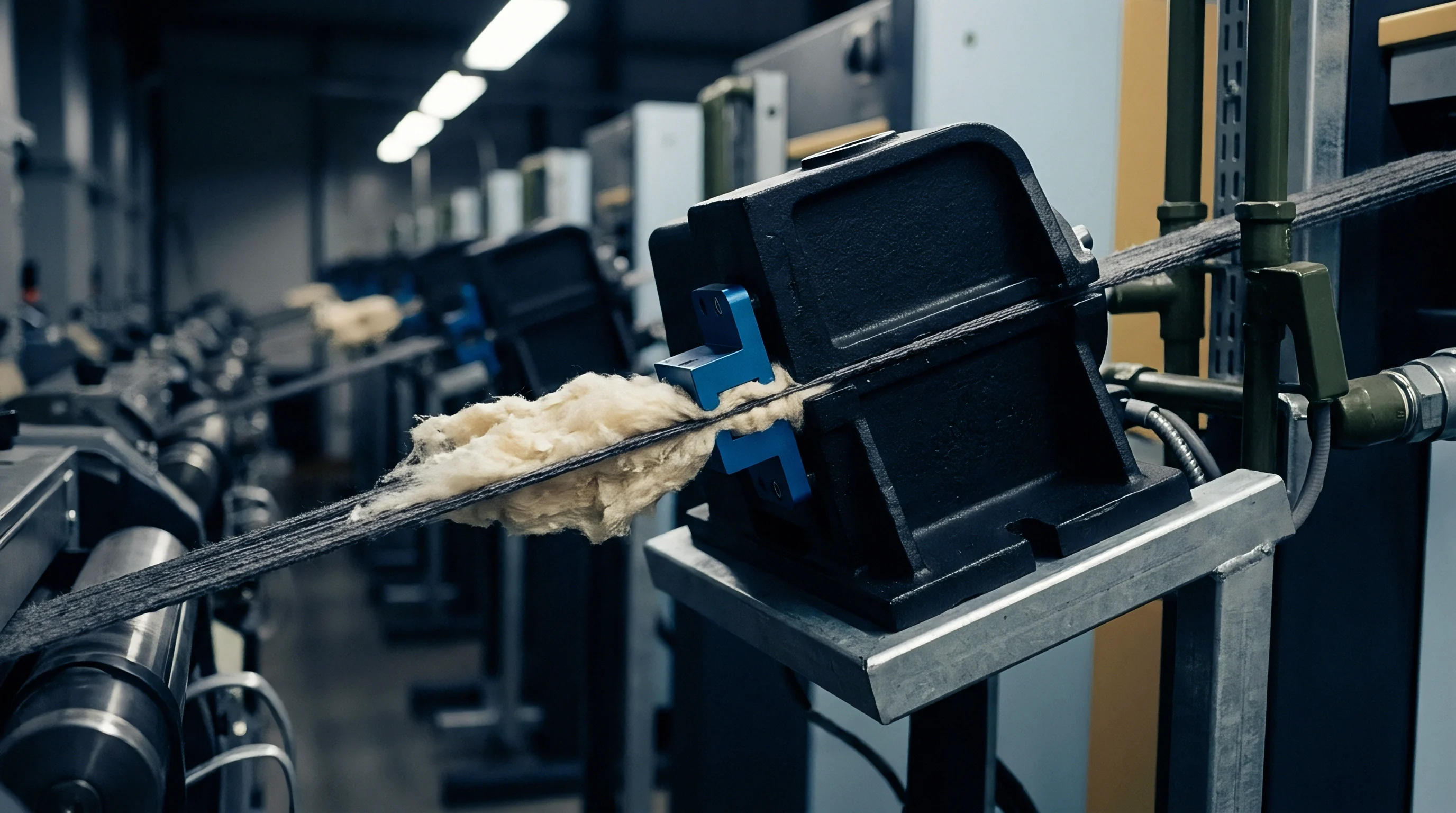
Metallic wire teeth strip sliver strands at surface speeds exceeding 25 meters per second. Higher fiber-to-wire friction occurs when processing long-staple combed cotton due to the reduced presence of lubricating short-fiber fluff. Opening roller speed affects alignment.
The angle of the wire teeth, combined with air suction in the opening housing, pulls individual fibers off the teeth tips into the transport channel.
Operating a 28-millimeter rotor at 110,000 revolutions per minute elevates radial packing pressure above 14 kilopascals within the rotor groove.
Aerodynamics of Feed Tube Delivery
Air velocities inside the transport channel range between 40 and 60 meters per second to preserve fiber straightness. As air carries individual fibers toward the rotor wall, the absence of short fibers reduces turbulent aerodynamic drag within the tube. Longer fibers maintain acceleration along the air stream center line, arriving at the rotor slip wall with minimal trailing hooks.
Yarn spinning mills often claim that higher opener pin wear causes unexpected surface hairiness rather than poor mechanical adjustment of the rotor speed ratio.
Helix
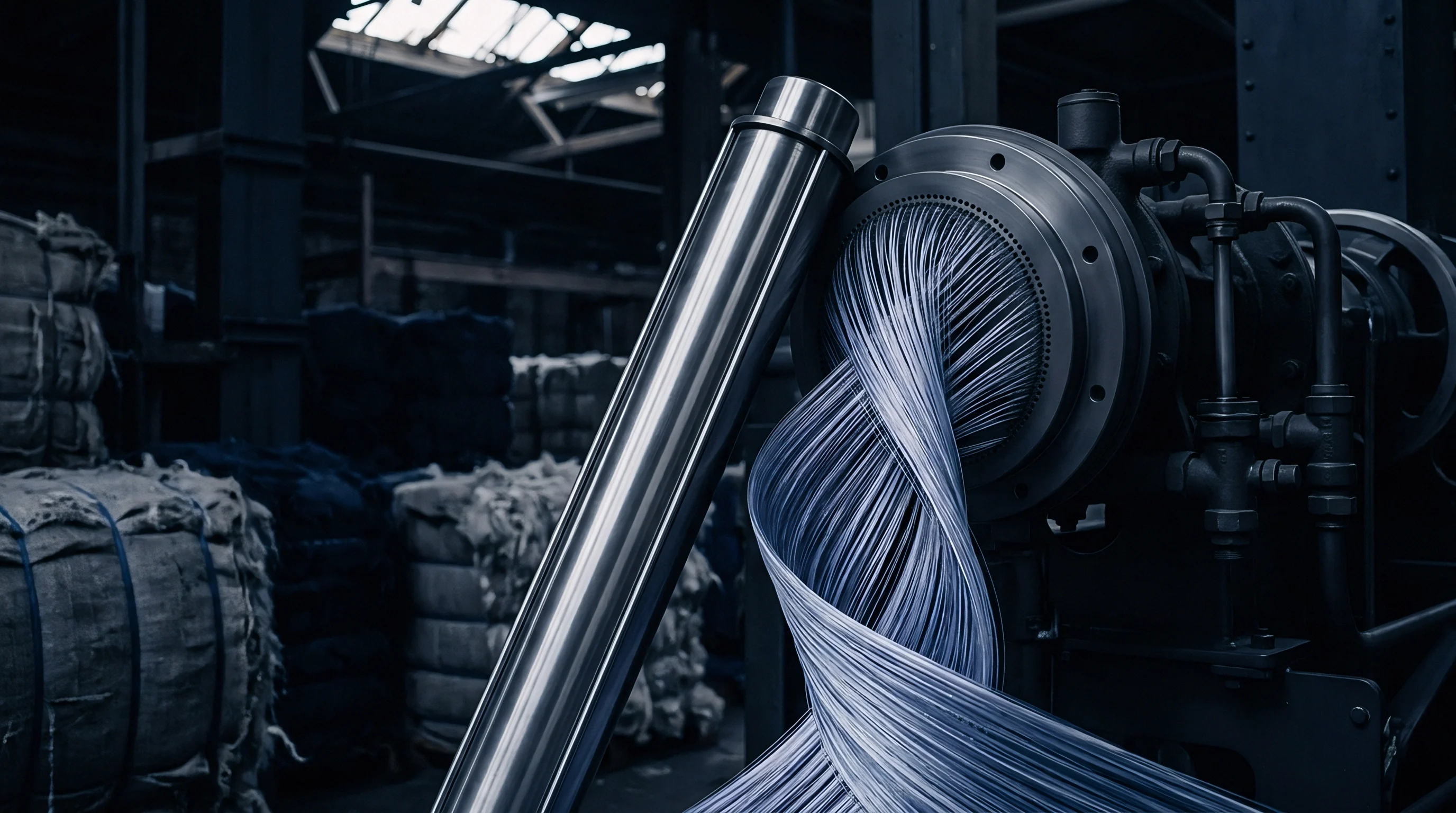
Fiber arrangement within open-end yarn relies on continuous radial movement as twist propagates from the navel to the rotor wall. As individual fibers collect inside the V-shaped rotor groove, centrifugal force compresses them into a continuous ring known as the fiber ribbon. Rotor speed dictates centrifugal acceleration.
The yarn tail peels this fiber ribbon from the groove continuously, inserting real twist supplied by the rotation of the rotor and false twist induced by the ceramic navel surface.
Groove geometry sets packing density. Tension variations across the peeling point force individual fibers to migrate inward toward the yarn axis or outward toward the yarn perimeter. Longer fibers, possessing greater contact length along the rotor groove, experience elevated peeling tension.
This tension imbalance drives long fibers toward the core, leaving shorter or misaligned fibers on the surface.

Force Equilibrium inside Rotor Cavity
Centrifugal forces pulling outward clash with tension forces pulling inward toward the yarn axis. The magnitude of this internal radial stress depends on rotor diameter, rotational velocity, and total yarn twist factor. When spinning fine counts, higher rotor speeds intensify the centrifugal packing force inside the groove.
Fibers deposited early in the ribbon cycle undergo maximum radial compression before twist integration.
| Rotor Diameter (mm) | Rotor Speed (RPM) | Opening Roll Speed (RPM) | Mean Fiber Radius Ratio | Migration Frequency (cycles/mm) | Wrapper Fiber Content (%) |
|---|---|---|---|---|---|
| 28 | 90,000 | 8,000 | 0.54 | 2.10 | 8.5 |
| 28 | 110,000 | 8,500 | 0.58 | 2.45 | 11.2 |
| 32 | 90,000 | 8,000 | 0.51 | 1.85 | 7.2 |
| 32 | 105,000 | 8,500 | 0.55 | 2.20 | 9.8 |
Radial Movement and Surface Wrapper Formation
Outer fibers failing to integrate into the core wrap around the yarn body as wild or wrapper structures. Twisted yarn peel-off occurs simultaneously with continuous fiber deposition. If a fiber head is caught by yarn twist while its tail remains pinned in the rotor groove by centrifugal force, the fiber wraps around the outside of the spinning bundle.
Twist insertion drives structural binding.
Higher twist factors lock surface fibers into the core before radial interchange reaches steady state equilibrium.
Fiber rigidity dictates the depth of radial penetration while twist insertion locks outer wrapper structures.

Tracing
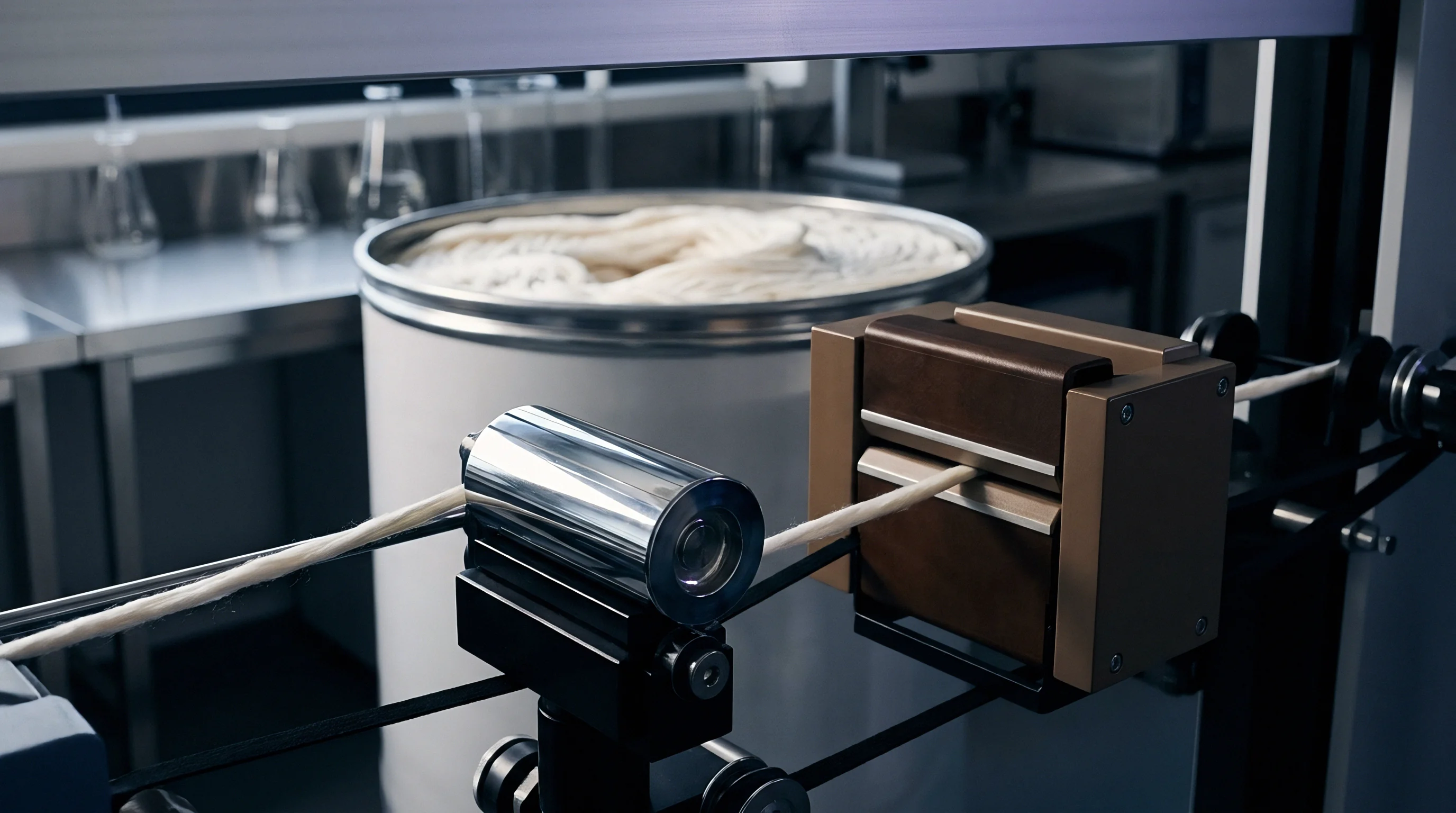
Laboratory determination of radial fiber distribution relies on introducing a small fraction of dyed fibers into the carded or combed sliver matrix. Mixing one to two percent of dark-dyed tracer fibers into the raw stock enables visual tracking of individual fiber paths through the transparent yarn matrix. Tracer fibers reveal internal placement.
Liquid immersion clarifies fiber trajectory.
Microscopic inspection requires immersing the yarn specimen in a liquid having the exact refractive index of cellulose. Methyl salicylate, with a refractive index of 1.544, renders non-dyed cotton fibers completely transparent. Under polarized or bright-field illumination, the path of the dyed tracer fiber emerges with geometric precision across the yarn longitudinal profile.
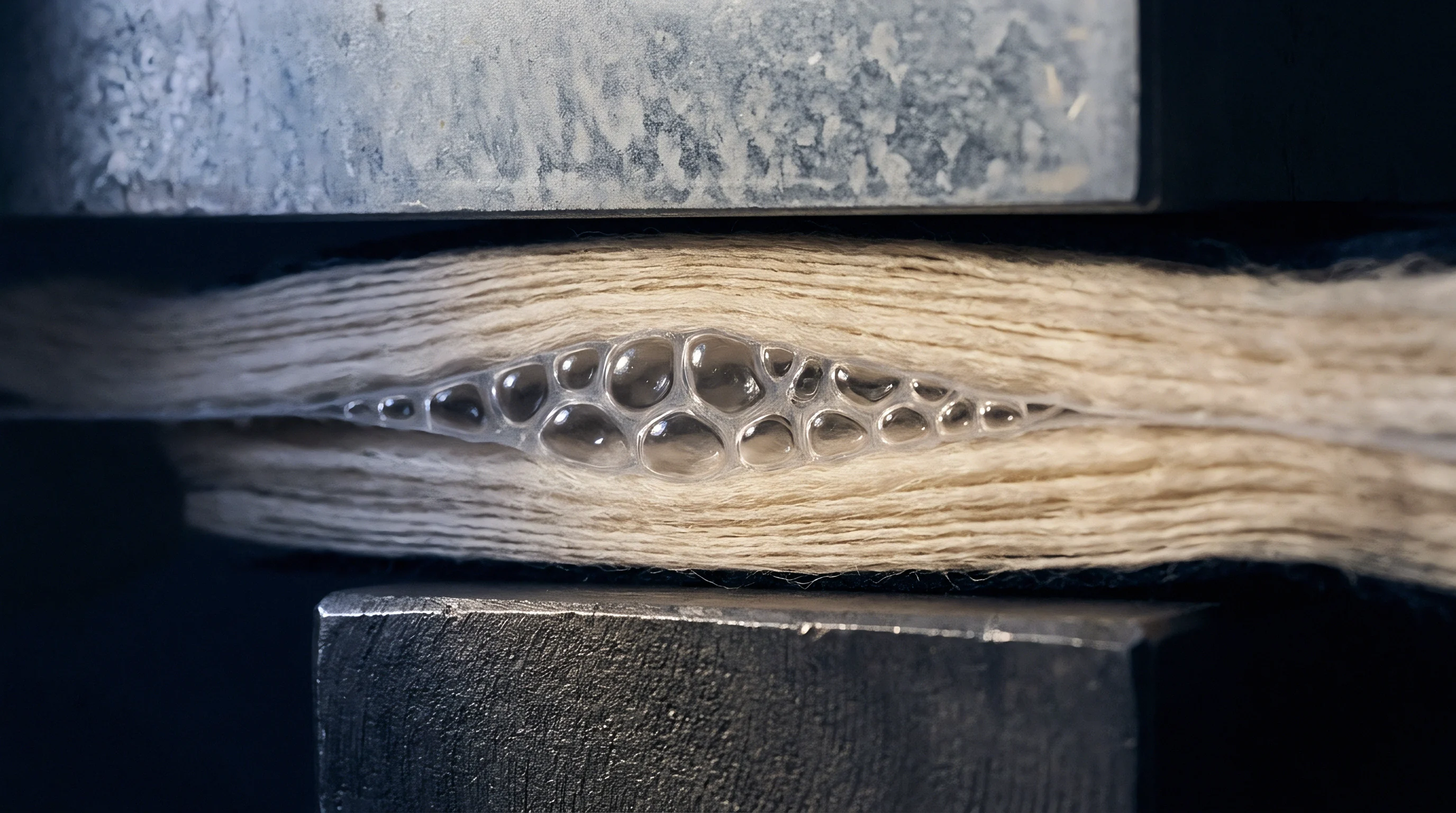
Optical Tracking of Immersed Yarns
Microscopic analysis under polarized light reveals structural paths without mechanical yarn destruction. Spatial coordinate points recorded along the tracer fiber path yield quantitative metrics: Mean Fiber Position, Migration Intensity, and Migration Frequency. Mean Fiber Position measures the average radial distance of a fiber from the yarn core, expressed as a ratio of the yarn radius.
Migration Intensity quantifies the root-mean-square deviation of the fiber radius across its length.
- Prepare sliver with one percent reactive-dyed combed cotton fibers blended uniformly prior to final draw frame passage.
- Spin test yarn under specified rotor speed, opening roll velocity, and navel geometry.
- Cut five-centimeter yarn specimens and mount each flat on an optical glass slide under minimal tension.
- Apply methyl salicylate fluid to submerge the specimen until background fibers become transparent.
- Capture longitudinal microscopic images at fifty-times magnification across twenty consecutive millimeter intervals.
- Calculate mean radial position and migration frequency using spatial coordinate data software.
Does Rotor Speed Shift the Mean Fiber Position?
Increases in rotational velocity compress the outer fiber layers while expanding core packing density. At 90,000 revolutions per minute, combed cotton fibers display fluid radial exchange due to balanced peeling tension. Raising rotor speed to 120,000 revolutions per minute causes high centrifugal pressure within the groove.
This pressure inhibits inner-to-outer movement, trapping longer fibers near the perimeter and elevating wrapper fiber formation.
The structural contribution of inner core migration under ultra-high rotor speeds above 150,000 revolutions per minute remains unquantified due to optical distortion from dense fiber compaction.


Strain
Yarn mechanical failure directly reflects internal structural cohesion produced by radial fiber interchange. Rotor yarns exhibit a characteristic core-sheath architecture. Tensile strength depends on friction.
Radial pressure locks inner fibers. Wrapper fibers lower breaking tenacity. In carded rotor yarns, low staple length uniformity leads to weak structural binding.
Combed rotor yarns overcome this limitation by maximizing fiber-to-fiber contact area along the yarn core.
Tensile Tenacity and Pilling Resistance
Surface wrapper structures shield inner core fibers from abrasive friction during Martindale wear testing. Continuous helical migration binds fiber ends into the yarn interior, preventing loose fibers from forming pills under cyclic rubbing. Pilling resistance depends on surface binding.
When migration intensity drops below 1.5 cycles per millimeter, surface fibers pull out easily, accelerating fabric surface degradation.
- Wrapper fiber buckle ~ Outer fibers fold back on themselves during peel-off, creating localized stress concentration points that reduce overall yarn tensile extension.
- Core slippage under load ~ Inadequate radial interchange leaves core fibers unanchored, permitting longitudinal slipping before ultimate yarn break occurs.
- Groove belt accumulation ~ Deposition of trash or micro-dust in the rotor groove disrupts continuous fiber placement, causing irregular migration cycles and thick places.
- Navel friction abrasion ~ Excessive surface friction against aggressive spiral ceramic navels strips wrapper fibers, generating fly waste during downstream knitting.

Rotor Speed versus Mechanical Performance Calculation
Consider a Ne 30 combed cotton yarn produced at two distinct machine configurations. Setup A operates at 90,000 revolutions per minute with a 32-millimeter rotor, yielding a migration intensity of 2.15 and breaking tenacity of 14.8 centinewtons per tex. Setup B accelerates rotor speed to 120,000 revolutions per minute using a 28-millimeter rotor.
Centrifugal packing forces in Setup B suppress radial interchange, reducing migration intensity to 1.45. Breaking tenacity declines to 13.6 centinewtons per tex despite identical raw material composition.
| Spinning System | Raw Material Type | Breaking Tenacity (cN/tex) | Uster Hairiness (H) | Migration Intensity (q) | Martindale Pilling Grade |
|---|---|---|---|---|---|
| Rotor Open End | Carded Cotton (Ne 30) | 12.1 | 4.80 | 1.20 | 3-4 |
| Rotor Open End | Combed Cotton (Ne 30) | 14.8 | 3.60 | 2.15 | 4-5 |
| Ring Spun | Combed Cotton (Ne 30) | 17.5 | 5.20 | 2.80 | 3.5 |
ISO 2060 testing dictates a maximum linear density variation of plus or minus two percent before delivery approval is withheld.
Setting rotor speeds beyond the structural migration capability of combed fibers reduces yarn breaking strength, causing high end-break rates during high-speed warping and knitting operations.


Margin
Financial evaluation of combed rotor spinning requires balancing combing noil removal against high rotor machine productivity. Combing waste increases raw material outlay. Duty rates vary by fiber mass.
Mill trials verify delivery strength. Yarn count fixes linear density. Removing twelve to sixteen percent short fiber as combing noil elevates incoming bale raw material costs per kilogram of finished sliver.
Rotor spinning machinery processes this premium sliver at production rates up to five times higher than ring spinning frames.
Landed cost calculations incorporate raw fiber prices, combing yield losses, machine electricity draw, and tariff classifications. Combed cotton yarns qualify under specific Harmonized System tariff codes depending on combed fiber weight percentages. Misclassifying carded rotor yarn as combed rotor yarn to meet customer handfeel specifications creates tariff compliance exposure and commercial penalty risks.
Raw Material Outlay and Combing Waste Metrics
Raw cotton costs escalate rapidly when combing waste percentages increase from twelve to sixteen percent. Sourcing engineers specify target short fiber limits to balance open-end spinning stability with combed sliver yield economics. When yarn specifications mandate high tenacity and low pilling, the added outlay of combing waste yields clear financial recovery by eliminating downstream fabric rejected lots.
- Sliver combed noil ratio ~ Specifying a fourteen percent noil extraction optimizes fiber length uniformity while holding raw material waste within target budgets.
- Rotor groove profile selection ~ Selecting a narrow T-groove increases packing density, enhancing radial migration for fine count combed yarns.
- Navel surface texturing ~ Choosing a smooth ceramic navel minimizes surface abrasion on fine combed fibers, preserving yarn surface appearance.
- Customs tariff documentation ~ Ensuring lab analysis dossier proves combed fiber processing protects shipments from re-classification under higher duty schedules.
Contractual Specifications for Combed Rotor Delivery
Commercial agreements specify mean fiber length, migration index tolerance, and rotor operational parameters to prevent delivery disputes. Specifying combed rotor yarn requires linking physical property targets to recognized laboratory test standards. Standard delivery clauses enforce acceptable quality limits for strength, hairiness, and count variation.
Contracts incorporating International Cotton Association Rule 223 require that claims regarding fiber length distribution accompany accredited HVI laboratory reports drawn within fourteen days of port arrival.