Mechanical Tuft Opening Dynamics in Cotton Synthetic Processing Lines
Optimize blowroom beater geometry and pin speed to match fibre tensile limits, preventing static buildup, crimp loss, and customs blend misclassification.

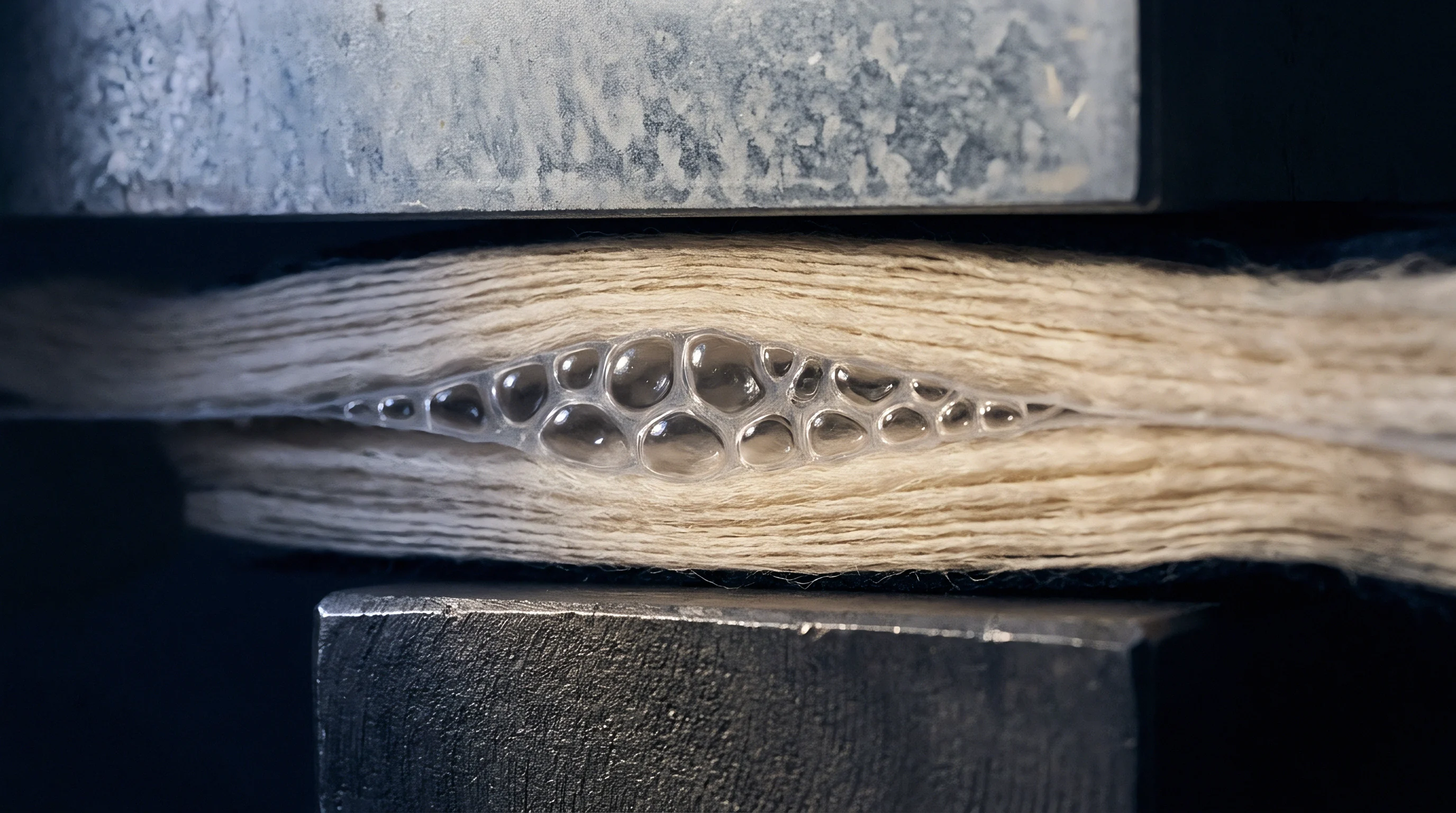
Beater
Opening lines process raw cotton and synthetic tow fragments by transferring momentum from rotating steel points into packed fibre masses. The incoming compressed bale tuft arrives at a density of roughly 350 to 450 kilograms per cubic metre following container extraction. Mechanical opening reduces this mass to discrete tufts weighing between 1.5 milligrams and 8.0 milligrams before the material reaches the chute feed of the revolving flat card.
The primary determinant of downstream ring or vortex spinning consistency remains the geometry and peripheral speed of the coarse and fine opener pins.
Cotton varieties presenting an AFIS upper quartile length of 28.5 to 30.5 millimetres tolerate different impact shears than semi-dull polyester or bright viscose staples cut to 38.0 millimetres. When synthetic tow fragments encounter sharp strike points at identical peripheral speeds as seed cotton, synthetic polymer thermal softening occurs at the pin interface. The surface temperature generated across a striker tip running at 18 metres per second regularly exceeds the glass transition temperature of 1.33 dtex polyethylene terephthalate, which sits between 68 and 80 degrees Celsius.
Energy delivery at the feed roller gap splits incoming tuft clusters along natural cleavages in seed cotton, whereas synthetic staples deform plastically under direct pinned loads. A spiked roller striking a dense 50-milligram tuft strips external fibres by tensile displacement while compressing the inner core. Carding waste increases rapidly when this compressive core survives into the licker-in zone.
The glass transition threshold of polyester staple dictates a maximum strike tip velocity of 14 metres per second to prevent permanent fibre crimp collapse.
Mills running cotton-synthetic intimates frequently adjust roller spacings rather than decelerating the primary cylinder lines. Running high striker speeds against tight settings shreds cotton cross-sections, producing fragments shorter than 12.7 millimetres that downstream air currents cannot capture. The resulting short fibre content elevates sliver count CV percentage by two to four points across the drawing passages.
Every operational intervention inside the blowroom balances opening intensity against structural fibre damage. Striking pins must release plant debris, motes, and leaf fragments without fracturing mature secondary cell walls in Gossypium hirsutum. Synthetics require progressive volumization to disentangle finish-bonded bundles without stripping spin finishes or creating fused hook configurations.
Operating a pin cylinder with worn blunt crowns drags the tuft through the grid bars instead of shearing individual locks cleanly from the feed nip.


Shearing
The detachment of tufts across the striker plate relies on three discrete mechanical forces: normal impact, tangential skin friction, and circumferential air drag. A feed roll rotating at 1.2 metres per minute feeds a compressed batt against an anvil nose where a spiked or wired beater rotates between 450 and 950 revolutions per minute. The shear rate applied to the tuft boundary is governed by the nip-to-point gauge.
Natural cotton presents an unoriented spiral fibrillar architecture that ruptures along longitudinal fissures under sudden mechanical shocks. Synthetic polyester fibres exhibit high molecular orientation along their longitudinal axis, yielding tensile breaking tenacities between 45 and 62 centinewtons per tex, compared to 26 to 32 centinewtons per tex for standard upland cotton. The mechanical energy required to detach a gram of synthetic staple tuft exceeds that for natural cotton by a factor of 1.8 at standard room conditioning of 65 percent relative humidity and 21 degrees Celsius.

Do Blended Batts Rupture Unevenly during Impact?
Bled stocks running through a single opening sequence undergo selective constituent segregation under high-velocity mechanical impact. When a pre-blended batt containing 60 percent carded cotton and 40 percent polyester staple meets a pinned cylinder, the cotton tufts fracture rapidly into low-mass entities, while synthetic clusters remain cohesive. The polyester component absorbs kinetic energy elastically, rebounding off striker bars with its internal crimp partially disturbed.
Air velocity inside the transfer duct transports lighter fragments faster than dense, unopened synthetic clusters. This aerodynamic divergence leads directly to short-term blend ratio variations in the card chute feeder. A nominal 60/40 blend often fluctuates between 54/46 and 67/33 across two-minute sampling windows when fine opening relies exclusively on high-impact beaters.
| Fibre Classification | Staple Length (mm) | Tenacity (cN/tex) | Beater Surface Speed (m/s) | Resulting Tuft Mass (mg) | AFIS Nep Creation Ratio |
|---|---|---|---|---|---|
| Upland Cotton (Middling) | 28.5 | 29.2 | 18.5 | 2.1 | 1.45 |
| Pima Cotton (Grade 2) | 35.0 | 38.5 | 14.0 | 1.6 | 1.25 |
| Recycled Polyethylene Terephthalate | 38.0 | 46.0 | 11.5 | 5.8 | 2.10 |
| Virgin Semi-Dull Polyester | 38.0 | 58.0 | 12.5 | 4.2 | 1.15 |
| Bright Viscose Rayon | 38.0 | 24.0 | 9.5 | 3.1 | 1.08 |
The creation of neps during fine opening reflects excessive pin penetration into compressed stock. Mechanical pins forced into an unsorted synthetic tuft hook individual filaments, looping them into entanglements that the carding flat clothing subsequently rolls into tight knots rather than parallelizing. For recycled polyester containing variable draw ratios and residual bottle flake contaminants, nep creation indices regularly exceed virgin polyester by 80 percent under identical opening parameters.
Cellulosic synthetics like lyocell and viscose display much lower wet and dry tenacities than polyester, demanding substantial reductions in cylinder velocity. Striking lyocell at typical upland cotton cylinder speeds creates widespread surface fibrillar peeling. Such mechanical degradation manifests later as patchy dye absorption and structural pilling in woven and knitted goods.
A supplier explains the presence of tight nep formations as an inevitable consequence of statutory limits placed on harvest drying temperatures.
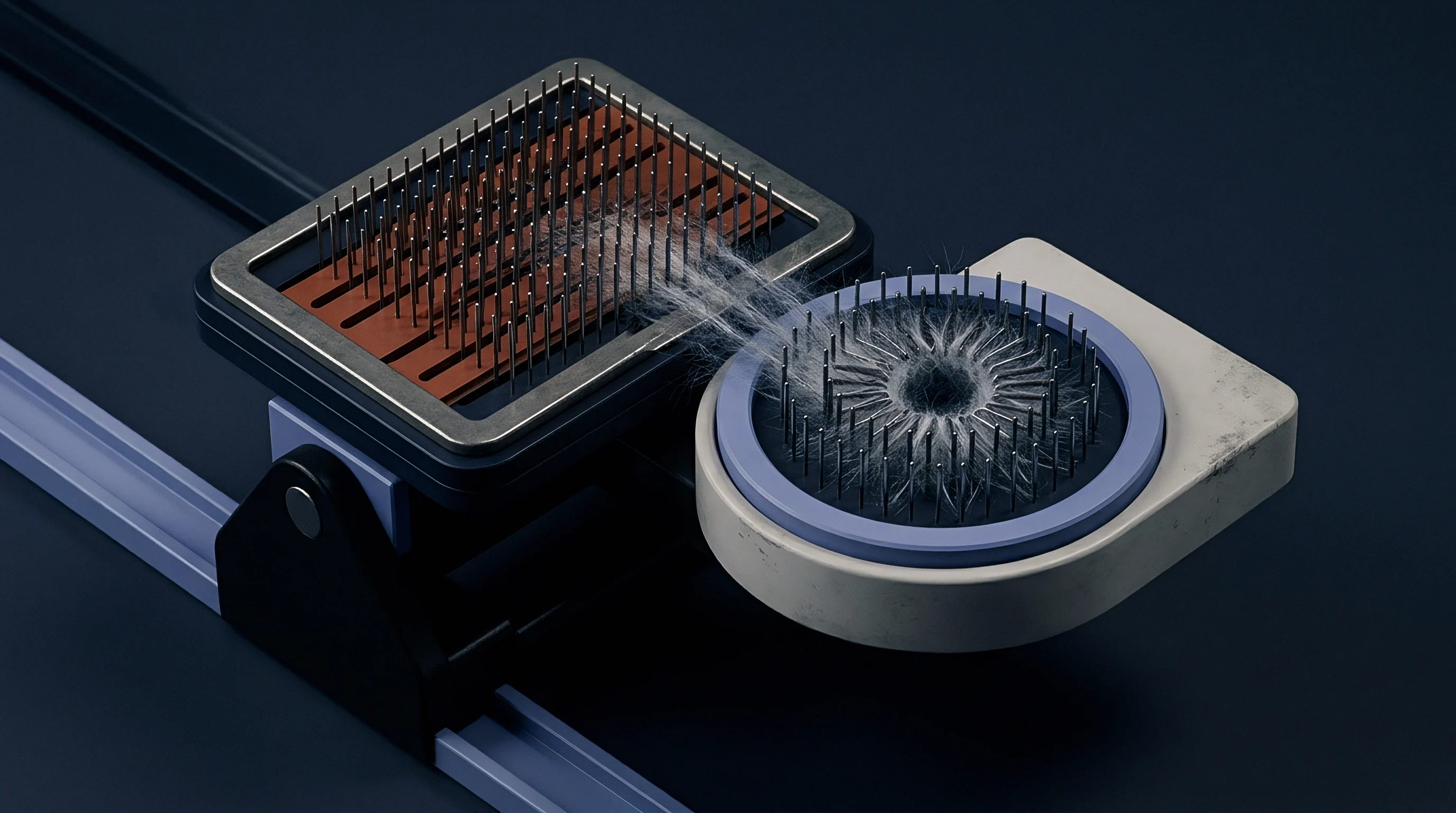
Air
Aerodynamic transport serves as an active opening mechanism alongside physical pneumatic conveyance. As fibres transit from the primary pinned roll into duct networks, turbulent boundary layers pull the loose ends of exposed staples outward. The ratio of air velocity to peripheral cylinder speed establishes whether tufts discharge cleanly through centrifugal release or wrap around the roller cylinder.
In standard blowroom configurations, conveying air streams maintain velocities between 12 and 16 metres per second within circular ducts ranging from 250 to 350 millimetres in diameter. Below 10 metres per second, heavy cotton trash and dense synthetic clumps precipitate out of suspension, collecting along duct elbows and triggering fire hazards through friction. Above 18 metres per second, micro-turbulences create rolling knots among flexible long-staple fibres.
Static air pressure across fine opening enclosures influences tuft expansion. When tufts enter low-pressure zones created by suction fans, trapped bale air expands the internal matrix, reducing bulk density prior to secondary card feeding. The relationship between ambient static suction, air mass flow rate, and fibre expansion operates under strict mechanical constraints.
ISO 139 standard atmospheres dictate conditioning tolerances of plus or minus two percent relative humidity before any mechanical tuft volume characterization begins.
Synthetic fibres carry lubricating spin finishes comprised of ethoxylated fatty acids, mineral oils, and antistatic quaternary ammonium compounds at levels between 0.10 and 0.35 percent by weight. If ambient air humidity inside the ducting drops below 50 percent, antistatic dissipations collapse. Fibres immediately generate surface charges exceeding 15 kilovolts per metre during pneumatic transit.
Static accumulation forces individual synthetic filaments to adhere tenaciously to galvanized sheet-metal duct walls. Pinned opening rollers running electrostatically charged polyester collect fibre laps around their axle shafts within fifteen minutes of continuous line feeding. The subsequent heat generation melts localized polymer films, necessitating complete line shutdowns for manual clearing.
A line operator who balances static pressures across condenser drums prevents premature tuft compaction against perforated cage screens.

Grid
Grid bars positioned beneath opening cylinders enforce clean separation between liberated contaminants and usable spinning stock. The angular geometry of these profiled bars directs the trajectory of dislodged particles while retaining flexed staple tufts within the main operating air stream. In processing upland cotton, trash removal efficiency balances against lint loss through these operational gaps.
Bar profiles feature sharp, wear-resistant edges inclined at angles between 15 and 45 degrees relative to the cylinder tangent. Adjustable triangular bars allow operators to vary the open separation area from 30 percent up to 65 percent depending on incoming lot leaf grades. Seed-coat fragments carrying attached fibre tufts possess higher inertia than clean tufts, causing them to strike the leading edge of the bar and ricochet downward into waste collection chambers.
Synthetic lines utilize closed, continuous grid plates or blind segments in place of slotted cotton cleaning bars. Because synthetic staple tow carries zero natural plant trash, open grid bars merely cause virgin fibre loss. Attempting to run a 50/50 intimate blend over open cotton cleaning bars discards up to 1.8 percent of premium synthetic staple into the under-machine drop boxes.
Adjusting the clearance between cylinder teeth and grid bar edges dictates cleaning precision across varying tuft sizes:
- Centrifugal extraction zone clearances maintain a gap between 0.70 and 1.20 millimetres to eject dense outer-hull fragments without trapping individual fibres.
- Secondary baffle positions set knife edges precisely at 0.50 millimetres from the path of passing pin tips to slice away loosely held trash particles.
- Air bleed apertures admit controlled volume inflows between 150 and 220 cubic metres per hour, preventing descending waste from re-entering the carrying air stream.
- Collection chamber seals maintain a continuous negative pressure differential of 40 to 60 Pascals to secure settled drop-waste against back-drafts.
When processing blends containing mechanically recycled cotton, grid settings must account for irregular, partially disintegrated yarn pieces. Recycled stocks hold short-fibre contents exceeding 22 percent by weight alongside intact woven remnants. Traditional triangular grids choke rapidly when handling these heterogeneous streams, demanding continuous automatic reverse-pulse suction cycles beneath the bar array.
Failure to calibrate grid apertures according to the trash content of incoming lots causes rapid blockages that deflect usable fibres into the waste stream, inflating clean raw material consumption across an order.

Split
The commercial fate of blended spinning lots is decided at the weighing pan and blending hopper before fine opening occurs. Blend ratios declared for regulatory customs purposes and consumer garment labeling depend on mechanical stability throughout the tuft sizing line. The quantitative testing of fiber composition, governed by ISO 1833 chemical dissolution procedures, allows commercial tolerances of plus or minus two percentage points on declared component ratios.
A mill processing a nominal 65 percent polyester and 35 percent combed cotton blend must maintain strict control over tuft mass distributions. If opening mechanisms reduce cotton to 1.5-milligram tufts while polyester clusters exit the fine beater at 9.0 milligrams, subsequent aerodynamic blending within mixing chambers fails to achieve an intimate dispersion. The heavier polyester tufts settle preferentially at the bottom of storage silos.
Consider a 20,000-kilogram commercial lot of yarn destined for cross-border delivery under Harmonized System code 5509.53, covering yarns of polyester staple fibers mixed mainly with cotton. Sourcing parameters assume a declared weight composition of 65 percent polyester and 35 percent cotton. The customs duty applied to this synthetic-predominant classification sits at 8.0 percent in the target import jurisdiction, compared to a higher rate applied to cotton-predominant yarns under chapter 52.
Assume the fine opening beater operates with dull pins at excessive feed rates, yielding inconsistent tuft breakdown across differing polymer tenacities. Aerodynamic separation inside the chute-feed transport system causes blend ratio migration across the run. Laboratory analysis of drawn sliver samples via ISO 1833-11, utilizing 75 percent sulfuric acid to dissolve the cotton component, reveals that peripheral sliver sections drop to 62.5 percent polyester, while central segments rise to 68.2 percent.
| Lot Sub-Segment | Tested Polyester Content (%) | Tested Cotton Content (%) | Tariff Heading Realized | Duty Rate Applied (%) | Landed Cost Variance Per kg (USD) |
|---|---|---|---|---|---|
| Bale Laydown Infeed Target | 65.0 | 35.0 | 5509.53 | 8.0 | 0.00 |
| Chute Feed Zone A (Fine Tufts) | 68.2 | 31.8 | 5509.53 | 8.0 | -0.08 |
| Chute Feed Zone B (Dense Tufts) | 62.5 | 37.5 | 5509.53 | 8.0 | +0.05 |
| Segregated Card Edge Sliver | 58.5 | 41.5 | 5509.53 | 8.0 | +0.12 |
| Disputed Out-of-Spec Blend Portion | 48.0 | 52.0 | 5205.12 | 12.5 | +0.34 |
| Data calculated on base raw material values: virgin polyester staple at 1.45 USD per kilogram; upland cotton at 2.10 USD per kilogram. Out-of-spec portion incurs reclassification and administrative penalty surcharges. | |||||
If tuft size variation allows cotton to concentrate locally, entire production segments slip below the 50 percent threshold into cotton-predominant tariff categories. Customs audits applying quantitative chemical dissolution will invalidate the certificate of origin and penalize the importer for incorrect tariff classification. Furthermore, uneven tuft distribution generates shade variations and dye streaks in knitted single jersey fabrics that cannot be corrected during finishing.
Customs reclassification from synthetic-predominant heading 5509 to cotton heading 5205 triggers an immediate administrative tariff adjustment that eliminates the importer margin.
Maintaining mechanical tuft parity requires matching the energy input directly to the mechanical properties of the respective components. Fine opening lines running cotton-synthetic mixtures require dedicated independent beaters for each raw material line prior to aerodynamic confluence. Combining virgin synthetics and raw cotton into a single mechanical opening beater introduces uncontrollable variance into downstream yarn quality metrics.
Under international standard purchase contracts, any yarn lot exhibiting a blend variance exceeding 3.0 percent from the specification document gives the buyer the absolute right to reject the delivery at the port of arrival.
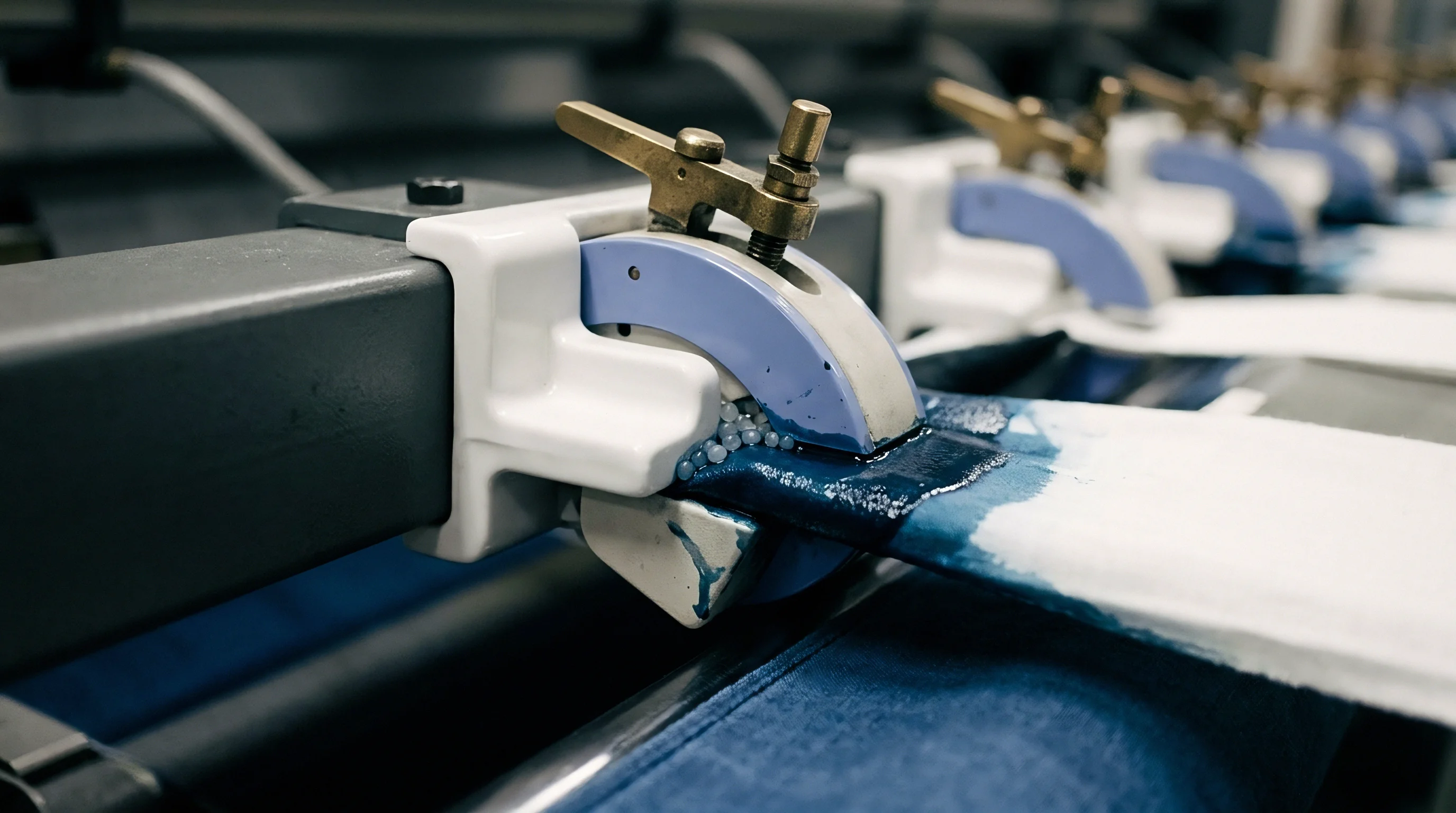
Tine
The physical geometry of opening cylinder clothing dictates the rate of energy dissipation into processed fibres. Modern blowroom lines deploy an array of pin, wire, and blade structures optimized for specific raw material densities. Striker tines range from forged, induction-hardened steel pins to interlocked saw-tooth metallic wires wrapped spirally around the cylinder core.
Pin density directly affects opening efficiency. Coarse pre-openers utilize heavy cast tines configured at densities between 0.5 and 1.5 pins per square centimetre. These robust points tear bale slices into fragments weighing 50 to 100 milligrams.
Fine opening cylinders transition to metallic tooth wire configurations ranging from 80 to 240 points per square inch, oriented at positive rake angles of 10 to 25 degrees for natural cotton and zero to negative 10 degrees for synthetic staples.
Metallic tooth geometry governs the mechanics of tuft hold and release:
- The cylinder wire engages the tuft matrix at the feed plate edge, piercing the exterior boundary with positive rake teeth.
- Centrifugal acceleration combines with air turbulence to carry individual fibres upward along the tooth face.
- Stripper rollers running at differential speeds lift opened tufts clear of the wire valleys to prevent tooth loading.
- Discharge air knives generate focused pressure differentials that strip residual clinging fibres away from the base fillets.
Processing synthetic fibres on wire designed with sharp positive rake angles generates point loading. Filament loops lodge deeply within the wire tooth gullet, where heat, friction, and tension compress the polymer into dense glazed films. Once tooth gullets fill with fused polymer residues, the cylinder loses all capacity to open incoming tufts, functioning instead as a smooth frictional drum that rolls loose stock into irregular neps.
Sawtooth wire running against recycled synthetic polyester requires specialized point hardening treatments. Surface coatings such as titanium nitride or chrome carbide extend tooth longevity when processing stocks containing abrasive titanium dioxide delustrants and silica impurities. An unhardened wire profile loses its mechanical shearing edge within 800 metric tons of continuous throughput.
A classer identifying irregular nep formations inspects the tooth flanks for micro-burrs using handheld optical magnification before adjusting feeder rates.

Friction
Mechanical opening operates through precise manipulation of surface boundary layer friction. The coefficient of friction among natural cotton fibres ranges from 0.22 to 0.28 under dry room conditions, rising sharply to 0.38 when relative humidity exceeds 70 percent. Higher humidity softens the wax layers coating the cotton cuticle, causing individual fibres to adhere and resist mechanical opening shears.
Synthetic fibres present an entirely different tribological profile dominated by boundary-lubricant films. Filament-to-filament friction must remain sufficiently low to allow smooth disentanglement inside the opening zone, yet maintain adequate fibre-to-metal traction to allow beater pins to pull tufts away from the feed nip. Ethoxylated lubricants minimize static coefficient spikes during the primary millisecond of striker contact.
Viscose rayon contains zero internal wax structures, exhibiting high inter-fibre friction due to its serrated, multi-lobed cross-sectional perimeter. When mechanical beaters strike dry viscose, the shear forces shatter the outer cellulose skin, creating short fibril fragments and dust. Humidification systems feeding viscose opening bays must maintain constant conditions of 60 percent relative humidity within a narrow tolerance of 3 percent.
A rigorous sampling protocol verifies raw material preparation before fine opening:
- Equilibrium moisture verification requires conditioned core samples dried to constant weight in a ventilated drying oven per ISO 6741 standards.
- Extractable finish level determinations utilize solvent extraction in petroleum ether per ISO 1368 to confirm spin finish concentrations between 0.12 and 0.20 percent.
- Fibre cohesion testing via rotor drafting force analysis identifies batch-to-batch variations in synthetic staple lubrication.
- AFIS particle counts quantify the baseline nep content of incoming raw lots before any beater strikes the stock.
The rate of static dissipation across the beater housing governs fine tuft separation. When high-speed metallic teeth impact low-conductivity polyester, kinetic energy converts directly into electrostatic charge. Without rapid charge grounding through ionizing discharge bars or specialized chemical antistatic sprays, fibres repel one another radially, creating diffuse, low-density tuft clouds that resist uniform aerodynamic collection.
Whether mechanical energy yields parallel fibres or tangled clusters depends on whether the thermal energy generated at the striking point exceeds the dissipation rate of the polymer mass.