Quantification Metrics for Oxidized Keratin Matrix Proteolysis in Recycled Animal Fibers
Alkali solubility above twenty-two percent and cysteic acid ratios over zero point four indicate severe keratin proteolysis in mechanically recycled animal lots.


Scission
Post-consumer animal fiber lots enter the recycling stream with severe chemical alteration from ultraviolet radiation, atmospheric oxygen, laundering cycles, and aggressive mechanical shredding. Keratin consists of crystalline intermediate filament proteins rich in alpha-helices embedded within an amorphous matrix of high-sulfur keratin-associated proteins. Cystine disulfide linkages (-S-S-) stabilize this matrix, supplying the lateral cohesion that prevents individual macrofibrils from slipping under axial loads.
When discarded wool and cashmere textiles face photo-oxidation and wet reprocessing, these disulfide bonds oxidize progressively into cystine monoxide, cystine dioxide, and cysteic acid residues. The peptide backbone fractures.
Mechanical shredding in rotary garnetting machines tears yarns apart, transferring enormous shear stresses onto fibers already depleted of crosslink density. The chemical degradation of disulfide bonds accelerates mechanical rupture, converting long staple fleeces into fragmented, fragile lengths. The peptide chains split into shorter segments through simultaneous proteolysis, increasing the concentration of free terminal amino and carboxyl groups.
This molecular fragmentation destroys the elastic recovery of the animal hair, altering how the stock behaves when processed in spinning preparations.
Oxidative sulfur conversion precedes mechanical breakage in every recycled post-consumer animal lot.
Primary Amine Accumulation in Cleaved Polypeptides
End-group analysis tracks the direct severing of the protein backbone. Intact animal fibers carry a baseline of approximately twenty to thirty micromoles of free amino terminals per gram of dry keratin. Acid stripping of dyes and wet mechanical garnetting hydrolyze peptide bonds, driving free amino terminal counts upward toward eighty to one hundred and twenty micromoles per gram.
The sample turns brittle. Quantifying these newly formed primary amines via spectrophotometric assays separates superficial weathering from deep structural proteolysis.
Reagents like o-phthaldialdehyde react selectively with primary amines in the presence of thiols to generate fluorescent isoindole derivatives, yielding measurable absorbance peaks at three hundred and forty nanometers. Ninhydrin colorimetry provides an alternative quantification route, forming Ruhemann purple upon reaction with alpha-amino acids and cleaved peptide fragments. An elevated concentration of free amine terminals correlates with reductions in single-fiber tensile strength, signaling that the structural integrity of the intermediate filaments has deteriorated past the threshold of spinning stability.
- Disulfide monoxide formation initiates structural vulnerability through the preliminary addition of oxygen atoms across cystine bridges.
- Cysteic acid generation destabilizes intermediate filament assemblies by introducing strongly ionized sulfonate groups into the hydrophobic core.
- Peptide backbone scission diminishes axial tensile strength through the direct cleavage of covalent amide linkages.
- Cortical cell detachment accelerates mechanical dusting during preparatory blowroom operations.

Cortical Disruption and Matrix Protein Dissociation
The interior architecture of animal hairs relies on orthocortical and paracortical cells bound by an intercellular cement rich in lipids and non-keratinous proteins. Oxidative proteolysis targets this cell membrane complex, leaching out the low-sulfur cementing proteins during wet washing and wet pulling operations. As the cementing layers dissolve, the cortical cells separate into distinct, isolated bundles.
The wet tenacity drops. Fiber bundles disintegrate under drafting forces, generating excessive fly waste throughout carding halls.
Electron microscopic examination of damaged fibers reveals hollow cavities along the cortex where matrix proteins once resided. These structural voids compromise the moisture equilibrium of the raw stock, causing erratic regain behavior across changing relative humidity levels. Without the dampening effect of the crosslinked matrix, external physical friction strips cuticular scales away, leaving exposed fibrillar shafts that fail prematurely in high-speed spinning.
The garnetting mill maintains that mechanical shredding generates heat without initiating macromolecular dissolution, attributing high cysteic acid readings to normal pastoral sunlight exposure on the living sheep.
Reagent
Wet chemical diagnostics provide direct measurement of keratin fragmentation, isolating the proportion of protein mass that has degraded into soluble fragments. Untreated animal fleeces resist mild alkaline dissolution because dense cystine crosslinks form a three-dimensional barrier against molecular dispersion. When proteolysis severs the polypeptide chains and oxidation converts cystine into cysteic acid, the damaged fragments dissolve rapidly into alkaline media.
Measuring mass loss after controlled chemical treatment separates structurally intact reclaimed wool from stock ruined by over-processing.
Standardized chemical tests subject conditioned samples to hot alkaline solutions, measuring the gravimetric residue remaining on porous sintered glass crucibles. High mass loss reflects an advanced state of cortical matrix decay, signaling that the material will suffer extreme fiber breakage during subsequent scouring and dyeing. Reagents digest the amorphous matrix.
Spinning mills rely on these dissolution benchmarks to establish whether recovered lots can withstand yarn manufacturing or require blending with sound synthetic fibers.
Alkali solubility exceeding twenty-four percent at sixty-five degrees Celsius indicates irreversible cuticular stripping and severe cortical matrix breakdown in post-consumer wool.

Alkali Solubility Benchmarks under Standard Conditioning
Testing under standard conditions subjects a one-gram specimen of defatted animal fiber to one-tenth molar sodium hydroxide solution maintained at sixty-five degrees Celsius for sixty minutes. Intact virgin wool exhibits an alkali solubility ranging between eleven and fifteen percent of total dry weight. Mechanically pulled post-industrial trimmings show solubility figures between sixteen and nineteen percent, reflecting light mechanical damage without heavy chemical breakdown.
Post-consumer reclaimed wool recovered from discarded apparel frequently displays alkali solubility values climbing from twenty-four percent to thirty-eight percent. The contract tolerance narrows. At solubility levels above twenty-eight percent, the animal fiber loses wet elongation, causing spinning ends-down rates to quadruple during spinning frame operations.
Chemical damage of this magnitude indicates extensive internal proteolysis, rendering the raw lot unsuitable for fine yarn counts.
- Sample conditioning establishes baseline moisture equilibrium at standard atmosphere.
- Alkaline extraction removes cleaved low molecular weight polypeptides under controlled agitation.
- Gravimetric drying quantifies dissolved mass against certified dry tare weights.
- Infrared spectral acquisition isolates the sulfonate absorbance bands through attenuated total reflectance.

Infrared Deconvolution of Sulfonate Absorbance Bands
Attenuated total reflectance Fourier-transform infrared spectroscopy delivers non-destructive quantification of sulfur oxidation states in animal fibers. Cystine oxidation creates distinct vibrational bands that appear between one thousand and one thousand two hundred reciprocal centimeters. Cysteic acid produces a strong symmetric stretching band centered at one thousand and forty reciprocal centimeters, accompanied by an asymmetric stretching vibration near one thousand one hundred and seventy-five reciprocal centimeters.
Cysteic acid levels climb rapidly.
Quantification requires deconvoluting the complex spectral envelope between nine hundred and fifty and one thousand two hundred and fifty reciprocal centimeters using Lorentzian-Gaussian curve-fitting routines. Technicians normalize the cysteic acid peak area against the conformationally stable Amide I band at one thousand six hundred and thirty reciprocal centimeters or the Amide III peak at one thousand two hundred and thirty reciprocal centimeters. Virgin cashmere displays an absorbance ratio below zero point one two, whereas post-consumer recycled fibers routinely yield ratios exceeding zero point four five, reflecting the accumulation of irreversibly oxidized sulfonic groups.
| Fiber Classification | Alkali Solubility Range (Percent) | Cysteic Acid FTIR Ratio (A1040/A1630) | Urea-Bisulfite Solubility (Percent) | Free Amino Terminals (Micromoles Per Gram) |
|---|---|---|---|---|
| Virgin Fine Merino (19.5 Micron) | 11.5 to 14.2 | 0.08 to 0.14 | 14.0 to 18.5 | 22.0 to 28.5 |
| Virgin Dehaired Cashmere (15.5 Micron) | 12.0 to 15.0 | 0.09 to 0.15 | 16.5 to 21.0 | 24.0 to 31.0 |
| Post-Industrial Recycled Wool (Garnetted Clip) | 16.8 to 19.5 | 0.18 to 0.25 | 22.0 to 27.5 | 38.0 to 48.0 |
| Post-Consumer Reclaimed Wool (Shoddy) | 24.5 to 36.0 | 0.42 to 0.68 | 35.0 to 52.0 | 72.0 to 115.0 |
| Bleached Post-Consumer Cashmere | 28.0 to 39.5 | 0.55 to 0.82 | 42.0 to 58.0 | 85.0 to 130.0 |
| Methods note: Alkali solubility evaluated according to IWTO-4-01 using 0.1 M NaOH at 65 °C for 60 minutes; FTIR ratios calculated via baseline-corrected peak integration across five lot replicates. | ||||

Can Alkaline Solubility Isolate Proteolytic Degradation?
Alkaline extraction mechanisms dissolve both oxidized cystine domains and peptide chains shortened by hydrolysis. Separation of chemical oxidation from pure proteolytic scission requires combining alkaline solubility data with urea-bisulfite solubility determinations. In concentrated urea and sodium bisulfite solutions, disulfide bonds undergo reductive cleavage, permitting soluble matrix proteins to disperse while intact polypeptide chains remain largely aggregated.
Crosslinks rupture under chemical attack.
Samples exhibiting high alkali solubility alongside normal urea-bisulfite solubility have suffered primary cystine oxidation without catastrophic peptide chain fragmentation. Samples displaying elevated values across both chemical extraction metrics have endured profound proteolysis, where mechanical garnetting and microbial rotting have severed the structural backbone. The price per kilo drops.
Acceptance of compromised stock based on raw color alone precipitates yarn breakage during ring drafting, inflating bobbin waste and producing garments that tear during wet scouring.
Sliver
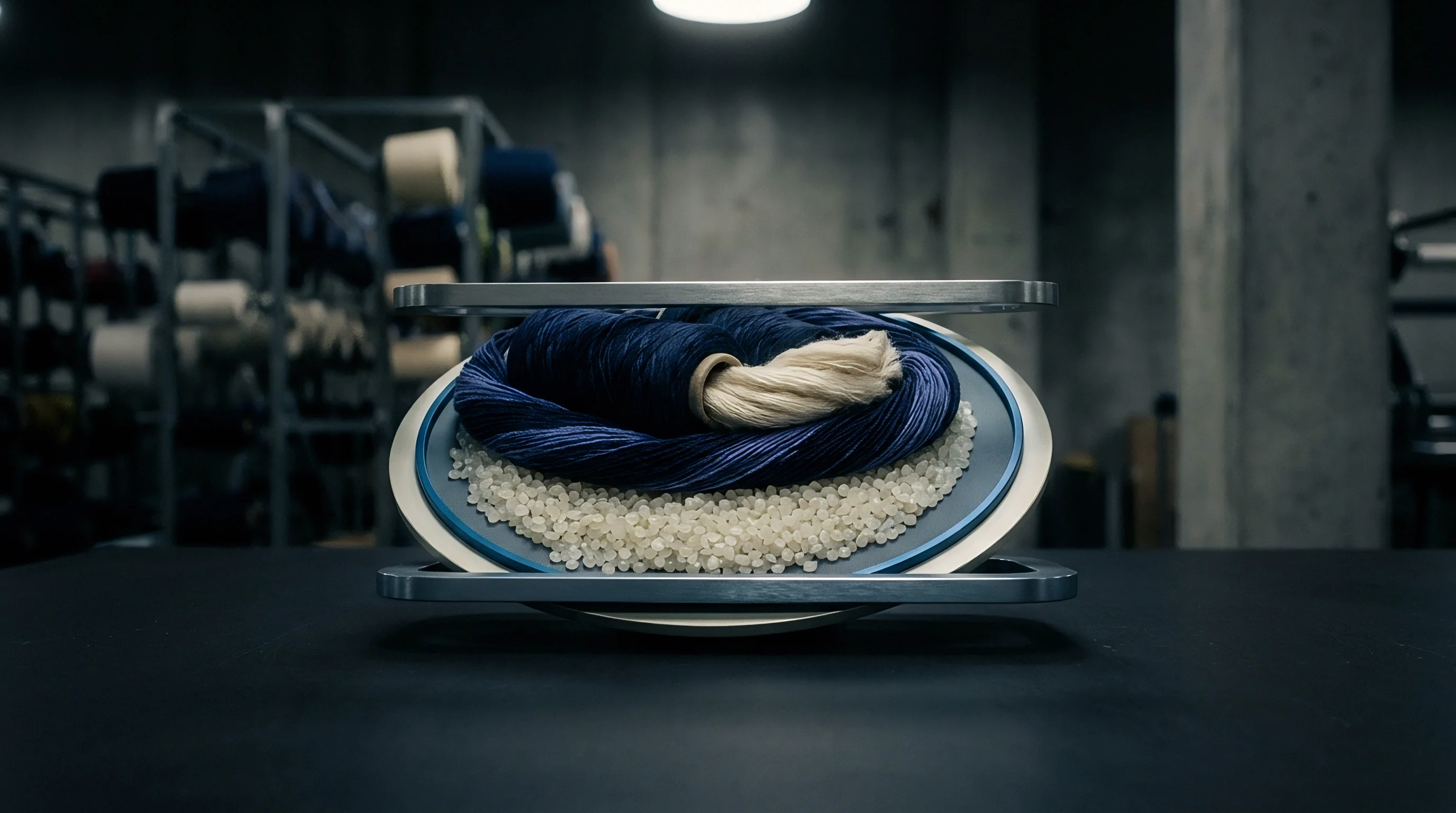
Carded slivers formed from mechanically recycled animal fibers exhibit marked shifts in fiber length distributions when compared to virgin production. Proteolytic cleavage inside the cortex lowers the threshold force needed to break a single fiber during mechanical opening. Raw animal fleeces carry natural crimp and elasticity that absorb impact inside carding cylinders.
Oxidized, cleaved keratin lacks this mechanical resilience, causing fibers to snap across their transverse axes as soon as wire teeth engage the tufts.
The transformation of uniform raw staple into fragmented fibers alters the drafting behavior of the sliver on spinning frames. Fiber bundles lacking length uniformity suffer drafting waves, creating uneven yarn cross-sections and pronounced periodic thin spots. Weakened lots yield high neps.
Managing yarn uniformity forces mills to adjust roller settings, slow down carding throughput, and increase twist factors to trap fragmented fibers inside the spinning core.
Brittle fiber tips shatter during aggressive carding passes while sound animal hairs bend without splintering.

Mean Fiber Length Loss during Garnetting
Garnetting cylinders fitted with hardened metallic wire teeth strike incoming textile scraps to pull yarns apart into loose fluff. Sound virgin wool fibers withstand these impacts with minimal transverse snapping, maintaining mean staple lengths between sixty and seventy-five millimeters. When rags contain oxidized keratin, the fibers snap continuously upon contact with worker and stripper rollers.
Carding shears weakened fibers.
Measurement using capacitive or optical staple length arrays records the rapid downward migration of the fiber length distribution curve. The mean fiber length drops from fifty-five millimeters down to twenty-two to thirty millimeters in aggressive garnetting runs. Short fiber content, defined as the percentage of fibers measuring less than twenty millimeters in length, climbs from an acceptable eight percent to upwards of thirty-five to forty-five percent.
This extreme concentration of fiber fragments prevents smooth flyer or rotor drafting, forcing spinners to limit spinning counts to coarse numbers.
| Processing Stage | Mean Fiber Length (Millimeters) | Short Fiber Content (Percent Less Than 20 mm) | Single Fiber Tenacity (cN/tex) | Carding Fly Waste (Percent Weight) |
|---|---|---|---|---|
| Virgin Raw Scoured Wool | 68.5 | 7.2 | 14.8 | 1.8 |
| Uncut Knitted Garment Stock | 62.0 | 9.8 | 13.2 | 2.4 |
| Rotary Cutter Output | 44.5 | 18.5 | 10.5 | 4.6 |
| Garnetted Card Sliver | 26.2 | 38.4 | 6.8 | 11.5 |
| Combed Recycled Top | 36.5 | 14.2 | 8.4 | 5.2 |
Rotor and Ring Drafting Performance Losses
Drafting zones on spinning frames rely on inter-fiber friction to control the acceleration of individual fibers as they pass between drafting rollers. Reclaimed animal hairs that have experienced matrix proteolysis possess stripped, broken scales, reducing the coefficient of inter-fiber friction. The combing waste rises.
Without sufficient surface friction, short fiber fragments float uncontrolled inside the drafting zone, bunching into thick slubs followed immediately by drafting voids.
Ring spinning systems operating on slivers with over thirty percent short fiber content suffer continuous thread breaks whenever drafting tension exceeds the reduced cohesive strength of the roving. Spinners running open-end rotor systems face rotor groove clogging as broken fiber ends powder into microscopic keratin dust under centrifugal pressure. Tenacity losses compound in wet finishing.
Shorter staple fragments pull free during twist insertion whenever matrix degradation outpaces cuticular friction.


Tolerance
Procurement agreements for recycled animal fibers define explicit chemical and mechanical boundary conditions to prevent downstream manufacturing failures. Buyers cannot rely on visual inspection or handfeel when purchasing post-consumer shoddy, because synthetic softening finishes easily mask internal matrix proteolysis during bale grading. Written contracts establish clear laboratory thresholds for alkali solubility, cysteic acid absorbance, and short fiber percentages before bales leave the supplier facility.
Analytical tolerances take into account natural measurement variance between commercial laboratories and regional differences in conditioning relative humidity. Testing protocols specify sample sizes, subsampling techniques, and exact standard methods to avoid contested results. Customs checks the certified tare.
Establishing defensible numerical parameters allows procurement teams to implement transparent commercial price adjustments when test reports indicate moderate chemical degradation.
Invocation of ASTM D1283 rejection parameters permits the direct deduction of reprocessing surcharges from the final mill settlement.

Chemical Limit Thresholds in Procurement Specifications
Commercial contracts categorize recycled animal stock into distinct performance grades based on chemical test ceilings. Grade A stock, destined for fine woolen knitting yarns, specifies an alkali solubility limit capped strictly at twenty percent alongside a cysteic acid FTIR absorbance ratio under zero point two five. This grade permits spinning fine yarn counts up to Nm 2/28 without excessive twist multipliers.
The yarn snaps under tension.
Grade B material, destined for heavier outerwear cloth and woven blankets, tolerates alkali solubility up to twenty-six percent and cysteic acid ratios reaching zero point four零. Any lot returning an alkali solubility exceeding twenty-eight percent faces outright commercial rejection or mandatory price discounts exceeding thirty percent of landed value. Such degraded material cannot support yarn formation without the structural reinforcement of virgin wool, nylon, or polyester carrier fibers.
- Solubility certificate review confirms compliance with destination spinning requirements.
- Retest margin agreement establishes technical tolerances before dispatch.
- Lot segregation enforcement isolates uncertified bales outside the processing bay.

Laboratory Variance across Replicated Dissolution Runs
Dissolution testing of animal keratin introduces laboratory variance that procurement contracts account for during dispute arbitration. Variations in heating bath agitation, extraction temperature fluctuations of even one degree Celsius, and differing crucible porosity grades shift measured alkali solubility figures by up to two full percentage points on identical lots. Fiber sampling introduces additional variance because post-consumer bales aggregate garments from hundreds of distinct dye recipes and laundering backgrounds.
Sound procurement frameworks implement a three-tier sampling structure, drawing ten core samples per ten-tonne container to produce a homogenized composite specimen. Laboratories perform extraction runs in triplicate, requiring the coefficient of variation across replicates to remain below four percent for a certified test certificate. When commercial disputes arise, independent retesting takes place at an agreed accredited laboratory, where the retest result overrides initial factory declarations if the variance exceeds two point five percentage points.
Incorporating the IWTO-4 alkali solubility ceiling into the raw material purchase confirmation forces the commercial invoice to discount automatically upon certified laboratory failure.

Exposure
Financial risk in recycled animal fiber procurement concentrates in the spread between fiber purchase price and finished yarn yield. When a mill buys degraded post-consumer wool at four euros per kilogram, excessive proteolysis inflates carding waste and spinning dropouts. If forty percent of the raw lot shatters into unspinnable card fly and pneumatic dust, the effective raw material cost per kilogram of delivered yarn surges past seven euros.
The invoice reflects damaged yield.
Downstream piece goods suffer from diminished abrasion resistance and erratic dye strike rates whenever cleaved keratin matrix proteins enter the wet finishing house. Damaged fibers absorb acid and reactive dyes at accelerated rates, causing blotchy, unlevel shades across the face of the cloth. Garments manufactured from degraded stock pill aggressively in wear, as weak, broken fibers work their way to the surface under light domestic friction.
Short fiber content increases immediately.
Correcting for unexpected proteolysis requires immediate re-engineering of the yarn blend inside the blowroom. Product developers must introduce high-tenacity polyamide or long-staple virgin fleece to restore structural cohesion, diluting the recycled content declaration and jeopardizing regulatory claims regarding circular material composition. Miscalculating this chemical risk penalizes the balance sheet through discarded yardage, delayed delivery penalties, and customer chargebacks.
Whether chemical re-crosslinking agents can restore commercial value to deeply cleaved post-consumer stock without breaching environmental discharge limits remains unresolved across industrial dyehouses.