Standard Chemical Dissolution Methods for Cotton Polyester Yarns
Chemical dissolution of cotton-polyester yarns uses 75% sulphuric acid to dissolve cellulose, requiring d-factor and moisture regain corrections for tariff accuracy.


Assay
A gravimetric test report reading 65.4 percent polyester and 34.6 percent cotton on a nominal 60/40 yarn determines whether an import clears customs under Harmonized Tariff Schedule heading 5509 or heading 5205. Chemically separating cellulose from polyethylene terephthalate dictates commercial compliance, tariff classification, and buyer acceptance across borders. Quantitative chemical analysis works by selectively dissolving one fibre component while leaving the insoluble residue intact for oven drying and weighing.
Laboratories run binary mixtures under two main standards: ISO 1833-11, specifying a seventy-five percent mass fraction of sulphuric acid, and AATCC TM20A, which uses seventy percent acid or alternative solvent systems. Reagent concentration dictates how aggressively the secondary polymer degrades, requiring analysts to balance complete cellulosic extraction against polyester surface integrity.
Seventy-five percent sulphuric acid dissolves cotton cellulose within twenty minutes at fifty degrees Celsius while leaving commercial polyester filaments gravimetrically stable.
Sulphuric acid hydrolyses the beta-1,4-glucosidic bonds in cellulose, breaking crystalline and amorphous microfibrils into soluble glucose and cellobiose fragments. Polyethylene terephthalate resists this nucleophilic cleavage within strict temperature limits. Above seventy-eight percent acid strength or sixty degrees Celsius, ester linkages along the polyester chain suffer progressive acidolysis; this surface stripping reduces residue mass and inflates the calculated cotton fraction.

Mechanical Disintegration Pretreatment
Sample preparation dictates final gravimetric precision. Yarn samples are cut into fragments five to ten millimetres long, as tightly twisted plies block acid ingress into the core and force dissolution times beyond safe limits. High-twist ring-spun yarns are manually teased apart so acid reaches every filament evenly.
Sizing agents, spinning lubricants, and paraffin waxes distort dry residue weights if left intact. Specimens undergo a one-hour pre-extraction in a Soxhlet apparatus using light petroleum or diethyl ether, followed by an ethanol wash and a continuous distilled water rinse. Without this step, sizes coat the cotton and impede proton attack, while insoluble waxes stay in the polyester residue and artificially raise the synthetic percentage.
The cleaned specimen, at least one gram in dry mass, is weighed to four decimal places on an analytical balance. Initial dry mass is established at one hundred and five degrees Celsius, drying until weighings taken fifteen minutes apart differ by less than 0.0005 grams. This step removes all ambient moisture regain before any chemical reagent touches the sample.
| Standard Protocol | Primary Chemical Reagent | Operating Temperature | Duration | Target Dissolved Fibre | Typical d-Factor |
|---|---|---|---|---|---|
| ISO 1833-11 | 75% Sulphuric Acid (w/w) | 50 ± 5 °C | 20 ± 2 min | Cellulose (Cotton) | 1.00 to 1.01 |
| AATCC TM20A | 70% Sulphuric Acid (w/w) | 38 ± 2 °C | 15 to 20 min | Cellulose (Cotton) | 1.00 |
| Alternative ISO 1833-24 | Phenol / Tetrachloroethane | 130 ± 2 °C | 30 min | Polyester (PET) | 1.02 |
| Alternative ASTM D629 | Zinc Chloride / Formic Acid | 40 ± 1 °C | 45 min | Cellulose (Cotton) | 1.015 |
The practical difference between ISO 1833-11 and AATCC TM20A lies in acid concentration and temperature. American testing laboratories generally use seventy percent acid at thirty-eight degrees to reduce handling risks and limit attack on the insoluble fibre. European and Asian facilities prefer seventy-five percent acid at fifty degrees, which clears heavy or mercerised cotton without leaving cellulosic lint to clog filtration crucibles.
Buyers accept whichever standard is named in the purchase contract, aware that leaving the method unspecified lets suppliers pick the protocol that yields results closest to nominal targets.


Reagent
Preparing seventy-five percent sulphuric acid requires careful volume and temperature control. Concentrated sulphuric acid of known specific gravity is poured slowly into chilled distilled water inside a fume hood; adding water directly to acid generates enough hydration heat to cause localized boiling, splattering, and cracked glassware. Laboratories verify acid concentration with a digital density meter or by titration against certified one-normal sodium hydroxide.
Specific gravity must read 1.670 at twenty degrees Celsius to meet the seventy-five percent mass fraction required by ISO 1833-11. Below 73.5 percent, dissolution stalls in secondary crystalline regions of the cellulose, leaving gelatinous, semi-hydrolysed glucan aggregates that choke sintered glass filter discs during vacuum filtration.
Filtration Apparatus and Crucible Preparation
Sintered glass crucibles of grade P16 or porosity 3 (pore diameters between sixteen and forty micrometres) retain separated polyester filaments while allowing dissolved cellulose to pass. Every crucible is conditioned in an oven at one hundred and five degrees Celsius for three hours, cooled to room temperature over activated silica gel in a desiccator, and tared immediately before filtration.
Handling crucibles bare-handed transfers oils and sweat that add up to 0.0008 grams of error, so equipment is moved with nickel tongs. The hot acid slurry is poured directly into the crucible over a vacuum flask under gentle suction; pulling vacuum too quickly pulls fine, partially degraded polyester microfibres through the porous glass disc into the waste receiver.
The filtered residue needs immediate neutralizing washes. After draining the primary acid filtrate, the crucible is filled with cold distilled water three times under vacuum to draw off concentrated acid. The residue is then washed with roughly five percent dilute ammonia to neutralize hydronium ions trapped inside the yarn bundle, followed by a flush of boiling distilled water to clear residual ammonium sulphate salts.
A neutral litmus test on the final wash drainage confirms the complete elimination of mineral acids from the synthetic matrix.
The washed crucible is dried at one hundred and five degrees Celsius for four hours, weighed, and returned to the oven in thirty-minute cycles until two consecutive weighings match within 0.0005 grams. Desiccator cooling time is kept at thirty minutes ~ long enough to reach thermal equilibrium, but not so long that ambient humidity leaks past the seals.
Aggressive acid rinsing can strip oligomers from inside synthetic fibre cores, contributing to measured polyester weight shortfalls.
Correction
The dry mass of recovered polyester residue does not equal the original polyester content of the yarn. An analytical adjustment, the correction factor d, compensates for minor mass loss during acid immersion and washing. For commercial polyester processed under seventy-five percent sulphuric acid at fifty degrees Celsius, ISO 1833-11 assigns a standard d-factor of 1.005 to 1.010, depending on drawing and texturing history.
To determine this value empirically, laboratories dissolve pure, scoured polyester filament under the same acid conditions and compare initial and recovered dry masses. Heavy surface coatings or dye carriers raise the calculated d-factor. Omitting the d-factor understates polyester content by up to a full percentage point, which can reclassify a borderline 50/50 blend as majority natural.

The Moisture Regain Adjustment Step
Commercial transactions require converting bone-dry mass to invoice mass using standard commercial moisture allowances. Yarns are traded on commercial mass, which adds back authorized water regain percentages defined in regional codes and standards like ASTM D1909 or European Regulation EU 1007/2011.
Most jurisdictions set the commercial moisture regain for carded or combed cotton at 8.50 percent, compared to 1.50 percent for standard polyethylene terephthalate polyester. When converting dry test results into commercial composition percentages, adding 8.5 percent to cotton and only 1.5 percent to polyester shifts the calculated blend ratio toward the cellulosic fraction.
For example, an unconditioned yarn sample yielding exactly 50.00 grams of dry polyester residue and 50.00 grams of dissolved cotton does not translate to a 50.00/50.00 commercial blend. Applying standard regains increases the commercial mass of cotton to 54.25 grams and polyester to 50.75 grams, bringing total commercial mass to 105.00 grams. Recalculating relative to this total gives a final commercial composition of 51.67 percent cotton and 48.33 percent polyester.
| Blend Ratio Target | Oven-Dry Polyester | Oven-Dry Cotton | Commercial Polyester (1.5% Regain) | Commercial Cotton (8.5% Regain) | Final Commercial Mass Ratio |
|---|---|---|---|---|---|
| 65/35 Poly/Cotton | 65.00 g | 35.00 g | 65.98 g | 37.98 g | 63.47% Poly / 36.53% Cotton |
| 60/40 Poly/Cotton | 60.00 g | 40.00 g | 60.90 g | 43.40 g | 58.39% Poly / 41.61% Cotton |
| 50/50 Poly/Cotton | 50.00 g | 50.00 g | 50.75 g | 54.25 g | 48.33% Poly / 51.67% Cotton |
| 35/65 Poly/Cotton | 35.00 g | 65.00 g | 35.53 g | 70.53 g | 33.50% Poly / 66.50% Cotton |
This gap between dry mass ratios and commercial mass ratios drives routine disputes between spinning mills and fabric buyers. A mill blending raw cotton sliver and polyester tow on a dry-mass basis produces yarn that fails commercial regain specifications, as destination testing under legal regain values reduces the apparent polyester percentage.
Contracts need to specify the exact calculation basis upfront ~ stipulating whether guaranteed ratios refer to unextracted dry mass, solvent-extracted dry mass, or commercial mass with official moisture regains applied.
Discrepancy
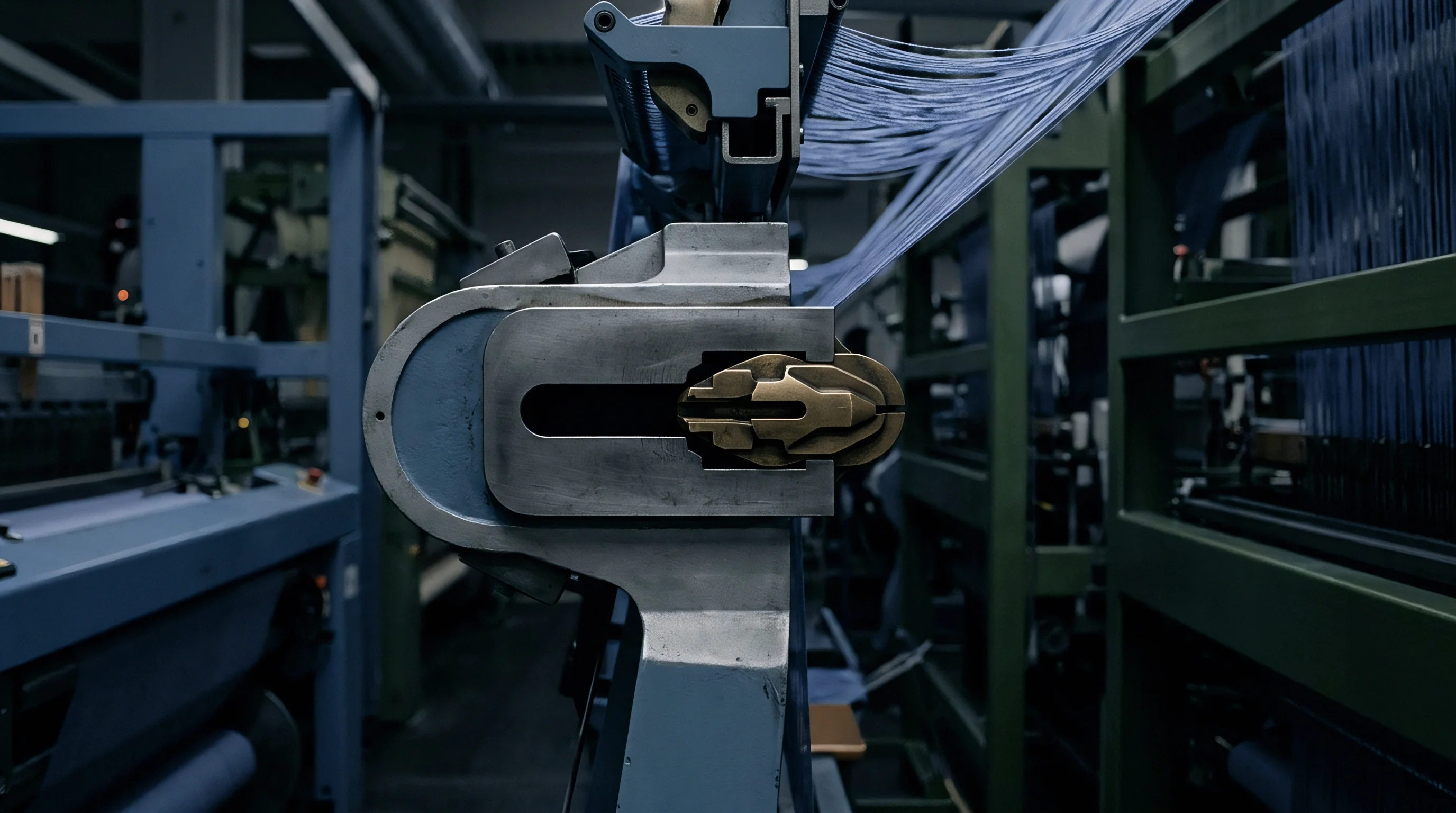
Discrepancies between mill target ratios and lab test results usually trace to three sources: draw-frame blending drift, degraded recycled polyester, or unextracted finishes. Mills blend either in the blowroom before carding or at the draw frame using carded slivers. Blowroom blending risks air-stream separation of dense cotton from lighter polyester staples, whereas sliver blending at the breaker frame yields better long-term consistency.
Even with tight sliver controls, short-term count and weight variations cause drift. Across a thirty metric ton production run, blend ratios can shift within a band of plus or minus 2.5 percentage points, causing lots produced near border thresholds to fail destination testing.
Chemical Vulnerabilities in Recycled Synthetics
Using recycled polyester resin complicates standard acid separation protocols. Mechanically recycled PET from bottle flake exhibits variable intrinsic viscosity, higher diethylene glycol content, and wider molecular weight distributions. Its lower molecular weight fractions and amorphous regions dissolve readily in seventy-five percent sulphuric acid at fifty degrees Celsius.
While virgin polyester filament shows a predictable d-factor of 1.005, recycled staple ranges from 1.018 to 1.035. Applying a virgin d-factor to recycled yarn understates synthetic content and causes false non-conformance reports, making it necessary to test intrinsic viscosity before setting dissolution correction values.
- Understrength acid reagents leave crystalline cellulosic residues clinging to synthetic filaments, artificially depressing dissolved cotton measurements.
- Thermal overshoot during acid digestion degrades polyester surface boundaries and strips short synthetic polymers into the acid liquor.
- Incomplete removal of spinning spin finishes leaves hydrophobic waxes on the residue, adding uncombusted tare weight to the dried crucible.
- Rapid vacuum drainage on coarse glass plates pulls sheared polyester microfibres through the filter disc into the waste container.
Functional finishes add another layer of error. Cotton-polyester workwear yarns often carry fluorocarbon repellents, reactive silicone softeners, or melamine resin crosslinkers for flame retardancy. Standard petroleum ether extractions fail to remove cured crosslinked resins.
These resins either remain in the polyester residue or dissolve unpredictably during acid treatment, introducing indeterminate mass errors into the balance reading.
Customs
Customs authorities enforce strict tariff classifications based on composition by weight. Under the Harmonized Commodity Description and Coding System, a single percentage point can move a shipment into a different tariff heading, making blend analysis the deciding factor between natural and synthetic trade chapters.
Section XI, Note 2 of the Harmonized System states that products containing two or more textile materials are classified as if consisting wholly of the textile material that predominates by weight. Yarn testing at 50.4 percent polyester and 49.6 percent cotton falls under Chapter 55 as man-made staple fibres, while a test reading 49.6 percent polyester and 50.4 percent cotton classifies under Chapter 52 as cotton.
Classification by predominant weight overrides aesthetic preference, end-use intent, and contractual trade naming conventions.
The financial impact of reclassification can be substantial. For instance, a fifty metric ton shipment of ring-spun Ne 30/1 yarn declared under HTS Code 5205.12 as predominantly cotton carries a 5.0 percent duty rate. If customs lab testing finds a commercial mass composition of 50.8 percent polyester and 49.2 percent cotton, the entry is reclassified under HTS Code 5509.53 at 12.0 percent duty.
On a shipment valued at 4.20 dollars per kilogram, total commercial value is 210,000 dollars. Duty at 5.0 percent equals 10,500 dollars, whereas duty at 12.0 percent comes to 25,200 dollars ~ creating an immediate duty shortfall of 14,700 dollars alongside potential misdeclaration penalties, bonded storage fees, and mandatory inspections on future entries.
To manage this risk, buyers often tie payment release directly to laboratory verification at destination, inserting contractual clauses that penalize mill variances crossing the 50.0 percent threshold.


Protocol
To prevent discrepancies between mill testing and customs verification, buyers often require standardized testing protocols on incoming lots. ISO 17025-accredited laboratories run duplicate assays on bobbins sampled across production cases, tracking temperature and relative humidity continuously throughout conditioning and weighing.
Raw gravimetric data ~ dry tare weights, crucible identifiers, solvent lot numbers, and residue masses ~ are logged to 0.0001 grams. If duplicate specimens differ by more than 1.0 percentage point, the test is invalidated and re-run using new yarn cuts.

Are Chemical Dissolution Results Defensible under Border Audits?
Customs authorities apply zero-tolerance rules to weight-based tariff classifications. Commercial labeling rules, such as FTC regulations or EU Regulation 1007/2011, permit a three percent blending tolerance for consumer products, but customs revenue collection recognizes no such variance, determining classification solely on certified laboratory test results.
A yarn labeled 52 percent cotton and 48 percent polyester that tests at 50.5 percent polyester is reclassified immediately regardless of commercial tolerance rules. Defending against audits requires retaining sealed reference bobbins, duplicate crucibles, and complete Soxhlet extraction records alongside the gravimetric work sheets.
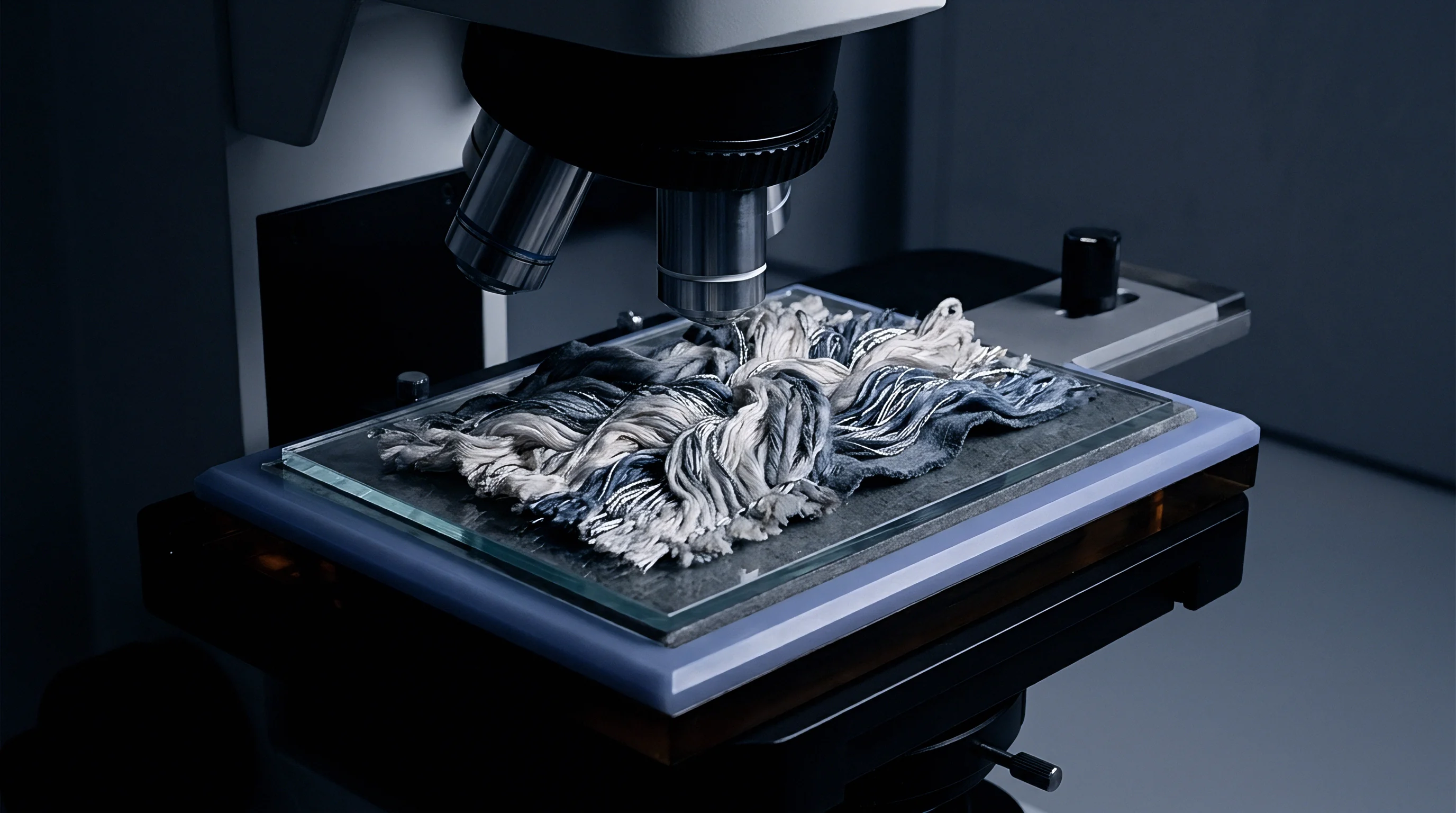
When test results land within 0.5 percent of a tariff boundary, laboratories perform cross-method validation. Gravimetric results are checked against microscopic fiber counts using polarized light or scanning electron microscopy to confirm morphological composition.
Supply contracts typically assign all re-testing fees, audit costs, and penalties to the spinning mill whenever independent testing deviates by more than 1.5 percentage points from contract specifications.