Standard Cotton Moisture Regain Measurement Procedures
Standard cotton moisture regain requires drying core samples at 105°C to constant mass under ASTM D2495 to adjust commercial invoice weight against the 8.5% standard.

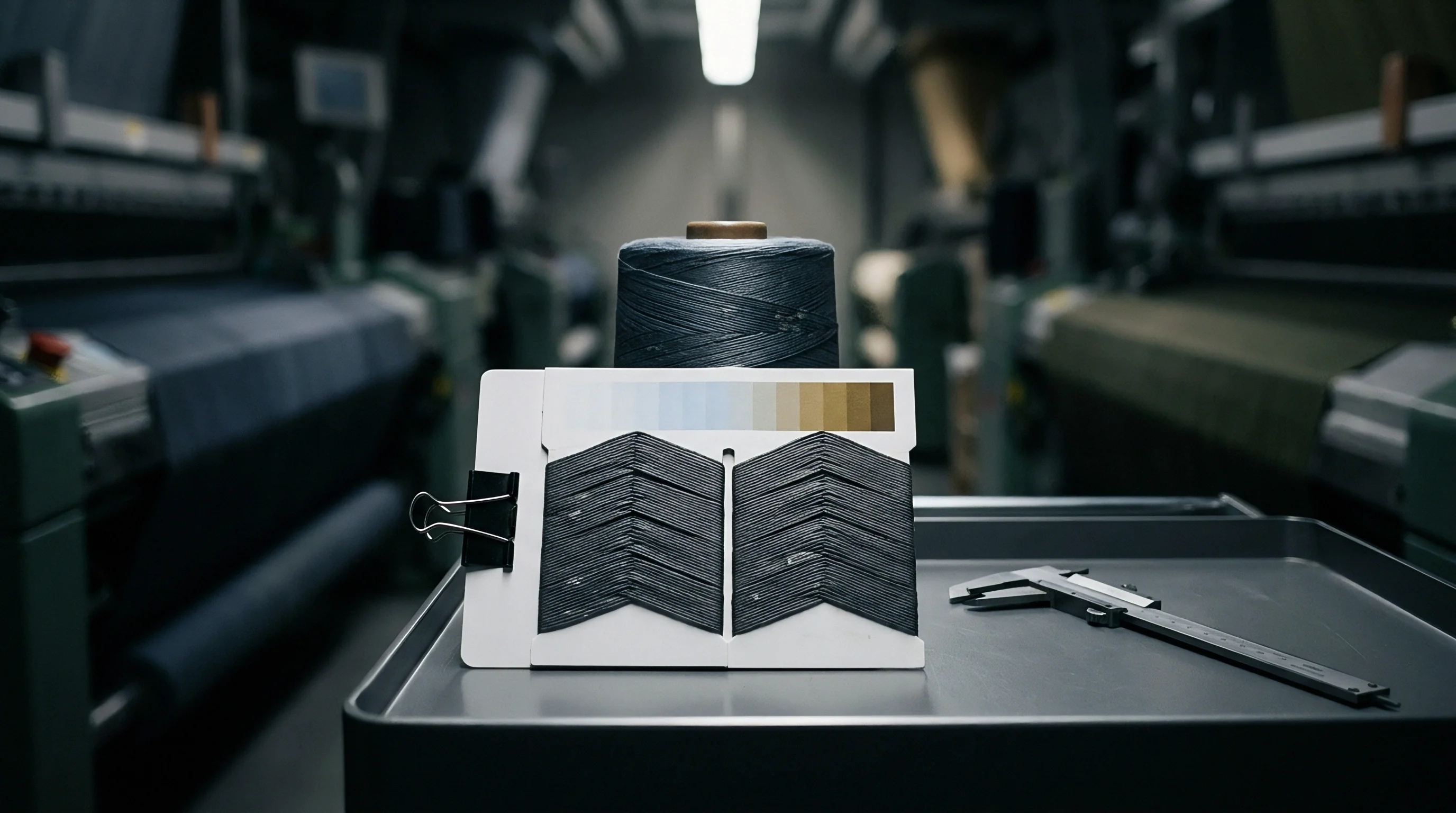
Oven
Drying chambers operate at 105 degrees Celsius to strip moisture from raw cotton until successive weighings confirm complete evaporation. The laboratory intake balance records the initial gross mass of the raw fibre, transfers the sample to a ventilated metal basket, and exposes the material to continuous positive-pressure air currents. Standard testing under ASTM D2495 isolates moisture mass from dry cellulosic mass through thermal desiccation.
The process converts damp field samples into bone-dry reference states, establishing the baseline against which commercial transactions, legal arbitrations, and processing adjustments take place.
Moisture content and moisture regain are mathematically distinct expressions derived from the same drying cycle. Moisture content divides lost water mass by initial damp sample mass, yielding a percentage bounded below one hundred, whereas moisture regain divides lost water mass by final oven-dry cellulosic mass. A sample containing eight grams of water dispersed across ninety-two grams of dry cellulose registers an 8.00 percent moisture content alongside an 8.70 percent moisture regain.
Interchanging these equations distorts inventory values by tenths of a percent, multiplying price discrepancies across container loads.
ASTM D2495 requires oven desiccation at 105 to 110 degrees Celsius until mass changes between fifteen-minute drying intervals drop below 0.1 percent of sample mass.
Standard testing methods formalize oven air velocity, container construction, and weighing intervals to prevent reabsorption during sample transfers. ASTM D2495 sets standard drying temperatures between 105 and 110 degrees Celsius, requiring sample exposure until mass changes between consecutive weighings separated by fifteen minutes do not exceed 0.1 percent of specimen mass. ISO 6741-1 governs international commercial mass determinations using identical thermal boundaries, but incorporates specific corrections for volatile spinning finishes and non-cellulosic constituents removed by thermal stripping.
Automated carousels within modern chambers eliminate external balance transfers, recording weights while maintaining 105-degree environments to circumvent the rapid moisture uptake that occurs when bone-dry cotton touches ambient factory air.
| Standard | Oven Temperature Range | Air Velocity Specification | Mass Stability Criterion | Allowed Finish Extraction |
|---|---|---|---|---|
| ASTM D2495 | 105 to 110 °C | Forced draft, 0.1 to 0.5 m/s | Change below 0.10% per 15 min | None permitted |
| ISO 6741-1 | 105 to 110 °C | Minimum 20 chamber volumes/min | Change below 0.05% per 15 min | Optional solvent degreasing |
| USDA Cotton Classing | 105 to 110 °C | Forced draft positive pressure | Single cycle 60-min minimum | None permitted |
| IWTO D-Draft Modified | 103 to 108 °C | Controlled laminar stream | Change below 0.05% per 10 min | Mandatory alcohol extraction |
Contractual terms dictate whether non-cellulosic matter lost during heating enters moisture calculations. USDA rules define moisture strictly as the mass lost through heat exposure without chemical solvent purification, whereas certain European destination mills apply ISO 6741-2 procedures that subtract solvent-extractable oils and waxes from final invoice weights.
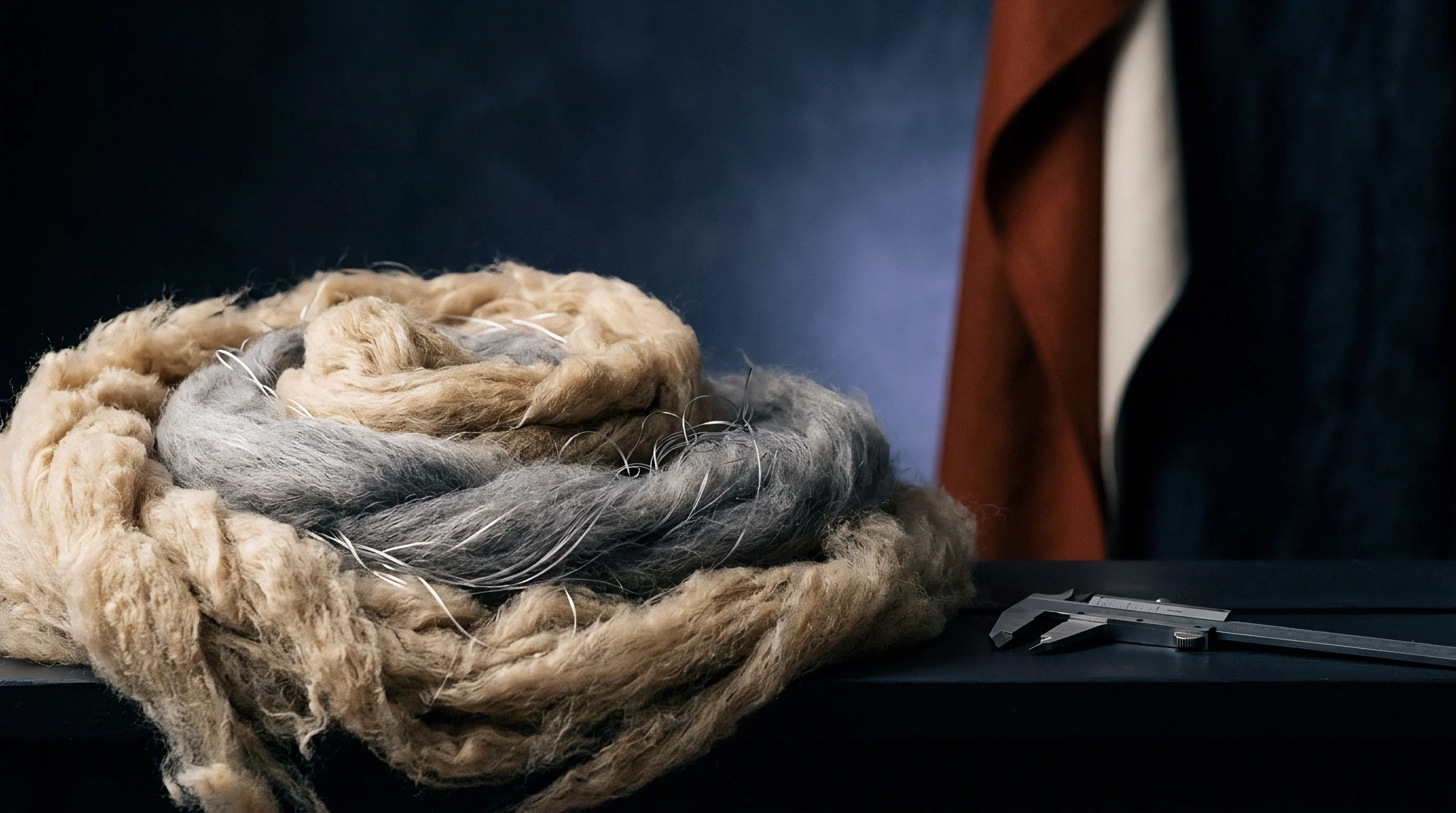

Atmosphere
Conditioning spaces stabilize cotton samples within fixed thermodynamic envelopes to align laboratory measurements with contractual moisture equilibrium. ASTM D1776 and ISO 139 prescribe a standard testing environment maintained at 21 degrees Celsius with a permissible variation of plus or minus 1 degree, combined with 65 percent relative humidity with a tolerance of plus or minus 2 percent. Cotton exposed to this environment reaches an equilibrium moisture regain between 7.5 and 8.5 percent, depending on its previous thermal and drying history.
Hysteresis causes raw cotton to hold different moisture percentages at identical temperature and relative humidity levels depending on the direction of environmental approach. Cotton desorbing from a saturated state down to standard conditions stabilizes near 8.5 percent regain, while samples adsorbing vapor upward from a desiccated state stabilize near 7.0 percent regain. Standard procedures prevent this disparity through required thermal pre-conditioning: raw fibre lots are placed in low-humidity conditioning vaults maintained between 10 and 25 percent relative humidity at 50 degrees Celsius for four hours, ensuring that final exposure to standard atmosphere follows an adsorption path.

Does Desorption Behavior Shift in Low Humidity?
Equilibrium curves show that relative humidity levels below forty percent narrow the hysteresis gap between wetting and drying cycles. At twenty percent relative humidity, the spread between desorption and adsorption curves contracts to 0.4 percent regain. Cotton fibers subjected to intense ginning heat enter standard conditioning chambers with altered internal crystalline structures, which shifts their sorption rates.
Laboratories lacking dedicated pre-conditioning ovens produce discordant test results because incoming cotton samples arrive at varying points along their respective sorption isotherms.
A standard atmosphere of twenty-one degrees Celsius and sixty-five percent relative humidity yields divergent regain percentages unless samples approach equilibrium along the adsorption isotherm.
Equilibrium testing demands verification through repeated gravimetric checks. Samples hang in wire baskets inside conditioning cabinets until two consecutive weighings taken two hours apart show less than 0.1 percent mass alteration. High-density bales bound with steel bands or polymer straps restrict air access to the inner fibre mass, prolonging the conditioning interval.
Loose tufts achieve equilibrium within four hours, whereas intact classing biscuits require twenty-four to thirty-six hours of continuous exposure to standard atmospheric airflow.
The unresolved question remains whether standard conditioning chambers accurately replicate the sorption hysteresis behavior of machine-compressed upland cotton harvested across varying global humidity zones.

Core
Probe extraction tools penetrate compressed bales to retrieve genuine interior samples isolated from atmospheric transit exposure. ASTM D1441 governs the sampling sequences, dictating core tube diameters, cutting tip geometries, and penetration depths across raw cotton lots. Surface cotton gains or loses ambient moisture within minutes of container de-vanning, reflecting destination warehouse weather rather than true consignment mass.
Sampling teams drive hollow rotary coring augers past the outer one hundred millimeters of fibre, extracting cylinders of cotton from the dense interior heart of the bale.
Moisture testing protocols demand immediate physical containment of drawn samples. Technicians seal core extractions inside vapor-barrier aluminum laminate bags or heavy-gauge polyethylene sleeves the instant the coring tube retracts from the bale wall. Ambient warehouse air drawn into sample bags alters moisture readings before laboratory balances can establish green lot weights.
Classers handle samples rapidly to prevent body heat and hand sweat from migrating into dry fibre specimens.
- Unsealed container storage permits rapid vapor exchange between dry laboratory interiors and humid bale core extracts prior to gross weighing.
- Shallow probe penetration collects weathered surface layers that misrepresent the moisture content of the compressed bale mass.
- Rotary friction overheating during deep coring drives volatile moisture out of the specimen before the coring barrel empties into the container.
- Dwell time delays between cutting bale strapping and drawing core samples allow atmospheric equilibration to alter the true commercial mass.
USDA classing conventions stipulate that ten percent of bales in lots under one hundred units undergo coring, while international merchants trading under Liverpool rules demand random extraction across twenty percent of bale units. When moisture testing resolves shipping discrepancies, classers extract twin samples from opposing sides of the bale crown, pooling specimens into airtight canisters to produce composite test lots reflecting internal moisture variation.
Never accept a moisture verification report where core samples spent more than ninety seconds exposed to unconditioned warehouse atmosphere.

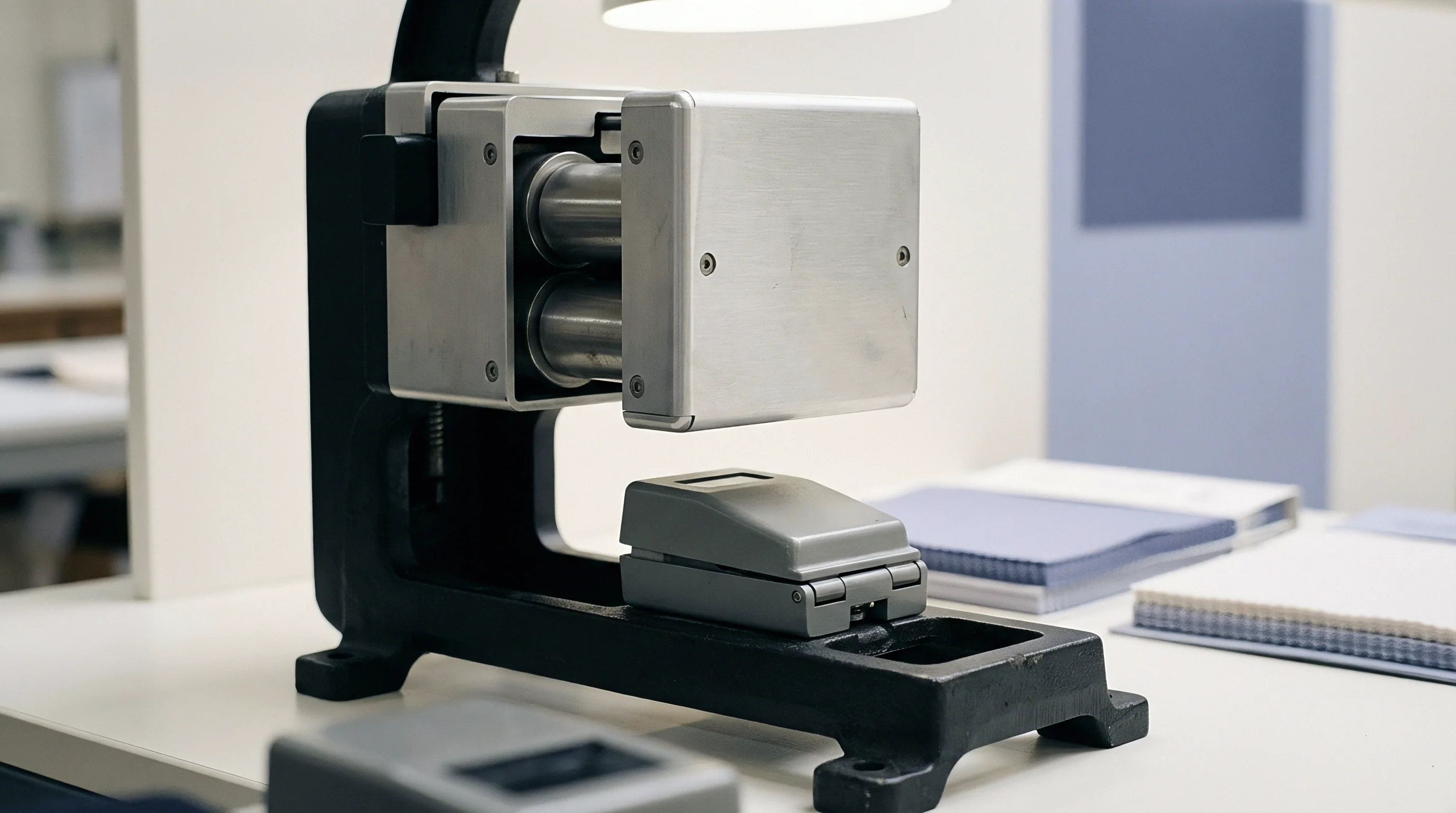
Gravimetry
Analytical balances equipped with sealed draft shields measure dry specimen fractions to four decimal places. Gravimetric calculation converts wet intake mass and dry chamber mass into actionable data points. Technicians calibrate internal balance mechanisms before every series using Class 1 stainless steel weights traceable to national measurement institutions.
Because bone-dry cotton absorbs atmospheric vapor at rates exceeding 0.05 percent per minute in open air, gravimetric transfer techniques dictate test precision.

Why Do Drying Temperatures Exceed Boiling Thresholds?
Cellulose holds moisture through hydrogen bonds bound to hydroxyl groups within amorphous fibre zones alongside surface capillary water. Thermal energy below one hundred degrees Celsius liberates surface moisture, leaving bound moisture locked within the fibrillar lattice. Drying chambers operate at 105 degrees Celsius to supply sufficient thermal kinetic energy to sever hydroxyl hydrogen bonds without inducing pyrolytic degradation of cellulose polymer chains.
Temperatures exceeding 115 degrees Celsius degrade non-cellulosic pectins and organic waxes, causing sample mass reductions that masquerade as moisture loss.
A weighing delay of twenty seconds during sample transfer adds up to half a percent of atmospheric moisture to bone-dry cotton specimens.
Technicians employ airtight weighing bottles or balance-integrated drying ovens to circumvent transfer errors. When using standalone drying ovens, technicians snap ground-glass lids onto weighing bottles inside the heated chamber before transferring the vessels into desiccators filled with active silica gel or phosphorus pentoxide. Desiccator cooling allows internal gas pressures to stabilize without admitting external ambient moisture.
The closed bottle transfers to the balance pan once vessel temperatures match the ambient weighing room environment.
- Gross intake recording captures sample mass in its drawn state immediately upon unsealing transport containers.
- Chamber exposure cycle subjects the specimen to 105-degree forced-draft thermal drying for a minimum baseline period of ninety minutes.
- Consecutive interval weighing tracks mass reduction across fifteen-minute increments until stability criteria confirm desiccation.
- Desiccator vessel stabilization cools enclosed specimens down to ambient balance temperatures under dry atmospheres without admitting air.
- Analytical tare subtraction isolates the bone-dry cellulose mass from the container tare weight to four decimal places.
- Mathematical regain determination computes final commercial percentages by dividing water mass loss by dry cellulose mass.
The mathematical conversion from measured regain to commercial mass governs the invoice value of the consignment. The equation divides the total incoming gross weight by the measured regain factor, multiplying the result by the contractually agreed commercial moisture regain allowance. The international convention for carded cotton staple establishes an official commercial regain allowance of 8.50 percent under ISO 6741-1 and USDA guidelines.
| Actual Measured Regain | Bone-Dry Cellulosic Mass | Standard Commercial Mass (8.5%) | Physical Arrival Weight | Commercial Mass Adjustment |
|---|---|---|---|---|
| 6.50% | 93,896 kg | 101,877 kg | 100,000 kg | +1,877 kg (Underweight credit) |
| 7.50% | 93,023 kg | 100,930 kg | 100,000 kg | +930 kg (Underweight credit) |
| 8.50% | 92,166 kg | 100,000 kg | 100,000 kg | 0 kg (Parity) |
| 9.50% | 91,324 kg | 99,086 kg | 100,000 kg | -914 kg (Excess water penalty) |
| 10.50% | 90,498 kg | 98,190 kg | 100,000 kg | -1,810 kg (Excess water penalty) |
| Calculations based on 100,000 kg gross weight at 8.50 percent official commercial moisture regain under ISO 6741-1. | ||||
Failure to capture genuine regain figures shifts financial liability directly onto spinning mills through uncompensated water purchases or incorrect customs entry declarations.
Tariff
Customs authorities classify imported cotton goods under Chapter 52 of the Harmonized System, assessing duty rates, quota limits, and trade remedies based upon certified net dry mass. Commercial disputes arise when shippers bill container lots based on gross landed weights that include three tons of transit water per twenty-ton container. If import documents state gross weight as commercial mass while actual laboratory regain tests return ten percent, the importer pays tariffs on untaxable excess moisture.
Settlement agreements require structured documentary packages that demonstrate chain of custody from container seal cutting to final analytical certificate issuance. Buyers facing moisture penalties submit laboratory dossiers to customs valuation divisions to secure landed cost rebates and correct entered customs values. Discrepancies between country-of-origin moisture declarations and destination laboratory results trigger commercial claims administered by international cotton associations.
- Airtight sample custody logs trace sampling times, container seal identifications, and core storage vessel serialization numbers.
- Oven calibration certificates substantiate balance accuracy, chamber temperature mappings, and traceability to international metrological reference standards.
- Desiccation mass balance records document initial gross weights, interval drying readings, and bone-dry weights for every sample lot.
- Commercial mass adjustment schedules translate measured regain deviations into monetary credit memos based upon contract price per net kilo.
Spinning operations verify incoming lot regain to calibrate opening-line blowroom settings and spinning frame draft tensions. Dry cotton processed below 6.5 percent regain shatters under beater roll impacts, reducing mean staple length and generating excessive short fibre content. Wet cotton entering carding zones at nine percent regain chokes licker-in wire clothing, causing lap splits, cylinder loading, and irregular sliver linear density.
Sourcing offices write strict moisture limits into purchase contracts to protect yarn quality parameters alongside raw material accounting balances.
Ocean container condensation can rehydrate compressed bales on arrival without altering the underlying dry cellulosic mass paid for on the invoice.