Thermoelectric Detector Cooling for High Speed Automated Web Inspection Systems
Thermoelectric cooling stabilizes InGaAs detector dark current below zero degrees Celsius, preventing thermal drift from blinding high-speed web defect sensors.

Chamber
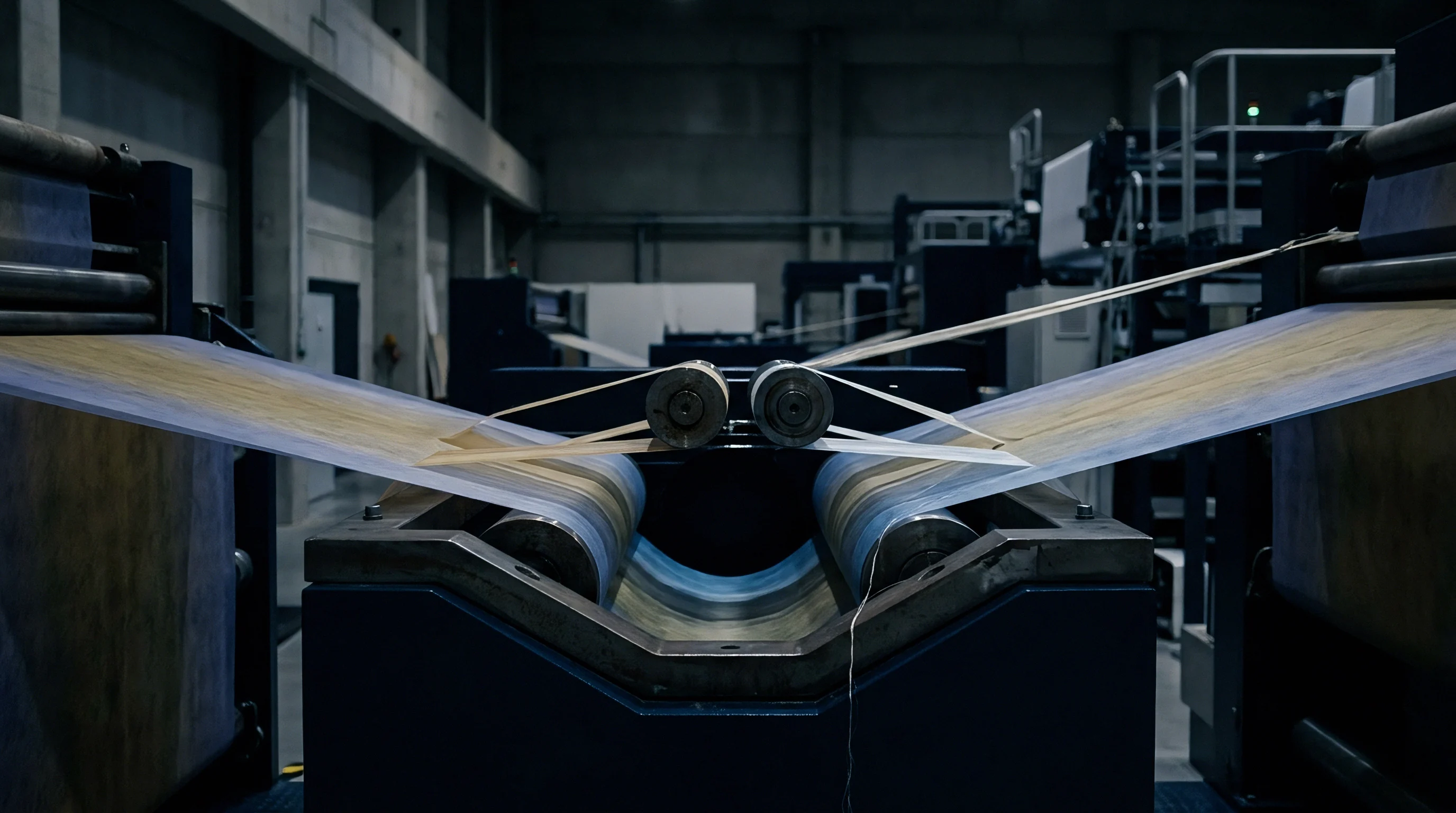
An optical housing suspended forty centimetres above a running textile web operates in an unforgiving microclimate. Ambient air temperatures above continuous tenter frames routinely reach fifty-five degrees Celsius, while airborne lint and evaporated spinning oils coat every unsealed surface. Inside the inspection head, a 2048-pixel indium gallium arsenide line-scan sensor continuously reads reflected short-wave infrared illumination across a three-metre sheet width traveling at two metres per second.
Stabilizing this detector array demands active heat extraction directly from the focal plane.
Peltier modules mounted behind the sensor array pull heat from the semiconductor substrate toward an extruded copper heat pipe assembly. Dark current doubles every six degrees. Uncooled sensor pixels saturate within three minutes under standard mill lighting, blinding the automated defect classification algorithms to foreign polypropylene yarns and subtle pick density variations.
The hermetic enclosure maintains an internal nitrogen blanket at a positive pressure of twenty millibars, preventing moisture condensation on the cold sapphire detector window when the chip cools to minus fifteen degrees Celsius.
Heat dissipation within the sealed envelope presents strict engineering boundaries. Convection currents inside the camera housing introduce optical turbulence that distorts sub-millimetre defect localization across the running cloth. Direct conduction through machined copper heat spreaders routes thermal energy away from the sensor package directly to the outer chassis heat sink fins.
Thermal dissipation figures quoted on camera datasheets frequently omit the thermal load of adjacent readout electronics, leading mill technicians to discover during July commissioning that enclosure temperatures exceed allowable ratings by twenty degrees.
Heat
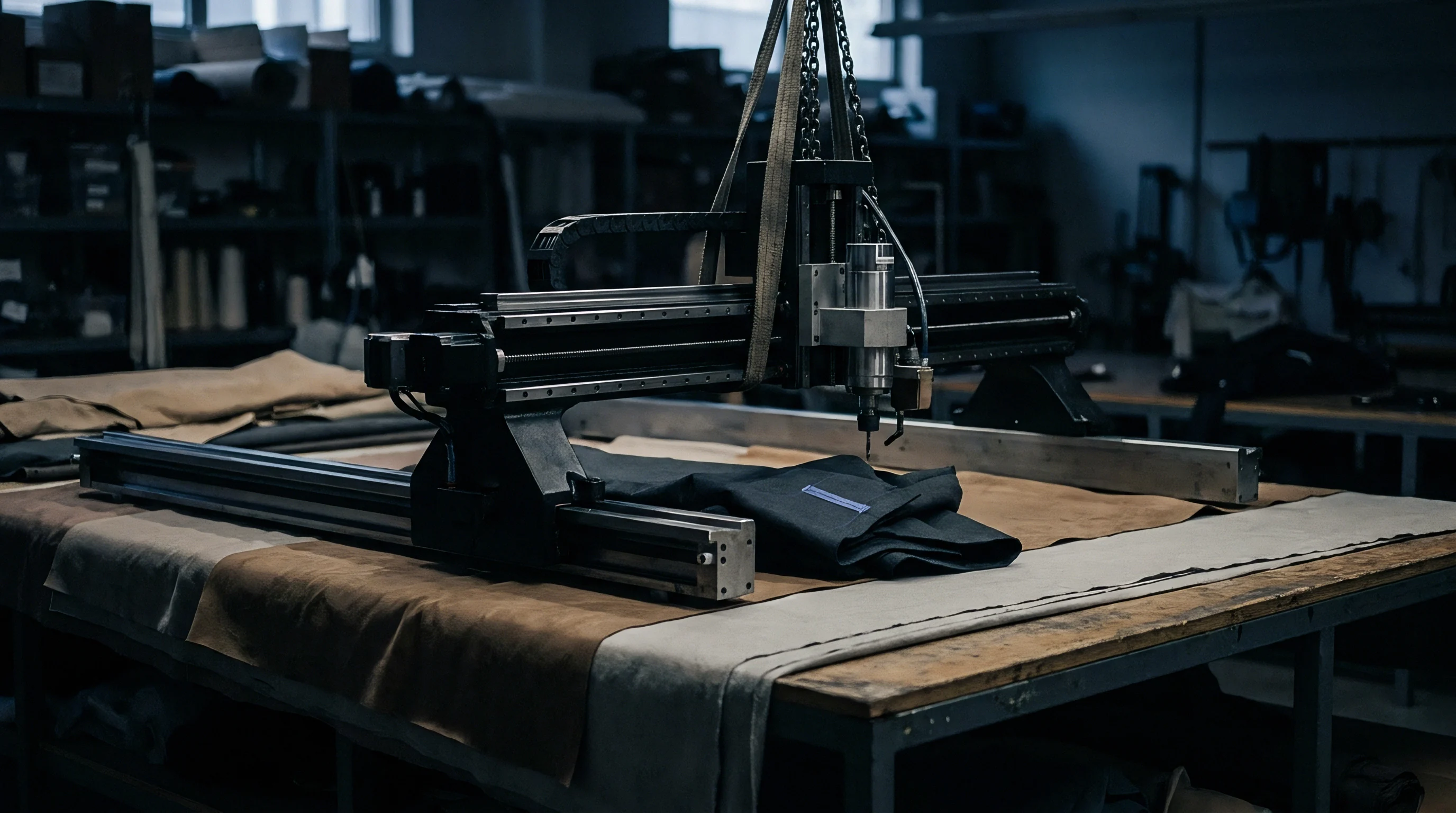
Thermal loads generated inside high-speed inspection enclosures originate from three distinct electrical sources. The line-scan detector array consumes three watts of direct DC power, the analog-to-digital processing boards dissipate twelve watts, and the thermoelectric cooler itself generates between fifteen and forty-five watts of resistive dissipation while pumping thermal energy away from the cold plate. Removing this cumulative thermal burden determines whether the inspection bridge maintains baseline calibration during round-the-clock finishing operations.

Will Thermal Drift Corrupt Grey Cloth Defect Thresholds?
Thermal fluctuations shift the baseline voltage output across individual photodiode elements. In an uncooled or poorly regulated linear array, this drift mimics absorption changes caused by moisture regain variations or sizing oil concentrations on the running textile web. Calibrating an automated camera system to detect low-contrast defects, such as foreign polypropylene twine fragments embedded in carded cotton yarns, demands a signal-to-noise ratio exceeding sixty decibels.
As detector temperature rises from minus ten degrees Celsius to twenty-five degrees Celsius, dark current increases twelvefold, raising the sensor noise floor and compressing the dynamic range available for defect discernment.
A temperature rise of eighteen degrees Celsius triples detector dark current under continuous thirty-kilohertz line scanning.
Peltier devices operate on the thermoelectric principle where direct electrical current driven through bismuth telluride junctions creates a temperature differential across opposing ceramic plates. The cold junction absorbs heat from the InGaAs detector substrate, while the hot junction releases that energy, alongside the electrical power supplied to the module, to an external thermal sink. Single-stage thermoelectric coolers achieve temperature differentials up to sixty-five degrees Celsius under zero thermal load, but under an active eight-watt detector and parasitic load, practical temperature depression narrows to thirty-five degrees.
Multi-stage cascades reach lower absolute temperatures, yet their electrical efficiency drops sharply, multiplying the thermal exhaustion requirements at the chassis exterior.
| Detector Temperature | Dark Current (pA) | Signal Noise Floor (RMS mV) | Dynamic Range (dB) | Polypropylene Yarn Contrast Ratio |
|---|---|---|---|---|
| Minus 20 °C | 0.42 | 0.18 | 68.4 | 4.2:1 |
| Minus 10 °C | 1.25 | 0.31 | 64.1 | 3.8:1 |
| 0 °C | 3.80 | 0.62 | 58.2 | 2.9:1 |
| 15 °C | 11.40 | 1.45 | 50.8 | 1.7:1 |
| 30 °C | 34.20 | 3.88 | 42.3 | 1.1:1 |
The mathematical balance governing the thermoelectric heat pump balances Peltier cooling against internal electrical resistance and conductive back-bleed across the ceramic substrate. Heat pumped from the cold junction must overcome conduction through the semiconductor pellets, which flows from the hot side back to the cold side proportionally to the temperature difference. Driving the thermoelectric cooler with excessive current increases internal resistive heating faster than the Peltier coefficient can extract energy, precipitating thermal runaway.
Proportional-integral-derivative controllers regulate drive current within a tight envelope of plus or minus one-tenth of a degree Celsius to preserve photometric calibration. Heavier current draw produces diminishing cooling returns once internal resistance dominates the junction.
Signal
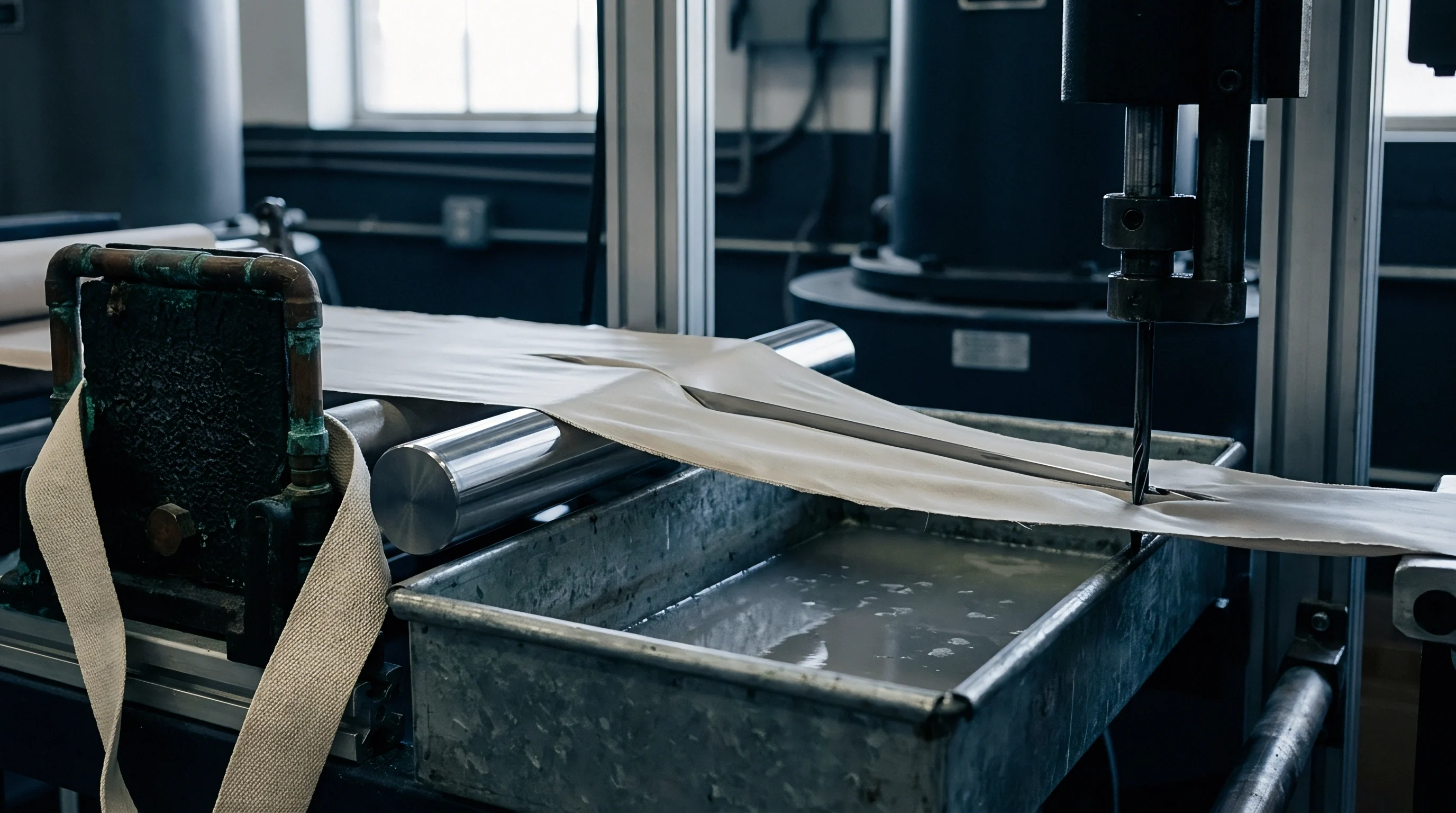
Electrical noise generated at the sensor level directly dictates the false-alarm rate of the vision classifier. When examining greige cotton sheeting at one hundred twenty metres per minute, an inspection pixel corresponds to a spatial dimension of 0.25 millimetres by 0.25 millimetres on the moving cloth. Detecting an individual broken filament or a transient drop in sizing application requires clean photometric contrast between the defective yarn and adjacent regular structures.
Elevated thermal noise creates pixel-to-pixel baseline variations that masquerade as yarn thickness fluctuations, forcing inspection operators to de-tune sensitivity thresholds.
Contaminant detection relies on spectral absorption bands specific to synthetic impurities. Raw cotton absorbs short-wave infrared light predictably based on its cellulose structure and ambient moisture content, showing distinct water absorption troughs at 1450 nanometres and 1940 nanometres. Polypropylene baling twine fragments, common contaminants originating in the field and the gin, show sharp hydrocarbon absorption peaks near 1210 nanometres and 1720 nanometres.
If detector temperature instability widens the noise envelope, the subtle absorption dip of a 0.1-millimetre polypropylene sliver falls below the statistical threshold of the line-scan receiver.
Sensor baseline stability determines whether foreign synthetics trigger a diverter gate or pass into finished apparel rolls.
Thermal destabilization within automated optical inspection heads introduces three distinct operational breakdown mechanisms across high-speed textile sorting operations:
- Dark current spatial non-uniformity develops when uneven heating across the linear array causes center pixels to exhibit higher offset voltages than edge pixels, generating artificial vertical banding across digital greyscale roll maps.
- Pixel response non-uniformity drift occurs as individual photodiode quantum efficiencies diverge with localized temperature shifts, invalidating factory flat-field shading corrections performed at the start of a production shift.
- Thermal focus distortion manifests when mechanical thermal expansion within the lens mounting barrel shifts the focal plane by forty microns, softening edges and masking tight pick count irregularities in high-density woven sheetings.
Moisture regain in natural fibres complicates real-time optical grading. Standard cotton carries a commercial moisture regain of 8.5 percent under standard atmospheric conditions of twenty degrees Celsius and sixty-five percent relative humidity, whereas polyester fiber holds a regain of only 0.4 percent. When an intimate admixture of sixty-five percent polyester and thirty-five percent cotton passes through a high-speed inspection bridge, regional moisture variations alter optical reflectance across the infrared band.
Stabilized detector cooling isolates genuine composition anomalies from surface moisture variation. Whether factory calibration routines can maintain this isolation over six-month production cycles without manual zeroing remains an engineering challenge that mill quality managers must resolve on the plant floor.


Mount
Mechanical integration of thermoelectric modules demands rigid isolation from loom-induced vibrations. Finishing lines run continuously alongside heavy weaving sheds, transferring low-frequency ground oscillations directly into the inspection gantry. Thermoelectric bismuth telluride pellets possess low shear strength and fracture under sustained mechanical chatter.
Clamping the cooler assembly requires calibrated spring-loaded hardware that maintains a uniform interface pressure between forty and sixty pounds per square inch while accommodating expansion cycles.

Is Liquid Recirculation Necessary in High Ambient Enclosures?
High ambient temperatures surrounding stenter frames rapidly overwhelm conventional finned air sinks. Forced air cooling within a textile mill draws particulate matter, bringing lint, chemical finishes, and sizing dust directly across the thermal sink surfaces within hours. Fins foul, air velocity plummets, and module hot-side temperatures spike above seventy degrees Celsius.
Liquid-chilled cold plates, operating on a closed loop using distilled water and inhibited propylene glycol, isolate the internal camera chassis from the plant atmosphere. Heat transfers directly to an external fluid circuit, exhausting thermal loads dozens of metres away from the sensitive optical zone.
A closed liquid circuit rejects eighty watts of camera thermal load without drawing lint into optical baffles.
Automotive metal stamping lines and aerospace composite tape-laying gantries face identical environmental constraints, isolating their linear arrays within sealed heat-pipe enclosures to survive ambient dust. Textile finishing machinery demands equal discipline. Thermal interface materials positioned between the detector ceramic plate and the copper heat spreader govern conductibility.
Phase-change materials and silver-filled thermal greases provide low thermal impedance, provided application thickness stays between twenty-five and fifty microns. Uneven torque applied to mounting fasteners causes grease squeeze-out, resulting in localized hot spots that burn out individual Peltier stages.
| Cooling System Architecture | Internal Delta T Max (°C) | Chassis Thermal Resistance (°C/W) | Lint Tolerance Level | Power Consumption (W) |
|---|---|---|---|---|
| Passive Fin Conduction | 15 | 1.85 | High | 0 |
| Forced Air Convection | 28 | 0.65 | Zero | 12 |
| Single-Stage Liquid Cold Plate | 45 | 0.18 | High | 35 |
| Two-Stage Liquid Recirculation | 62 | 0.12 | High | 78 |
Thermal qualification of automated web inspection systems follows an exacting sequential procedure before the machinery signs off for commercial roll sorting:
- Mechanical torque auditing of all cold-plate retention spring assemblies ensures clamping forces do not exceed sixty pounds per square inch, preventing ceramic micro-fractures during thermal cycling.
- Thermal interface thickness measurement verifies bondline thickness under fifty microns, eliminating air voids that degrade conductive heat transfer to the liquid block.
- Dry nitrogen purge cycling removes ambient humidity from the optical enclosure until dew point measurements inside the chamber drop below minus forty degrees Celsius.
- Continuous step-load thermal stress testing runs the Peltier drive current at maximum capacity for twenty-four hours under fifty-degree external ambient conditions to verify zero solder creep.
Procuring engineers verify these steps against rigid mechanical criteria. Specification dossiers must define exact tolerances for fluid flow rates, thermal interface resistance, and operating ambient ranges to prevent early sensor degradation on the finishing floor:
- Flow rate monitoring instrumentation tracks coolant delivery, maintaining a velocity of at least 1.5 litres per minute across each optical head to preserve turbulent heat transfer.
- Positive internal pressure differential stays between fifteen and twenty-five millibars to prevent humid mill air from penetrating gasketing seals during emergency line shutdowns.
- Automatic over-temperature interlock switches shut down camera electronics if the thermoelectric hot side exceeds sixty-five degrees Celsius, protecting expensive InGaAs arrays from permanent thermal damage.
Purchasing agreements governing high-speed inspection gantries mandate strict compliance with environmental protection classes. Contracts stipulate that optical inspection enclosures must conform to standard IP65 dust and water ingress ratings under continuous operating vibration, shifting liability for thermal-choke shutdowns entirely to the equipment supplier.
Penalty
Financial liability arising from sensor cooling failure materializes when substandard goods ship to apparel cutters and industrial laminators. Consider a continuous finishing operation processing a sixty-five percent polyester, thirty-five percent combed cotton woven poplin shirting. The mill runs ten thousand metres per shift at a standard wholesale valuation of 3.20 dollars per finished linear metre.
Operating at one hundred twenty metres per minute, the line processes two thousand metres per hour through a single automated inspection gantry.
Thermal degradation of the detector array shifts defect classification sensitivity halfway through a production run. A temperature rise from minus fifteen degrees to five degrees Celsius elevates sensor dark noise, blinding the system to continuous warp-direction oil streaks and broken picks. Ten rolls of sixty-inch broadloom, comprising eight thousand linear metres, pass through the inspection station classified as First Quality Grade A material.
The fabric arrives at the garment converter, where high-speed automated cutting tables lay down eighty plies simultaneously.
Defects discovered after cloth cutting cannot be repaired or re-routed. The garment manufacturer scraps thousands of cut panels, triggering immediate commercial claims against the textile mill. The direct loss on the eight thousand metres of defective shirting equals 25,600 dollars in raw cloth value.
Consequential damages asserted by the cutter for cutting labor, lost production capacity, and order cancellation penalties commonly add three times the cloth invoice value, escalating the financial penalty past one hundred thousand dollars for a single shift of uncooled inspection operation.
Customs classification introduces severe regulatory exposure when composition anomalies pass undetected. Under Harmonized Tariff Schedule Chapter 52 and Chapter 55, duty rates diverge based on whether cotton or synthetic fibers predominate by weight. A woven poplin declared as thirty-six percent cotton and sixty-four percent polyester enters under tariff subheading 5512.19 at a duty rate of 14.9 percent.
If thermal baseline drift in the NIR camera masks an undetected yarn lot switch that drops polyester content to forty-nine percent, the cloth shifts to Chapter 52, classified as chief weight cotton under subheading 5210.31 at a higher duty rate alongside strict country-of-origin documentation requirements.
Customs authorities identifying misdeclared fiber content impound shipments at the port of entry, assess retroactive duties, and impose civil fraud penalties up to two times the landed value of the merchandise. Mill profitability collapses when inspection equipment fails to catch structural and compositional errors before rolls ship. Undetected defect propagation through defective sensor cooling transforms a profitable textile finishing contract into an unrecoverable commercial loss that drains annual mill operating margins.