Attribute Sampling Plans for Textile Chemical Compliance
Attribute sampling for textile chemical compliance enforces zero-defect lot criteria to prevent hazardous substance dilution across finished yardage.


Swatch
Textile compliance testing for restricted substances demands a binary pass or fail determination rather than an average measurement across a shipment. Physical textile testing accepts parametric variance: breaking strength, tear resistance, and colorfastness values across multiple rolls can be averaged to establish batch conformity under ISO 2859-1 sampling frameworks. Chemical compliance operates under absolute statutory thresholds.
A single fabric roll carrying forty milligrams per kilogram of extractable lead invalidates the entire shipment under REACH Annex XVII, even if twenty nine other rolls in the lot register below analytical detection limits.

Binary Lot Acceptance Mechanics
Attribute sampling plans evaluate fabric lots by classifying each sampled unit as either conforming or non-conforming against a defined chemical limit. Variable sampling, which calculates a population mean and standard deviation to estimate lot compliance, fails in chemical restricted substance list testing. Chemical contamination in woven and knitted goods is rarely distributed normally across a production run.
Contamination occurs in concentrated spikes caused by dirty exhaust dye baths, contaminated auxiliary sizing agents, or unwashed finishing equipment between color changes. Parametric averaging mathematically masks these localized chemical spikes. Combining a highly contaminated roll swatch with four clean swatches lowers the mean chemical concentration below the regulatory action limit while leaving actionable consumer risk inside the container.
Attribute acceptance sampling relies on zero-acceptance plans where the acceptance number is zero defects across the sample size. Under a zero-acceptance plan, discovering a single non-conforming specimen triggers immediate rejection of the entire inspection lot. This binary structure aligns directly with enforcement practices at customs entry ports and international market surveillance authorities.
Regulatory inspectors cut single swatches from imported garments or fabric rolls. Customs laboratories do not average your shipment; they test the isolated cut. If that isolated specimen violates statutory limits, the border authority issues a import refusal or mandatory recall notice for the entire bill of lading.

Structural Differences in Testing Regimes
Designing an effective attribute sampling program requires distinguishing physical lot quality verification from chemical risk isolation. Physical testing measures structural properties where process variance is continuous and predictable. Chemical testing measures hazardous substance presence where process variance is discontinuous and catastrophic.
| Evaluation Parameter | Physical Quality Plan (ISO 2859-1) | Chemical Compliance Plan (c=0) |
|---|---|---|
| Acceptance Criteria | Acceptable Quality Limit percentage band | Zero non-conforming units in sample size |
| Mathematical Basis | Normal distribution mean and standard deviation | Hypergeometric binomial distribution |
| Defect Aggregation | Permits minor non-conformities up to AQL limit | Single defect rejects total lot volume |
| Sample Combination | Individual test specimens evaluated per roll | Strictly governed composite ratio limits |
| Commercial Consequence | Price discount or secondary grading allowed | Total lot quarantine, re-export, or destruction |
Chemical compliance verification treats a single non-compliant specimen as evidence of systematic chemical bath contamination.
Executing a variable sampling plan on regulated chemical parameters leaves non-compliant rolls inside cleared shipments, triggering mandatory customs recalls and market withdrawals when border authorities test individual components.


Bale
Defining an inspection lot on the factory floor determines whether statistical sampling yields valid chemical compliance evidence. An inspection lot is a homogeneous collection of fabric rolls manufactured under uniform conditions, using identical fiber lots, dyestuffs, and chemical finishing formulations. Combining multiple dye lots or different fiber blends into a single sampling lot invalidates the statistical foundation of attribute plans.
When a mill batches five different colorways from three distinct dye vessels into one inspection lot, a zero-acceptance sample plan selected for that aggregate volume fails to provide the calculated statistical protection for any single colorway.

Production Lot Boundaries and Heterogeneity
Heterogeneity is the primary systemic cause of sampling plan failure in textile wet processing. Dyestuffs and chemical auxiliaries enter the mill in discrete batches. A dyehouse compounding a dark navy shade uses different chemical leveling agents, fixatives, and residual salt concentrations than the same dyehouse compounding a light pastel shade.
Even within a single continuous dyeing run, chemical exhaustion rates change across the length of the fabric run. The beginning of a dye run may carry higher concentrations of unfixed reactive dyes, while the end of the run may suffer from bath depletion or thermal breakdown of chemical carriers.
Sampling density must account for fabric roll history. Pulling swatches exclusively from easily accessible outer rolls on a packing pallet introduces severe selection bias. Mill floor samplers must select rolls across the entire spatial and temporal spectrum of the dye lot production sequence.
Swatches must be cut after removing outer roll wraps and discarding the first linear meter of fabric to eliminate surface dust and external storage contamination.

Roll Isolation Protocol
Proper physical sample extraction preserves sample integrity before laboratory digestion and chromatographic analysis. The following procedure isolates representative swatches from bulk fabric shipments on the factory floor.
- Cut ten linear centimeters across the full usable width of the target fabric roll after trimming selvages.
- Store each isolated specimen in an individual fluorinated high-density polyethylene bag to prevent cross-contamination.
- Assign a unique alphanumeric identifier linking the sample specimen directly to the mill dye vat batch number.
- Record ambient humidity and storage temperature on the sample chain of custody documentation before transport.
- Ship specimens to the accredited laboratory under dry sealed conditions within forty-eight hours of collection.
A sample cut from an outer roll edge fails to capture bath exhaustion gradients across the fabric width.
Mills frequently maintain that chemical non-compliance in a single fabric roll represents an isolated dyehouse anomaly rather than systematic chemical bath failure.


Tolerance
Operating characteristic curves define the statistical probability of accepting a fabric shipment containing non-compliant chemical residues. Every attribute sampling plan carries two inherent statistical risks: Producer Risk, which is the probability of rejecting a compliant fabric lot, and Consumer Risk, which is the probability of accepting a non-compliant fabric lot. In chemical compliance management, Consumer Risk is the dominant operational metric.
Accepting a fabric lot that contains prohibited alkylphenol ethoxylates or toxic heavy metals exposes the brand to statutory enforcement, civil litigation, and severe brand damage.

Operating Characteristic Curves in Zero Acceptance Plans
Zero-acceptance sampling plans, designated as c=0 plans, optimize the Operating Characteristic curve to provide steep protection against low defect rates. Standard ISO 2859-1 sampling plans with non-zero acceptance numbers require large sample sizes to achieve low Consumer Risk. A c=0 plan minimizes the required sample size while ensuring that the probability of lot acceptance drops sharply as the actual lot defect percentage rises.
For a target Lot Tolerance Percent Defective of five percent, a c=0 plan calculates the exact number of rolls that must be tested to ensure a ninety percent or ninety-five percent statistical confidence of detecting at least one non-conforming roll.
Calculating sample size under c=0 attribute plans relies on the hypergeometric distribution for finite lots and the binomial distribution for continuous production streams. The mathematical relationship determines that as lot size increases, the required sample size reaches an asymptote rapidly. Beyond a lot size of five hundred rolls, increasing the sample size yields diminishing returns in consumer protection, allowing compliance teams to standardize sample counts across large commercial shipments.

Does Batch Size Dictate Zero-Acceptance Sample Selection?
Selecting sample numbers for chemical compliance requires matching the lot volume against the targeted risk index. Lower risk categories apply to unbleached, undyed Greige goods, while higher risk categories apply to functional finished goods carrying water-repellent, flame-retardant, or antimicrobial treatments.
| Lot Size (Fabric Rolls) | Low Risk Index (c=0) | Medium Risk Index (c=0) | High Risk Index (c=0) |
|---|---|---|---|
| 1 to 8 | 2 rolls | 3 rolls | 5 rolls |
| 9 to 15 | 3 rolls | 5 rolls | 8 rolls |
| 16 to 25 | 5 rolls | 8 rolls | 13 rolls |
| 26 to 50 | 8 rolls | 13 rolls | 20 rolls |
| 51 to 90 | 13 rolls | 20 rolls | 32 rolls |
| 91 to 150 | 20 rolls | 32 rolls | 50 rolls |
| 151 and above | 32 rolls | 50 rolls | 80 rolls |
A sample size of thirteen rolls yields a ninety percent probability of detecting a five percent lot defect rate under zero-acceptance criteria.
Whether commercial buyers can economically justify sample sizes above thirty-two rolls for low-risk synthetic Greige fabrics remains an open operational question across major retail compliance programs.


Matrix
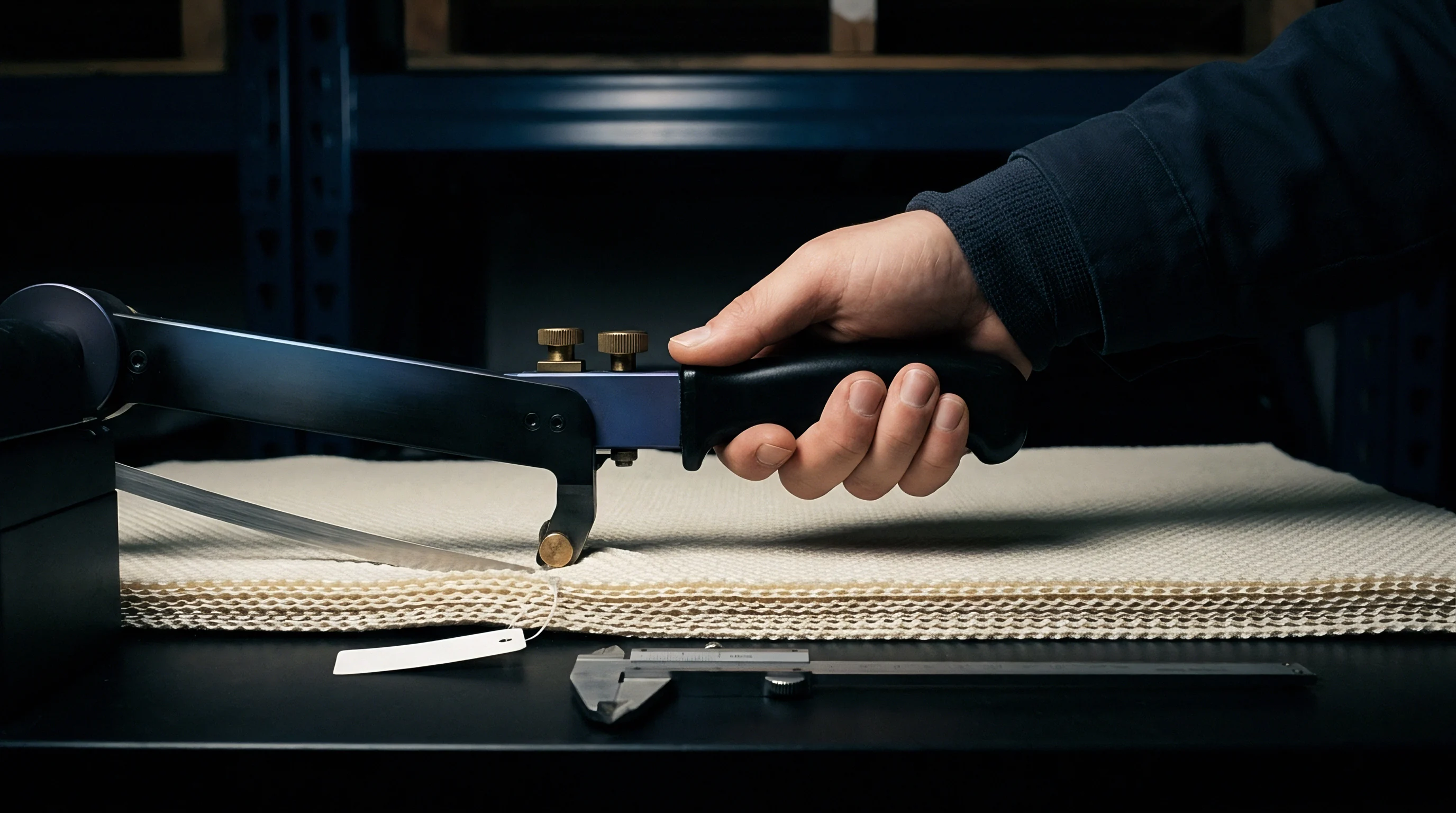
Laboratory preparation of textile specimens introduces chemical interactions that alter statutory analytical detection limits. When an attribute sampling plan specifies composite testing, swatches from multiple fabric rolls are combined into a single analytical test sample to reduce laboratory testing costs. Composite sampling is financially attractive, but it creates a severe analytical dilution hazard.
If three fabric swatches are pooled into one extraction flask, any chemical residue present in a single swatch is diluted by a factor of three during chemical extraction.
Composite Dilution Mathematics and Reporting Thresholds
To maintain the statistical protection of a zero-acceptance plan during composite testing, laboratories must adjust their analytical reporting limits. The laboratory Limit of Quantification must be lower than the adjusted composite limit. If the statutory restriction limit for a regulated aromatic amine under EN 14362-1 is thirty milligrams per kilogram, and the laboratory prepares a three-into-one composite sample, the action threshold for that composite sample becomes ten milligrams per kilogram.
If the composite test yields eleven milligrams per kilogram, the laboratory cannot report a pass result. The analyst must break down the composite and test all three swatches individually to identify which roll contains the non-compliant chemical concentration.
Analytical methods differ in their susceptibility to composite dilution errors. High-performance liquid chromatography coupled with tandem mass spectrometry offers ultra-low limits of detection for fluorinated surfactants, easily accommodating composite dilution factors up to five-into-one. Gas chromatography-mass spectrometry testing for phthalates in polyvinyl chloride coatings faces matrix interference when synthetic plasticizer oils overload the chromatographic column, limiting composite ratios to maximum three-into-one preparations.
| Chemical Category | Standard Test Method | Statutory Limit | Max Composite Ratio | Adjusted Action Limit |
|---|---|---|---|---|
| Banned Azo Colorants | EN ISO 14362-1 | 30 mg/kg | 3-into-1 | 10 mg/kg |
| Extractable Heavy Metals | EN 16711-1 | 0.2 mg/kg (Cd) | 2-into-1 | 0.1 mg/kg |
| Organotin Compounds | ISO 22744-1 | 1.0 mg/kg | 5-into-1 | 0.2 mg/kg |
| Phthalate Esters | EN ISO 14389 | 1000 mg/kg | 3-into-1 | 333 mg/kg |
| PFAS Compounds | CEN/TS 15968 / LC-MS | 0.025 mg/kg | 5-into-1 | 0.005 mg/kg |
| Methods notes: Statutory limits represent EU REACH Annex XVII standard action levels; adjusted action limits define mandatory composite deconvolution thresholds for accredited testing laboratories. | ||||

Analytical Extraction Failures
Chemical screening using attribute plans can fail due to specific physical and chemical mechanisms during laboratory extraction. Understanding these failure modes allows sourcing teams to structure valid testing requisitions.
- Composite Dilution Oversights occur when pooling swatches dilutes restricted aromatic amine concentrations below laboratory detection limits while individual rolls exceed regulatory action levels.
- Matrix Extraction Interferences arise when elastane synthetic fibers release hydrophobic compounds that mask target phthalate peaks during gas chromatography mass spectrometry analysis.
- Substrate Degradation Errors take place during thermal extraction of fluorinated polymers, generating false positive signals for short-chain perfluoroalkyl substances.
- Cross-Contamination Events happen when unwashed sample cutting shears transfer heavy metal pigments from printed trims to unprinted base fabrics during specimen prep.
Section 8 of EN 14362-1 mandates individual re-testing whenever a composite sample yields aromatic amine concentrations above ten milligrams per kilogram.
Annex XVII Entry 43 of REACH Regulation EC 1907/2006 establishes that any single textile article yielding aromatic amines above thirty milligrams per kilogram invalidates the entire lot certificate regardless of composite averaging.


Vat
Upstream chemical management in wet-processing facilities complements finished fabric acceptance sampling by reducing defect density before final cut operations. Testing finished fabric rolls under a zero-acceptance attribute plan without controlling input dye chemicals creates extreme commercial risk. If the defective lot percentage in a dyehouse exceeds ten percent due to contaminated chemical supply chains, any cost-effective attribute sampling plan will reject batch after batch at the finished fabric warehouse, creating massive delivery delays and unusable fabric inventory.

Wet Processing Auxiliary Verification
Verification of input chemicals against restricted substance lists must occur at the dyehouse receiving dock. Wet-processing mills must mandate that chemical suppliers provide certified ZDHC Manufacturing Restricted Substances List Conformance Level 3 documentation for every chemical auxiliary batch. Level 3 conformance verifies that the chemical formulation has undergone analytic screening and factory audit by an accredited third-party certifier.
Dyehouse water management represents another unmonitored source of chemical non-compliance defects. River water or unpurified borehole water used in scouring, dyeing, and washing stages introduces seasonal spikes of extractable heavy metals like copper, nickel, and chromium. Implementing attribute testing on incoming process water prevents industrial water supplies from contaminating otherwise compliant dyestuffs.

Audit Integration with Attribute Plans
Evaluating mill compliance programs requires a systematic audit protocol before approving bulk production orders. Compliance officers evaluate four core operational checkpoints.
- Formulation Verification checks that input dyestuffs carry valid ZDHC Level 3 MRSL conformance certificates before release to dyehouse operations.
- Process Water Audit measures heavy metal background levels in raw intake water prior to compounding exhaust bath recipes.
- Fixation Monitoring verifies temperature profiles during post-dye stenter drying to ensure complete cleavage of residual unfixed reactive dyes.
- Subcontractor Screening enforces attribute sampling protocols on secondary embroidery and screen printing facilities performing commission work.
Attribute plans deliver statistical confidence only when paired with strict chemical inventory controls on the mill floor.
Chemical bath stability controls defect variance across long dye runs far more reliably than finished fabric testing at the port.


Exposure
Commercial liability for non-compliant fabric shipments rests on the statistical rigor of the sample plan specified in the purchase contract. When a retail brand or garment importer receives a non-compliant chemical test report from a customs authority, the financial impact extends far beyond the direct cost of the failed fabric rolls. Statutory non-compliance triggers mandatory customs holds, demurrage charges, laboratory re-testing fees, container freight station storage tariffs, total inventory write-downs, and contractual late-delivery penalties enforced by downstream apparel customers.

Border Detention Economics and Retest Rules
Border enforcement agencies operate under zero-tolerance mandates for restricted chemical substances. If a European national authority detains a container of imported finished garments under Safety Gate surveillance procedures due to prohibited phthalate concentrations in a screen print, the importer faces an immediate operational fork. The importer can accept total destruction of the shipment under customs supervision, or request official secondary re-testing of the detained lot.
Secondary re-testing under customs oversight is financially hazardous. Border authorities select the re-test sampling plan, typically executing strict zero-acceptance attribute protocols at higher sample counts. The importer pays all testing fees, container detention charges, and port handling costs while the re-test proceeds.
If the secondary attribute plan detects a single non-conforming specimen, the authority issues a final rejection order, forfeiting all accrued expenses and requiring documented destruction of the goods.

Worked Scenario on Financial Risk Allocation
To understand the economics of attribute plan design, assume a purchase order for fifty thousand meters of dyed woven polyester fabric, split across twenty discrete dye lots of two thousand five hundred meters each. The fabric purchase price is four dollars per meter, establishing a base cargo value of two hundred thousand dollars. The buyer specifies an RSL chemical screening requisition under two different testing strategies.
Under Strategy A, the buyer executes an ISO 2859-1 Normal Single Sampling Plan with an AQL of 1.0, pulling five swatches across the entire fifty thousand meter shipment. Total laboratory testing cost equals seven hundred fifty dollars. However, the Consumer Risk under Strategy A for detecting a localized dye bath contamination affecting only one dye lot (a five percent lot defect rate) is less than forty percent.
The shipment clears factory departure but faces customs inspection. The border authority tests ten swatches under a zero-acceptance plan, finds one non-conforming swatch carrying fifty milligrams per kilogram of short-chain chlorinated paraffins, and places the container under quarantine. Landed costs escalate immediately: forty-five days of port demurrage costs nine thousand dollars, customs administration fees add two thousand five hundred dollars, and mandatory inventory destruction costs fourteen thousand dollars, resulting in a total financial loss of two hundred twenty-five thousand five hundred dollars.
Under Strategy B, the buyer mandates a zero-acceptance attribute plan (c=0) applied individually to each of the twenty discrete dye lots. The plan selects three swatches per dye lot, requiring sixty total laboratory tests, executed via twenty 3-into-1 composite preparations. Total laboratory testing cost equals four thousand five hundred dollars.
During mill-floor screening, Lot 14 fails the adjusted composite action limit for short-chain chlorinated paraffins. The buyer isolates and rejects Lot 14 at the factory gate, replacing it before export at a cost of ten thousand dollars absorbed by the mill under purchase order warranty terms. The remaining nineteen lots clear customs without incident.
Investing three thousand seven hundred fifty dollars in statistically appropriate attribute sampling prevents a two hundred twenty-five thousand dollar commercial failure.
Allocating retest costs to the supplier under contractual purchase order terms forces wet-processing mills to adopt internal zero-acceptance sampling protocols before releasing finished rolls to international freight forwarders.