Cross-Width Wet Pickup Discrepancies during Continuous Textile Finishing Operations
Cross-width wet pickup variance damages chemical uniformity, requiring calibrated roll crowning, bath turnover monitoring, and five-point swatch testing.
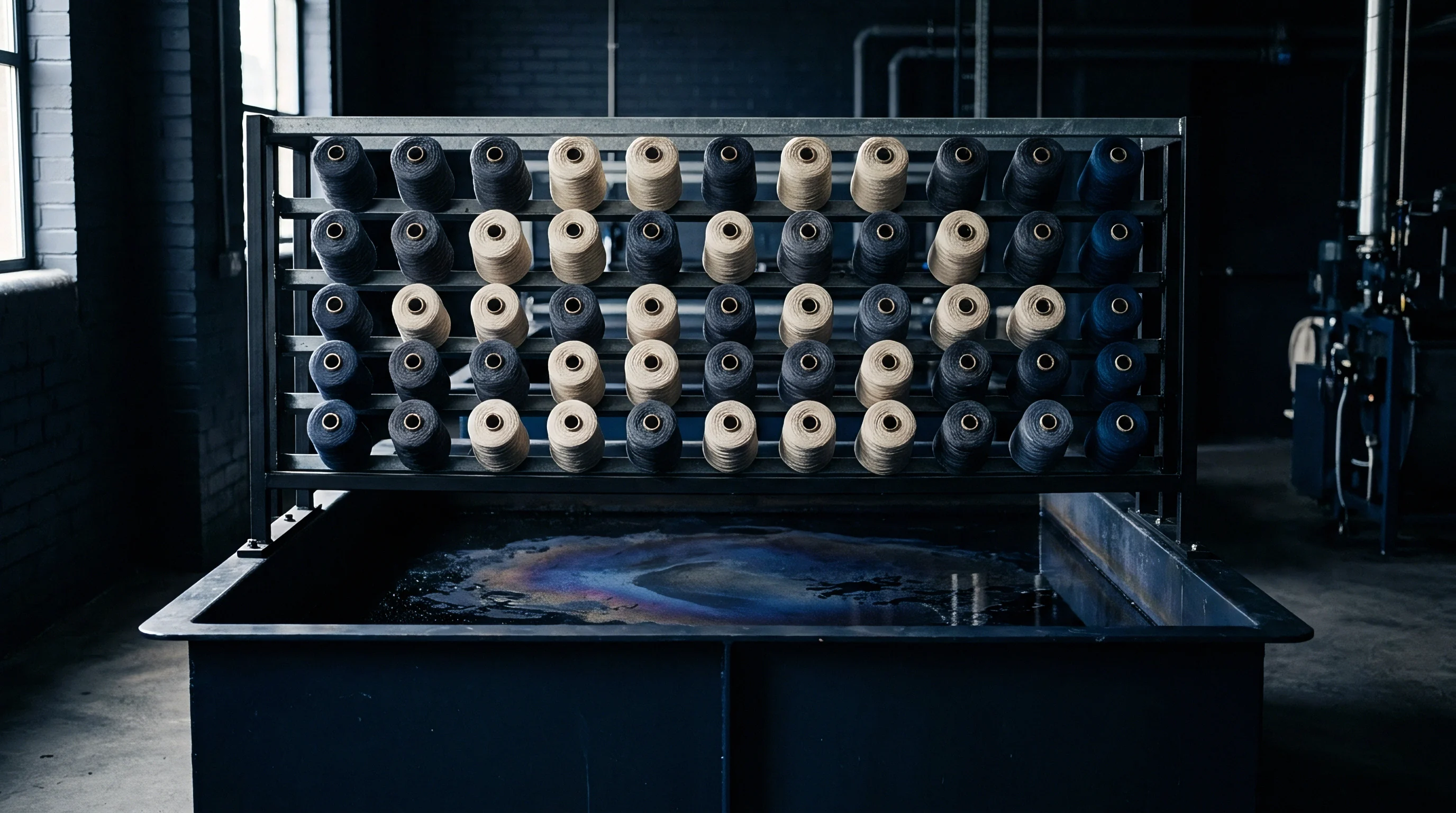
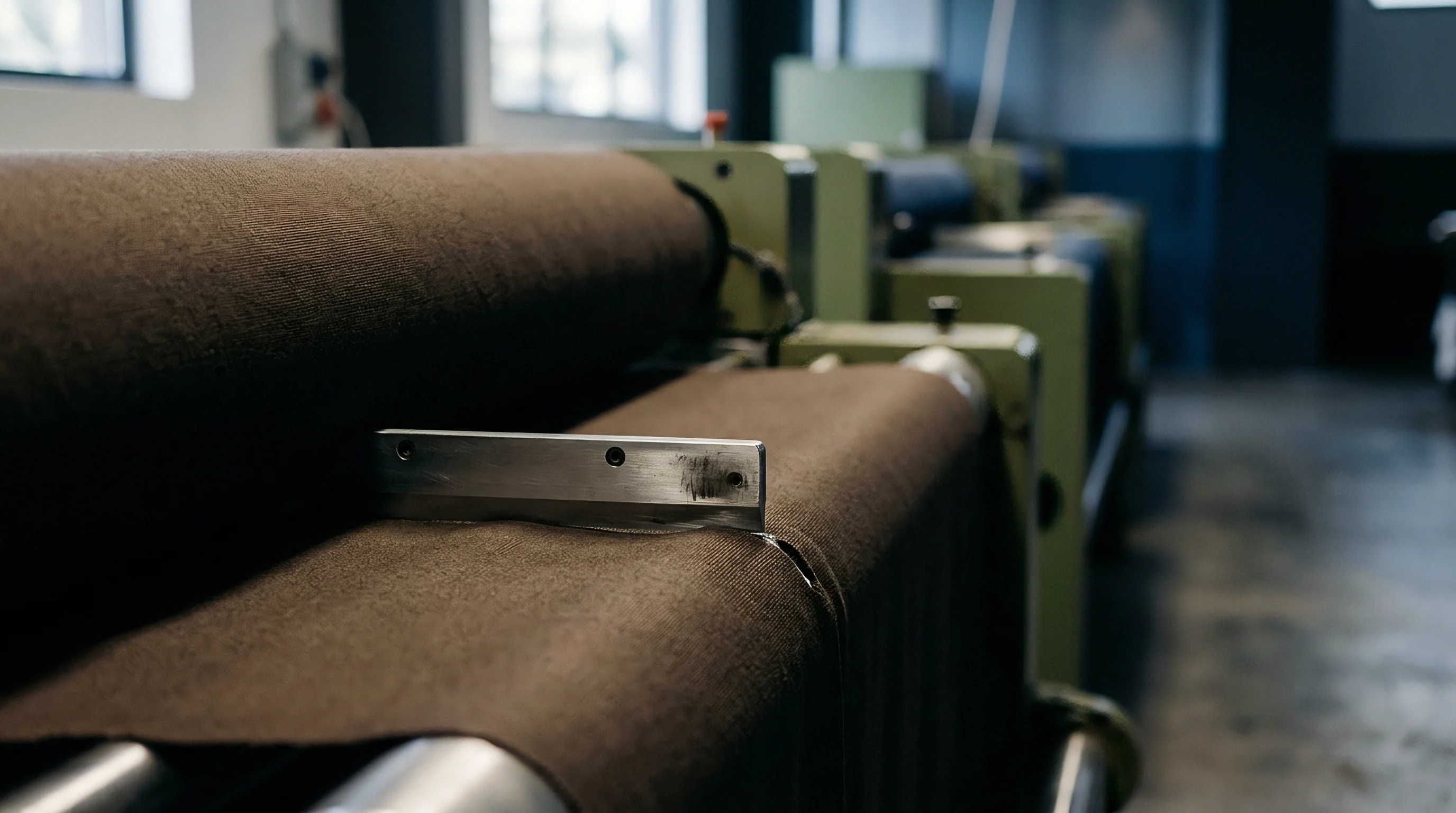
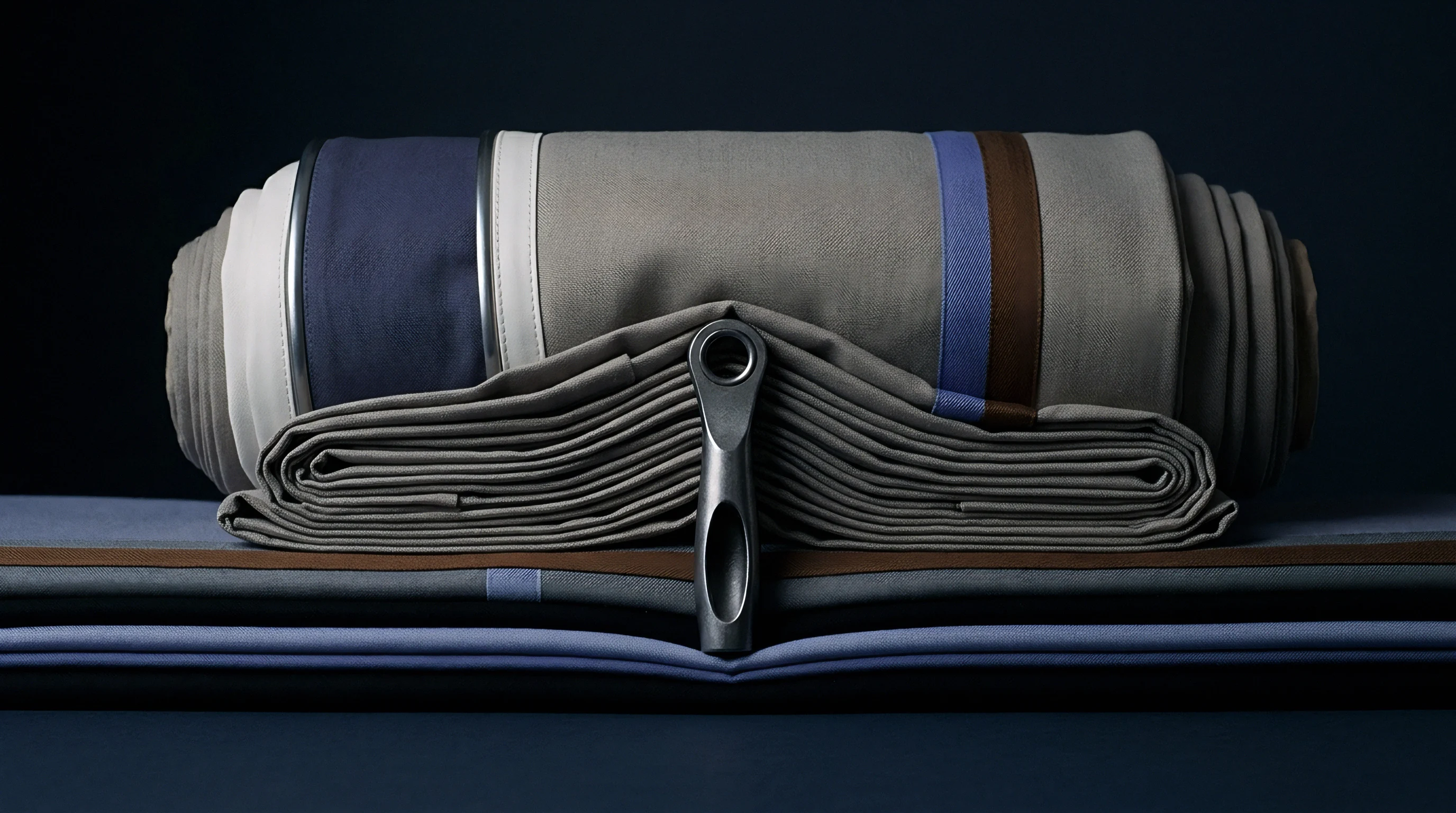
Nip
Continuous padding mangles transfer liquid chemical formulations onto textile webs by passing substrate through loaded squeeze rolls. Uniform application across a three-meter working width demands constant mechanical pressure within the contact zone. Steel core deformation under hydraulic end-loading creates a variable pressure profile across the roll face.
Uncorrected deflections cause higher pressure near the journal ends and lower pressure along the center line, driving systemic cross-width wet pickup discrepancies during continuous textile finishing operations.
Heavy rolls bend under hydraulic loads. Roll deflection mechanics dictate that an un-crowned roll pair loaded at the bearings produces an elliptical nip gap. Squeeze effectiveness drops along the mid-span of the bowl, allowing extra fluid mass to pass into the web interior while squeezing edge zones dry.
Deflection magnitude increases with the fourth power of roll face width and decreases linearly with shaft stiffness. Variable rubber cover hardness compounds this deflection. Thermal expansion during extended runs softens the polymer matrix near high-friction bearing housings, localized nip pressures shift, and liquid retention rates drift across the web.
Hydrodynamic forces within the entering fluid wedge alter local pressure distribution at high line speeds. Bath fluid drawn into the converging roll gap generates hydraulic lift proportional to web velocity and liquid viscosity. When line speeds rise above forty meters per minute, this liquid wedge pushes the roll faces apart, lowering net mechanical expression.
Viscosity alters liquid transfer speeds. If viscosity varies across the liquor trough, the hydrodynamic force shifts locally, causing wet pickup spikes that elude static roller alignment checks.
Hardness variations exceeding two Shore A units across a rubber roll face alter local fluid expressed under line pressure.
Steel rolling mills encounter identical roll deflection patterns under multi-ton hydraulic loading, where crown grinding profile errors of twenty micrometers alter sheet thickness uniformity across six-foot wide strip lines. Rubber-covered textile bowls exhibit identical physics under lower loads due to elastomer compliance. Variable crown grinding profiles, such as parabolic or cosine shapes, offset structural bending under set working loads.
Operating a padded mangle outside its engineered load window voids this balance. Lowering hydraulic line pressure on a fixed-crown roll causes center-heavy squeezing, leaving selvages excessively wet.
Engineered crown compensation relies on controlled-deflection rolls. Floating-roll architectures utilize internal hydraulic cushions or segmented hydrostatic elements positioned directly behind the roll shell. Adjusting internal oil pressure across discrete zones allows operators to flatten the cross-width nip pressure profile during speed transitions.
Calibration of these systems requires dynamic footprint impressions using pressure-sensitive films exposed at operational temperatures and line speeds.
Equipment manufacturers routinely claim that dynamic crown-adjusting rollers compensate for all cross-web pickup discrepancies without requiring mechanical grinding adjustments for changing fabric weights.

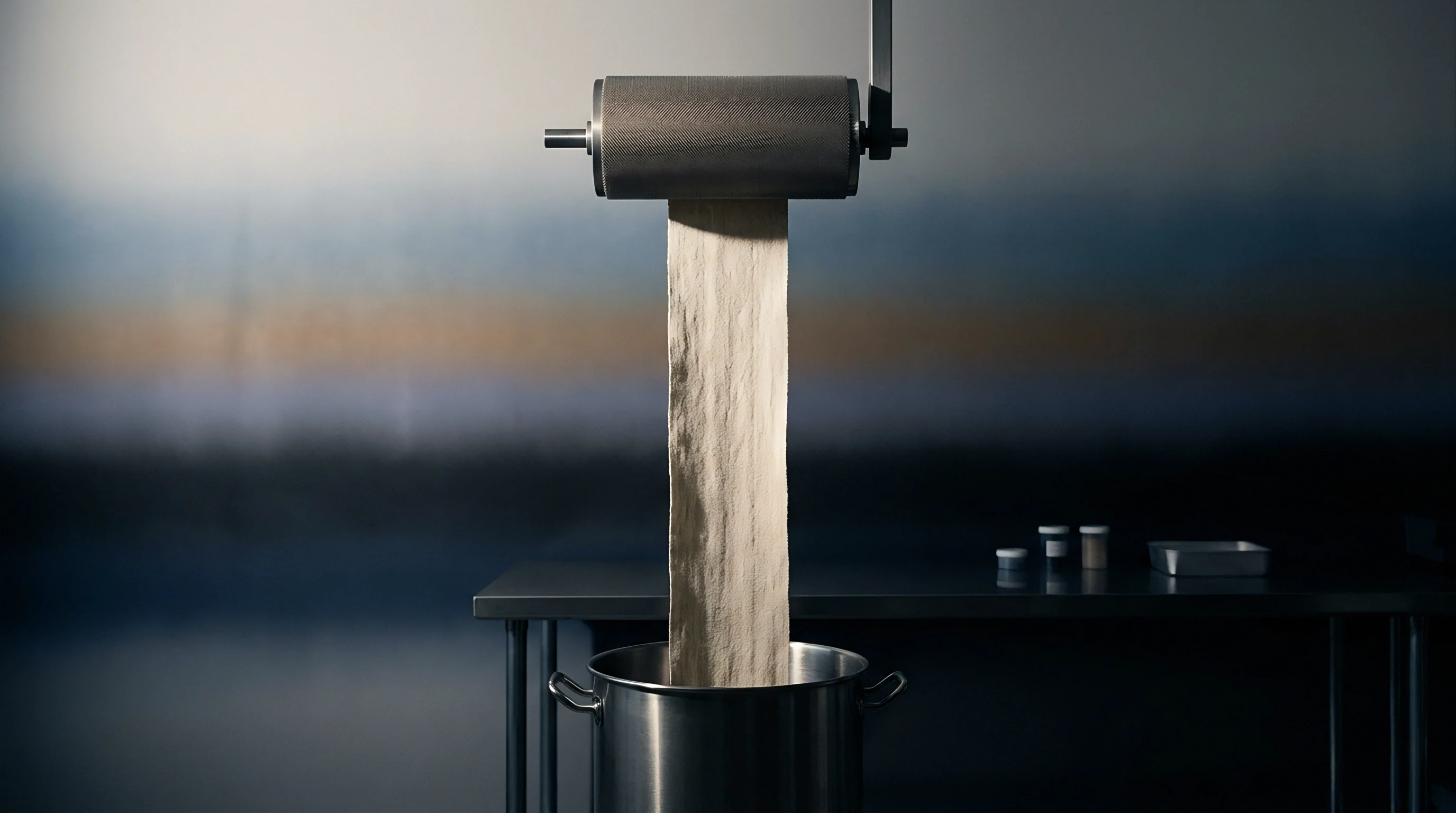
Trough
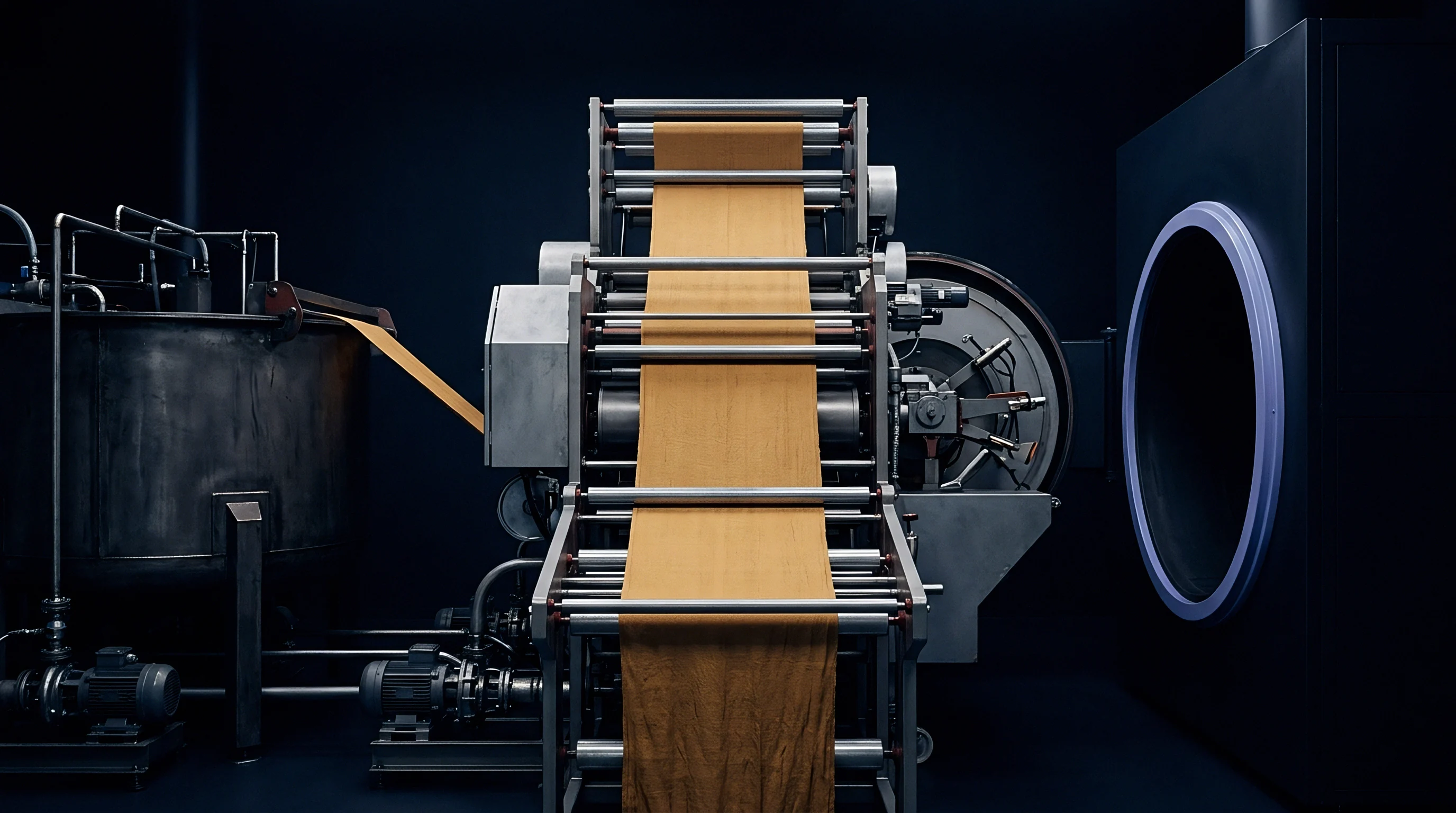
Substrate Displacement and Fluid Renewal Velocity
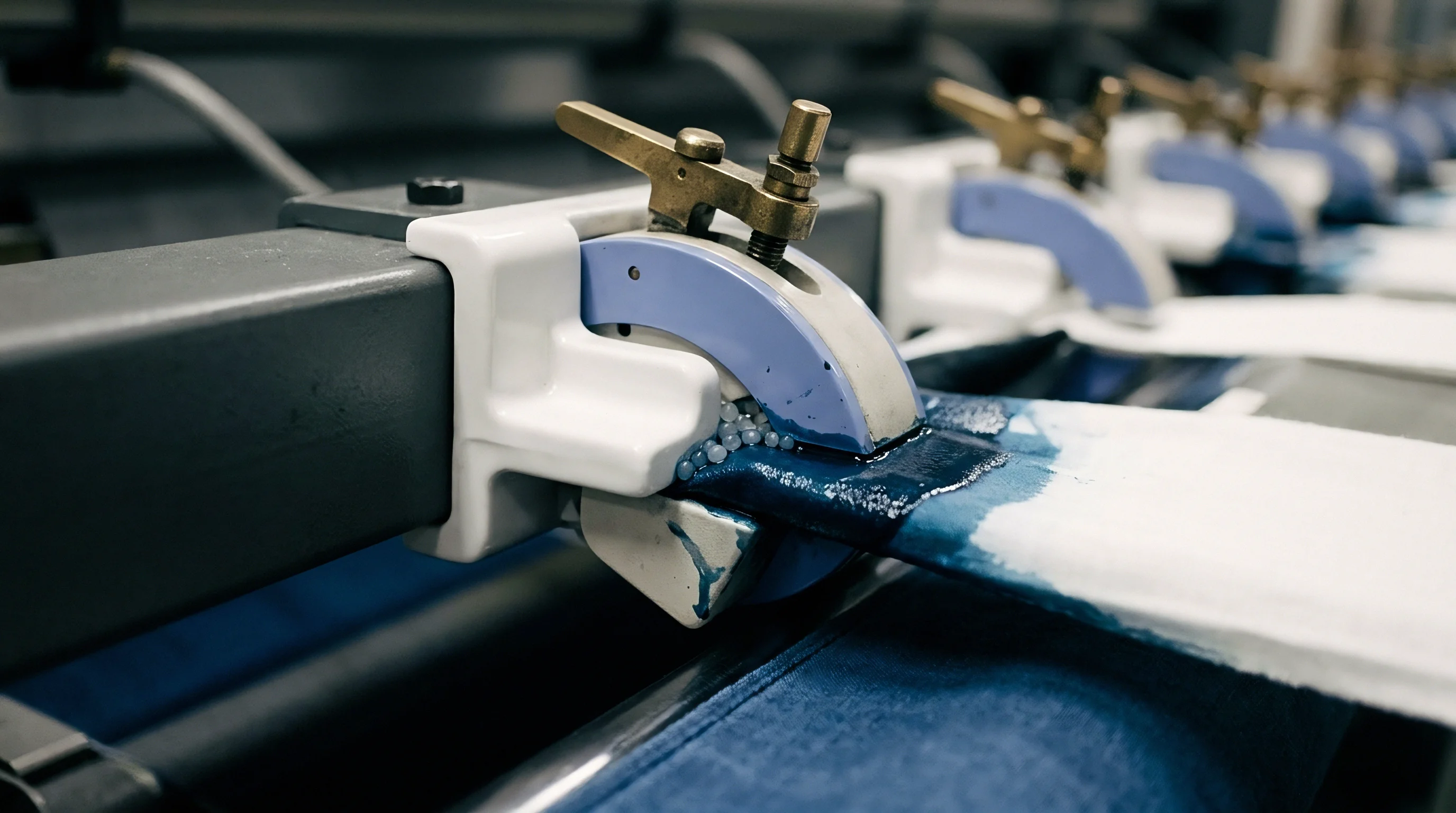
Continuous dip troughs hold the chemical finish liquor into which the dry web submerges prior to squeezing. Substrate displacement creates internal circulation currents within the bath. High-speed web movement drags liquid along the fabric path, generating boundary layer flow patterns.
When fluid renewal rates fail to match speed demand across the full width, localized chemical depletion alters pickup equilibrium.
Trough geometry governs liquor turnover efficiency. Deep, high-volume troughs increase liquid dwell time but promote stagnant recirculation zones along outer vessel walls. Shallow, low-volume dip pans reduce chemical waste and accelerate fluid turnover.
Fluid velocity vectors must maintain uniform replenishment across the center and selvages. Inadequate side-to-center recirculation leads to thermal and concentration gradients within the bath.
Concentration Gradients in Continuous Dip Baths
Chemical consumption rates vary between core bath areas and edge boundaries when fabric absorbency fluctuates. Differential capillary suction pulls specific formulation components faster than the web absorbs water. Squeezing forces fluid into central voids.
Exhaustion of active finish ingredients occurs when the replenishment stream enters at a single point, creating a concentration slope across the trough width.
Cold liquor alters chemical bath activity. Temperature variation within the trough impacts liquid viscosity, surface tension, and fiber swelling rates. Steam heating pipes positioned unevenly across the trough floor create localized hot spots.
Higher fluid temperatures accelerate bath uptake, creating wet pickup disparities between left, middle, and right web sections.
| Trough Zone | Fluid Velocity (m/s) | Temperature Variance (C) | Viscosity Shift (mPa·s) | Local Pickup Variance (%) |
|---|---|---|---|---|
| Left Edge (0–30 cm) | 0.42 | +1.8 | -0.4 | +3.2 |
| Left-Center | 0.28 | +0.4 | -0.1 | +0.8 |
| Center (Mid-Span) | 0.15 | -1.2 | +0.6 | -2.5 |
| Right-Center | 0.25 | +0.2 | 0.0 | +0.4 |
| Right Edge (0–30 cm) | 0.39 | +1.5 | -0.3 | +2.9 |
Continuous liquor feeding requires multi-point manifold delivery pipes spanning the full width of the dip pan. Single-pipe center feeds allow active chemical concentration to drop near outer edges during long production runs. Dosing pumps must inject concentrated replenishment stock into high-turbulence mixing chambers ahead of the main distribution pipe to eliminate concentration gradients before liquid contacts cloth.
- Single Point Inflow Slugs cause localized chemical spikes along the center path while leaving selvages starved of active finish auxiliaries.
- Dead Recirculation Corners collect stagnant liquor, allowing bath components to phase-separate or precipitate over multi-shift runs.
- Unshielded Direct Steam Injections dilute localized bath regions with condensed water, lowering active solids pickup along adjacent web lanes.
- Asymmetrical Drainage Port Layouts pull fluid preferentially toward one side of the pan, disrupting cross-web renewal velocity vectors.
Maintaining liquor replenishment rate proportional to fabric mass throughput prevents bath depletion across extended finishing runs.
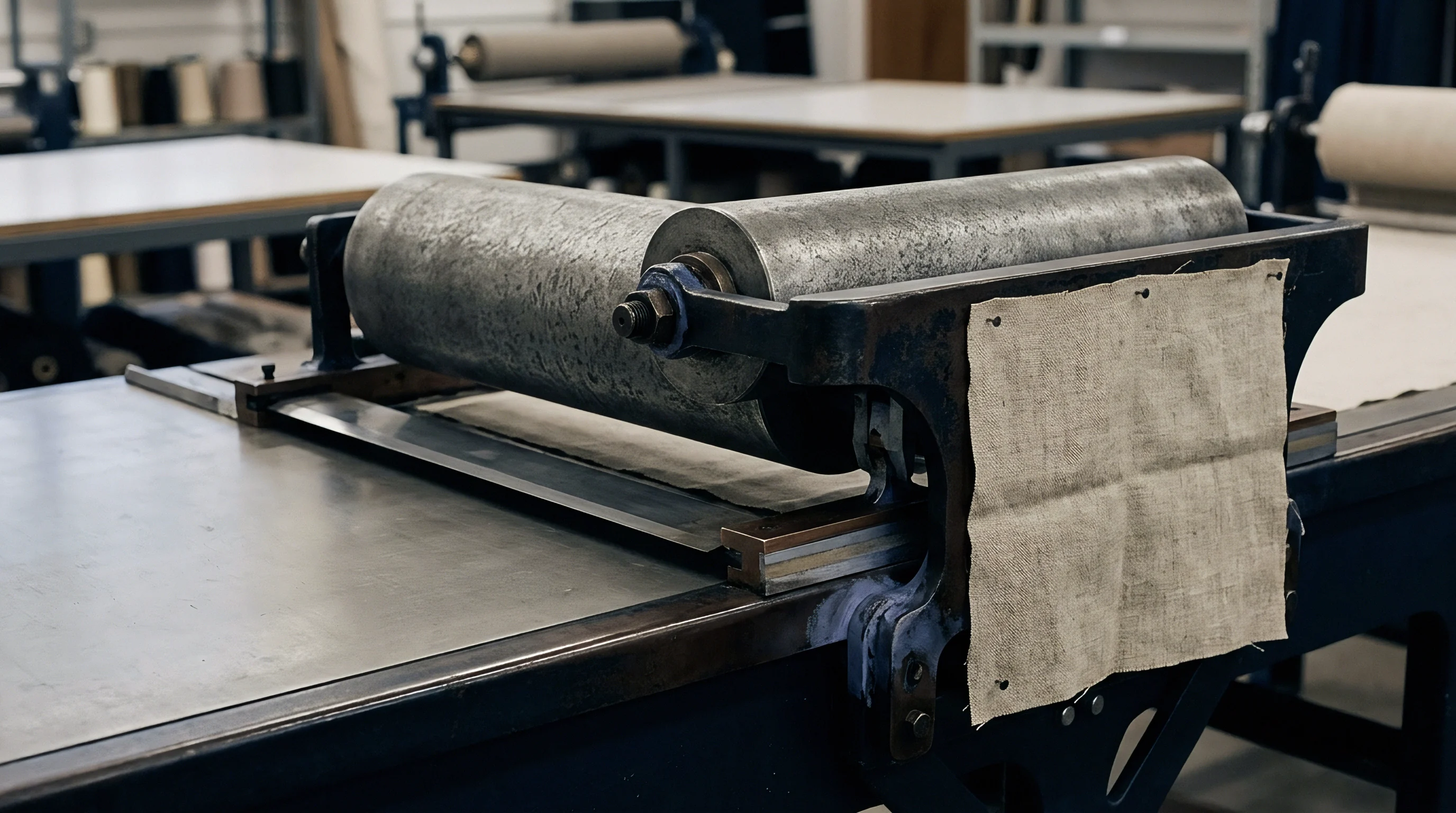
Capillarity
Preparation Non-Uniformity and Absorbency Profiles
Pre-treatment processes dictate wet pickup uniformity during downstream finishing operations. Desizing, scouring, and bleaching set substrate absorbency through foreign matter removal and wax extraction. Uneven alkaline scouring leaves residual natural cotton waxes concentrated in specific web zones.
High residual wax levels impair capillary action, preventing uniform liquor imbibition during short immersion cycles.
Moisture content entering the pad trough governs liquor uptake dynamics. Dry pick-up values change across width. A web containing eight percent moisture at the center and four percent near the edges absorbs chemical liquor unevenly.
Dry fibers suck up bath liquid rapidly through capillary suction, while pre-wetted regions experience delayed chemical uptake. Heat accelerates cross-web surface drying. Unequal pre-drying across stenter pre-glides or cylinder banks yields persistent cross-width moisture variations.
Worked Absorption Math for Woven Cotton Batches
Consider a 220 gram per square meter woven cotton fabric running through a pad-dry-cure line targeted at sixty-five percent wet pickup. Laboratory baseline testing under ISO 22198 establishes standard mass determination conditions at twenty degrees Celsius and sixty-five percent relative humidity. Squeeze roller deflection creates a hydraulic pressure differential of 1.5 bar between the journal ends and the mid-span.
Under 4.0 bar edge pressure, wet pickup measures sixty percent along outer lanes. Under 2.5 bar center pressure, pickup rises to sixty-eight percent.
Calculated liquid mass applied per square meter equals 132.0 grams at the selvages and 149.6 grams at the center line. If the finishing bath contains forty grams per liter of fluorocarbon water-repellent resin, dry chemical add-on yields 5.28 grams per square meter at the edges against 5.98 grams per square meter in the middle area. This 13.2 percent cross-width chemical add-on differential alters liquid repellant ratings across the web width.
At a nominal wet pickup target of sixty-five percent, a five percent cross-width disparity changes dry chemical solids mass by three point two grams per square meter.
Bad preparation distorts fluid absorption rates. Mercerization degree variations yield physical fiber structural changes that shift fluid absorption capacities. Barium activity number testing across the web width reveals whether structural swelling remains uniform.
Unbalanced alkali concentration during mercerizing leaves selvages with lower hydroxyl accessibility, directly limiting capillary pickup within edge lanes.
The precise cross-width differential threshold for silicone micro-emulsion migration during stenter entry, often cited between 3.5 percent and 7.2 percent, cannot be fixed absolutely due to varying yarn twist multipliers; a prudent buyer specifies a maximum 3.0 percent wet pickup variance across five cut swatches.

Radiometry

Why Do In-Line Gauge Calibrations Drift across Wide Frames?
Continuous monitoring of wet pickup across wide textile stenters relies on non-contact radiometric, microwave, or near-infrared sensors. High speeds reduce immersion dwell time. Traverse frames sweep sensing heads across the moving web, mapping moisture mass per unit area in real time.
Gauge calibration drift skews sensor output when environmental factors inside the stenter housing shift during operation.
Ambient vapor density changes affect near-infrared absorption bands, masking water absorption peaks. Thermal expansion of traverse tracks causes sensor-to-web distance variations, altering beta-gauge signal attenuation ratios. Dust accumulation on optical mirrors shifts baseline calibration zero points, producing false wet pickup profile maps that trigger incorrect automatic roll-pressure corrections.

In-Line Sensor Architectures for Moisture Profile Verification
Microwave resonance sensors measure dielectric constant variations driven by water mass per unit area. These systems provide penetration through thick structures like heavy carpet webs or dense canvas. Beta-gauge transmission systems rely on krypton-85 or americium-241 sources to measure total attenuation, calculating wet pickup by subtracting dry web weight inputs fed from upstream scanners.
| Measurement Technology | Operating Principle | Response Time | Cross-Width Resolution | Environmental Sensitivity |
|---|---|---|---|---|
| Near-Infrared (NIR) Reflectance | O-H bond absorption bands (1450 nm, 1940 nm) | 10 ms | 5 mm spot size | High (steam, ambient humidity) |
| Microwave Resonance | Dielectric constant shift via free water molecules | 2 ms | 20 mm path width | Low (unaffected by surface dust) |
| Beta-Ray Attenuation | Mass density attenuation of ionizing radiation | 50 ms | 50 mm beam diameter | Medium (requires dry weight subtraction) |
| High-Frequency Capacitance | Fringing field impedance variations | 5 ms | 10 mm electrode gap | High (sensitive to web contact distance) |
Verifying scanner performance requires manual gravimetric cross-checks. Cutting swatches across the web width immediately after the pad nip provides baseline mass data to validate sensor profiles. The procedure detailed below defines standard field verification steps for calibrated scanners.
- Stop continuous web movement and cut three full-width swatches measuring one hundred millimeters along the warp direction.
- Seal each swatch into an airtight aluminum container within fifteen seconds of cutting to prevent evaporation losses.
- Weigh sealed containers on a calibrated analytical balance with zero point one milligram resolution to establish wet mass values.
- Dry swatches in a ventilated oven at one hundred five degrees Celsius until mass constancy is verified under ISO 139 standard conditions.
- Calculate wet pickup percentage for left, center-left, center, center-right, and right lanes using dry mass baseline figures.
- Adjust traverse sensor gain parameters to match gravimetric reference values before restarting the finishing line.
Standard delivery contracts referencing ISO 22198 require continuous wet pickup profiles to remain within a plus-or-minus two-point-five percent bandwidth of nominal target values across ninety-five percent of certified roll yardage.

Gradation
Chemical Add-On Variance and Regulatory Threshold Exposure
Non-uniform wet pickup translates directly into variable active chemical add-on across the fabric face. Functional finishes like flame retardants, oil-repellents, and antimicrobial agents carry strict mass-per-unit-area application requirements. Low pickup zones fail performance thresholds, while high pickup zones exceed chemical residue limits defined by safety standards.
Fluorinated water-repellent treatments demonstrate regulatory vulnerability to wet pickup gradients. REACH Annex XVII Entry 68 restricts perfluorooctanoic acid and related substances to twenty-five parts per billion in finished textile articles. If an over-application zone receives fifteen percent excess bath liquor due to low squeeze pressure, trace contaminant levels jump, pushing localized fabric regions into non-compliance while center swatches pass verification testing.
REACH Annex XVII Entry 68 restricts perfluorooctanoic acid to twenty-five parts per billion, rendering localized excess application an immediate compliance breach.
OEKO-TEX Standard 100 Class I requirements enforce tight extraction limits on extractable heavy metals and formaldehyde. An unbalanced padding operation applying resin finishes containing free formaldehyde leads to localized off-gassing spikes. A single composite sample drawn from a roll center obscures edge-zone non-compliance, creating regulatory exposure when market surveillance authorities test edge swatches during compliance audits.

Shade Shading and Cross-Web Functional Discrepancies
Unbalanced padding leads to shade variation. Continuous pad-dyeing operations using reactive or disperse dyes display side-to-center shading when wet pickup profiles fluctuate. Color difference values calculated under ISO 105-J03 CIELAB parameters reveal shade shifts.
A wet pickup variation of four percent generates Delta E color shifts exceeding one point two units on medium-shade cotton twills, triggering garment panel shading failures during cutting room inspection.
Antimicrobial finishes utilizing quaternary ammonium salts or silver nitrate complexes require precise dry add-on to meet EN ISO 20743 efficacy mandates. Under-application along selvage lanes allows bacterial colonization, failing wash durability requirements after ten commercial laundering cycles. Over-application at the center triggers cytotoxic reactions during cutaneous toxicity screening under ISO 10993 parameters.
Substance distribution verification requires systematic auditing of multi-point swatches pulled across the finished roll. The checklist below structures audit reviews for functional finish applications.
- Multi-Point Swatch Sampling requires cutting five swatches across the full usable width rather than relying on single center-strip cuts.
- Active Ingredient Extraction mandates gas chromatography-mass spectrometry analysis of edge, quarter, and center swatches to map active ingredient distribution.
- Physical Efficacy Testing requires hydrostatic head or flame propagation testing conducted independently on left, middle, and right lanes.
- Substance Limit Verification matches localized chemical add-on data against restricted substance lists to ensure localized compliance limits hold across the web.
Regulatory compliance dossiers require document evidence showing uniform chemical distribution, supported by multi-point laboratory analysis. The file structure mandates inclusion of specific testing criteria detailed below.
- Batch Processing Logs recording real-time squeeze roll pressure settings, line speeds, and trough chemical replenishment rates throughout the run.
- Traverse Sensor Calibration Records showing daily gravimetric verification data for in-line moisture monitoring systems.
- Laboratory Test Certificates stating active solids concentration across five distinct widthwise sampling zones under ISO accredited methods.
- Subcontractor Flow-Down Declarations confirming chemical auxiliaries supplied to continuous finishing lines meet restricted substance limits prior to padding.
Failure to maintain cross-width chemical add-on within specified tolerances leads to localized regulatory non-compliance, complete lot rejections, and immediate liability for downstream garment reworks.


Reckoning

Purchase Order Specifications for Acceptable Wet Pickup Variance
Commercial contracts for continuous textile finishing must establish clear quantitative metrics for wet pickup uniformity. Blanket phrases mandating commercially acceptable quality offer zero protection during cross-border trade disputes. Sourcing purchase orders must define specific tolerances for cross-width wet pickup variance, tied directly to standardized test methods and sample locations.
Strict tolerances prevent costly customs holds. Purchase order clauses must specify maximum allowable wet pickup deviation between edge, quarter, and center lanes. A technical specification clause requires wet pickup across five full-width sampling zones to remain within a plus-or-minus three percent envelope relative to agreed target values when tested per ISO 22198 procedures.

Arbitration Protocol for Border Retention and Retest Disputes
When border authorities or brand auditors retain goods for suspected chemical non-compliance, dispute resolution depends on sample integrity. Retesting isolated swatches invalidates batch proof. Customs detentions based on a single edge-swatch test must be challenged using a structured retest protocol that samples the complete cross-width profile across multiple independent rolls within the shipment container.
| Dispute Trigger | Primary Failure Mode | Arbitration Test Method | Acceptance Threshold | Financial Liability Allocation |
|---|---|---|---|---|
| Cross-Shading Non-Conformity | Nip pressure deflection or roll crown mismatch | ISO 105-J03 (5-zone CIELAB evaluation) | Delta E < 0.8 between any two zones | Finisher pays re-dyeing or fabric replacement cost |
| PFAS Localized Exceedance | Liquor pooling at selvages during padding | EN 17681 extraction via GC-MS | Substance concentration < 25 ppb across all zones | Finisher absorbs detention fees and disposal costs |
| Water Repellency Gradient | Capillary absorbency skew from bad scouring | AATCC TM193 / ISO 23232 spray testing | Rating variance < 0.5 across full width | Pre-treatment mill shares liability with finisher |
| Uneven Flame Retardancy | Trough chemical concentration depletion | 16 CFR 1610 / ISO 15025 vertical burn | Zero char length failure across all swatches | Finisher covers batch scrap and re-production cost |
Arbitration protocols specify that retesting must be conducted by an ISO 17025 accredited laboratory mutually agreed upon by buyer and supplier. The testing protocol requires taking three swatches per roll across five distinct rolls selected randomly from the held container. Testing laboratories must report individual results for each cross-width zone rather than averaging figures into a single roll mean value.
Commercial claims arising from cross-width wet pickup variations are resolved based on the documented evidence chain established prior to shipment. Where laboratory evidence confirms wet pickup differentials exceeded contract limits during continuous finishing, financial liability for container demurrage, re-testing fees, and fabric rejection falls on the finishing mill.