Determining Cryogenic Homogenisation Limits for Composite Microplastic Characterization in Recycled Synthetic Blends
Cryogenic homogenization of recycled synthetic blends requires maintaining samples below minus 140°C to prevent elastomeric phase bypass and thermal degradation.

Fracture
Polymeric matrices in recycled post-consumer synthetic textiles present high viscoelastic resistance at ambient temperatures. Combining polyethylene terephthalate with elastane creates phase-separated domains with vastly different glass transition values. Polyethylene terephthalate exhibits a glass transition temperature near eighty degrees Celsius, whereas polyether-urea elastomeric segments maintain rubbery elasticity down to minus forty degrees Celsius.
Standard mechanical milling at room temperature transfers mechanical kinetic energy into plastic deformation, raising internal sample temperatures and inducing localized polymer melting. This thermal dissipation alters the physical structure of microplastic fragments, causing artificial agglomeration and thermal degradation before analytical instruments receive the sample.

Viscoelastic Behavior across Polymeric Phases
Achieving uniform particle reduction across heterogeneous synthetic textile blends requires shifting every polymer constituent into a brittle fracture regime. Applying stress above the glass transition point induces chain slip and yield elongation rather than clean cleavage along crystallite boundaries. Under ambient shear, elastomeric components stretch, absorb energy without breaking, and generate friction that elevates the mill vessel temperature above ninety degrees Celsius within two minutes.
This temperature spike degrades low molecular weight additives, volatizes residual spin finishes, and initiates cross-linking in degraded polyamide fractions.
Effective embrittlement relies on maintaining the entire matrix below the lowest glass transition temperature among the blend constituents. When processing a ninety percent recycled polyethylene terephthalate and ten percent elastane yarn blend, cooling the sample to minus one hundred degrees Celsius turns the terephthalate matrix brittle while leaving the polyurethane core near its viscoelastic transition zone. Cooling the sample down to liquid nitrogen immersion temperatures at minus one hundred ninety-six degrees Celsius locks both phases into a rigid glass state, enabling instantaneous brittle fracture under mechanical impact.
Liquid nitrogen submersion for less than ninety seconds fails to suppress elastane chain mobility in blended yarns containing more than eight percent polyurethane.
Uncalibrated sample preparation introduces several systemic errors into microplastic characterization protocols:
- Thermal chain scission alters polymer molecular weight distributions and generates synthetic microplastic particulate counts that do not exist in the original fabric batch.
- Elastic smearing coats hard polyester fragments with softened polyurethane films, obscuring surface chemistry during micro-Fourier Transform Infrared spectroscopy identification.
- Additive volatilization strips phthalate plasticizers and flame retardants from recycled polyvinyl chloride or polyolefin components, distorting Pyrolysis-Gas Chromatography/Mass Spectrometry quantitative outputs.
- Particle size inflation occurs when softened fibers compress into dense pellets under milling media rather than fracturing into discrete micron-scale particles.
The exact boundary where localized shear heating overcomes external cryogenic cooling within micro-domains of elastomeric filaments remains undetermined across standard mill configurations.

Frost
Thermal management during sample reduction dictates whether polymer chains retain their structural integrity or suffer thermal degradation. Immersing synthetic blend samples directly in liquid nitrogen establishes a rapid cooling rate, forcing the polymer matrix below its secondary relaxation transitions. Direct submersion vaporizes liquid nitrogen around the sample surface, forming an insulating vapor film known as the Leidenfrost layer.
This gaseous layer reduces the convective heat transfer coefficient from two thousand Watts per square meter Kelvin down to two hundred Watts per square meter Kelvin, delaying thermal equilibrium.
What Cryogenic Temperature Limits Prevent Polymer Glass Transition Bypass?
Preventing transition bypass requires calculating the precise thermal equilibration time for each yarn structure before mechanical impact begins. Multi-filament textured yarns trap stationary air pockets between filaments, further insulating the inner core from liquid coolant bath exposure. Extending pre-cooling duration ensures that core temperature matches surface temperature, preventing core yielding during the first stroke of the mill ram.
| Polymer Type | Glass Transition (°C) | Melting Point (°C) | Target Embrittlement Temp (°C) | Min Soak Duration (s) |
|---|---|---|---|---|
| Recycled Polyethylene Terephthalate (rPET) | 75 to 85 | 250 to 260 | -40 | 120 |
| Recycled Polyamide 6,6 (rPA66) | 50 to 60 | 255 to 265 | -60 | 150 |
| Polyether-Urea Elastane | -50 to -40 | 170 to 220 | -140 | 300 |
| Recycled Polypropylene (rPP) | -20 to -10 | 160 to 170 | -80 | 180 |
| Recycled Polyvinyl Chloride (rPVC) | 70 to 80 | 160 to 210 | -30 | 120 |

Cooling Rate Kinetics and Thermal Transfer Constraints
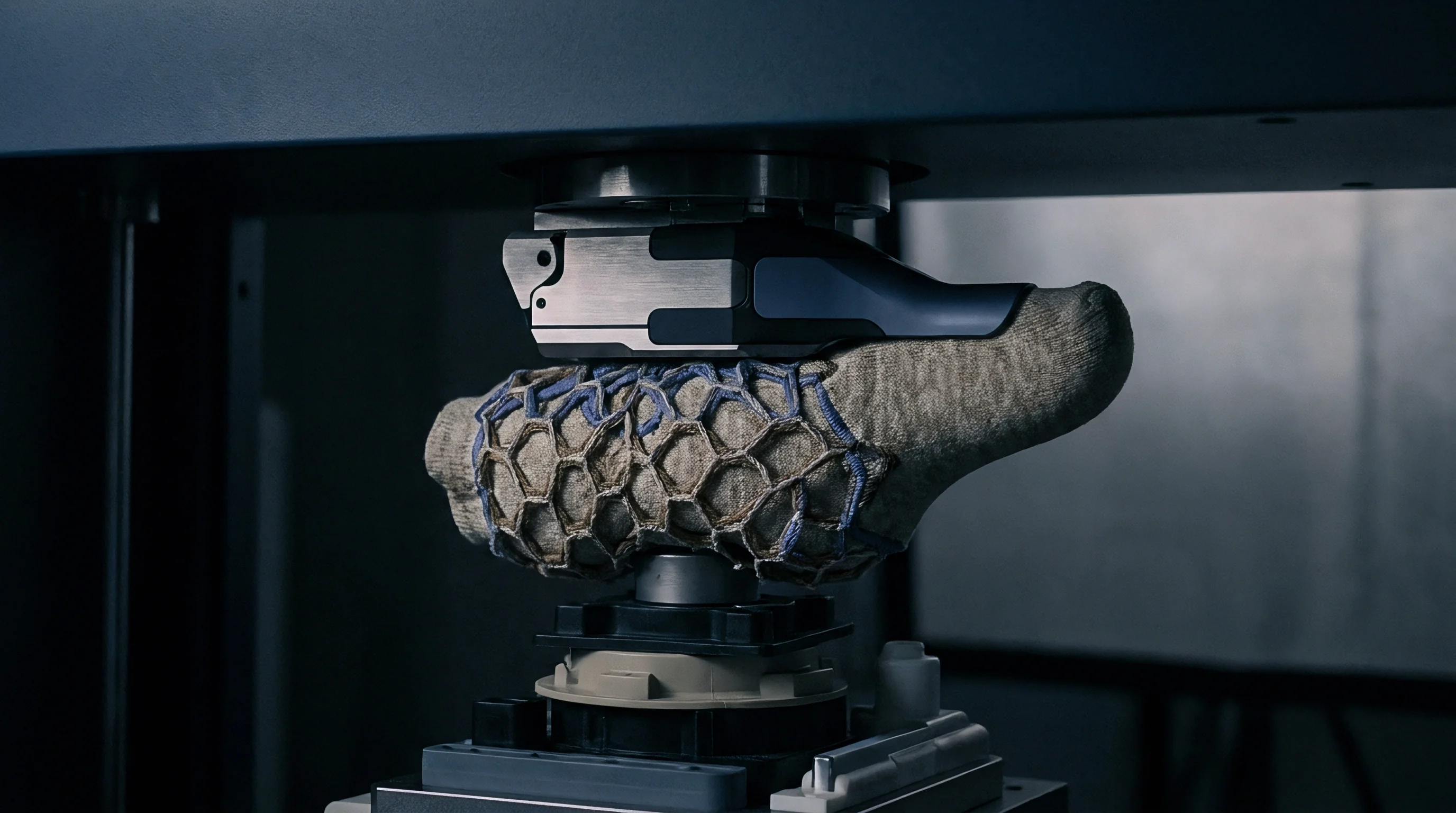
Heat extraction kinetic profiles depend heavily on sample mass, container wall thickness, and liquid nitrogen flow dynamics. A stainless steel grinding jar with a six-millimeter wall thickness requires three minutes of continuous liquid immersion to reach minus one hundred ninety degrees Celsius. Introducing twenty grams of synthetic textile sample at ambient temperature adds significant thermal load, raising the internal temperature of the sealed jar by forty degrees Celsius if pre-cooling is omitted.
Maintaining sub-ambient conditions throughout the grinding period requires continuous thermal regulation or pulsed liquid nitrogen injection systems. Closed jar systems without external cooling loops experience rapid internal temperature rises due to kinetic energy conversion during impact milling. A twenty-hertz milling frequency converts approximately eighty-five percent of driver motor energy into thermal energy within the grinding chamber.
Without active liquid nitrogen circulation around the jar jacket, chamber temperatures rise above minus twenty degrees Celsius within ninety seconds, breaching the glass transition threshold of elastomeric components.
Chilling the milling chamber before introducing polymer matrix prevents localized surface melting during initial impact cycles.
Continuous liquid nitrogen bath replenishment offers superior thermal control compared to intermittent pulse cooling.
Grind
Mechanical energy input from high-frequency impact mills transfers kinetic force directly into the polymer backbone. Vibrational ball mills and cryogenic impact grinders utilize hardened steel or titanium media to deliver concentrated kinetic strikes to the embrittled textile sample. Shock waves propagate through the glassy polymer matrix, initiating micro-cracks along inter-crystalline amorphous zones.
Excessive kinetic energy application ruptures covalent carbon-carbon bonds within the polymer backbone, generating free radicals and reducing the average molecular weight of the sample.

Mechanochemical Degradation and Chain Scission Mechanics
Evaluating mechanochemical stability requires monitoring the intrinsic viscosity and molar mass distribution of the ground microplastics. High-energy impact milling at thirty hertz for five continuous minutes reduces the weight-average molecular weight of recycled polyamide 6,6 by up to eighteen percent. Chain scission yields lower molecular weight oligomers that alter peak retention times during Pyrolysis-Gas Chromatography/Mass Spectrometry analysis.
These artificially created fragments lead analysts to report elevated microplastic particle counts in lower size fraction bins.
Quantifying energy input vs degradation threshold involves balancing impact frequency against cycle duration. Consider an impact mill operating with a ten-gram steel impactor at twenty-five hertz. The kinetic energy (Ek) per strike is calculated from impactor mass (m) and velocity (v):
Ek = frac12 m v2
Assuming an impact velocity of four meters per second, each strike delivers eighty millijoules of energy. At twenty-five hertz, the system imparts two Joules of energy per second directly into a two-gram sample mass. Over a three-minute cycle, three hundred sixty Joules of cumulative mechanical energy enter the system.
When processing pure recycled polyester, ninety-two percent of this energy dissipates as sound and thermal vibration, while eight percent drives surface area creation via crack propagation. In blended compositions carrying soft polyurethane phases, up to thirty percent of kinetic energy converts to internal shear heating, raising localized micro-domain temperatures by up to sixty degrees Celsius in millisecond bursts.
| Impact Frequency (Hz) | Cycle Duration (min) | Cooling Pause (min) | Intrinsic Viscosity Drop (%) | Generated Oligomer Fraction (%) |
|---|---|---|---|---|
| 10 | 2.0 | 1.0 | 1.2 | 0.3 |
| 15 | 2.0 | 1.0 | 2.8 | 0.7 |
| 20 | 1.5 | 2.0 | 4.1 | 1.1 |
| 25 | 1.0 | 2.0 | 8.5 | 2.9 |
| 30 | 1.0 | 3.0 | 14.2 | 5.4 |

Vessel Geometry and Milling Media Dynamics
Chamber architecture dictates material movement pathways during high-frequency oscillation. Cylindrical grinding jars featuring spherical end-caps guide milling media into symmetrical back-and-forth trajectories, ensuring uniform force distribution across the textile charge. Flat-ended cylindrical vessels allow material compaction in corner dead zones, creating un-ground fiber bundles that escape homogenization.
Titanium grinding jars offer higher thermal conductivity and lower mass momentum than stainless steel alternatives, reducing thermal lag during pre-cooling steps.
- Clean the titanium mill jar with high-purity HPLC-grade n-hexane to eliminate surface contaminant residues.
- Submerge the sealed chamber into liquid nitrogen until boiling ceases, indicating complete thermal equilibration at minus one hundred ninety-six degrees Celsius.
- Mount the chilled assembly into the mill housing using insulated mechanical clamps calibrated to twenty Newton-meters.
- Execute three impact cycles at twenty hertz for sixty seconds, punctuated by two-minute cooling intervals.
- Extract the pulverized mass inside an inert argon atmosphere glovebox to prevent moisture condensation.
Non-compliance with ISO 24187 sample preparation temperature limits renders Pyrolysis-GC/MS microplastic quantification reports legally void during EU border inspections.
Excessive impact energy degrades polymer molar mass distributions, yielding false positive readings for low molecular weight microplastic fragments.
Sieve
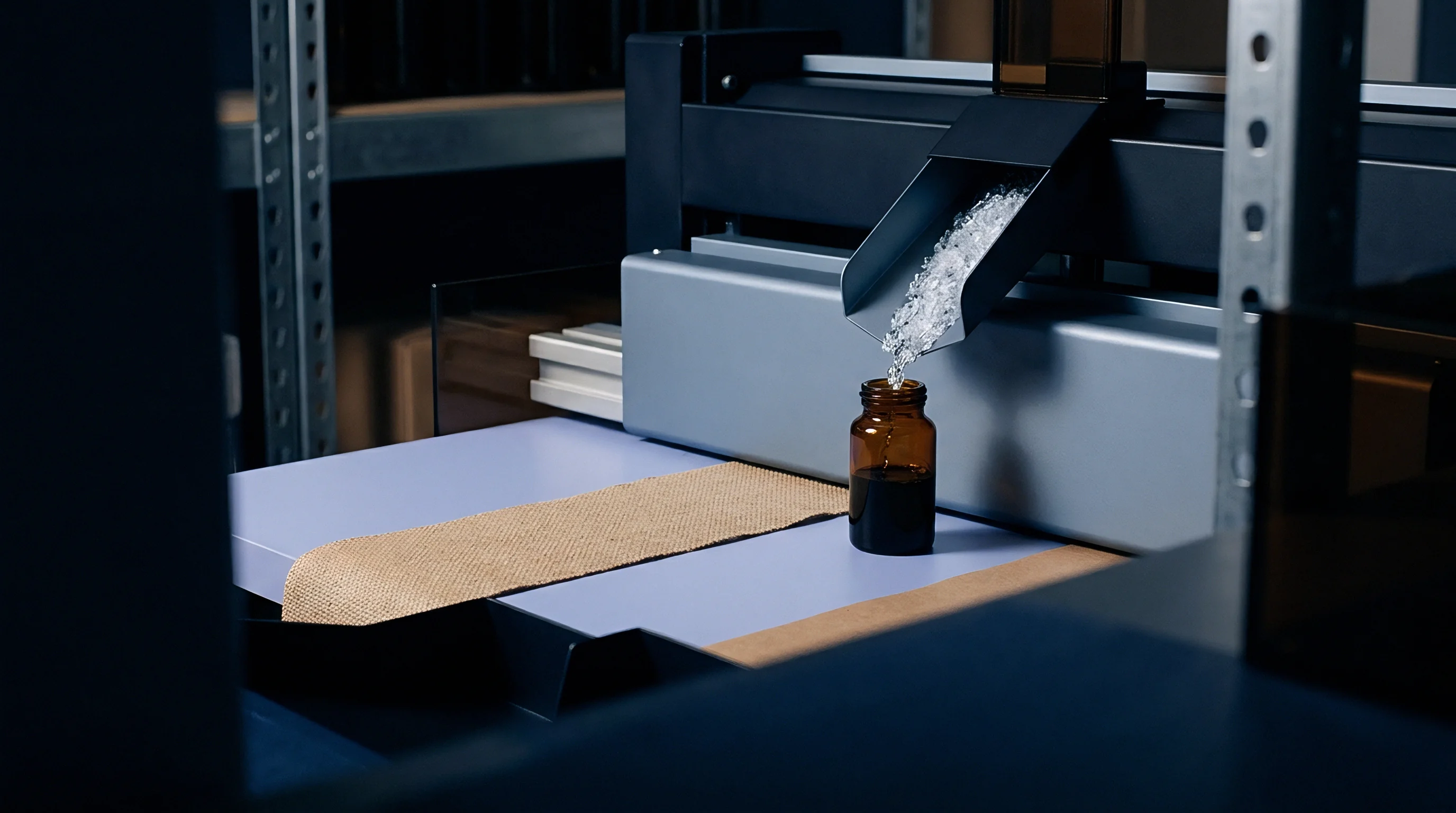
Analytical separation of comminuted particulate matter requires precise aerodynamic or wet fractioning methods. Dry sieving of ultra-fine synthetic powders below fifty micrometers fails due to severe electrostatic attraction between polymer particles and sieve mesh wires. Cryogenically ground polyester and nylon microplastics carry high surface charges generated during high-energy fracture.
These charged particles aggregate rapidly, forming false macro-agglomerates that fail to pass through sieve apertures matching their true individual dimensions.
Size Fractionation and Particle Mass Recovery
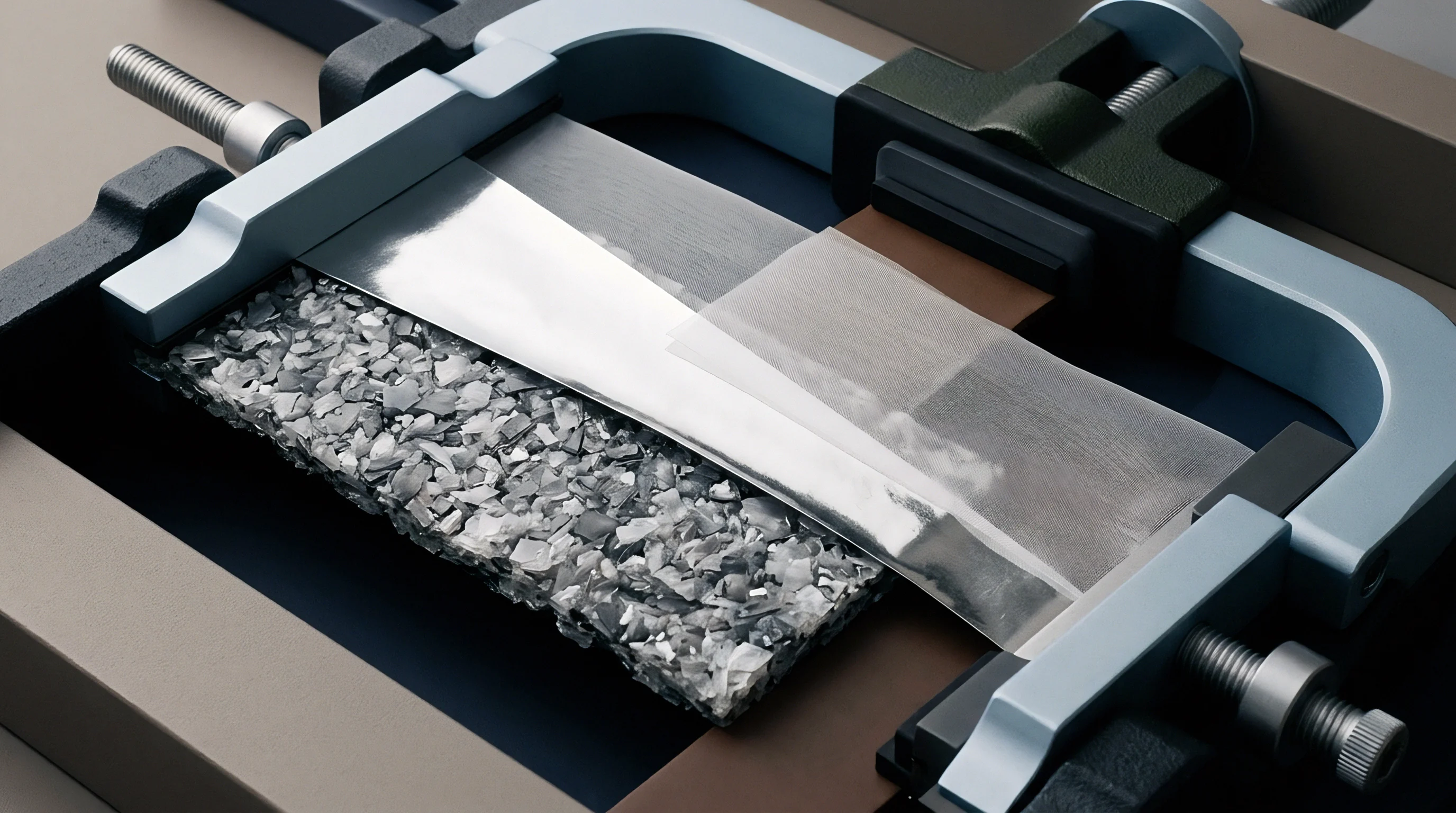
Overcoming electrostatic aggregation requires using wet sieving cascades with non-foaming, low-surface-tension surfactant solutions. Iso-propanol aqueous solutions at ten percent volume concentration neutralize surface charges while reducing liquid surface tension to twenty-eight millinewtons per meter. This allows particles down to ten micrometers to pass freely through electroformed nickel sieve meshes without clogging apertures or forming surface-tension suspensions.
| Polymer Matrix | Target Size Bin (µm) | Wet Sieve Recovery (%) | Electrostatic Retention (%) | FTIR Identification Rate (%) |
|---|---|---|---|---|
| rPET / Elastane (90/10) | 100 to 500 | 96.4 | 2.1 | 99.1 |
| rPET / Elastane (90/10) | 20 to 100 | 91.2 | 6.8 | 94.5 |
| rPET / Elastane (90/10) | 1 to 20 | 78.5 | 18.3 | 82.0 |
| rPA66 / Recycled Cotton | 20 to 100 | 88.7 | 8.9 | 91.3 |
| rPP / Recycled Synthetic Blend | 20 to 100 | 84.1 | 12.4 | 86.7 |
Spectroscopic and Pyrolytic Interference Patterns
Particle size distribution directly influences spectroscopic characterization accuracy. Micro-Fourier Transform Infrared spectroscopy in transmission mode requires particles thinner than twenty micrometers to prevent complete infrared beam absorption. Micro-Raman spectroscopy handles thicker particles but suffers from strong fluorescence interference caused by residual dyes, optical brighteners, and thermal degradation byproducts produced during un-cooled milling runs.
Pyrolysis-Gas Chromatography/Mass Spectrometry eliminates optical size constraints by thermally degrading the entire sample aliquot into characteristic volatile pyrolyzates. However, sample non-homogeneity within sub-milligram test portions introduces severe analytical variance. If cryogenic milling yields particle size distributions with a peak mass fraction above one hundred micrometers, a one-milligram analytical portion contains too few individual particles to provide a statistically representative sample of a multi-component blend.
Achieving a relative standard deviation below five percent across Pyrolysis-GC/MS replicate runs requires reducing ninety-five percent of the sample mass to a particle size below forty micrometers.
Static charge build-up on fine polymer powder causes severe wall losses inside stainless steel separation funnels.
Suppliers frequently claim that thermal mass reduction observed during analytical runs stems from inherent raw material volatility rather than milling-induced thermal degradation.

Dossier
Regulatory compliance verification depends on rigorous, reproducible analytical evidence from accredited testing laboratories. Demonstrating microplastic content or shedding rates under EU Eco-design directives and REACH Annex XVII restrictions demands complete documentation of sample chain-of-custody and homogenization parameters. Test reports omitting milling frequency, sample temperature profiles, or sieve recovery figures fail audit checks performed by European national market surveillance authorities.
ISO 17025 Scope Validation and Method Performance
Testing laboratories substantiating microplastic characterization data must hold formal ISO/IEC 17025 accreditation covering the exact sample preparation methods deployed. A general accreditation for polymer testing under standard ASTM or ISO methods does not validate proprietary or modified cryogenic milling protocols. Auditing compliance files requires checking the laboratory scope certificate for explicit reference to ISO 24187 or ISO/TR 21960 protocols governing microplastic sample preparation from solid matrices.
Verification protocols must validate every step of the analytical workflow:
- Equipment calibration logs must document annual vibration frequency verification of cryogenic mills using calibrated optical tachometers.
- Liquid nitrogen monitoring receipts must confirm continuous coolant immersion during the entire milling sequence for each batch tested.
- Blank extraction controls must demonstrate zero background synthetic polymer contamination from laboratory seals, spatulas, or air filtration units.
- Particle mass balance ledgers must show total sample recovery above ninety-two percent following wet sieving and drying steps.
Contractual Risk Distribution and Technical File Audits
Commercial contracts between brand buyers, textile mills, and independent testing houses must define clear analytical protocols and liability boundaries for failed microplastic characterization tests. Relying on vague claims of recycled content or low-shedding performance without standardized cryogenic sample preparation evidence leaves importers vulnerable to regulatory enforcement action. When border authorities confiscate a shipment based on non-compliant microplastic shedding metrics, financial losses include import tariff forfeiture, storage fees, and mandatory re-export costs.
Brand compliance teams should insert specific technical requirements into purchase order terms, mandating that all analytical data rely on cryogenic homogenization at temperatures below minus one hundred forty degrees Celsius. The technical dossier supporting green claims must retain raw Pyrolysis-GC/MS chromatograms, micro-FTIR spectra maps, and particle size distribution curves for a minimum of ten years to satisfy regulatory audits under modern supply chain transparency legislation.
Standard purchase contracts inserting DIN EN ISO 17889 analytical protocols shift financial liability for microplastic testing failures directly onto the yarn converter.