Standardized Potassium Chloride Addition Protocols for Eliminating Diffusion Potential Artifacts in ISO 3071 Extracts
Standardized potassium chloride addition eliminates diffusion potential artifacts in ISO 3071 textile extracts to yield true thermodynamic pH values.

Cell
When measured in unsupplemented deionized water, potentiometric pH determinations on aqueous textile extracts per ISO 3071 often show systematic errors of 0.4 to 0.8 pH units. Pure water extracts lack sufficient conductivity, which destabilizes the galvanic cell formed by the indicator glass electrode and reference system. As an unbuffered, low-ionic-strength extract meets the reference electrolyte through a porous ceramic frit, a phase boundary potential forms.
Known as the liquid junction potential, this boundary potential directly alters the measured electromotive force.
Electrochemical Junction Dynamics
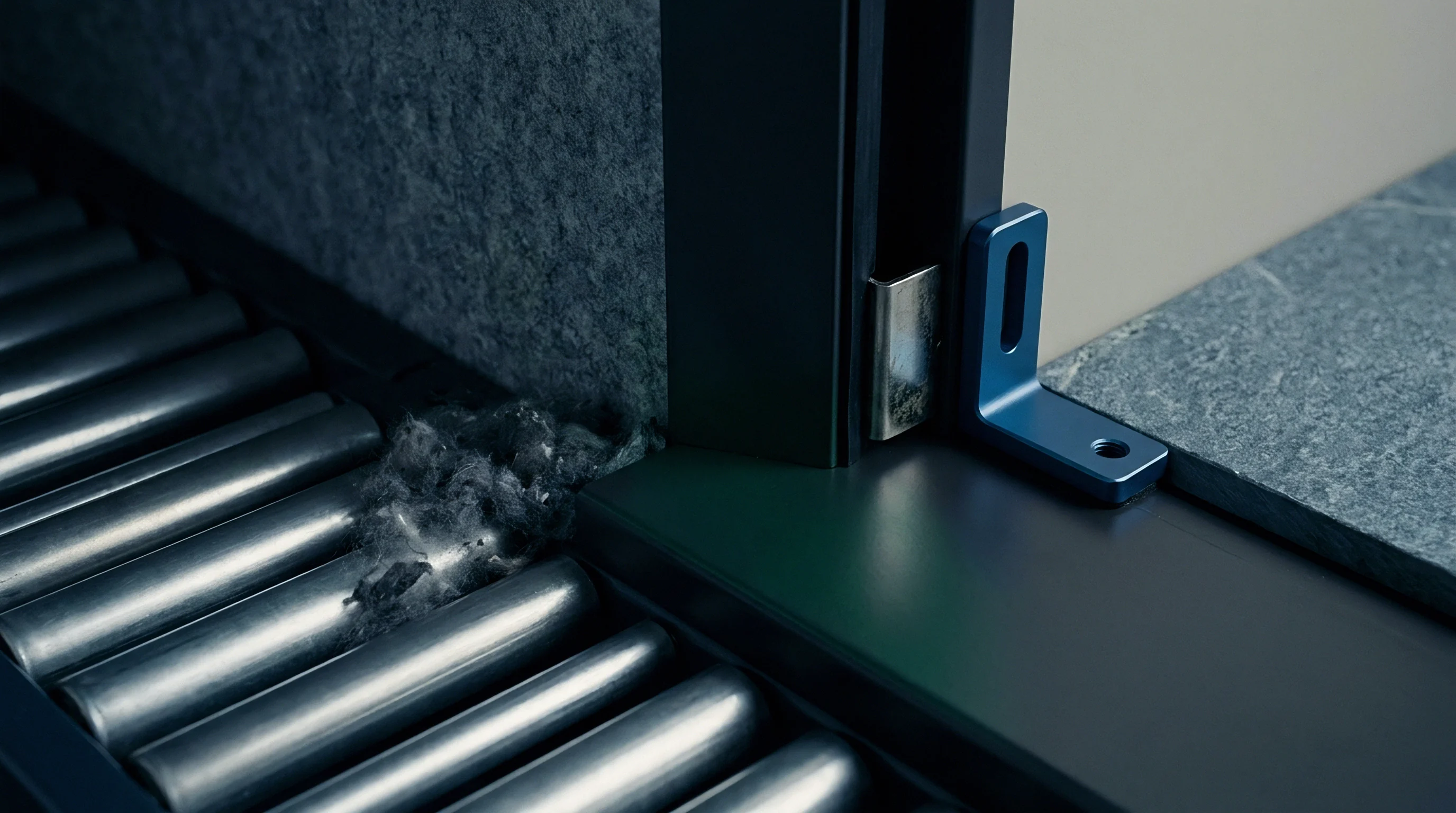
Potentiometric measurement relies on a sensing loop built from a pH-sensitive glass membrane and a reference electrode. The reference electrode maintains a constant potential using an internal element immersed in a concentrated potassium chloride solution, typically 3.0 mol/L or saturated. The liquid junction provides electrical continuity between this internal electrolyte and the sample liquor.
In high-purity water extracts with minimal dissolved salts, a steep concentration gradient develops across the pores of the ceramic frit.
Potassium and chloride ions diffuse out of the reference cell into the dilute sample at rates set by their respective ionic mobilities, while hydronium and hydroxyl ions in the sample diffuse into the frit pores. Because hydronium ions have an absolute mobility of 349.8 S cm²/mol at 25 °C compared to 73.5 S cm²/mol for potassium ions, this difference in migration speed creates an asymmetric charge separation across the interface. The resulting spatial charge imbalance produces a diffusion potential that adds directly to the cell voltage read by the meter.
A concentration difference exceeding three orders of magnitude between the internal potassium chloride electrolyte and the aqueous extract induces liquid junction drift up to fifty millivolts.
Standard glass electrodes drift quickly. Under Nernstian behavior at 25 °C, every 59.16 millivolts of electromotive shift corresponds to a full unit change in reported pH. A junction potential artifact of 30 to 45 millivolts introduces an error exceeding 0.5 pH units ~ enough to push a compliant fabric extract reading into non-compliant territory under strict brand restricted substance lists.
Thermodynamic Activity and Phase Boundaries
Hydrogen ion activity in aqueous media determines true chemical reactivity, and glass electrodes measure this hydronium ion activity rather than stoichiometric molar concentration. In solutions with an ionic strength below 0.001 mol/L, the activity coefficient approaches unity, but high resistance across the liquid junction raises internal cell impedance to hundreds of megohms. This high circuit resistance makes the measurement sensitive to electrostatic interference and amplifier noise inside the pH meter.
Unbuffered solutions yield unstable readings. As the reference electrolyte leaches potassium chloride into an unsupplemented sample beaker during static measurement, local ionic strength around the frit shifts continuously, and the liquid junction potential moves with it. On the instrument screen, this electrochemical instability shows up as continuous digital drift.
Stirring the extract accelerates electrolyte loss and changes diffusion layer thickness, driving further potential swings.
- Interfacial Potential Spike occurs when ultra-pure water extracts create asymmetric ion migration across the porous frit.
- Electrode Memory Effect manifests as residual ions from previous high-ionic buffer calibrations distort subsequent unbuffered liquor readings.
- Static Charge Accumulation generates random millivolt oscillations during mechanical agitation of synthetic fiber suspensions.
Standard calibration buffers maintain high ionic strength. Commercial pH 4.01, 7.00, and 10.01 buffers contain dissolved phosphate, phthalate, or borate salts at concentrations between 0.05 mol/L and 0.1 mol/L, keeping the liquid junction potential low and stable during two-point or three-point calibrations. Transferring the calibrated sensor directly into a low-conductivity textile extract causes a sudden jump in junction potential as background ionic strength drops.
Section 5.2 of ISO 3071 addresses this by replacing pure deionized water with a 0.1 mol/L potassium chloride solution across all compliance testing.


Artifact
Low ionic strength in distilled water extracts creates a physical barrier to accurate electromotive force readings, leading to false failures during chemical compliance verifications. Specifying pure water extractions in early editions of ISO 3071 caused broad variability between laboratories; replicate tests on identical fabric swatches regularly yielded different pH values depending on electrode age, frit porosity, and electrolyte flow rates.

What Causes Phase Boundary Drift during ISO 3071 Extractions?
Diffusion rates across the porous ceramic interface depend directly on relative ion mobilities. In low-conductivity textile liquors, the lack of background ions forces charge transfer at the junction to rely almost entirely on ions migrating out of the reference electrode. Potassium ions diffuse slightly slower than chloride ions (which have a mobility of 76.3 S cm²/mol at 25 °C), and this 3.8 percent mobility disparity creates a net negative charge accumulation on the sample side of the frit interface.
Extracted salts increase solution conductivity. Natural cellulosic fibers release residual organic acids, trace minerals, and processing salts during the two-hour agitation period mandated by ISO 3071, whereas synthetic fibers like polyester or polyamide release virtually no ionic species into the aqueous phase. Synthetic fiber extractions therefore exhibit much lower conductivity than cotton extractions, producing higher liquid junction artifacts and longer bench stabilization times.
| Extraction Medium | Nominal Ionic Strength (mol/L) | Mean Liquid Junction Potential (mV) | Observed pH Bias (Units) | Reading Stability Time (s) |
|---|---|---|---|---|
| Deionized Water (Grade 3) | 0.00005 | +32.4 | +0.55 | 420 |
| Distilled Water (Scoured Cotton) | 0.00120 | +14.1 | +0.24 | 180 |
| 0.01 mol/L KCl Solution | 0.01000 | +2.8 | +0.05 | 25 |
| 0.10 mol/L KCl Solution | 0.10000 | +0.3 | +0.01 | 5 |
Quantifying Ion Mobility Disparities
Potassium and chloride ions have nearly identical mobilities in dilute aqueous solution, which minimizes diffusion potential when both sides of the junction hold adequate salt concentrations. Swamping the textile extract with an equitransferent salt like potassium chloride establishes an ionic background where potassium and chloride ions carry over 99 percent of the current across the liquid junction.
Introducing 0.1 mol/L potassium chloride into the extraction fluid raises ionic strength several orders of magnitude above the level from fabric impurities. This added salt overwhelms variable background conductivity from residual dye intermediates, finishing agents, or water hardness minerals, collapsing the diffusion potential across the ceramic frit to near zero millivolts.
ISO 3071 clause 5.2 mandates potassium chloride addition to prevent false non-compliance declarations under buyer restricted substance lists.
Stabilizing the junction potential eliminates the measurement artifact entirely. The glass electrode response then reflects pure hydronium ion activity adjusted for the constant ionic background. Comparative measurements show that adding 0.1 mol/L potassium chloride reduces measurement standard deviations across accredited laboratories from 0.35 pH units down to 0.04 pH units on identical cloth lots.
Dose
Standardizing the extraction solution eliminates electromotive artifacts by establishing a constant background salt concentration. ISO 3071 outlines specific dosing criteria so chemical addition does not introduce foreign acidity or alkalinity to the sample. Precision requires control over salt purity, solution preparation, electrode geometry, and temperature stabilization.

Reagent Preparation and Dosing Geometry
Analytical grade potassium chloride dried at two hundred degrees Celsius serves as the primary solute. Trace carbonates or heavy metal salts in technical-grade reagents alter the baseline pH of deionized water, so the standard specifies dissolving 7.456 grams of reagent-grade potassium chloride per liter of grade 3 water conforming to ISO 3696. The background pH of this prepared 0.1 mol/L extraction solution must fall strictly between 6.0 and 7.0 at 20 °C. If the salt solution pH sits outside this neutral band, the analyst discards the batch rather than attempting neutralization with acid or base titrants.
Two dosing protocols exist within laboratory workflows. Method A uses direct extraction with the pre-formulated 0.1 mol/L potassium chloride solution. Method B uses deionized water for initial extraction, adding concentrated potassium chloride solution just before immersing the pH electrode.
Direct extraction using 0.1 mol/L potassium chloride per Method A offers better consistency by keeping ionic strength uniform throughout mechanical shaking.
- Weigh 7.456 grams of analytical grade potassium chloride dried at two hundred degrees Celsius for two hours.
- Dissolve the salt in grade three deionized water and dilute to exactly one liter inside a volumetric flask.
- Pipette one hundred milliliters of the reagent solution into a glass-stoppered flask containing five grams of cut textile material.
- Agitate the flask mechanically on a wrist-action shaker for two hours at room temperature.
- Calibrate the combination electrode using two standard buffer solutions containing matching ionic background strengths before recording final values.

Electrode Selection for Low-Conductivity Extraction
Sensor construction determines liquid junction stability during extraction measurements. Conventional ceramic frit electrodes feature slow electrolyte flow rates between 0.1 and 0.5 milliliters per hour. These tight porous structures clog easily when micro-fibers, lint, or colloidal finishing agent emulsions settle out of the extract liquor, restricting electrolyte flow, destabilizing the junction potential, and reinstating measurement drift.
Ground-glass sleeve junctions offer superior performance in textile testing. They provide a continuous liquid ring interface with outflow rates reaching 1.0 to 3.0 milliliters per hour. Higher electrolyte flux prevents fiber ingress, flushes particulate contaminants, and maintains a clean liquid-liquid interface, rapidly stabilizing reference potentials even in turbid extracts from raised or napped fabrics.
| Junction Type | Electrolyte Outflow Rate (mL/h) | Frit Clogging Susceptibility | Drift Rate in Pure Water (mV/min) | Drift Rate in 0.1 M KCl (mV/min) |
|---|---|---|---|---|
| Single Porous Ceramic Frit | 0.1 to 0.3 | High | 4.5 | 0.2 |
| Dual Ceramic Junction | 0.3 to 0.6 | Moderate | 3.1 | 0.1 |
| Ground-Glass Sleeve | 1.5 to 3.0 | Low | 0.8 | 0.0 |
| PTFE Porous Ring | 0.5 to 1.0 | Low | 1.9 | 0.1 |
Temperature shifts alter dissociation constants. Electromotive readings vary with temperature according to the Nernst factor and the inherent temperature coefficient of the glass membrane. ISO 3071 requires maintaining extract temperatures at 20 ± 2 °C or 25 ± 2 °C during measurement.
Automatic temperature compensation probes adjust the meter calculation slope, but cannot compensate for physical shifts in sample dissociation equilibria, making thermostatic control of extraction flasks mandatory for high-accuracy determinations.
Sleeve junctions with high electrolyte flow maintain stable reference potentials in suspended fiber liquors where ceramic frits clog.
Consider a 40-tonne batch of dyed cotton yarn tested across two facilities. Facility One uses pure deionized water extraction per older historical methods and records a pH of 3.85. Facility Two applies ISO 3071:2020 with 0.1 mol/L potassium chloride addition and records a pH of 4.25.
The 0.40 unit difference stems entirely from liquid junction suppression in Facility Two. The true thermodynamic pH lies at 4.25, placing the shipment inside the compliant zone of brand restricted substance lists. High-precision potentiometric measurements on low-density extracts depend on maintaining rapid electrolyte outflow through clean ground-glass sleeve interfaces.


Disparity
Commercial contracts specifying ISO 3071 compliance face substantial risk when buyer and vendor laboratories use different editions of the test protocol. Discrepancies between pure water extraction reports and potassium chloride-supplemented reports generate severe friction. A single shipment of certified organic cotton or high-performance technical fabric can pass at the origin mill yet fail at the destination port laboratory solely due to extraction electrolyte variations.

Commercial Exposure under Conflicting Extraction Media
Financial liability during batch rejections hinges on the technical validity of the test report cited in the claim. Brand restricted substance lists enforce narrow pH acceptance bands, typically 4.0 to 7.5 for direct skin contact items and 4.0 to 9.0 for outer garments. OEKO-TEX STANDARD 100 Annex 4 specifies a tight pH range of 4.0 to 7.5 for Product Class I through III.
An unadjusted water extract reading that drifts downward by 0.4 units due to junction artifacts triggers an automatic breach of specification.
Unadjusted readings cause false failure reports. Acidic finishing residues like citric acid or core neutralizing agents show amplified potential shifts in pure water. Conversely, alkaline residues from mercerization or scouring steps can exhibit artificial suppression when unbuffered water extracts interact with acidic ceramic frit interfaces.
Standardizing on 0.1 mol/L potassium chloride eliminates these false positives and negatives, providing true chemical compliance data.
| Product Category | Regulatory / RSL Limit (pH) | Pure Water Extract Mean pH | 0.1 M KCl Extract Mean pH | Compliance Status Shift |
|---|---|---|---|---|
| Class I (Baby Wear) | 4.0 to 7.5 | 3.70 | 4.10 | False Fail to Pass |
| Class II (Direct Skin Contact) | 4.0 to 7.5 | 7.85 | 7.40 | False Fail to Pass |
| Class III (Non-Skin Contact) | 4.0 to 9.0 | 9.30 | 8.85 | False Fail to Pass |
| Class IV (Decoration Material) | 4.0 to 9.0 | 3.80 | 4.05 | False Fail to Pass |
Reconciling ISO 3071 with OEKO-TEX and Brand Limits
Restricted substance lists published by major apparel brands set tight acceptable pH ranges between 4.0 and 7.5. Reconciling conflicting laboratory reports requires auditing the precise extraction protocol cited in test certificate notes. Test reports omitting explicit mention of 0.1 mol/L potassium chloride addition remain suspect under modern verification frameworks; accredited laboratories must cite ISO 3071:2020 explicitly to confirm electrolyte standardization was executed during analysis.
Retest fees fall on the supplier. When a buyer receives an out-of-specification result generated by an unstandardized water extraction, purchase order terms often trigger mandatory re-sampling, secondary laboratory verification, and commercial delays. Contracting parties can prevent these disputes by incorporating precise testing parameters directly into purchase agreement specifications.
- Extraction Solvent Verification requires laboratory reports to declare exact potassium chloride concentrations alongside raw potential measurements.
- Temperature Log Integrity ensures electromotive calibrations account for temperature-dependent glass electrode slope variations.
- Subcontract Dyehouse Alignment prevents commercial rejections by establishing identical electrode geometries across supply chain testing nodes.
Unadjusted aqueous extracts systematically bias acid-dyed polyamide goods into non-compliant reporting zones.
Contractual clarity requires specifying both the test method number and its execution variant within the purchase order. Stating ISO 3071 without qualifying the extraction medium leaves the laboratory free to select legacy water extraction procedures. Rejecting export containers based on unadjusted water extract reports exposes buyers to redundant air freight expenses and severe line-down penalties.

Audit
Verifying accredited laboratory reports requires scrutinizing documented testing parameters rather than relying on headline pass statements. Brand assurance teams must audit full test dossiers to verify that contract laboratories eliminate liquid junction artifacts through standardized potassium chloride additions. A valid ISO 17025 accreditation certificate covers specific methods, but only detail-level raw data sheets prove correct execution on the bench.
ISO 17025 Scope Verification for Textile Ph Testing
Accreditation schedules issued by national bodies explicitly define the edition and modification of standard methods covered under a facility license. A laboratory scope listing ISO 3071:2005 may not hold authorization for the 0.1 mol/L potassium chloride procedures mandated in ISO 3071:2020. Auditors must inspect formal scope documents published by accreditation authorities to confirm method currency.
Valid accreditation scopes prevent customs holds. Border surveillance agencies in regulated jurisdictions frequently pull import samples for screening, and customs testing laboratories strictly enforce current international standard versions. If an importer submits a compliance dossier based on outdated water extraction methods, customs authorities may reject the documentation and initiate independent testing using standardized potassium chloride solutions.

Documenting Batch Evidence for Customs Clearance
Border clearance procedures for regulated apparel shipments increasingly demand complete technical dossiers verifying chemical safety criteria. The technical dossier must link specific fabric roll numbers to their corresponding laboratory test reports. Test reports should record the calibration slope of the pH meter, the background pH of the prepared potassium chloride batch, the exact extraction temperature, and the model of electrode used during the assay.
Values recorded on raw bench sheets provide proof of analytical validity. When raw data sheets show instant, non-drifting millivolt readings within five seconds of probe insertion, the auditor can confirm effective ionic swamping. Slow stabilization logs exceeding three minutes indicate unbuffered water extraction or severe ceramic frit fouling.
Retaining thorough bench logs protects brand integrity during third-party compliance reviews. Whether international accreditation bodies will eventually enforce retrofits of legacy laboratory scopes to eliminate legacy water extraction reports remains an open issue for global supply chain managers.