Standardized Laboratory Methods for Measuring Alkylphenol Ethoxylates in Fabric
ISO 18254-1 methanol extraction paired with LC-MS/MS provides definitive batch quantification of alkylphenol ethoxylates to survive brand audits and borders.

Substrate
Textile chemical testing depends on physical sample extraction efficiency from dense polymer webs. Alkylphenol ethoxylates, including nonylphenol ethoxylates and octylphenol ethoxylates, serve as surfactants, emulsifiers, and scouring agents during spinning, weaving, and wet processing. Residual surfactants adhere to natural cellulosic channels, synthetic hydrophobic filaments, and protein-based wool structures through hydrophobic interactions and hydrogen bonding.
Surfactants bind to synthetic polymers. Extracting these non-ionic compounds from finished cloth demands breaking those physical bonds without degrading the target chemical species or co-extracting interfering polymeric finishings.
Sample preparation dictates analytical precision before solvent contact occurs. Fiber orientation, fabric density, and hydrophobic top-coatings hinder solvent penetration into internal yarn cores. Standardized protocols require grinding raw textile swatches into uniform particles to maximize surface area contact with extraction media.
Cryogenic milling under liquid nitrogen prevents thermal degradation of sensitive ethoxylate chains while converting elastic elastane or polyester blends into micro-powders. Standard mechanical cutting using shear mills produces uneven particle sizes, leading to variable solvent diffusion rates and lower analytical recovery figures.
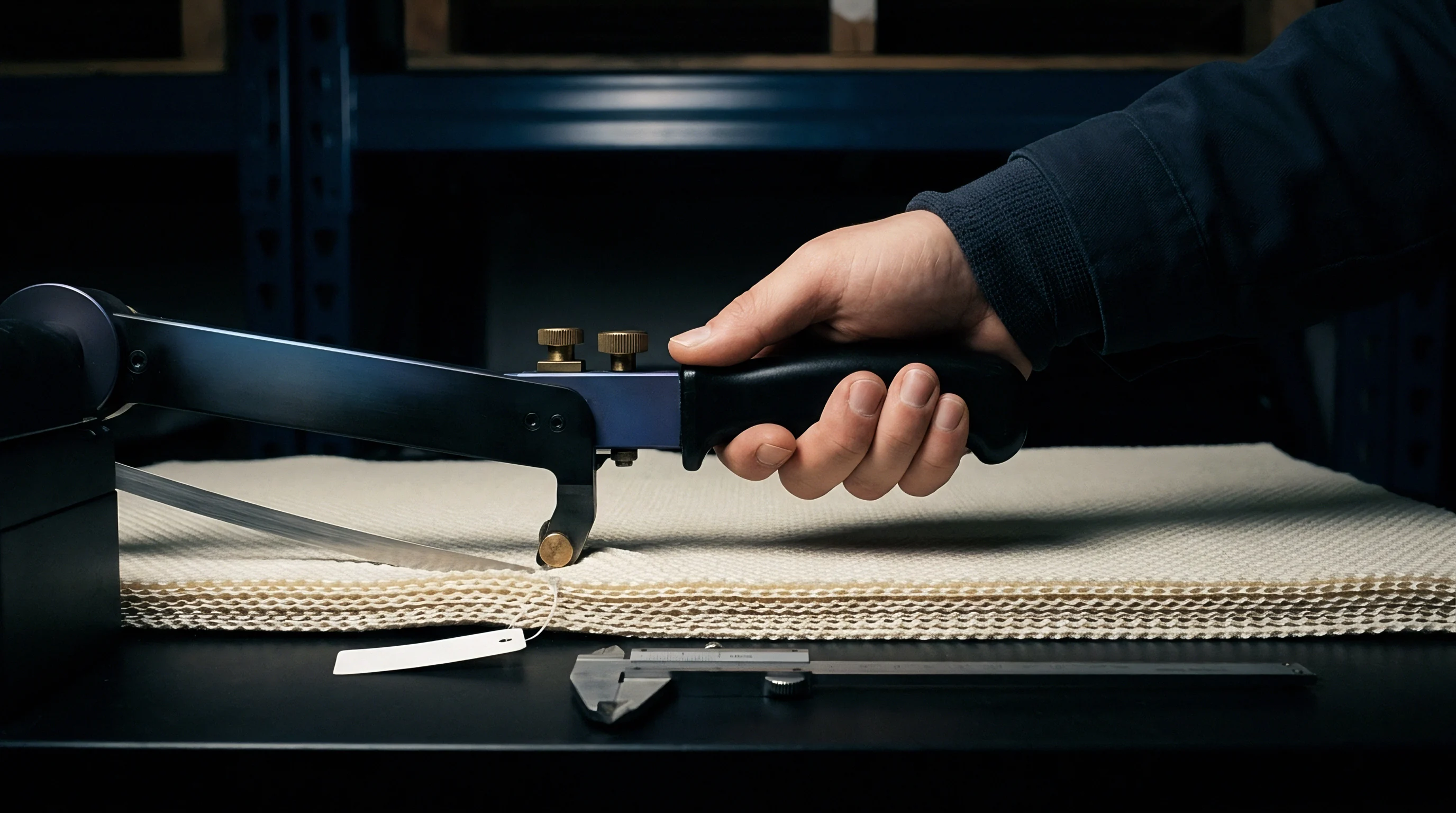
The mechanical reduction of fabric samples into two-millimeter fragments enables uniform solvent diffusion across dense hydrophobic synthetic fibers.
Differences in moisture content across fabric batches alter extraction thermodynamics and relative solvent concentrations during testing. Wool fibers retain dense oils. Cellulosic swatches require conditioning at twenty-one degrees Celsius and sixty-five percent relative humidity prior to gravimetric weighing.
Particle size dictates solvent penetration. When laboratories receive wet-processed knits or hydrophobic rainwear fabrics, residual fluorinated coatings or polyurethane membranes act as physical barriers. These barriers shield bound alkylphenol ethoxylates from cold solvent bath penetration, resulting in false negative compliance reports during routine screening.

Fiber Matrix Effects on Surfactant Retention
Synthetic filaments like polyethylene terephthalate and polyamide retain non-ionic surfactants through hydrophobic interaction within the amorphous regions of the polymer matrix. Cotton and regenerated cellulosic fibers entrap alkylphenol ethoxylates within microscopic lumen structures and interstitial hydroxyl networks. Wool and silk protein structures absorb ethoxylated compounds through complex ionic and hydrophobic pathways, requiring tailored solvent polarities during laboratory processing.
High-density structures limit mass transfer, demanding mechanical energy to draw bound surfactants out of the matrix.
Finishing agents applied during garment assembly create additional extraction barriers. Durable water repellents, silicone softeners, and cross-linking crease-resistant resins encapsulate residual scouring agents. Standard liquid immersion fails to breach these cross-linked resin barriers without mechanical shear or elevated temperature.
The laboratory protocol selects extraction conditions matching the specific fiber blend and chemical finish present on the submission swatch.

Mechanical Milling and Particle Size Standardization
Heterogeneous particle distribution introduces significant analytical variance during chromatographic quantification. Fragment sizes exceeding five millimeters prevent complete solvent saturation within standard sonication cycles. The following failure modes recur during sample preparation on the testing floor:
- Incomplete Cryogenic Freezing prevents ductile synthetic fibers from fracturing, yielding stretched filaments rather than discrete particles.
- Thermal Degradation During Shear Milling raises sample chamber temperatures above seventy degrees Celsius, vaporizing short-chain alkylphenols.
- Sieve Mesh Contamination transfers cross-contamination between consecutive fabric lots when operators skip solvent wash cycles.
- Gravimetric Moisture Fluctuation alters dry-weight calculations when operators weigh unconditioned cellulosic micro-powders immediately after high-speed milling.
The dyehouse claimed that washing cycles at the finishing plant removed all residual scouring agent prior to shipment.

Flask
Solvent selection governs the quantitative recovery of nonylphenol ethoxylates and octylphenol ethoxylates from prepared fabric powders. Methanol serves as the primary extraction medium in standard laboratory protocols due to its dual polar and non-polar solvation characteristics. The hydroxyl group of methanol interacts with the hydrophilic polyoxyethylene chain, while the short methyl group accommodates the hydrophobic alkylphenyl moiety.
Temperature shifts solvent density. Ultrasonic energy accelerates mass transfer by generating localized micro-cavitation bubbles that rupture cell walls and synthetic polymer domains.
Accelerated solvent extraction and Soxhlet extraction methods represent alternative physical pathways for quantitative recovery. Accelerated solvent extraction operates under high pressure, maintaining liquid methanol above its ambient boiling point to penetrate closed micro-porous structures. Soxhlet extraction provides continuous washing with fresh solvent over prolonged cycles, though extended exposure to heat risks cleaving high-molecular-weight ethoxylate chains into lower oligomers.
Soxhlet cycles degrade thermal oligomers. Laboratory technicians balance extraction speed against molecular degradation when selecting vessel conditions.
Standardized methods ISO 18254-1 and ISO 18254-2 define precise thermal and mechanical boundaries for surfactant extraction. ISO 18254-1 utilizes methanol extraction in a sealed glass container placed in an ultrasonic bath at seventy degrees Celsius for sixty minutes. This thermal sonication process breaks non-covalent matrix bonds while keeping target analytes intact.
The resulting liquid extract undergoes filtration through a 0.45-micrometer polytetrafluoroethylene membrane to remove suspended micro-fibers prior to instrument injection.

Methanol Extraction Kinetics under Sonication
Ultrasonic power density determines the rate of surfactant liberation from fiber micro-structures. Operating at frequencies between thirty-five and forty kilohertz generates uniform acoustic cavitation throughout the bath liquid. This mechanical action drives methanol molecules deep into the expanded polymer matrix of heat-set synthetic fabrics.
Insufficient acoustic energy leaves up to thirty percent of bound ethoxylates within the core of heavy-yarn substrates.
Temperature control during sonication remains critical for quantitative repeatability. Unregulated ultrasonic baths warm over time due to mechanical friction, altering solvent evaporation rates and concentration values inside non-sealed containers. Maintaining sealed glass vessels within a temperature-controlled water bath at seventy degrees Celsius prevents volatile loss of low-boiling alkylphenols while maximizing surfactant solubility.
Comparison of Solvent Extraction Standards
Different international testing protocols specify distinct combinations of solvent chemistry, temperature, and duration. Selection of the method governs target compound recovery percentages across varying fiber matrices.
| Standard Protocol | Solvent System | Temperature and Duration | Target Analytes | Extraction Yield Efficiency |
|---|---|---|---|---|
| Yield efficiency ranges derived from round-robin proficiency testing across accredited laboratories testing standard cotton-polyester reference materials. | ||||
Methanol extraction at sixty degrees Celsius yields complete recovery for ethoxylate chains up to sixteen units.
Incomplete extraction yields false compliance certificates, causing container rejection at European entry ports with re-testing charges exceeding four thousand Euros per lot.

Spectrum
Quantification of extracted ethoxylate mixtures requires liquid chromatography paired with tandem mass spectrometry. Alkylphenol ethoxylates do not consist of single chemical structures; they exist as complex distributions of oligomers differing in polyoxyethylene chain length and alkyl chain branching. High-performance liquid chromatography separates these oligomer distributions based on hydrophobicity or chain length depending on column chemistry.
Electrospray ionization targets sodium adducts. Reversely phase C18 columns resolve isomers based on the alkyl head structure, while normal-phase or hydrophilic interaction liquid chromatography separates analytes by ethoxylate chain length.
Tandem mass spectrometry operating in triple quadrupole mode identifies specific mass-to-charge ratios corresponding to individual oligomer units. Ethoxylated oligomers form positive ammonium or sodium adduct ions during electrospray ionization. Electrospray ionization response decreases as the ethoxylate chain length exceeds twelve units.
Oligomers fragment into distinct sub-ions. Standard collision-induced dissociation produces characteristic fragment ions, such as the 135 mass-to-charge fragment for nonylphenol derivatives and 119 for octylphenol derivatives, confirming chemical structure against false positive signals.
Branched alkyl chains broaden chromatograms. Commercial nonylphenols contain over twenty structural isomers featuring diverse highly branched nonyl groups attached to the phenol ring. Chromatographic peaks appear as complex humps rather than crisp single signals.
The mass spectrometer sums the multiple reaction monitoring transitions across the entire retention window to calculate total surfactant concentration against calibrated reference standards.

Mass Spectrometry Ionization of Oligomer Distributions
Ion source parameters control the formation of parent adduct ions without causing in-source fragmentation. Maintaining an electrospray capillary voltage between three and three-and-a-half kilovolts maximizes adduct stability for ethoxylate chains containing between two and twenty ethoxy units. High capillary temperatures cause thermal cleavage of ether bonds, artificially inflating the detected concentration of short-chain oligomers and free alkylphenols.
Mass-to-charge detection windows must account for ammonium adduct additions present in mobile phases containing ammonium acetate or ammonium formate. The primary parent ion series follows the pattern of the alkylphenol mass plus forty-four mass units per ethylene oxide monomer, plus twenty-three for sodium or eighteen for ammonium. Quadrupole resolution settings balance sensitivity across broad mass ranges with signal specificity for individual oligomer peaks.

How Do Isomer Peaks Affect Analytical Calibration?
Analytical reference materials for nonylphenol ethoxylates consist of technical mixtures containing variable distributions of ethoxylate chain lengths. Calibration curves built using single-standard oligomers fail to reflect the total ion response of industrial surfactant grades applied in textile mills. Laboratories utilize technical mixture reference standards with known average ethoxylate chain lengths to map ionization response factors across the full oligomer profile.
Integration parameters must encompass the full chromatographic footprint of all branched isomers. Truncating integration boundaries to capture only the highest peak underestimates total ethoxylate content by up to thirty-five percent. Automated integration software requires manual baseline validation by experienced analytical chemists to avoid miscalculating signal area in complex textile matrix extracts.
ISO 18254-1 mandates liquid chromatography with tandem mass spectrometry to isolate individual ethoxylate chain units.
Electrospray ionization response decreases as the ethoxylate chain length exceeds twelve units.


Discrepancy
Interferences from co-extracted finishing auxiliaries degrade testing accuracy in industrial fabric analysis. Fatty alcohol ethoxylates represent the primary source of false results during routine liquid chromatography testing. These non-ionic surfactants share physical characteristics, solubility profiles, and polyoxyethylene chain structures with target alkylphenol ethoxylates.
Fatty alcohols mimic alkylphenol fragments. When fatty alcohol ethoxylates co-elute alongside target analytes, shared fragment ions cause instrument overload or signal misinterpretation.
Matrix suppression represents another physical obstacle during mass spectrometry quantification. Co-extracted dye molecules, silicone softeners, and residual spinning oils compete for charge during electrospray ionization. Matrix suppression masks true concentration.
This competition reduces the ionization efficiency of target ethoxylate molecules, causing the mass spectrometer to register lower concentrations than those physically present within the sample solution.
| Interfering Compound Class | Mechanism of Interference | Spectral Impact | Standard Cleanup Protocol |
|---|---|---|---|
High concentrations of residual dyes foul chromatographic columns and mass spectrometer ion sources. Reactive and disperse dye molecules deposit within the capillary tubing, causing retention time shifts and source contamination. Solid-phase extraction cartridges packed with normal-phase silica or alumina remove heavy dye loads while allowing non-ionic surfactants to pass through for instrument evaluation.
Fatty Alcohol Ethoxylate Cross-Reactivity
Structural similarities between linear alcohol ethoxylates and alkylphenol ethoxylates challenge standard mass spectrometry mass filters. Common fatty alcohol ethoxylates derived from lauryl or cetyl alcohols share fragment mass values when fragmentation occurs along the polyoxyethylene backbone. Isotope pattern analysis and high-resolution time-of-flight mass spectrometry differentiate these species by resolving nominal mass overlaps down to four decimal places.
Chromatographic separation techniques must resolve fatty alcohol peaks from alkylphenol peaks prior to ionization. Adjusting mobile phase gradients using acetonitrile, methanol, and water containing 0.1 percent formic acid achieves baseline separation of linear fatty ethoxylates from aromatic alkylphenol ethoxylates, eliminating false positive mass spectral matches.

Matrix Cleanup and Ion Ratio Verification
To eliminate false compliance reporting caused by matrix interference, analytical technicians execute a systematic verification sequence:
- Pass raw methanol extract through an alumina solid-phase extraction column to absorb polar dye molecules and particulate matter.
- Evaporate solvent extract under a gentle nitrogen stream at forty degrees Celsius until dry to avoid heat-induced analyte loss.
- Reconstitute dried residue in exact volume ratio of mobile phase solvent containing deuterated internal standards.
- Inject sample extract into high-performance liquid chromatograph utilizing hydrophilic interaction chromatography column chemistry.
- Verify qualifying ion to quantifying ion intensity ratios within a fifteen percent tolerance window against certified reference standards.
Co-elution with fatty alcohol ethoxylates inflates calculated alkylphenol ethoxylates concentrations by up to forty percent.
Whether low-pressure ionization sources can eliminate matrix suppression without degrading high-molecular-weight oligomers remains unproven across commercial laboratories.


Norm
Global chemical regulations impose strict limits on residual alkylphenol ethoxylates due to their environmental persistence and endocrine-disrupting degradation products. REACH Annex XVII Entry 46 establishes a legal limit of 0.01 percent by weight, equivalent to one hundred milligrams per kilogram, for nonylphenol ethoxylates in textile articles washable in water. European Union market surveillance authorities enforce this limit at national borders using standardized testing protocols.
REACH sets one hundred ppm.
Voluntary eco-certifications enforce significantly lower thresholds than statutory market entry regulations. Schemes such as OEKO-TEX Standard 100, the Global Organic Textile Standard, and the Zero Discharge of Hazardous Chemicals Manufacturing Restricted Substances List dictate strict baseline limits. Certificates expire after twelve months.
Testing strategies must demonstrate sensitivity down to one milligram per kilogram to confirm compliance against these voluntary standards.
| Standard / Regulation | Applicable Scope | Threshold Limit (Sum APEO) | Required Test Method | Reporting Limit |
|---|---|---|---|---|
Sum calculations require adding all identified oligomers from ethoxylate chain length two through twenty, alongside free alkylphenols. If an analytical report quantifies individual oligomers below the limit of reporting, those values cannot be factored into the final sum calculation. Improper reporting formats that aggregate noise levels below laboratory detection limits lead to false positive limit breaches and unnecessary batch rejections.

Threshold Variations across Regulatory Jurisdictions
Regulatory frameworks across Europe, North America, and Asia maintain divergent compliance thresholds. While European authorities focus on washable textile articles under REACH Annex XVII, California Proposition 65 lists nonylphenol as a known chemical hazard requiring warning labels if exposure thresholds are breached. Chinese national standard GB 18401 does not explicitly limit total ethoxylates but enforces safety limits through regional ecological standards such as GB/T 31701 for infants and children garments.
Navigating these regulatory variances requires choosing analytical target lists that satisfy the strictest destination market requirements. A single fabric lot intended for global distribution must satisfy the lowest threshold across all target markets, necessitating test protocols capable of detecting sub-part-per-million levels with high structural certainty.

Elements of Audit-Proof Laboratory Documentation
A compliant test report must contain complete analytical metadata to survive third-party compliance audits and customs clearance inspections. A verification file includes the following core elements:
- Accreditation Scope Certificate verifying the laboratory holds ISO/IEC 17025 accreditation for ISO 18254-1 testing.
- Sample Description and Fiber Composition Statement identifying article numbers, colorways, and mill production lot codes.
- Limits of Detection and Quantification stated explicitly for both individual oligomers and aggregated ethoxylate sums.
- Chromatographic Peak Profiles demonstrating clear separation of target analytes from matrix background noise.
- Chain of Custody Documentation tracking swatch collection from the mill floor to final laboratory sample intake.
Laboratory scope documentation specifies the exact chain lengths evaluated under accredited test protocols.
Section 4 of REACH Annex XVII Entry 46 prohibits placing washable textile articles containing nonylphenol ethoxylates above one hundred milligrams per kilogram on the European Union market.


Clause
Managing financial liability associated with restricted substance failures requires precise contractual mechanisms. Retest costs land on suppliers. When market surveillance authorities detain a shipment for alkylphenol ethoxylate non-compliance, financial exposure extends beyond the immediate value of the fabric lot.
Customs holds drain profit margins. Commercial exposure encompasses port storage fees, mandatory destruction costs, line-down penalties at garment factories, and brand reputation damage following public recall notices. Batch testing proves chemical conformity.
To quantify exposure under standard commercial arrangements, consider a worked risk model for a shipment of dyed polyester knit fabric. Assume a shipment size of 50,000 meters valued at $4.00 per meter, totaling $200,000 in landed goods value. Port detention storage fees accrue at $300 per day.
Testing charges for a representative composite sample run $450 per colorway. If a border audit detects 140 milligrams per kilogram of nonylphenol ethoxylates, exceeding the 100 milligram per kilogram legal limit under REACH Annex XVII, the entire container is denied entry. The importer incurs a mandatory re-export or destruction charge of $12,000, port storage charges of $4,500 over fifteen days of administrative review, and contract penalties from the retail buyer amounting to twenty percent of total invoice value ($40,000).
Total commercial loss reaches $256,500 on a $200,000 shipment value.
Sourcing agreements must establish liability transfer protocols tied directly to accredited test reports. Compliance clauses require mills to guarantee that all chemical auxiliaries, scouring agents, and print pastes utilized during production comply with the ZDHC MRSL. The purchase order terms must mandate batch-level testing by an independent ISO/IEC 17025 accredited laboratory prior to container loading at the port of origin.

Contractual Indemnity Mechanisms for Compliance Failures
Purchase orders must incorporate structured risk-allocation language to protect buyers against downstream chemical liabilities. Robust contracts enforce the following commercial terms:
- Pre-Shipment Certificate Requirements mandating that no container clears origin port without a valid test report matching exact roll lot numbers.
- Full Supplier Indemnification requiring the dyehouse to cover direct losses, customs penalties, re-testing expenses, and destruction costs resulting from restricted substance violations.
- Mandatory Retain Sample Protocols requiring the mill to preserve sealed fabric cut swatches from each production batch for twelve months to enable re-testing in third-party disputes.
- Right to Split Lot Testing allowing the buyer to sample high-risk colorways independently without invalidating overall contract terms.
Testing retain swatches provides the final technical defense when market surveillance authorities challenge a shipment’s compliance status. If an origin test report indicates compliance while destination testing shows a failure, both parties must re-test archived retain swatches using identical ISO 18254-1 procedures at a mutually agreed referee laboratory. The referee laboratory’s findings serve as binding arbitration, establishing whether contamination occurred during chemical wet processing or via post-production storage and shipping conditions.
Downstream liability allocation depends on maintaining an unbroken, verifiable document trail connecting raw chemical input declarations to final roll swatches taken off the mill finishing line.