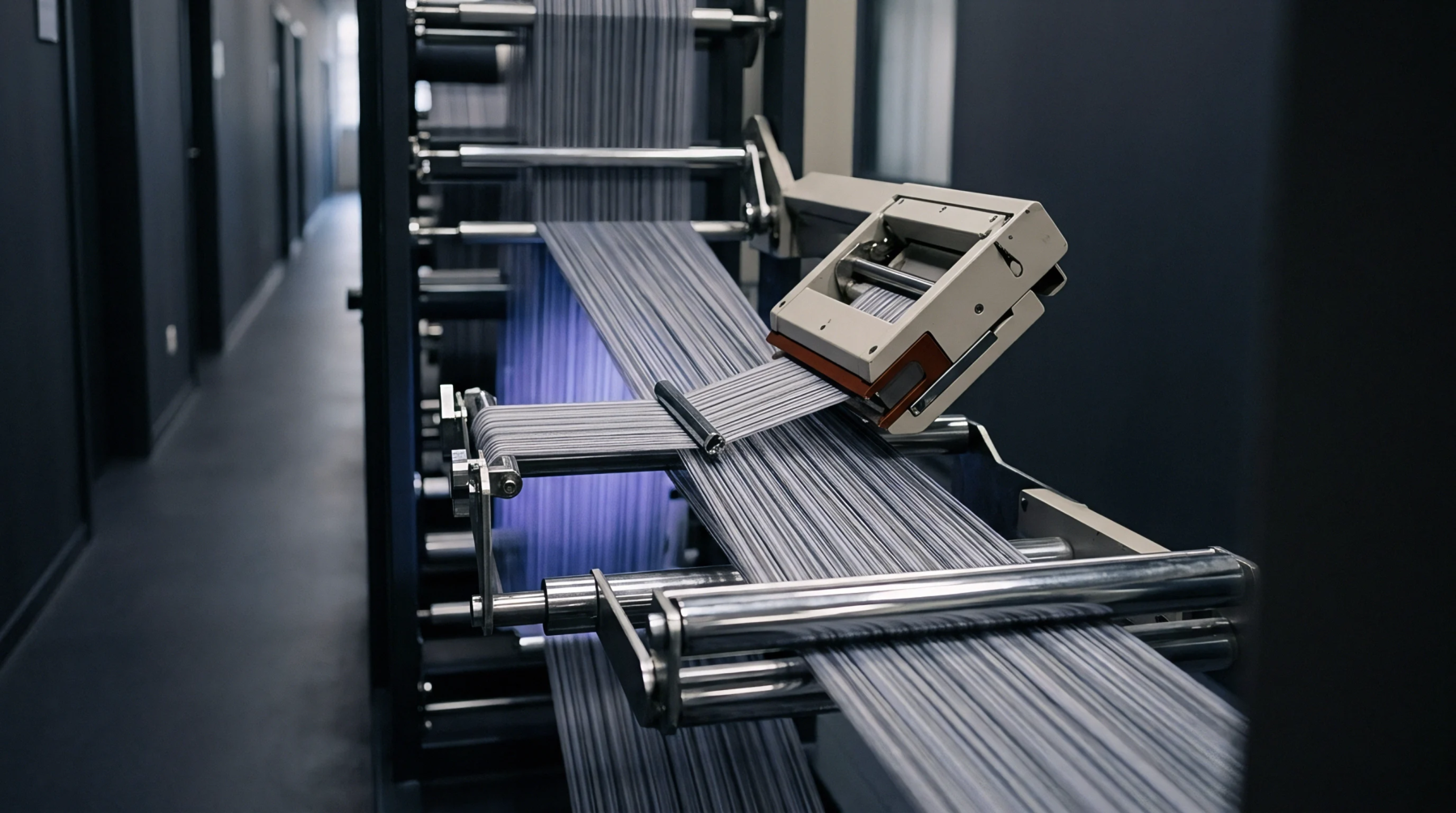
Preventing Filament Damage in Micro Denier Elastomeric Warp Knits
Preventing filament damage in micro denier elastomeric warp knits demands precise beam tension control, strict stenter thermal capping, and low-shear jet scouring.
Surfactant molecules that modify the exhaustion rate of dye onto protein or synthetic fibres govern the uniformity of shade depth across an entire batch of material. An acid dye leveling agent modulates the affinity between the dyestuff and the substrate to prevent rapid uptake at localized sites. The active components typically feature anionic or nonionic structures that compete with dye molecules for vacant bonding spots on the yarn surface.
Competitors retard the dye strike until the liquor reaches a temperature that ensures even distribution. High concentrations of the surfactant inhibit exhaustion altogether by forming a stable complex that keeps the pigment suspended in the bath. Mill chemists calibrate the dosage based on the molecular weight of the dyes and the specific surface area of the textile fibre.
This controlled interaction prevents blotchiness that occurs when thermal energy triggers premature fixation. Proper usage requires careful monitoring of the pH and temperature gradient throughout the cycle to maintain stable equilibrium between the dye in the bath and the dye on the fibre.
Variations in flow rates within a dyeing machine often lead to uneven colour absorption during the initial warming phase. An acid dye leveling agent addresses these fluctuations by delaying initial adsorption until the circulation of the dyebath achieves a consistent heat profile. The mechanism operates through the temporary occupation of active receptor sites on the polymer chain that would otherwise trap excess colourant near the liquor inlet.
Gradually the bath temperature rises and the surfactant molecules desorb while dye ions occupy the vacated space. Operators manage this transition by selecting additives that correspond to the migration characteristics of the chosen dye class. Precise dosing maintains the balance between efficient exhaustion and the prevention of streakiness on delicate fabrics.
Success depends on the correlation between the ionic charge of the textile and the chemical structure of the additive employed.
Equilibrium conditions remain subject to rapid change when the temperature exceeds the glass transition point of synthetic fibres. An acid dye leveling agent keeps the dye migration process linear by adjusting the rate of diffusion into the amorphous regions of the fibre matrix. Heat provides the kinetic energy necessary for dye molecules to move from the surface into the interior structure.
Without this chemical control, pigments settle at different speeds depending on the physical proximity to the heat source inside the vessel. Controlled migration prevents the migration of dye from pale zones toward darker regions after fixation. Chemical stability ensures that the dye molecules move uniformly toward the interior of the fibre bundle without forming aggregates.
Laboratory analysis validates the effectiveness of these agents by comparing treated swatches against untreated control groups under controlled pressure and bath conditions. An acid dye leveling agent ensures that the standard deviation of reflectance values across the fabric remains within tight production tolerances. Consistent distribution of dye reduces the likelihood of shade variation from the centre to the edge of a roll.
Uniformity defines the output quality in high speed industrial continuous dyeing operations. The performance of these chemicals determines the ability of a facility to reproduce a specific shade with minimal off-quality stock.
Preventing filament damage in micro denier elastomeric warp knits demands precise beam tension control, strict stenter thermal capping, and low-shear jet scouring.
Expertise is a utility, not a secret. sentiention™ publishes its working knowledge as open reference: intelligence layer covering the materials it sources, the markets it enters, and the reference that serves both.