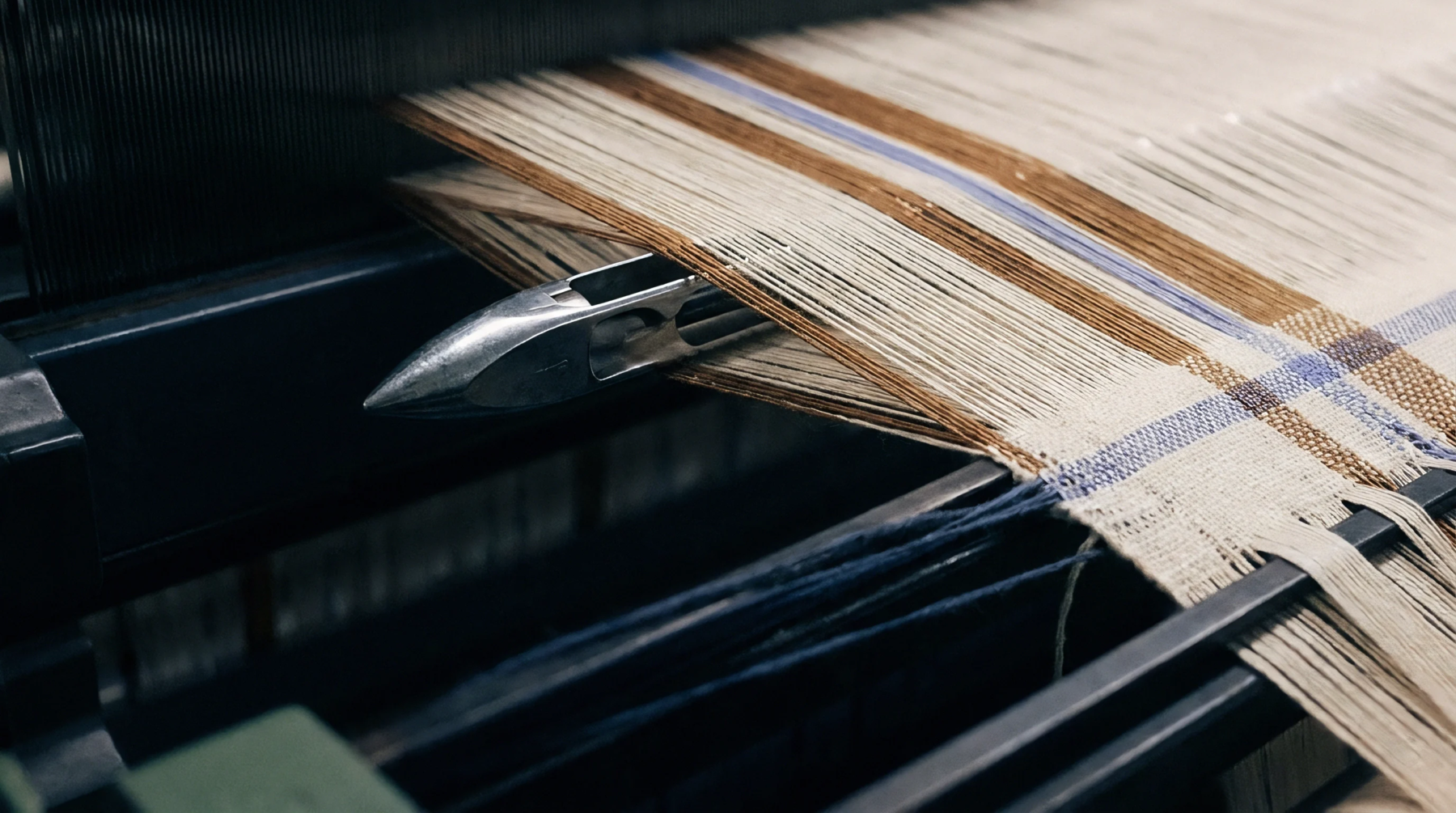
Warp Density
Air jet loom warp density designates the precise count of parallel yarns aligned longitudinally across a weaving machine before the insertion of the filling yarn. Mills determine this linear frequency during pre-production beam preparation to establish the structural integrity of greige goods. Fabric engineers calculate ends per inch to regulate tension limits during pneumatic insertion.
Pneumatic insertion depends entirely on this specific linear spacing because excessively high yarn counts restrict the air channel required for picking. Production planners verify this parameter at the sizing machine checkpoint where warp sheets receive protective coatings before entering the reed.
Shedding Clearance
Proper yarn spacing prevents filament entanglement during the high speed opening of harnesses. Harness frames lift alternating ends to form a triangular aperture through which the weft travels on a stream of compressed air. Individual yarns must maintain sufficient lateral gaps so stray fibers do not bridge adjacent ends and cause warp stops.
Operators monitor stop motion sensors on the loom to detect friction points caused by overpacked yarn arrangements. Higher linear counts demand reduced shed depths to prevent excessive strain on the sizing film protecting each individual strand.
Pneumatic Dynamics
Compressed air propulsion relies heavily on the physical clearance between adjacent longitudinal yarns to propel the filling pick across the reed channel. Restrictive yarn layouts disrupt the laminar airflow necessary for velocity maintenance over wide weaving widths. Main nozzles and relay nozzles adjust their timing cycles based on the resistance encountered within the yarn tunnel.
Dense constructions require higher pressure settings to overcome the drag created by closely spaced filaments. Pressure adjustments must balance against yarn strength limits to avoid breakage during high velocity insertions.
Commercial Inspection
Quality control teams evaluate finished fabric rolls against buyer specifications using standardized optical counting glasses under controlled lighting. Certified inspectors record end counts across multiple zones to identify potential bowing or skewing defects introduced during mechanical take up. Commercial agreements often stipulate strict percentage tolerances around the nominal target before shipments receive final acceptance for apparel manufacturing.
Discrepancies between mill specifications and delivered density measurements trigger immediate payment holds pending technical arbitration. Final fabric performance depends on maintaining these strict structural boundaries throughout bulk production runs.