Fabric Mass Metric
Fabric mass per unit surface area quantifies the density of textile constructions independently of their variable delivery roll widths or running lengths. Areal weight is verified commercially through standardised circular cut specimens evaluated on calibrated analytical balances under conditioned atmospheric environments of twenty degrees Celsius and sixty-five percent relative humidity. Test methods ASTM D3776 and ISO 3801 define the precise procedural boundaries for this measurement.
The property applies to woven, knitted, and nonwoven structures, but excludes narrow elastics and linear yarns. A change in finishing tension alters this figure without altering total yarn count.
Circular Swatch Sampling
Five distinct specimens cut using a calibrated one-hundred-square-centimetre die cutter provide the statistical basis for laboratory verification. Areal weight is established across the full usable width of the textile bolt, deliberately avoiding the five centimetres nearest to each selvedge edge. Specimen cutters exert direct rotational torque to prevent tension distortion during the cutting cycle.
Unconditioned fabrics skew values due to ambient atmospheric humidity absorption. Laboratory technicians condition cut swatches for four hours before final balance assessment.
Yield Mechanics
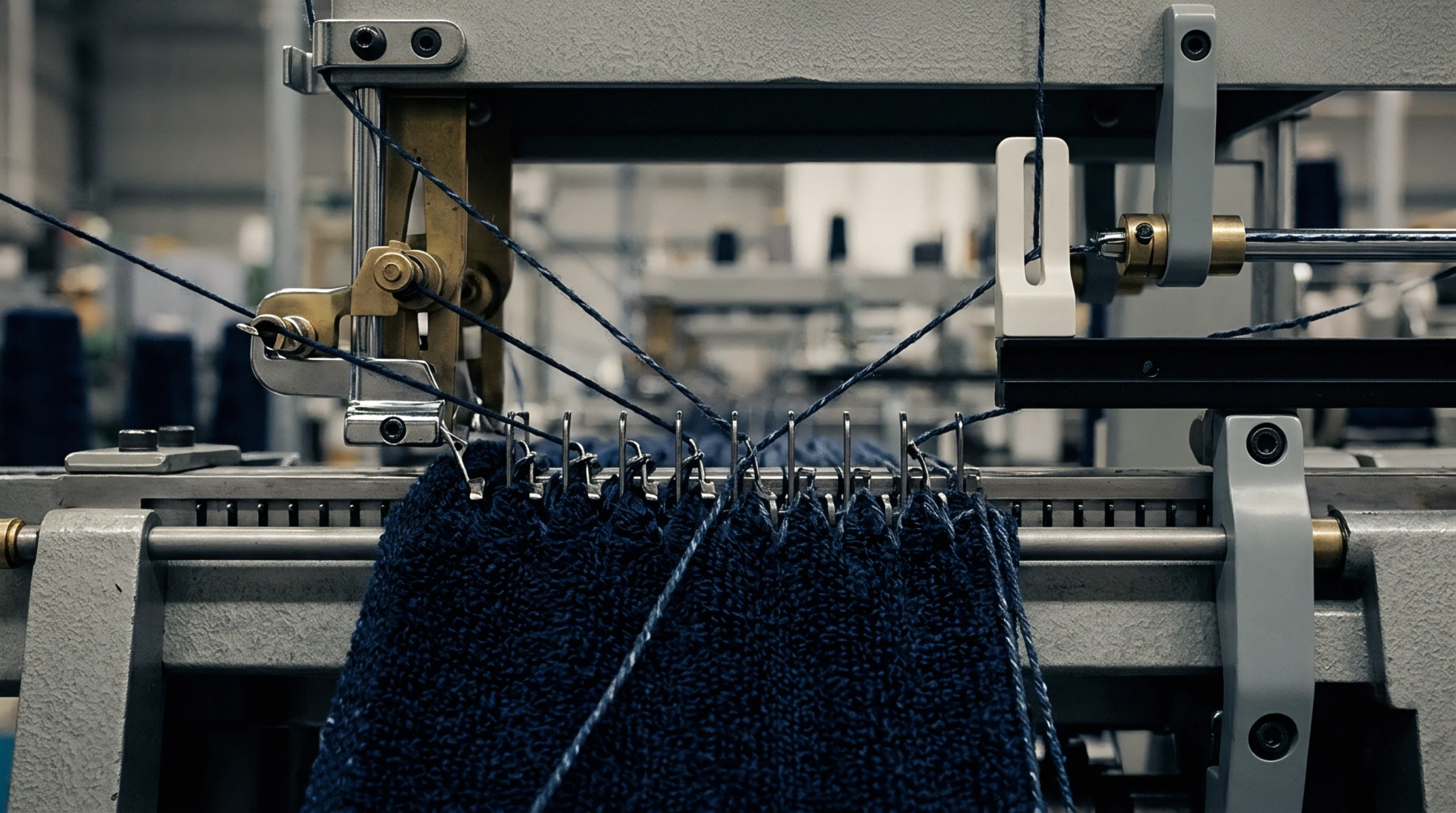
Machine tension during weaving or circular knitting stretches yarn loops and suppresses the mass value measured immediately at the machine takedown frame. Areal weight increases substantially during downstream scouring, wet dyeing, and drying as compressive loop relaxation takes place. Stenter frame overfeeding compacts courses and expands the square metre weight to reach buyer target metrics.
Calendering crushes yarn diameters, increasing apparent surface density without adding true physical yarn bulk. Heat setting permanently fixes synthetic filament geometry at the desired operational target.
Contractual Clearance Limits
Garment purchase orders establish strict areal weight tolerances, typically restricted to a spread of plus or minus five percent from the approved reference standard. Deviations beyond this acceptable boundary trigger fabric roll rejections or proportional invoice debits due to cutting room consumption variances. Underweight cloth yields structurally unstable garments prone to dimensional seam distortion.
Excess weight wastes yarn stock and causes running metres to fall short of cut plan allocations. Inspection protocols mandate checking three rolls per thousand metres delivered.