Pore Reduction
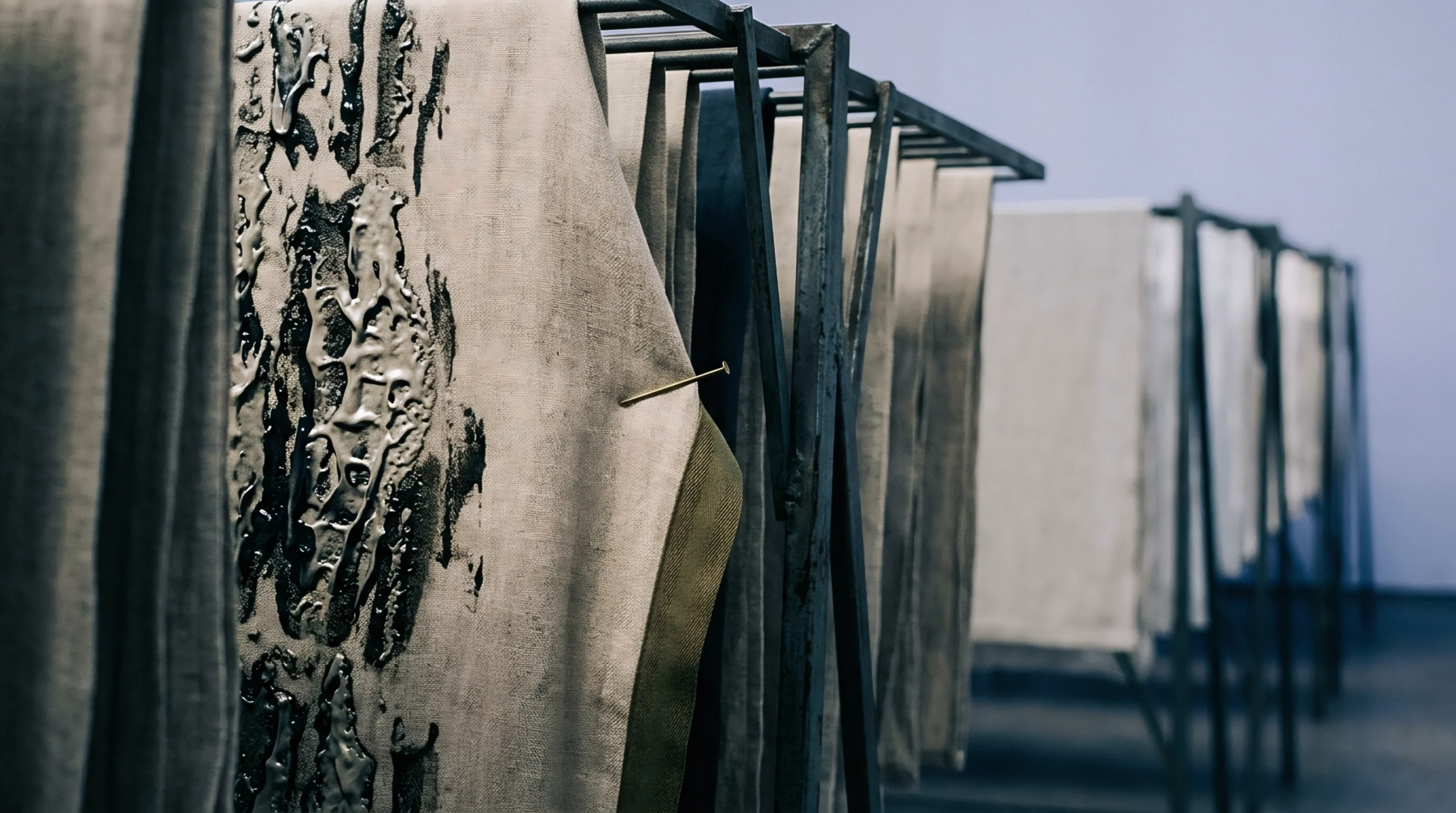
Structural deformation of wet fiber networks or yarn pores occurs when surface tension forces during liquid evaporation exceed the mechanical strength of the wet material. This capillary pressure collapse can lead to permanent flattening of the yarn during industrial drying. Quality control inspectors verify the resulting changes in thickness to ensure that the fabric retains its intended insulation and bulk.
The effect is most pronounced in fine, low-modulus fibers that cannot withstand the high surface tension of evaporating water.
Drying Rate
Controlled thermal drying in the mill reduces the severity of the structural compression. If the water is removed too rapidly at high temperatures, the high surface tension forces of the remaining liquid pull the fibers closer together. This capillary pressure collapse alters the density of the yarn core.
Fiber Diameter
Fine fibers are more vulnerable to this deformation than coarse fibers because their smaller pore spaces generate higher capillary forces. For example, microfiber fabrics show a greater tendency toward capillary pressure collapse than standard polyester fabrics. This difference causes microfibers to lose their soft texture and loft if they are dried under incorrect process conditions.
Fabric Softness
Loss of tactile quality is the direct consequence of this structural flattening. The compacted fiber assembly becomes stiff and loses its surface hand.