Chemical Impregnation
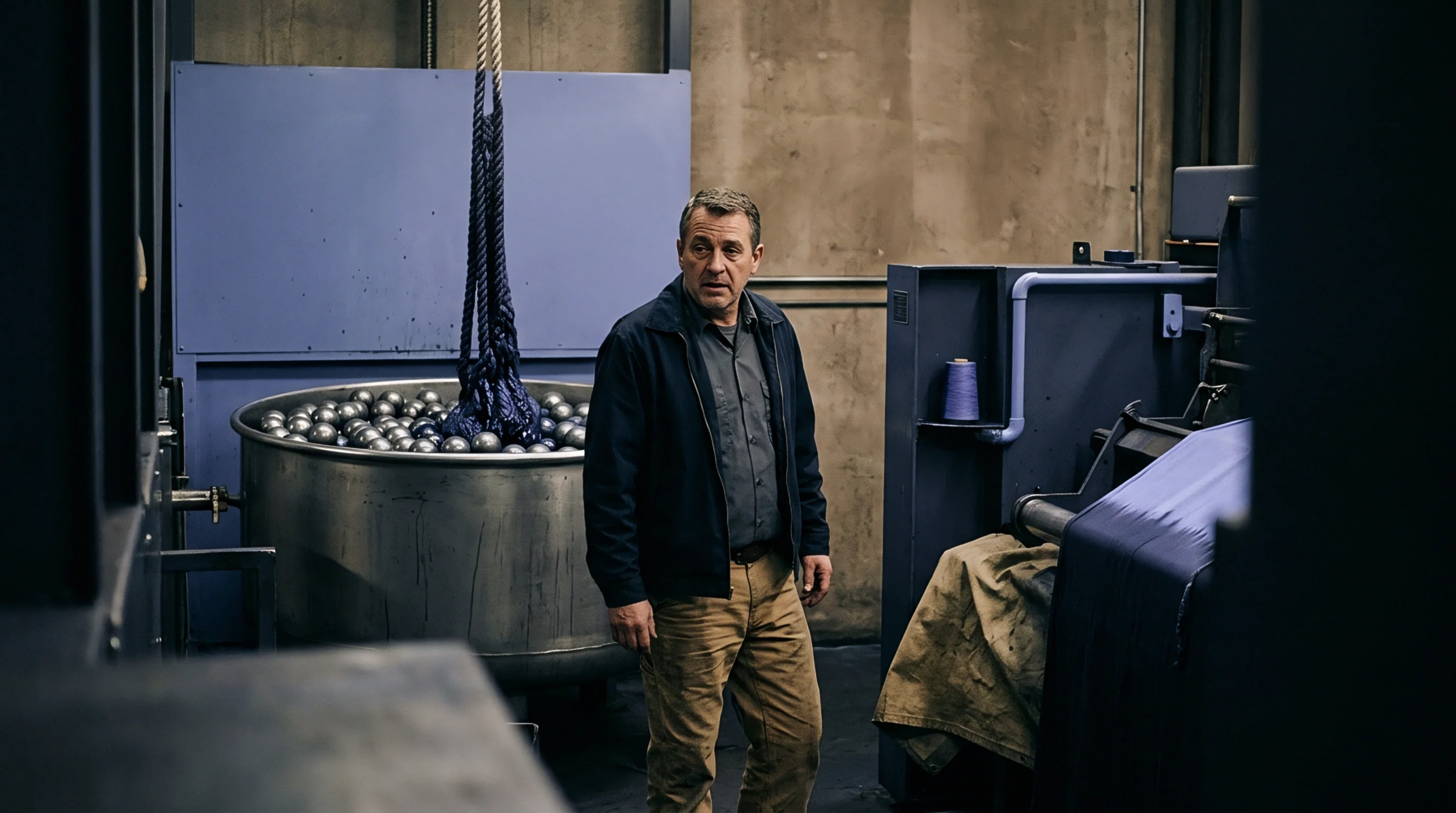
An aqueous exhaustion process achieves colorant fixation on cellulosic textiles through the continuous padding of fabric followed by a prolonged rotational dwell period at room temperature. Cold pad batch dyeing utilizes a sodium silicate or caustic soda solution to initiate the reactive hydrolysis required for covalent bonding. The fabric moves through an immersion bath containing the dye and alkali mixture before passing through a nip zone that removes excess liquid.
A plastic wrap seals the resulting batch to prevent moisture loss or carbon dioxide absorption during the reaction window. Technicians monitor the liquor ratio and dwell time to ensure consistent saturation across the full width of the textile material.
Process Mechanics
Uniformity depends upon the stability of the pad liquor because the reactive dye loses potency once the alkali triggers the fixation sequence. A chemical pump maintains the concentration levels while temperature sensors verify that the ambient environment stays within the range required for kinetic stability. Roll rotation prevents gravity from pulling the liquor toward the bottom of the batch which would create shade variation between the selvedges and the center.
Automation of the dwell rotation ensures that the chemical potential remains constant throughout the entire length of the substrate. The reaction stops when the fabric enters the wash range where neutralisation removes unreacted dye molecules from the fibre surface.
Operational Constraints
Fibre permeability dictates the success of this method because tight fabric constructions restrict the penetration of the dye liquor into the core of the yarn. Heavy weaves often require higher pad pressure to overcome surface tension and force the solution into the interstitial spaces between filaments. Synthetic blends do not accept reactive dyes through this procedure, meaning the substrate must consist of cotton, viscose or linen to guarantee compatibility.
Production batches undergo testing for colour fastness against the standard against which the mill contract is signed before final approval occurs. Variability in the fabric weight or surface treatment alters the pickup percentage and shifts the final depth of shade away from the target standard.
Quality Verification
Inspection of the finished goods requires evaluation under standard lighting conditions to identify filtration marks or pressure stains caused by uneven winding. Laboratory analysis confirms that the degree of fixation meets industrial standards for wash fastness and rub resistance in typical textile applications. Every meter of processed goods carries a signature of the mechanical force applied during the initial padding stage.
Proper calibration of the nip pressure provides the necessary control over the wet pickup ratio that determines total dye yield. Final shade conformity rests upon the absolute control of the dwell time and the specific alkalinity of the application bath throughout the resting phase.