Mechanical Disruption
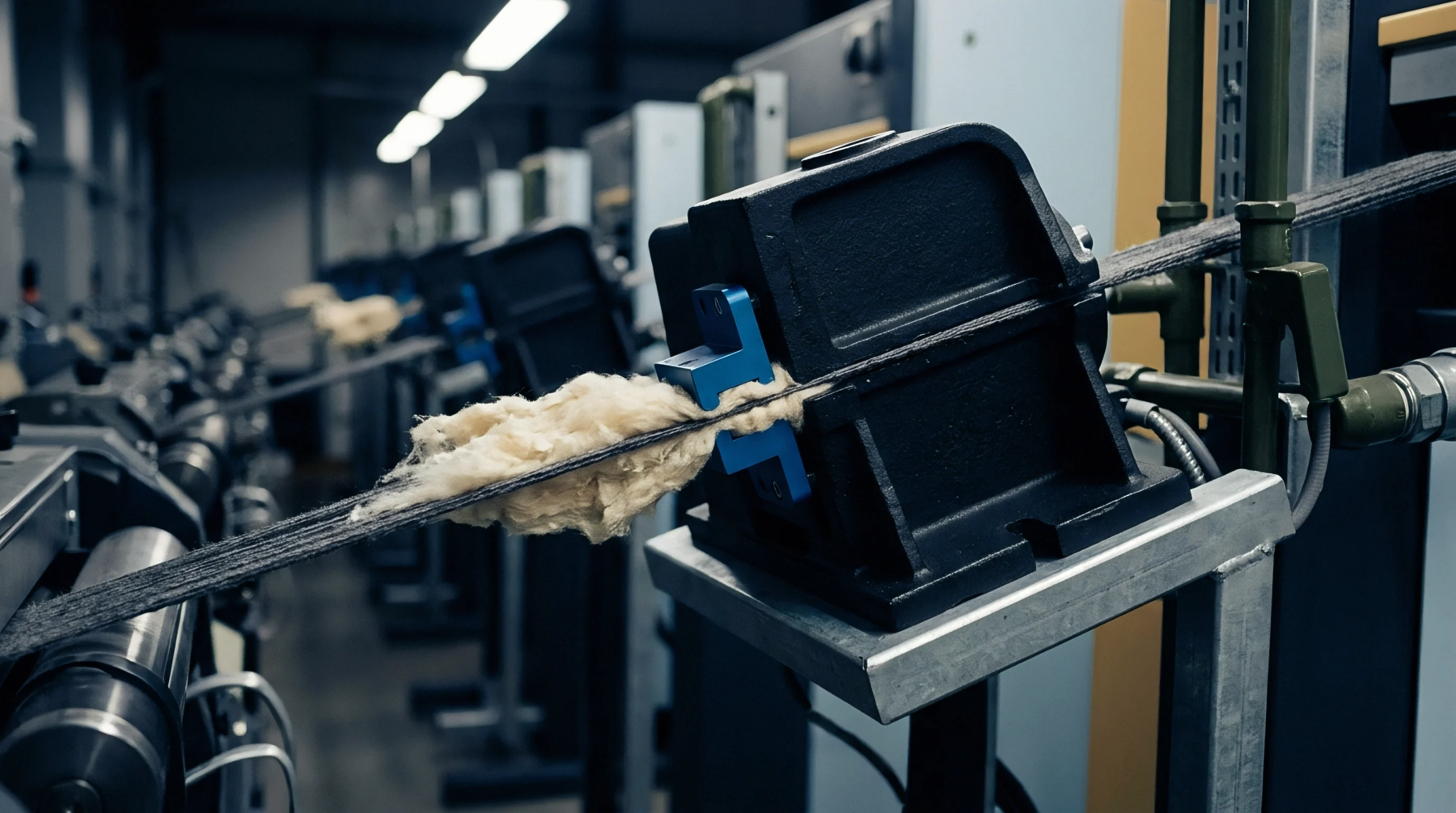
Filament exposure occurs when the surrounding staple fiber bundle slides along the central axis of a composite yarn under tension. In textile manufacturing, core-sheath slip denotes this physical separation between the elastomeric or high-tenacity filament core and its protective cotton or synthetic sheath. The defect arises primarily from insufficient friction or inadequate twist during the spinning stage.
When the twist multiplier falls below a critical threshold, the sheath fibers fail to grip the core, allowing axial displacement to occur under minimal stress.
Processing Vulnerability
Tension variations in knitting or weaving machines act as primary triggers for this structural failure. High-speed sewing lines generate similar friction, causing needle-clogging bunches of bunched-up sheath fibers.
Fabric Defect
Uncovered core areas produce visible streaks or uneven dyeing in finished knitwear. The elastic filament, once stripped of its cotton sheath, responds differently to dyestuffs and finishing chemicals. This leaves bare sections that appear as shiny lines or localized yarn breakage across the fabric face.
Measurement Protocol
Laboratory evaluation relies on a constant-rate-of-extension tensile tester configured to measure the force required to slide the sheath over a fixed yarn length. Technicians clamp one end of the sheath and pull the core to record the resistance profile. A high friction value indicates a secure mechanical bond that prevents downstream shedding during high-speed production.