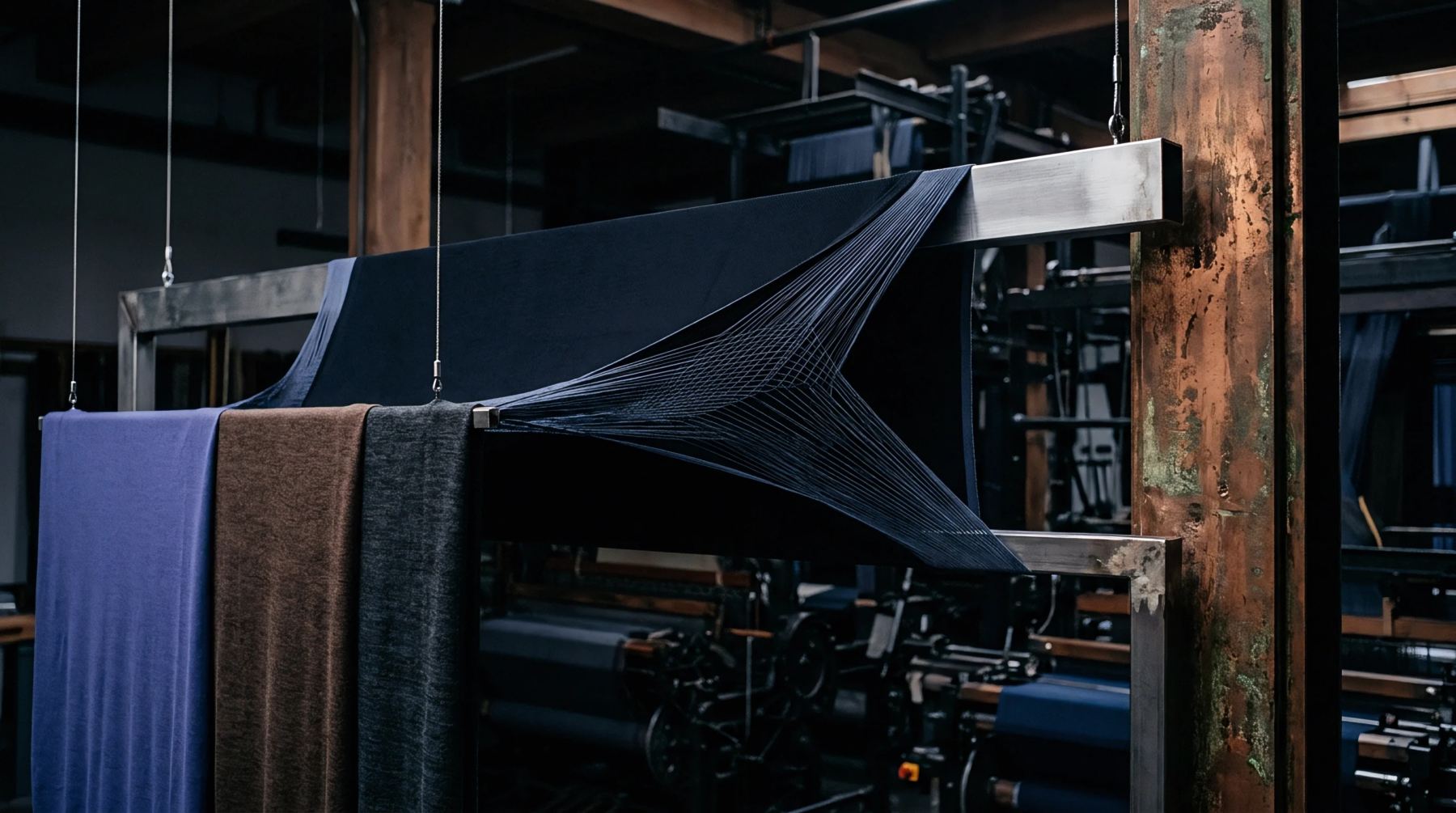
Threading Arrangement
Manufacturing instruction establishes the precise number of warp ends drawn through every split in the reed to control the distribution and spacing of threads. This denting plan dictates the visual density and structural consistency of the woven cloth across its full width. Technicians follow the sequence to ensure that the yarn density matches the engineering requirements of the fabric design.
A standard layout might place two ends in every opening while a more complex version varies the count to create stripes or textured ribs. Precision at this stage prevents the formation of reed marks which appear as unsightly gaps in the finished product. Proper execution maintains the intended width of the fabric during the weaving process and ensures the cloth meets weight specifications.
Mechanical Sequence
Weaving operations rely on the reed to maintain uniform spacing and provide the force necessary to beat the weft yarn into the fell of the cloth. The denting plan acts as the bridge between the drafting of the warp through the heddles and the actual formation of the fabric web. If the sequence is irregular, the tension across the loom becomes uneven, leading to potential breakage or wavy edges.
Production managers verify the arrangement before the loom starts to avoid costly re-threading of thousands of individual strands. Every wire in the reed must be accounted for to maintain the geometric integrity of the weave. The movement of the reed against the yarn causes friction, so the grouping of ends must be calculated to prevent fiber damage.
High-speed looms require even more precise setups to handle the rapid acceleration and deceleration of the beating motion. Monitoring the alignment throughout the production run prevents drift and maintains quality. Consistent beats ensure the cloth is uniform from the first yard to the last.
Density Calculation
Structural engineers determine the required ends per inch by multiplying the reed density by the number of yarns per opening. This calculation for the denting plan ensures that the fabric meets weight and strength specifications for its intended use. In heavy canvases, the count is typically high and uniform to provide a blocked surface that resists water or wind.
Each variation changes how the yarns interact, affecting the hand feel and the way the fabric drapes when cut into garments.
Reed Selection
Engineering choices regarding the loom equipment directly influence how the yarns are grouped during the weaving process. A fine reed with many thin wires allows for more delicate distributions whereas a coarse reed with fewer wires handles thicker yarns without causing abrasion. The denting plan must account for the thickness of the yarn to prevent the fibers from fraying as they move back and forth through the metal slits.
When yarns are too thick for the chosen spacing, the friction increases, resulting in fuzzing or pilling on the surface of the grey goods. Final inspection teams look for these defects to trace back errors in the initial setup of the machine. Success in weaving high-quality fabrics depends on the compatibility between the yarn diameter and the mechanical limits of the reed.
Technicians often run a short sample to verify that the chosen plan does not cause excessive warp breaks or surface distortion. Correct planning at the start of a production order saves time and reduces material waste in the mill.