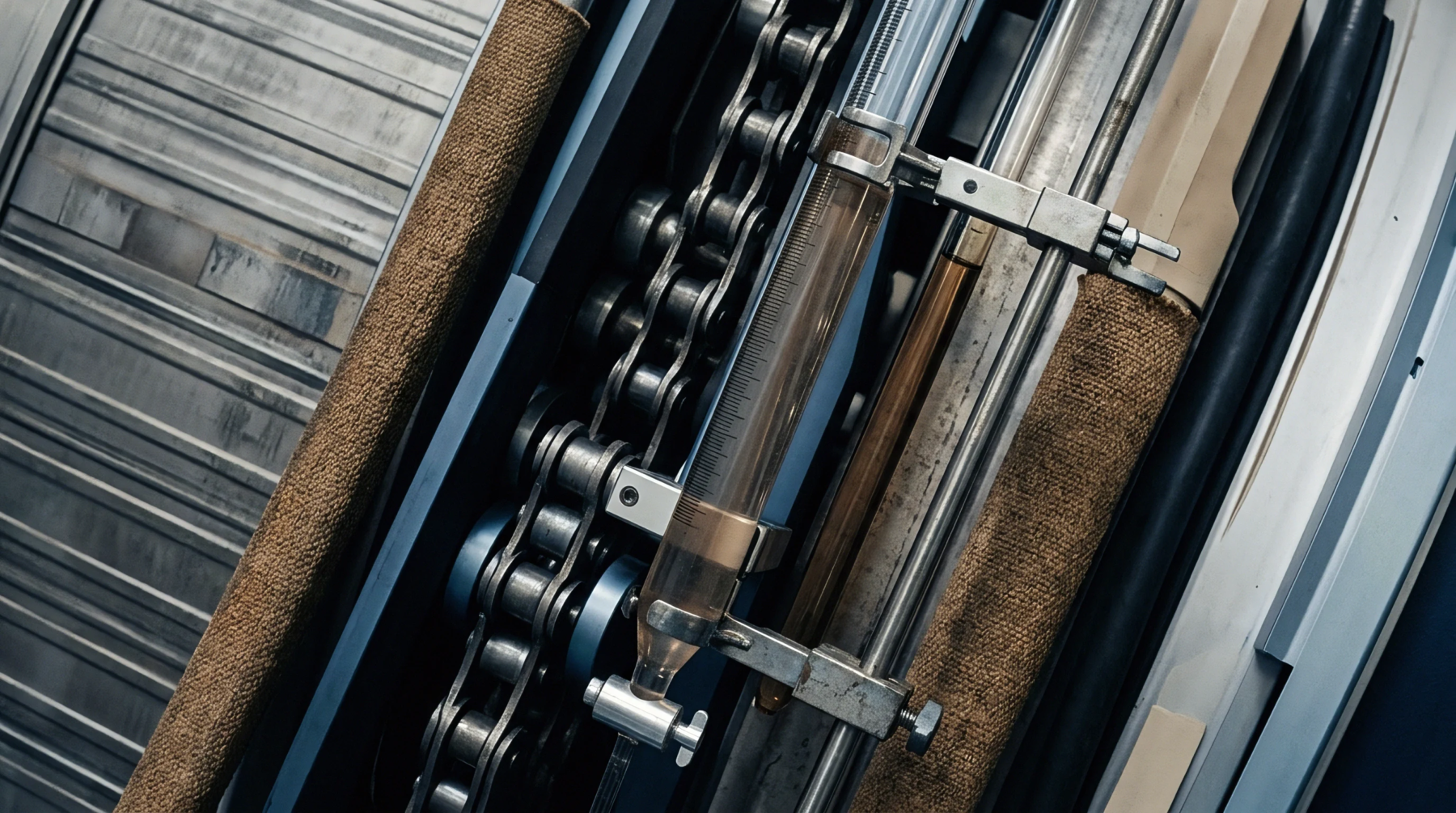
Fluidic Adjustment
Liquid delivery validation represents an operational protocol in finishing ranges where chemical auxiliaries meet continuous fabric webs. Dosing pump calibration establishes the exact volumetric displacement of positive displacement pumps feeding resin baths, softening agents, and functional finishes onto moving textiles. Operators verify output rates against gravimetric catches collected over measured time intervals at specific stroke frequencies and backpressures.
Fluid viscosity variations and chemical concentration shifts alter delivery accuracy, requiring strict mechanical adjustment before production runs commence on delicate substrates. This verification boundary stops at the fluid discharge point, leaving chemical reaction kinetics inside the padder trough outside its immediate scope.
Viscosity Variance
Chemical formulations used in textile impregnation exhibit non Newtonian flow behavior under high shear rates inside pump heads. Silicone microemulsions and acrylic binders present distinct resistance profiles that directly affect stroke volume delivery efficiency during continuous padding operations. Ambient temperature fluctuations alter fluid density inside supply lines, producing deviations between nominal machine settings and actual liquor pickup on the running fabric.
Technicians measure these delivery discrepancies during pre production trials to maintain strict pickup tolerances across diverse woven and knitted substrates.
Mechanical Tolerance
Stroke length adjustment screws and diaphragm flexing rates determine the mechanical repeatability of chemical metering systems. Plunger wear and check valve seating integrity degrade volumetric efficiency over extended operation cycles within finishing houses. Technicians record stroke frequency against discharged mass to establish linear response curves across normal operating ranges.
Pressure surges from downstream static mixers disrupt internal check valve closure, creating slip across seals and altering the applied chemical add on percentage.
Gravimetric Verification
Laboratory balance measurement of collected liquor provides the primary audit method for verifying liquid delivery accuracy during mill trials. Gravimetric collection bypasses indirect flow meter readings, capturing actual mass delivered under simulated production backpressures. Technicians compare weighed discharge totals against preset controller targets to calculate percentage error margins prior to signing off on batch production sheets.
This mass verification protocol ensures chemical add on rates match technical specification sheets issued by apparel buyers for finished textile goods.