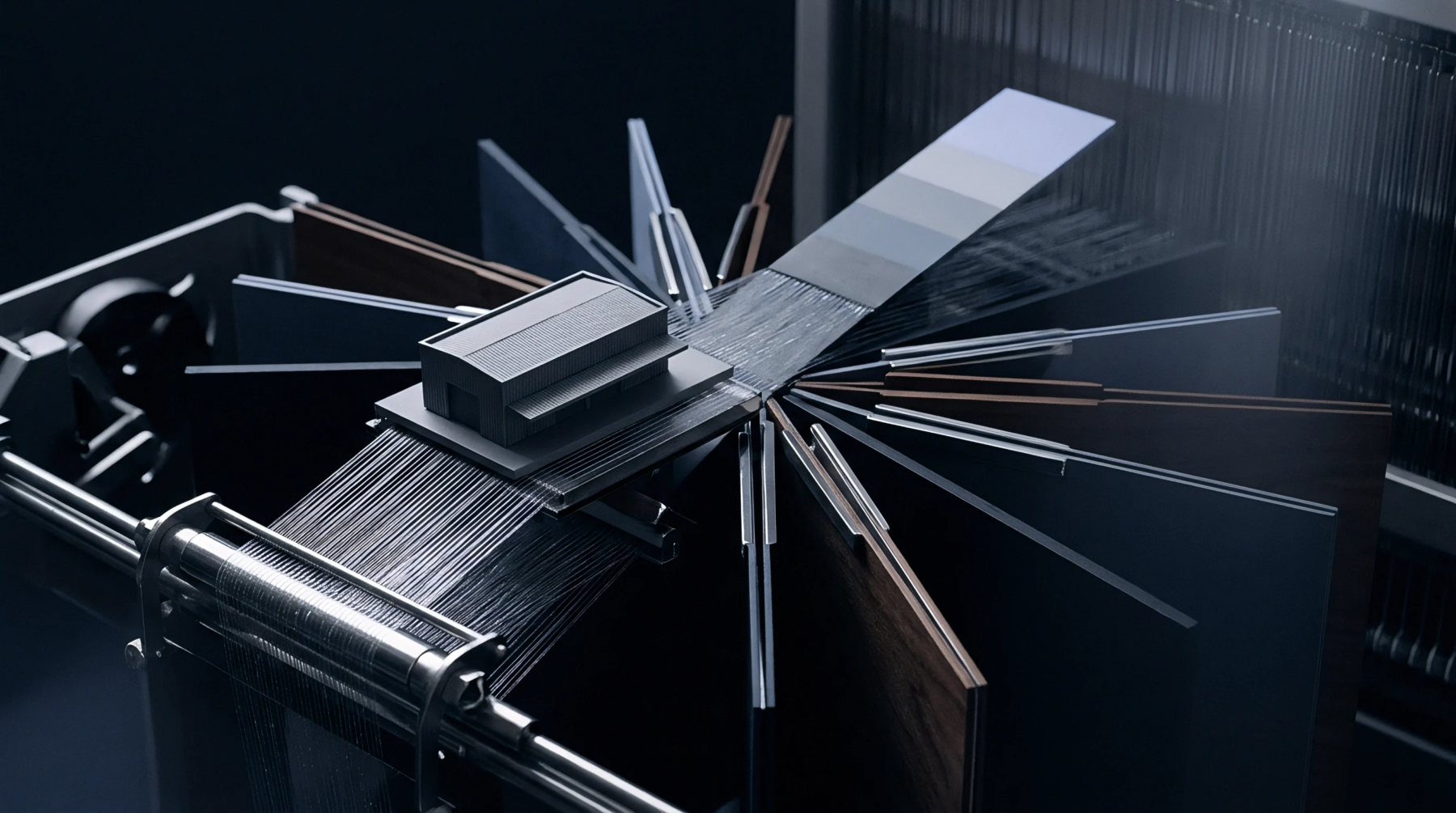
Warp Automation
Electronic feedback loops adjust yarn let off velocity to maintain constant force during high speed weaving. This dynamic tension control system detects resistance fluctuations across the warp beam and regulates the motor torque instantly. Sensors monitor beam diameter decrease to ensure the force applied to individual strands remains uniform regardless of spool exhaustion.
Constant monitoring prevents uneven stretch in synthetic filaments that would otherwise lead to periodic streaks in the finished greige fabric.
Process Calibration
Calibration occurs before full production startup at the loom interface. Technicians input target centinewton values based on the specific count of the warp yarn being processed. The software calculates the necessary braking force to counter the inertia of the rotating beam.
Periodic manual verification against a hand held tensiometer ensures the internal electronic readings align with the physical load on the yarn ends. Deviations trigger automatic adjustments to the servo drive parameters to restore equilibrium.
Load Distribution
Uneven distribution of force across the warp width results in mechanical stress differences between the selvedge and the center sections. These variations cause internal buckling or puckering during the subsequent finishing stages where heat application exacerbates existing strain. Proper management of these internal forces keeps the warp sheet flat and ensures that the interlacing happens under consistent conditions.
Stable delivery of the warp sheet allows for higher loom revolutions without risking frequent end breakage or surface defects.
Measurement Accuracy
Laboratory assessment of final cloth geometry confirms the effectiveness of the regulation during the prior construction phase. Discrepancies in the density of the pick count suggest that the control system struggled to compensate for changes in the beam mass. Precise force application provides the baseline for repeatable fabric dimensions across different production lots.
Finished yardage exhibits superior dimensional stability when the processing tension stays within narrow technical tolerances throughout the entire operation.