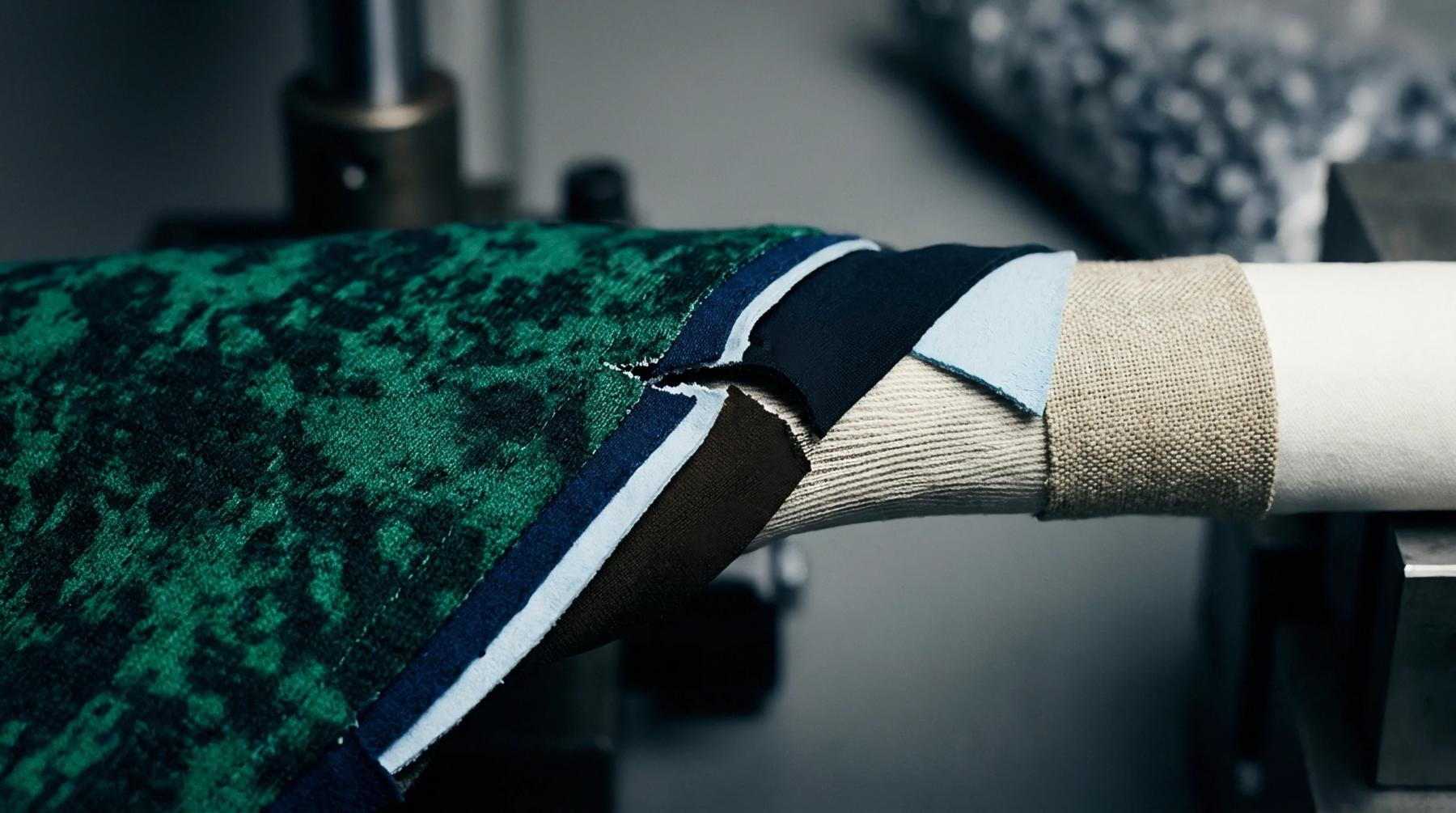
Fabric Structure
Knitted materials produced on machines with a high needle density feature a smooth surface and tight loop structure. These fine gauge knits typically utilize machines with twenty-four or more needles per inch to create highly packed structures. The resulting fabrics offer superior drape and soft hand feel.
This category includes high-end jersey and technical baselayers.
Yarn Requirement
Superfine yarns are necessary to prevent yarn jams and needle damage during knitting. Spinning mills must produce highly uniform combed cotton or micro-synthetic filaments to ensure that the yarn passes cleanly through the tiny needle eyes. Imperfections such as slubs and thick places can cause immediate needle breakage or hole formation in the fabric.
This strict material requirement means that only top-tier, low-hairiness yarns are selected for fine gauge knits.
Finishing Precision
Processing high-density, lightweight knitted fabrics requires careful wet-finishing control to avoid creasing and distortion. High friction during scouring can create permanent running marks that ruin the delicate surface of the material. Specialized tensionless jet dyeing machines and open-width washing ranges prevent these defects from forming.
Proper chemical softeners are then applied during drying to enhance the natural suppleness of the knit structure.
Mechanical Challenge
Maintaining correct needle alignment on the knitting machine is the principal requirement for high-gauge production. Microscopic deviations in needle position create vertical stripes and uneven loops that are highly visible on the smooth fabric face.