Fluid Dynamics Definition
Kinetic energy density stability describes the physical principle where the total momentum within a closed textile processing system remains constant provided no external forces act upon the moving liquor. Fluid momentum conservation governs the movement of dye baths through dense fabric coils and across narrow nozzles in jet dyeing machines. Static pressure changes across a cross section balance out the inertial force of the fluid moving at high velocity.
Any variation in the cross sectional area forces the velocity to shift, which in turn demands a precise adjustment in pressure to maintain the total equilibrium.
Dyeing Machine Mechanics
High speed circulation relies on maintaining steady mass flow rates to ensure consistent contact between the substrate and the treatment chemicals. Precise pump settings facilitate the required pressure head inside the vessel, keeping the liquor stream moving at a velocity that avoids cavitation. When the nozzle geometry restricts the flow, the fluid accelerates to maintain its inertia, exerting different mechanical forces on the yarn bundles.
Changes in the fabric permeability introduce frictional drag that acts as an external force on the system. This drag requires active monitoring of pump power to compensate for the lost energy density and maintain the flow integrity.
Process Verification Point
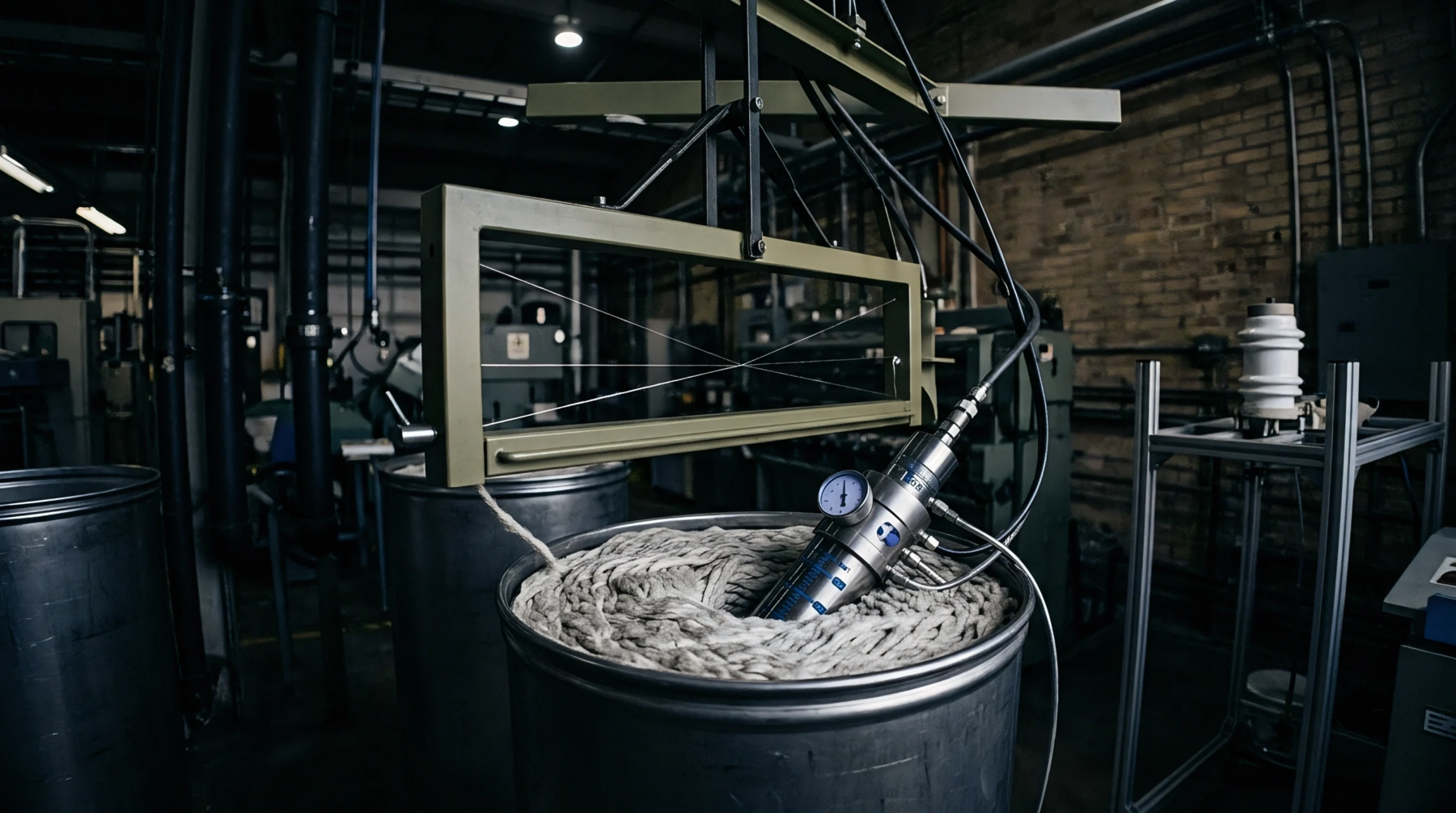
Quality control personnel monitor flow meters and pressure gauges at the inlet and outlet of the heat exchanger to verify that the energy state of the liquor matches the process parameters. Deviations from the expected pressure differential indicate a blockage in the filter or an uneven distribution of the fabric rope. Technicians rely on these pressure readings to detect variations in pump performance before the inconsistencies show up as shade differences on the final garment.
Maintaining the correct flow profile ensures that the chemical concentration reaches every part of the fibre, resulting in a uniform application of dyes.
Operational Performance Boundary
The principle holds strictly as long as the fluid remains incompressible and the system exists in a steady state. Turbulent flow patterns or excessive entrainment of air bubbles introduce complex variables that fall outside this specific model. These physical disturbances alter the effective density of the liquor, causing the measured pressure to drift away from the predicted value.
Reliable results depend on the elimination of air pockets and the maintenance of a constant temperature across the entire circulation loop. Accurate modeling of this phenomenon limits the occurrence of uneven dyeing results during the bulk production phase.