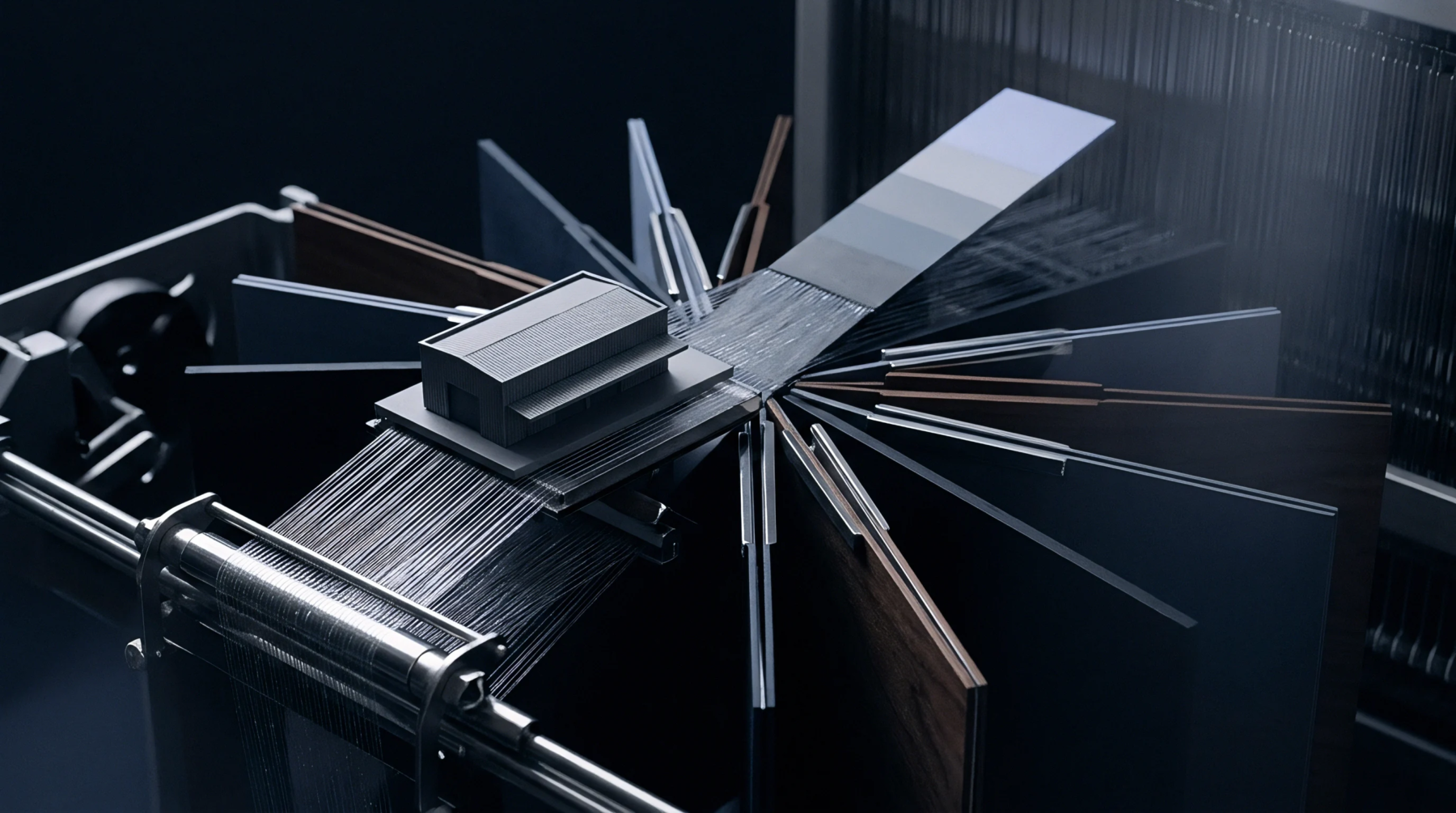
Harness Positioning
Mechanical height adjustments of loom harness frames establish the vertical displacement required for shed formation. Correct heald frame elevation positions the eye of each heald wire relative to the neutral warp line at peak shed opening. Adjusting this height controls the vertical clearance available for weft insertion elements such as rapiers or shuttles.
The setting applies to dobby and cam shedding motions across all woven fabric production. It ceases to apply in jacquard shedding systems, where individual harness cords replace rigid rectangular frames.
Shed Opening
Vertical clearance dictates warp yarn tension peaks during the open shed phase of the weaving cycle. Higher heald frame elevation increases shed height, which allows larger insertion elements to pass without contacting warp ends. Excessive elevation elevates warp thread tension, causing higher end-break rates on low-elongation yarns.
Optimizing elevation minimizes yarn stretch while securing clear passage for the filling yarn.
Motion Coordination
Synchronization between dobby drive levers and frame connection rods governs the timing of vertical displacement. Adjusting drive stroke length alters total frame lift distance during shed opening. Frame movement must reach maximum height before weft entry and remain stationary during insertion.
Mechanical Clearance
Balanced frame height prevents physical rubbing against adjacent harness guides and drive connections. Improper elevation accelerates guide strip wear, causing frame vibration at high loom speeds.