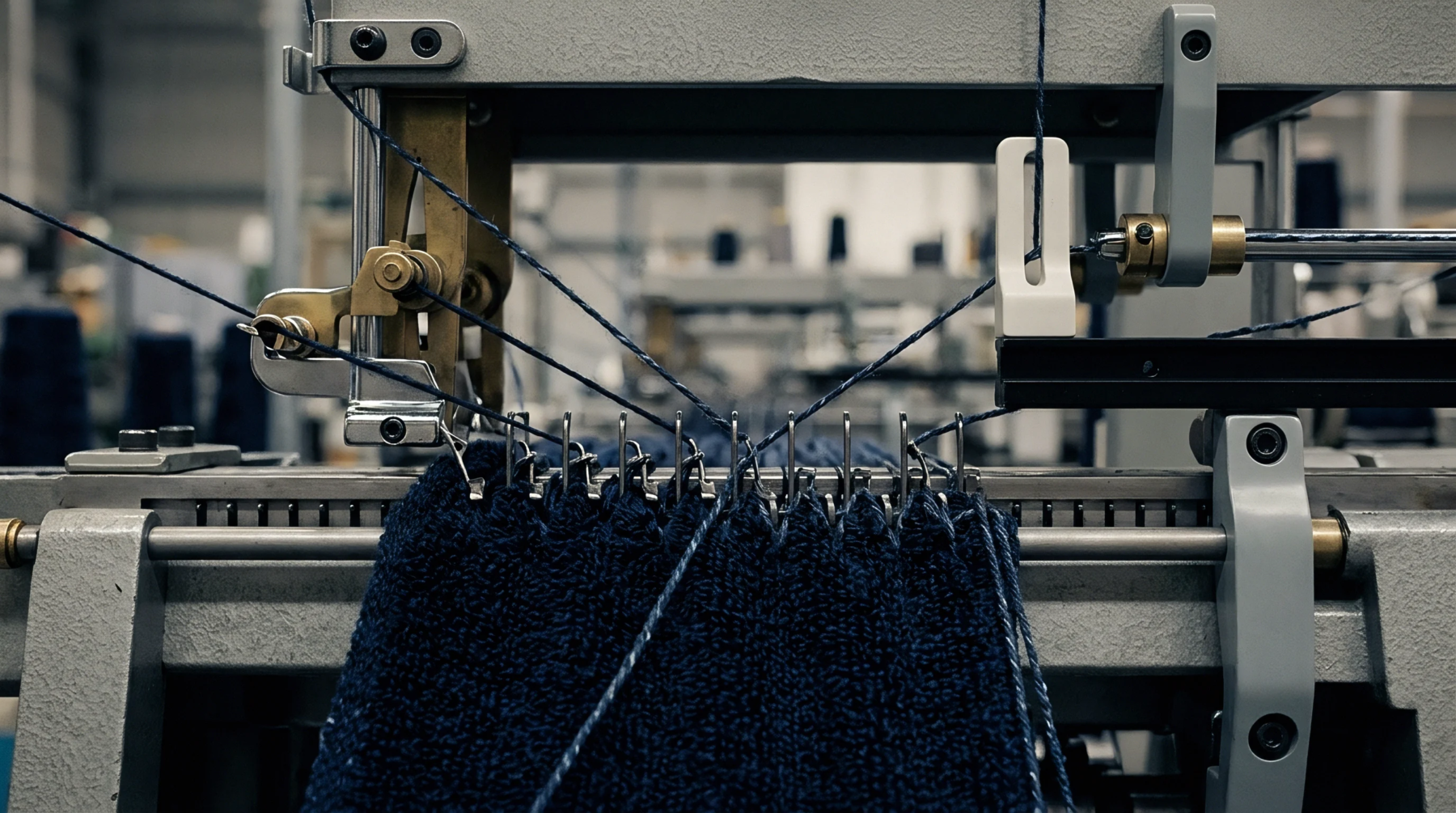
Tension Modulation
Warp management requires precise mechanical settings to prevent fabric defects during the shedding cycle. The let off calculation determines the rate at which the yarn beam rotates to supply warp threads at a constant tension as the diameter of the supply beam decreases. Weavers use this mathematical relationship to ensure that the material tension remains uniform from the full beam until the last layer of fibre.
Feedback Loop
Electronic sensors monitor the yarn path to detect deviations in force. Control units process these inputs to adjust motor torque or brake pressure accordingly. Variations in ambient humidity or fibre elasticity necessitate periodic reevaluation of the mathematical parameters to maintain production speed.
Operational Boundary
Mechanical limits of the loom frame restrict the responsiveness of the supply system. High speed weaving introduces inertial forces that can override a theoretical model. Changes in the weave pattern or the count of the warp density force a recalibration of the delivery system to avoid broken ends or uneven fabric surface.
Mechanical Consequence
Incorrect settings cause the warp to feed at an irregular pace which produces thin places or thick bar defects in the woven structure. Consistent tension control prevents these distortions by synchronizing the beam rotation with the pick insertion rate. Accurate adjustment of this variable maintains the structural integrity of the final textile product.