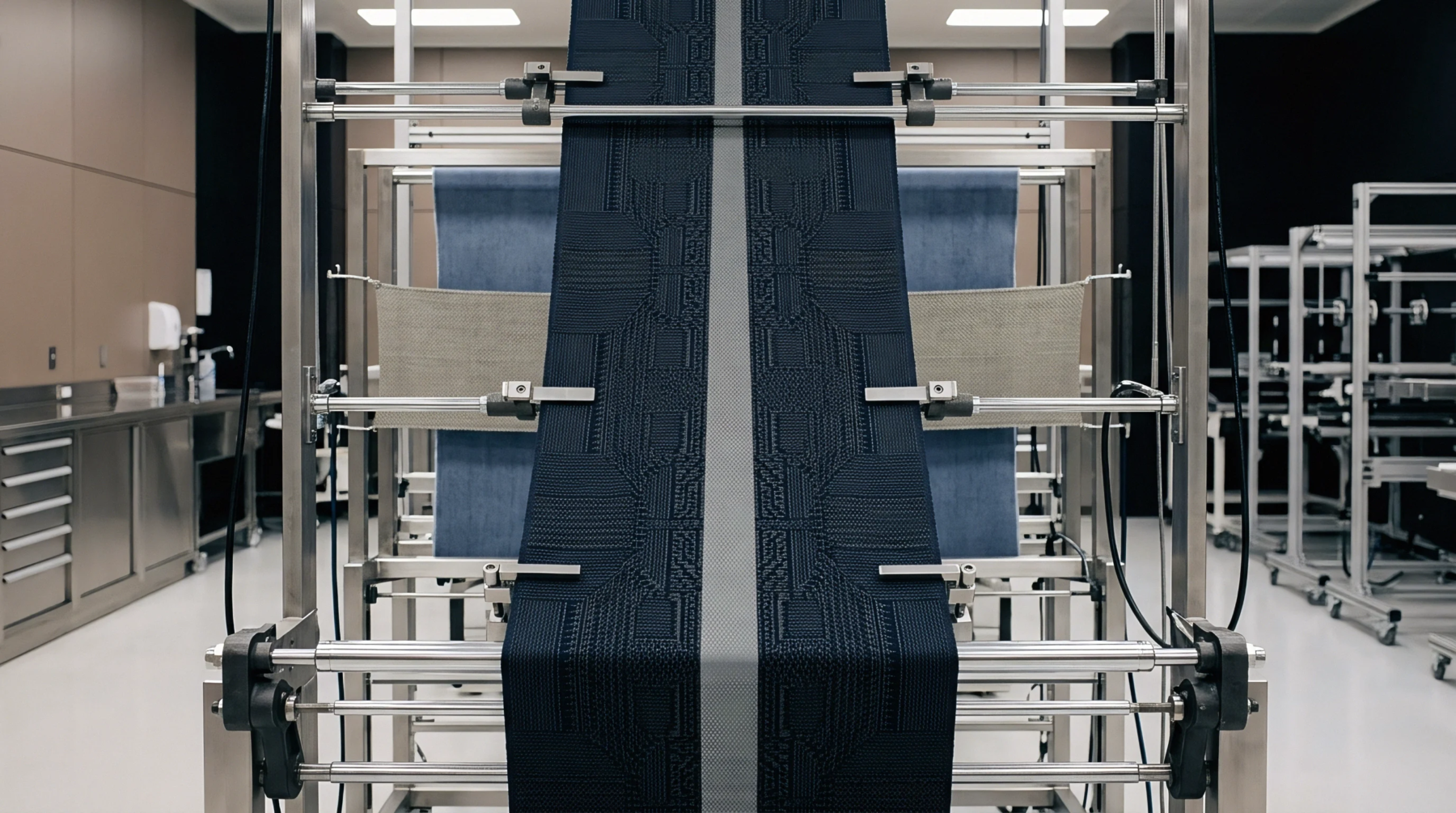
Weaving Machine Timing
Weaving machine timing determines the rotational period during which the warp yarns remain stationary at their maximum separation to allow weft insertion. Adjusting the loom shed dwell angle determines the window available for the rapier or air-jet to travel across the width of the fabric. Engineers calculate this value in degrees of the main shaft rotation to ensure the shuttle clears the yarn path before the shed begins to close.
Longer periods of openness facilitate wider widths or heavier yarns but may limit the overall beat-up speed.
Harmonic Motion
Cam profiles or electronic motors dictate how the harnesses move relative to the crankshaft. When a technician modifies the loom shed dwell angle, they must also consider the stress placed on the warp ends during the pause. Constant tension at full extension increases the risk of yarn fatigue.
Smooth transitions between opening and closing prevent the snapping effect common in high-tenacity synthetic yarns.
Insertion Timing
Rapid weft delivery systems require precise timing to avoid collisions. The dwell ensures the yarn path is unobstructed.
Window Operational
Mechanical cams have a fixed profile that cannot be changed without replacing the hardware. Electronic shedding offers more flexibility for complex weave structures.