Weaving Force
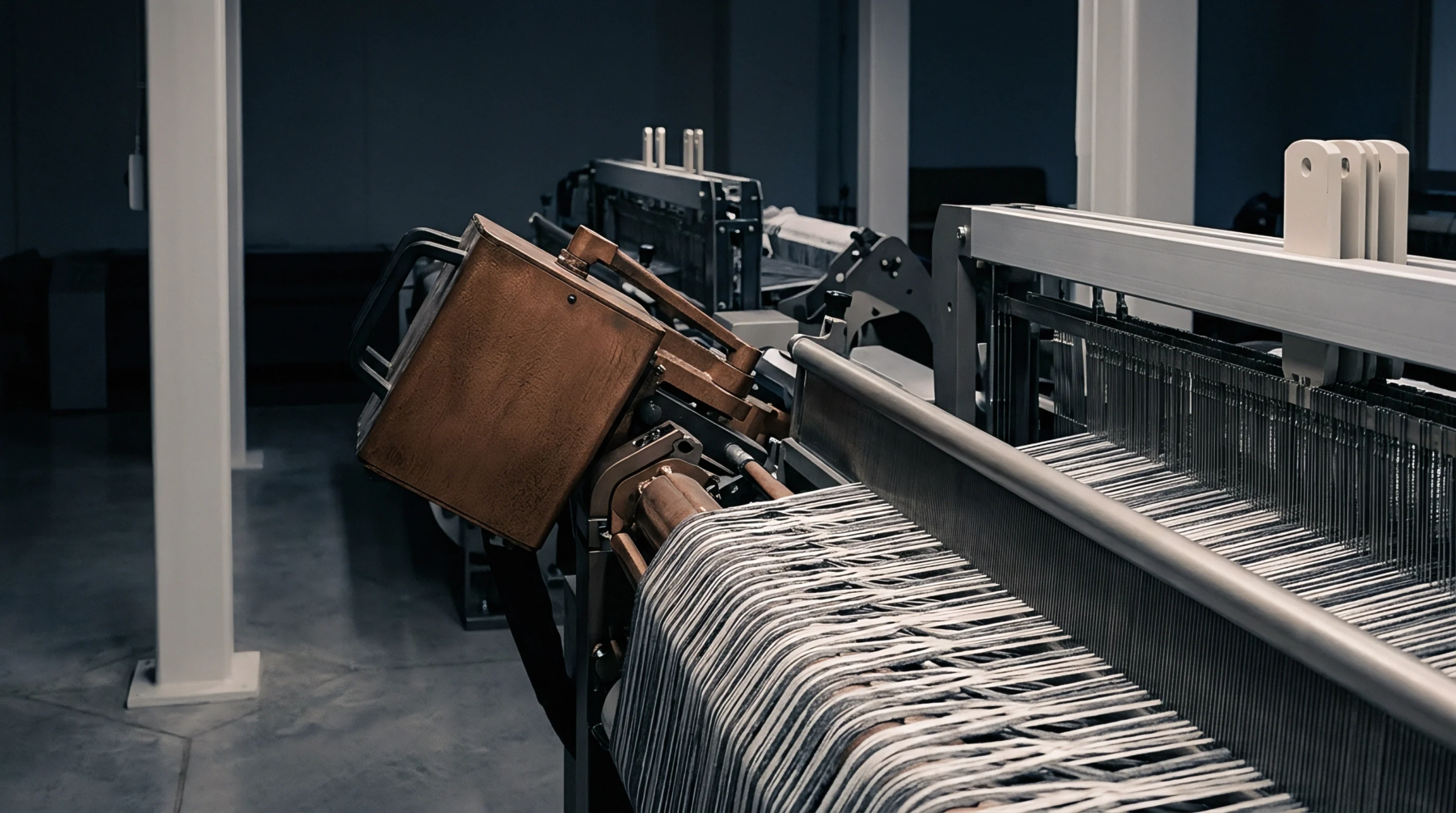
Mechanical stress applied to warp yarns during the opening of the weaving gap ensures the clean passage of the weft insertion device. This loom shed tension is generated as the heald frames move apart to create the top and bottom layers of the warp. Proper control of this force prevents yarn breakage and ensures a uniform fabric surface.
Mechanical Influence
Elasticity of the yarn must be high enough to absorb the peak loads without permanent deformation. When the loom shed tension is too high, individual filaments may fray or snap, leading to machine downtime. Conversely, insufficient tension causes the warp yarns to sag, which results in tangled threads and weaving defects.
Fabric Quality
Monitoring systems on modern weaving machines track these levels in real time across the full width of the beam. Adjusting the loom shed tension allows the operator to compensate for variations in yarn humidity or batch quality. Maintaining a consistent value is required for producing high quality greige cloth with minimal faults.
Operational Limit
The maximum allowable load is determined by the tensile strength of the warp yarn and the geometry of the shed. Loom shed tension settings are a primary component of the technical specification for any woven construction.