Mechanical Disruption
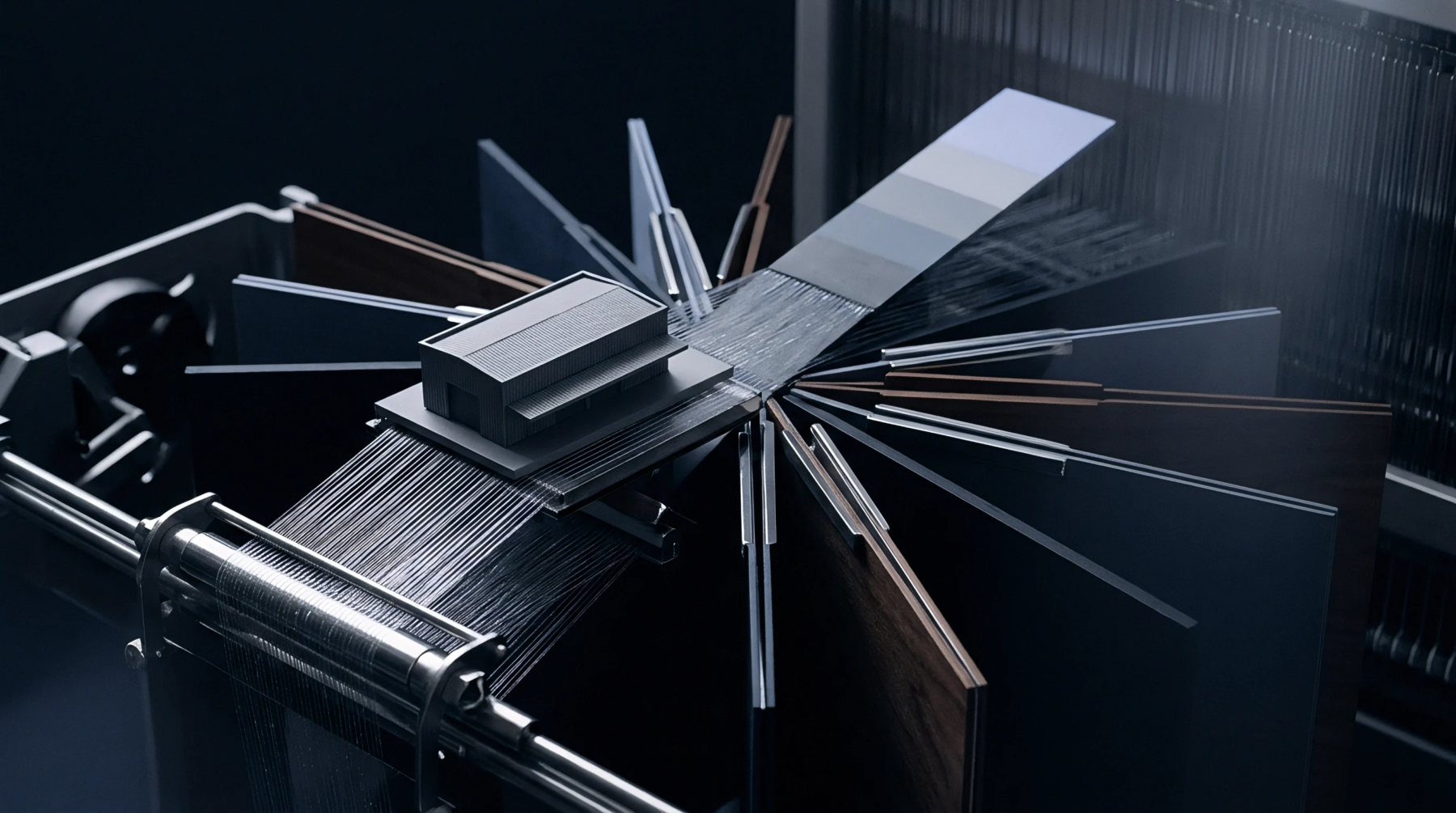
Mechanical failure occurs when the warp or weft delivery system halts during the weaving cycle to prevent damage to the shed or reed. A loom stop mark forms because the pause in operation changes the tension or beat force applied to the cloth surface at that specific coordinate. Stationary wires remain under tension for a duration that exceeds the period of normal oscillation, resulting in an area of uneven crimp.
Textile auditors evaluate this defect as a deviation from the expected density of the fabric construction.
Corrective Protocol
Operators identify the cause of the stoppage by checking the sensors or the mechanical linkages that triggered the alarm. Clearing the error usually involves removing the pick that caused the tension anomaly to ensure the pick density remains uniform across the width. Technicians adjust the brake settings on the warp beam to compensate for the slack created by the restart.
Consistent synchronization of the stop motion keeps these deviations within acceptable industry tolerances.
Production Boundary
Production limits dictate that any stop exceeding the time required for a standard cycle induces a visible variance in the base fabric. Fabrics composed of high filament count yarns or materials with low elastic recovery exhibit these marks more readily than heavier technical textiles. Mills designate segments containing such defects as seconds if the disruption exceeds a set length or frequency in a linear meter.
Inspections occur after the grey fabric leaves the loom and before the finishing stage begins.
Quality Threshold
Quality assurance teams measure the severity of a loom stop mark by comparing the affected zone against a standard reference piece. Heavy density weaves mask small tension variances far better than light plain weaves or satins. Fabric grading systems assign penalty points to these occurrences when the mark persists after the restart or if the alignment of the pattern shifts significantly.
The presence of these marks represents a failure in the automated monitoring system of the weaving machine.