Dimensional Constants
Dimensional equations for weft-knitted fabrics utilize specific mathematical ratios to relate the loop density to the length of yarn in a single stitch. First formulated in nineteen fifty-nine, the munden constants provide these fixed numerical values for plain knit structures. They establish that stitch length alone determines the dimensions of a fully relaxed knitted fabric.
Weft Knitting
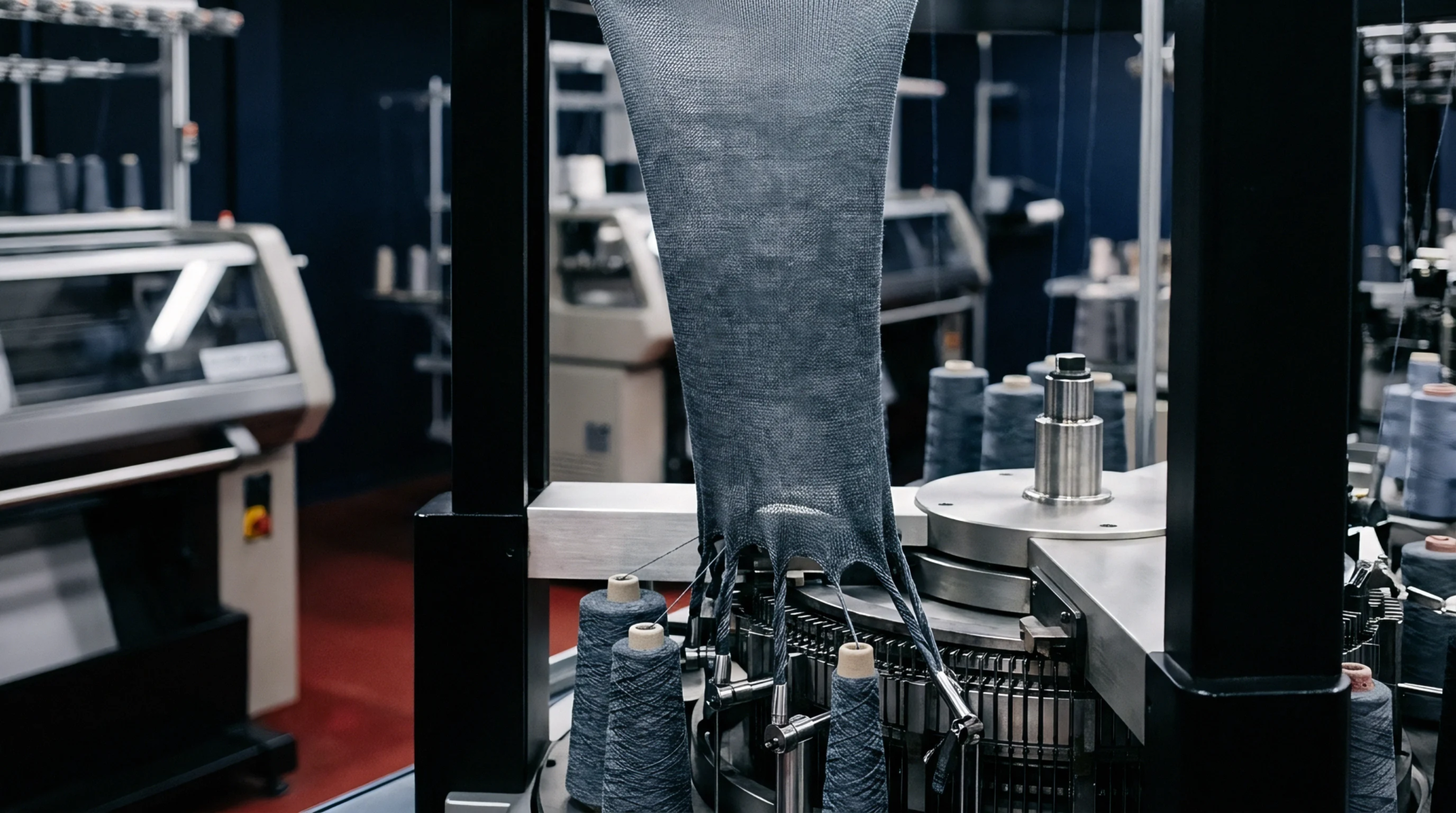
Loop length determination dictates the width and length of the finished fabric coming off the circular knitting machine. Calculations using the munden constants allow a knitter to predict the course and wales per inch based on the yarn run-in per revolution. This prediction holds true across different yarn counts and machine diameters.
Relaxation State
Knitted fabric must reach a fully relaxed condition before its final dimensions can be measured accurately. When applying the munden constants, the fabric is subjected to wet relaxation to release the internal stresses introduced during the knitting process. If the fabric is only dry-relaxed, the constants will yield inaccurate predictions.
Quality Control
Commercial fabric specifications require tight tolerances on weight and width to avoid waste during garment cutting. A manufacturer uses the munden constants to adjust machine settings so that the finished fabric matches the buyer’s requirements. For example, if the desired courses per inch cannot be met, the stitch length is altered until the mathematical relation is satisfied.
This method reduces trial-and-error runs on the factory floor and saves both yarn and time. The resulting consistency secures the required fabric yield for bulk garment production.