Rotor Yarn
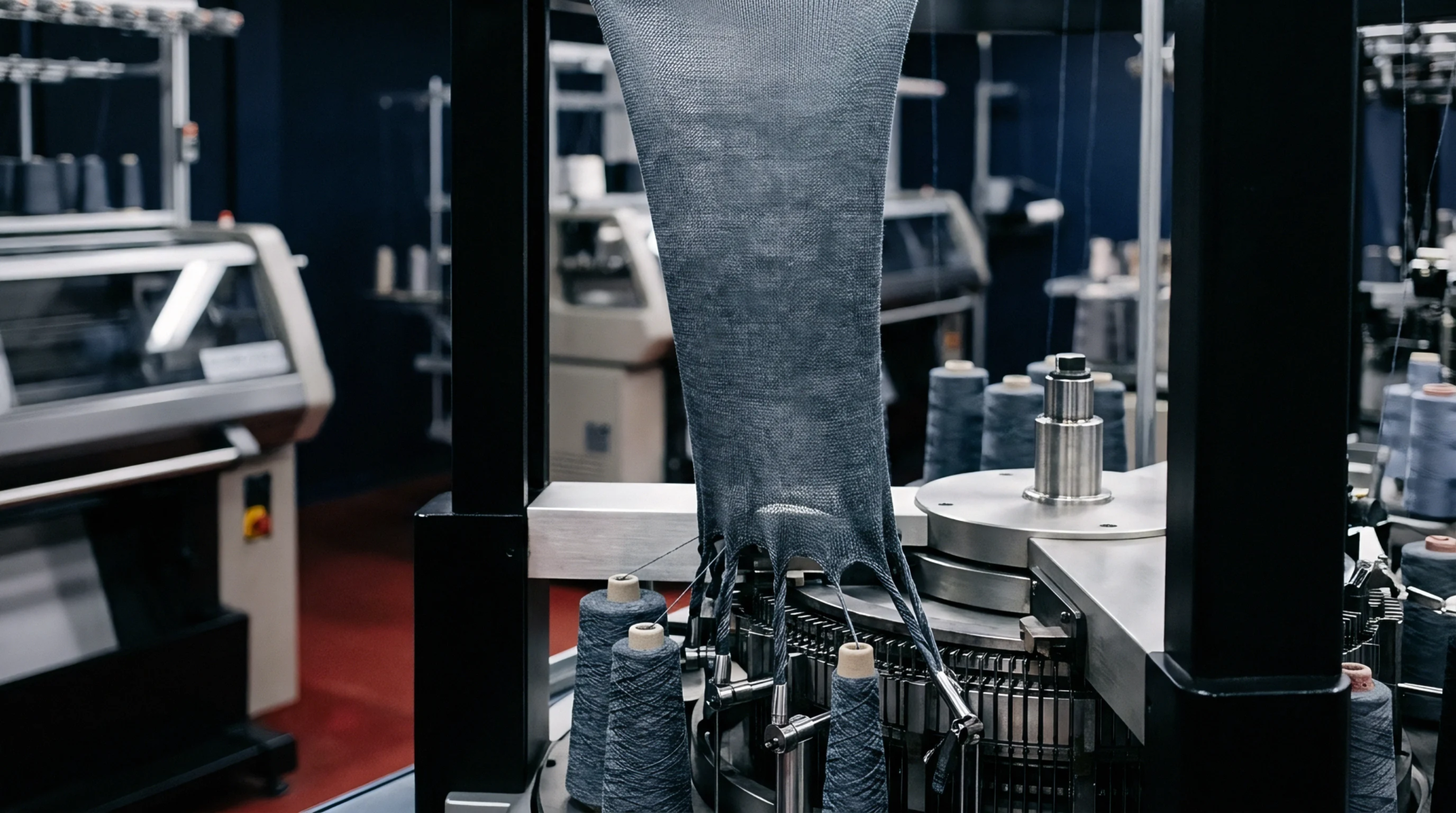
Break spun material forms through centrifugal deposition within rotor spinning machinery, operating as an alternative to ring spun yarn for specific volume applications. Open-end yarn replaces traditional roving frames by feeding sliver directly into a high speed opening roller that drafts individual fibers before condensation inside a spinning chamber. Mills evaluate this construction for uniform thickness, high abrasion resistance, and lower production costs during bulk procurement of utility fabrics.
Production stops applying standard twist multipliers effective for ring spinning because the mechanical twisting action relies on rotor wall friction rather than spindle rotation. High production speeds and reduced labor requirements drive widespread adoption across denim, toweling, and sheeting manufacturing operations.
Twist Structure
Twist distribution differs markedly from ring spun alternatives because false twist principles govern the outer sheath while core fibers remain less consolidated. Open-end yarn exhibits a characteristic wrapper fiber formation where loose fibers wrap around the main body during collection inside the rotor groove. Tensile strength suffers slightly under standard testing conditions due to lower fiber orientation, yet breaking extension remains adequate for high speed weaving looms.
Spinners control hairiness by adjusting rotor speed and doffing cycles to minimize surface fuzz on the final textile.
Fabric Performance
Woven and knitted goods produced from rotor spun material demonstrate superior pill resistance and excellent dye absorption compared to ring spun equivalents. Fabric hand feels firmer because the internal structure contains rigid fiber arrangements resulting from centrifugal compaction inside the manufacturing apparatus. Laundering tests reveal lower shrinkage rates during initial washing cycles due to stress relaxation occurring uniformly throughout the yarn body.
Apparel brands select this material for casual wear and heavy workwear where durability outweighs the soft drape demanded by luxury garments.
Quality Verification
Laboratory testing protocols measure unevenness, imperfections, and breaking tenacity on commercial yarn packages delivered from spinning mills to garment factories. Technicians evaluate mass variation through capacitance based sensors that register linear density fluctuations per kilometer of material. Purchasing contracts specify acceptable limits for thick places, thin places, and neps to ensure smooth passage through high speed knitting and weaving machinery without frequent breakage.
Finished fabric testing confirms that raw material consistency translates directly into predictable seam strength and uniform coloration across dyed lots.