Finishing Sequence
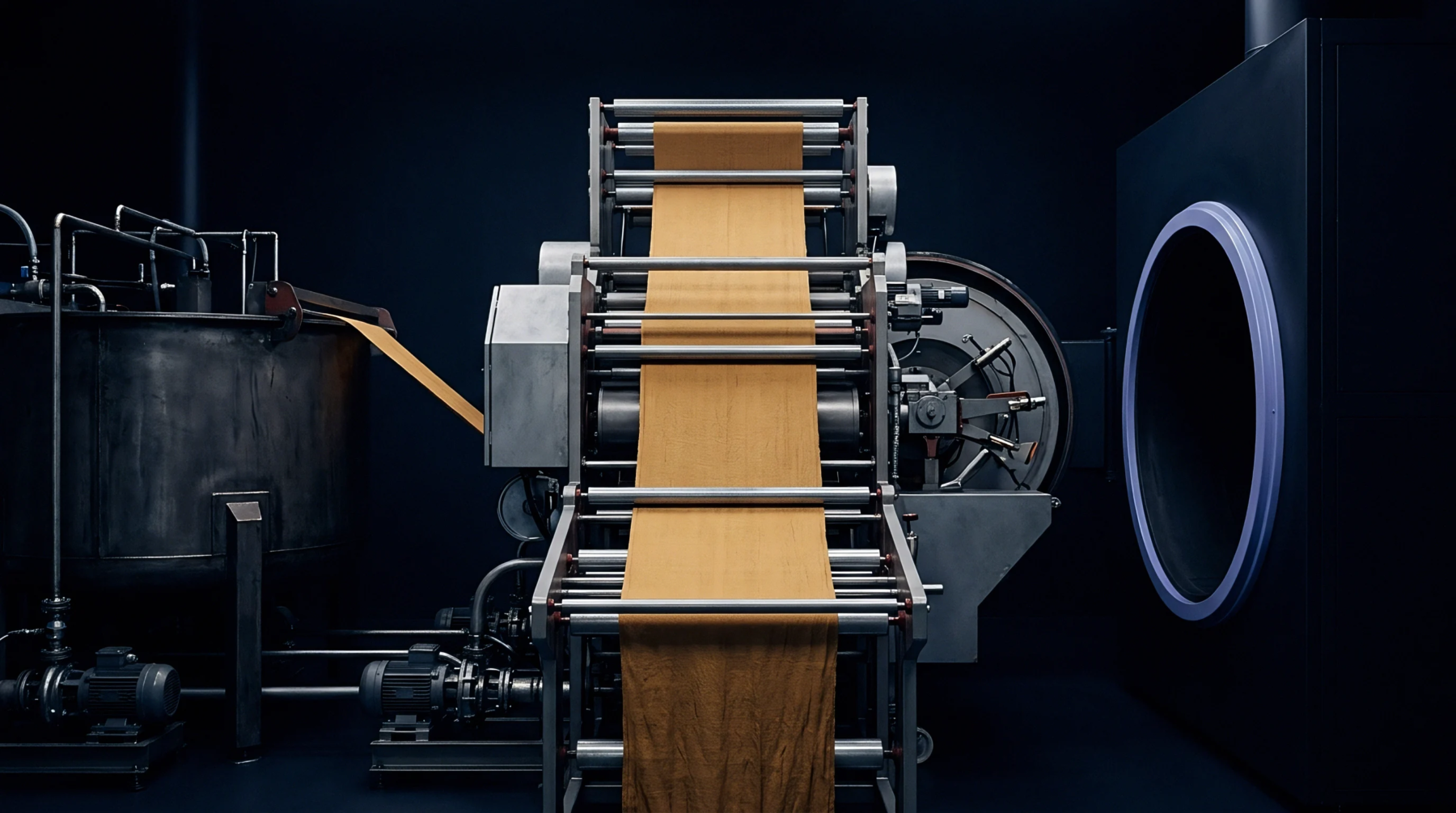
Continuous method for the application of dyes or functional chemicals involves immersing the fabric in a liquid bath and then removing excess moisture through a drying unit. The pad dry process relies on the mechanical pressure of nip rollers to force the liquor into the fibre structure before evaporation begins. This technique is standard for adding flame retardants, water repellents, softeners, or crease-resistant resins to bulk production lots.
Liquor Uptake
Control of the pad dry process depends on the wet pick up percentage, which measures the amount of liquid retained by the fabric after passing through the rollers. Variations in roller pressure or fabric speed change the chemical concentration and affect the final performance of the textile.
Migration Control
Rapid evaporation in the drying stage of the pad dry process can cause chemicals to move toward the surface and create an uneven finish. Pre-drying at lower temperatures helps to fix the chemicals in place before the final high-temperature drying occurs.
Color Consistency
Maintaining a constant liquor level in the trough ensures that the pad dry process produces a uniform shade from the start to the end of the roll. Inconsistent drying rates lead to side-to-center shading.