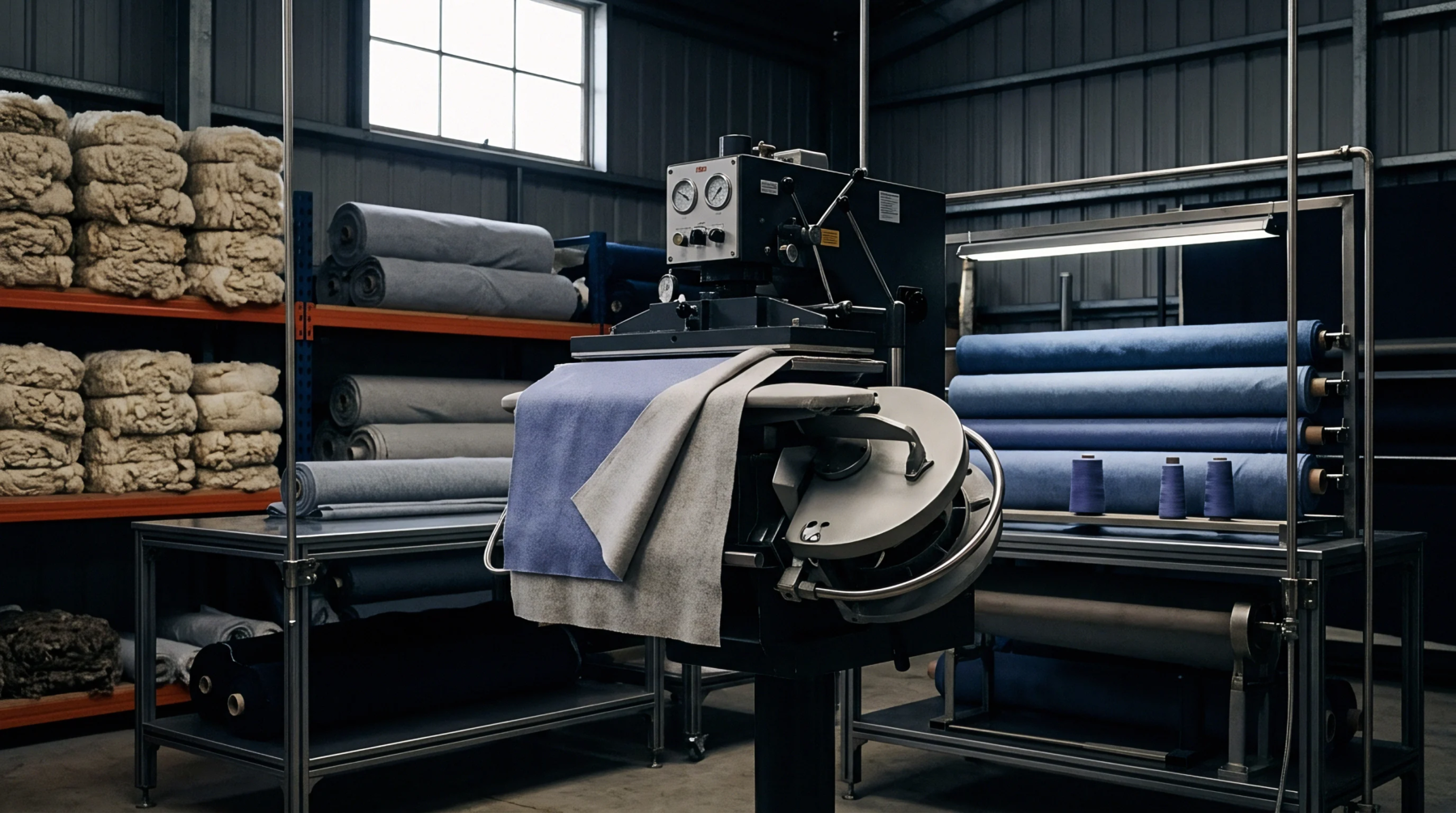
Elastic Composite
Composite textile structure consists of a synthetic elastomeric core wrapped with a protective layer of staple or filament sheath fibers. Textile mills use polyurethane core yarn to weave elastic denim, stretch chinos, and activewear fabrics. The core provides high stretch and recovery, while the sheath protects the core from thermal and chemical damage.
This combination allows the fabric to have the touch of natural cotton or wool while retaining the elasticity of synthetic polymers.
Spinning Technology
This yarn is typically produced on modified ring spinning frames equipped with core-feeding attachments. The polyurethane core yarn must be wound under controlled draft to ensure the elastic filament is completely covered. Poor wrapping leads to the core showing through, which affects the dye uptake.
Finishing Challenge
Heat-setting on a stenter frame is necessary to stabilize the fabric and prevent curling. If the temperature is too high, the polyurethane core yarn lose their elasticity as the core polymer chains degrade. This step must be managed to protect the elastic properties.
Performance Checking
Quality control labs test the stretch, recovery, and core centering of incoming yarn batches. They measure the stripping force required to push the sheath away from the core. This measurement ensures the yarn will perform well during high-speed weaving and knitting.