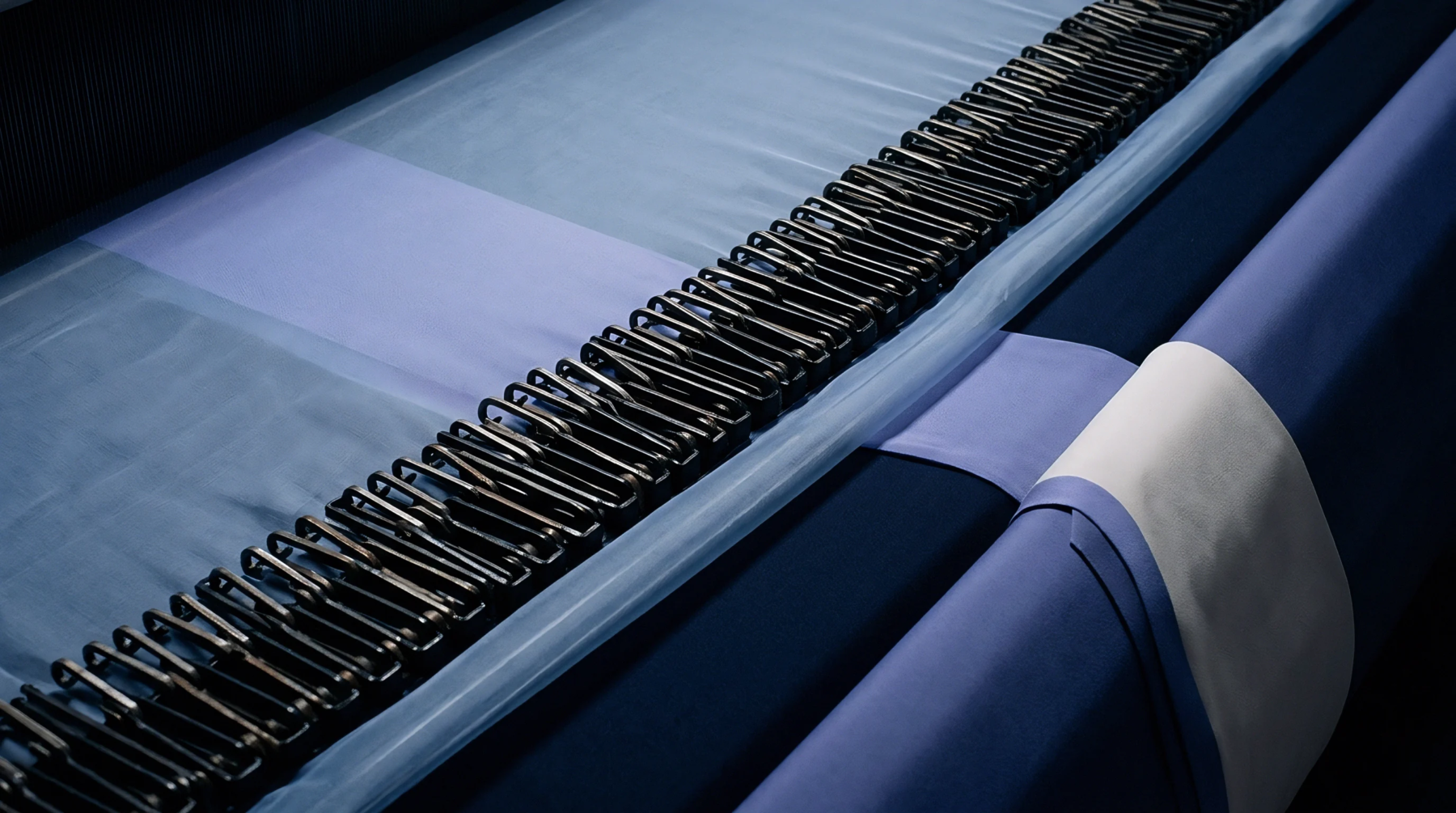
Mechanical Coordination
Insertion of pick-up and drop-off arms defines how rapier loom mechanics function to transfer filling yarns across the shed. These assemblies utilize a gear-driven or belt-driven system to push and pull the rapier heads into the open space between warp yarns. Synchronization remains the primary requirement for operation because the timing of the delivery rapier meeting the receiving rapier determines the stability of the pick.
When the shed geometry allows, the transfer point occurs at the midpoint to balance the distance traveled by each arm. Failure to align this intersection point causes mispicks or broken filling ends that degrade the overall quality of the resulting textile.
Motion Velocity
Constant acceleration profiles dictate the load placed on the driving linkages during the insertion cycle. High-speed production requires rapid deceleration of the rigid or flexible rapier head before the central shed handover to prevent vibration or timing drift. Manufacturers select material compositions for these components to minimize mass while maintaining structural rigidity under cyclic stress.
Lower inertia reduces the power demand of the motor and decreases wear on the drive cams.
Attachment Configuration
Flexible steel bands or rigid carbon composite rods move the rapier heads in paths regulated by guide blocks. Precision in the spacing of these guides prevents the rapier from deflecting during the transit phase, as contact with the warp yarns during insertion risks fraying delicate fibers. Heavy industrial fabrics necessitate a more robust drive assembly to overcome the friction inherent in moving dense or bulky filling materials.
Adjustment of the guide rail alignment becomes a routine maintenance task for ensuring consistent pick quality across wide widths.
Calibration Metric
Angular positioning sensors monitor the location of the rapier drive relative to the main shaft rotation to verify timing accuracy. Digital controllers compare the actual arrival of the rapier head against a set limit to detect potential slips in the belt or gear teeth. Deviation from this target triggers an automated stop to prevent mechanical collision between the arms and the reed.
Monitoring these values provides the data needed for long-term predictive maintenance of the drive train.