Insertion Method
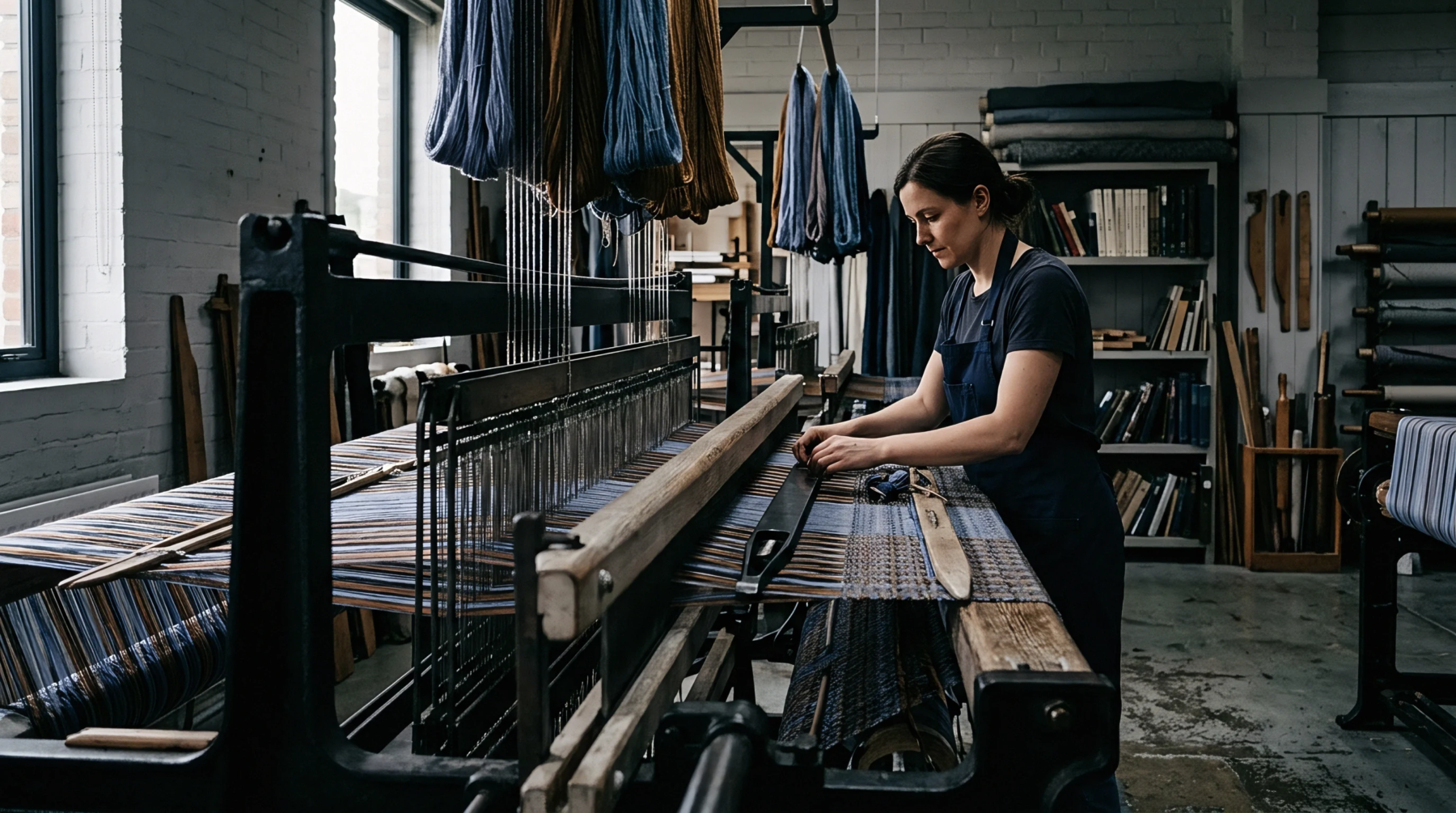
Solid mechanical grippers mounted on flexible bands or rigid rods carry filling yarn across an open warp shed. Weaving mills employ rapier weaving to process diverse yarn counts, delicate filaments, and fancy effect yarns at high commercial efficiencies. The process uses either a single rapier traversing the entire width or two rapiers transferring the filling pick at fabric center.
The system covers pick insertion from selection to reed beat-up, ending once mechanical grippers release the yarn and withdraw from the warp shed.
Transfer Mechanics
Double-rapier machines divide insertion into giver and taker phases to shorten cycle times. The giver rapier collects yarn from an electronic feeder at the loom side, carrying it to the cloth centerline. Simultaneously, the taker rapier enters from the opposing side, meeting the giver to clamp the yarn tip during shed dwell.
Cam mechanisms drive the precise hand-over, ensuring continuous yarn control without loose loops or erratic slack. Flexible rapiers wind around drive wheels to save floor space, whereas rigid rapiers excel in wide-width technical textile weaving.
Operational Parameters
Technicians monitor insertion parameters using loom monitoring consoles, logging filling stop rates per 100,000 picks. Rapier weaving runs at lower insertion rates than air-jet machines, typically operating between 400 and 700 picks per minute, but handles coarse, slubbed, or low-twist yarns without yarn damage. Filling tension remains moderate and adjustable, preventing yarn breakage on weak woolens or brittle glass fibers.
Inspectors verify edge quality by inspecting cut selvages and tuck-in units, ensuring tucked ends do not create thick fabric borders. Proper gripper timing prevents filling transfer faults that leave mispicks, short picks, or jerked-in filling ends.
Fabric Flexibility
Handling complex filling patterns makes this insertion method the standard for jacquard upholstery, wool suitings, and multi-color shirtings. Up to sixteen different filling colors or yarn counts interlace seamlessly under electronic selector control. Mills producing high-end apparel utilize rapier insertion to preserve filament luster without air-jet abrasion.
Rapier weaving delivers precise yarn placement across dense, heavy, or structurally diverse textile constructions.