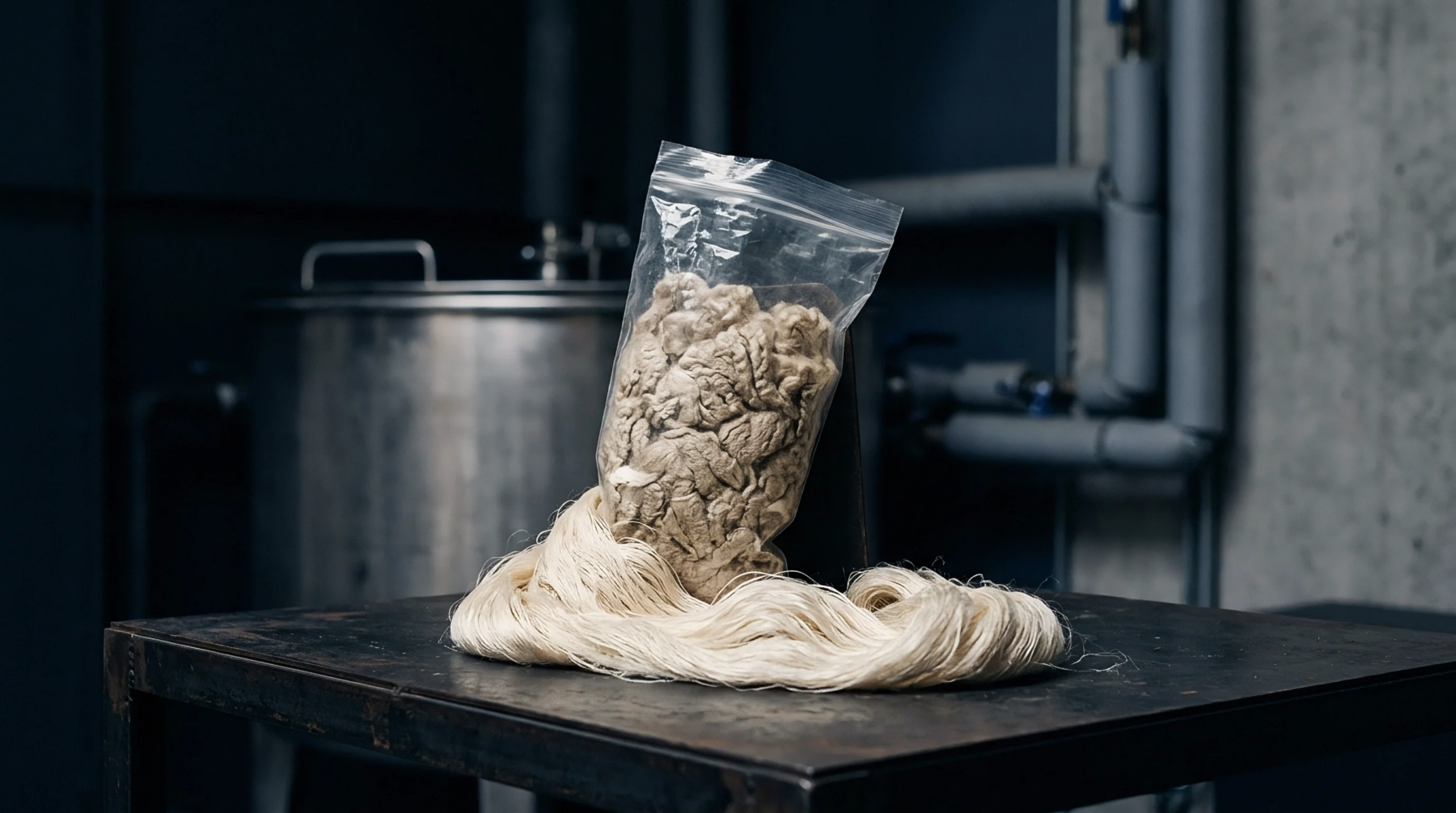
Determining Commercial Mass from Oven Dry Fibre Weights
Commercial mass equals oven-dry mass multiplied by standard regain allowances, establishing an immutable billable weight independent of transit moisture shifts.
Quantitative adjustment applied to analytical chemical titrations in textile wet processing laboratories is the designated reagent correction factor used during standardized water hardness and bath concentration evaluations. Mill technicians rely upon this multiplier to offset systematic volumetric variances introduced by degraded standard solutions or impure auxiliary supplies. Laboratory protocols mandate its calculation before any titration run governing reactive dye fixation baths or scouring liquor titrations occurs.
Liquid chemical deliveries arriving at the mill gate undergo strict incoming inspection where analytical titration confirms active ingredient concentrations against supplier certificates of analysis. Technicians determine the exact normality of EDTA titrants or acid solutions by titrating primary standards under controlled temperature conditions. The resulting numerical multiplier scales subsequent factory floor measurements to ensure absolute repeatability across multiple production shifts.
Without this numerical adjustment, dyehouse operators record false chemical consumption figures that distort process economics and cause shade variations across bulk fabric orders. Boundary conditions restrict the application of the multiplier strictly to volumetric analytical procedures inside the wet processing laboratory. Gravimetric testing methods and instrumental spectrophotometry utilize entirely separate calibration protocols that exclude volumetric corrections entirely.
Titration procedures require precise volumetric measurement where minor meniscus reading errors compound across large solution volumes. Technicians prepare standardized chemical agents by dissolving precise masses of analytical grade salts in deionized water within volumetric flasks. Titrant standardization against certified reference materials establishes the true concentration of the prepared liquid before issuance to the dyehouse floor.
The mathematics dividing the theoretical concentration by the experimentally determined concentration yields the exact multiplier required for subsequent calculations. Mill operators multiply raw titration titers by this factor to obtain true chemical consumption data for alkaline scouring baths and hydrogen peroxide bleach solutions. Temperature fluctuations inside the testing room alter liquid densities and introduce systematic errors unless the multiplier undergoes daily verification.
Analysts record daily environmental parameters alongside titer values to maintain strict traceability across all wet processing records.
Commercial accountability demands absolute transparency between textile mills and auxiliary chemical suppliers during raw material disputes. Purchasing departments rely upon verified titration records containing traceable multiplier logs to recover costs from vendors supplying substandard surfactant batches or deficient chelating agents. Fabric buyers audit mill laboratory procedures during routine quality assurance inspections to verify that chemical titration records match actual production recipes.
Discrepancies between mill titrations and supplier certificates trigger formal quality claims that halt pending yarn or fabric shipments until independent laboratory arbitration resolves the chemical variance. Mill directors insist upon rigorous documentation of all analytical adjustments to satisfy global brand compliance audits and environmental discharge standards.
Analytical accuracy diminishes rapidly when turbid dye liquors or highly colored extraction samples obscure the chemical endpoint during titration runs. Technicians discard cloudy aliquots and utilize alternative filtration steps because suspended particulate matter interferes with indicator color transitions and invalidates the multiplier calculation entirely. Organic sizing residues leaching from woven fabrics during desizing baths contaminate titration samples and produce false high readings that resist simple numerical correction.
Experienced laboratory supervisors recognize these matrix interferences and mandate preliminary sample digestion before applying standard analytical multipliers to complex industrial effluents.
Commercial mass equals oven-dry mass multiplied by standard regain allowances, establishing an immutable billable weight independent of transit moisture shifts.
Expertise is a utility, not a secret. sentiention™ publishes its working knowledge as open reference: intelligence layer covering the materials it sources, the markets it enters, and the reference that serves both.